Results by title
9 books match the query 'Relation'
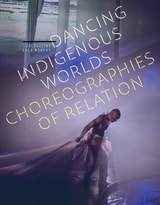
Dancing Indigenous Worlds
Choreographies of RelationJacqueline Shea Murphy
University of Minnesota Press, 2023
The vital role of dance in enacting the embodied experiences of Indigenous peoples
In Dancing Indigenous Worlds, Jacqueline Shea Murphy brings contemporary Indigenous dance makers into the spotlight, putting critical dance studies and Indigenous studies in conversation with one another in fresh and exciting new ways. Exploring Indigenous dance from North America and Aotearoa (New Zealand), she shows how dance artists communicate Indigenous ways of being, as well as generate a political force, engaging Indigenous understandings and histories.
Following specific dance works over time, Shea Murphy interweaves analysis, personal narrative, and written contributions from multiple dance artists, demonstrating dance’s crucial work in asserting and enacting Indigenous worldviews and the embodied experiences of Indigenous peoples. As Shea Murphy asserts, these dance-making practices can not only disrupt the structures that European colonization feeds upon and strives to maintain, but they can also recalibrate contemporary dance.
Based on more than twenty years of relationship building and research, Shea Murphy’s work contributes to growing, and largely underreported, discourses on decolonizing dance studies, and the geopolitical, gendered, racial, and relational meanings that dance theorizes and negotiates. She also includes discussions about the ethics of writing about Indigenous knowledge and peoples as a non-Indigenous scholar, and models approaches for doing so within structures of ongoing reciprocal, respectful, responsible action.
Dostoevsky and Romantic Realism
A Study of Dostoevsky in Relation to Balzac, Dickens, and GogolDonald Fanger
Northwestern University Press, 1998
Geographies of Relation
Diasporas and Borderlands in the AmericasTheresa Delgadillo
University of Michigan Press, 2024
Not only does Delgadillo offer a rare extended analysis of Black Latinidades in Chicanx literature and theory, but she also considers over a century’s worth of literary, cinematic, and performative texts to support her argument about the significance of these cultural sites and overlaps. Chapters illuminate the significance of Toña La Negra in the Golden Age of Mexican cinema, reconsider feminist theorist Gloria Anzaldúa’s work in revising exclusionary Latin American ideologies of mestizaje, delve into the racial and gender frameworks Sandra Cisneros attempts to rewrite, unpack encounters between African Americans and Black Puerto Ricans in texts by James Baldwin and Marta Moreno Vega, explore the African diaspora in colonial and contemporary Peru through Daniel Alarcón’s literature and the documentary Soy Andina, and revisit the centrality of Black power in ending colonialism in Cuban narratives. Geographies of Relation demonstrates the long histories of networks and exchanges across the Americas as well as the interrelationships among Indigenous, Black, African American, mestizx, Chicanx, and Latinx peoples. It offers a compelling argument that geographies of relation are as significant as national frameworks in structuring cultural formation and change in this hemisphere.
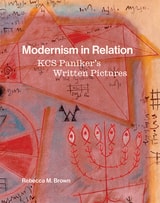
Modernism in Relation
KCS Paniker’s Written PicturesRebecca M. Brown
J. Paul Getty Trust, The, 0
This innovative book reimagines modernism through the illegible scribbles and vibrant colors of southern Indian artist KCS Paniker.
KCS Paniker (1911–1977) is a canonical figure in India’s twentieth-century modernism. He was principal of the Madras School of Art and founder of one of the world’s longest-standing artists’ communities. Yet, even within India, he remains a marginal figure, positioned at the periphery of a dominant art world centered in the north. Paniker’s best-known body of work, the Words and Symbols series (1963–77), calls on us to reconsider how knowledge is produced and disseminated in a postcolonial, decolonizing world. These “written pictures”—paintings filled with symbols, tables, equations, and illegible scribbles—invite decoding, only to undermine the pursuit of wholeness or stable meaning.
Paniker famously called Paul Klee his “guru.” In this book, art historian Rebecca M. Brown explores what that might mean, moving beyond tracing influence and derivation to embrace a fuller sense of artistic relation across geography and time. Featuring over 100 stunning illustrations, Modernism in Relation explores the dynamic, twisting currents of modernism, tracing how Paniker navigated its waters on his own terms—abandoning prescriptions for what modern art should be or what Indian modernism should look like. The book reveals a maker seeking new creative languages, challenging ways of knowing, and exploring the unpredictable, ever-changing nature of relation.
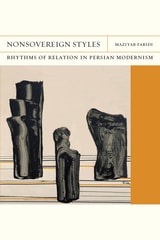
Nonsovereign Styles
Rhythms of Relation in Persian ModernismMaziyar Faridi
Northwestern University Press, 2027
Exploring motifs in modern Persian literature and Iranian film that demand new forms of relationality from politics
Assembling an understudied corpus of literary and filmic texts at the intersection of Persian and global modernism, Maziyar Faridi traces a constellation of aesthetic motifs that resist colonially imported constructs of political relationality in order to argue for an intermedial poetics of nonsovereignty. Moving from the poetry of Nima Yushij and Ahmad Shamlou to the ciné-poems of Férydoun Rahnéma and Forugh Farrokhzad, Nonsovereign Styles charts the transformation of poetic language through its exposure to minor ethnic languages and the rhetorics of English, French, and Spanish modernist poetry and alternative film. Faridi centers two key motifs: ezterāb, a trembling rhythm in which the self encounters itself as difference, and mehr, an aporetic mode of relation beyond identity, community, and sovereignty. Against the state’s project of ethnonationalism, these motifs form a poetics that is both transhistorical and transnational, producing a translational link between Iranian and internationalist poets, such as Langston Hughes and Paul Éluard. By situating Persian modernism within the broader map of global modernism, this book invites us to consider what reading these texts can teach us today about styles of relating to the world and the very sense of the political.
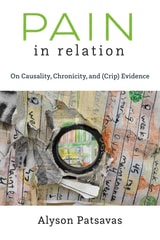
Pain in Relation
On Causality, Chronicity, and (Crip) EvidenceAlyson Patsavas
University of Michigan Press, 2026
Pain in Relation: On Causality, Chronicity, and (Crip) Evidence argues that the dominant stories circulating within contemporary US culture are marked by seemingly contradictory certainties: pain is at once subjective yet universal; that pain makes life unlivable and can be overcome with perseverance. These certainties graft onto pained people as impossible imperatives: the imperatives to live “despite” our pain and to defend the value of lives imagined to be compromised “because of” it. Alyson Patsavas outlines the harm these imperatives cause and draws on feminist, queer, and disability theory to offer alternative frameworks for making sense of and relating to pain.
The study fleshes out “crip autotheory” and experiments with evidencing practices, using anecdotes, journal entries, personal reflections, list-making, and photography to map “cripistemologies of pain,” or critical, disability-informed experiential ways of knowing pain. Equal parts cultural critique, intimate portrait of pained life, and commentary, Pain in Relation invites readers to challenge what they think they know about pain and explore new ways of relating to pain, pained life, and the futures we imagine for pained people.
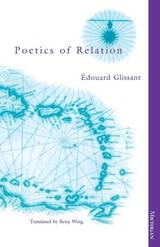
Poetics of Relation
Édouard Glissant
University of Michigan Press, 1997
In Poetics of Relation, Glissant turns the concrete particulars of Caribbean reality into a complex, energetic vision of a world in transformation. He sees the Antilles as enduring suffering imposed by history, yet as a place whose unique interactions will one day produce an emerging global consensus. Arguing that the writer alone can tap the unconscious of a people and apprehend its multiform culture to provide forms of memory capable of transcending "nonhistory," Glissant defines his "poetics of relation"--both aesthetic and political--as a transformative mode of history, capable of enunciating and making concrete a French-Caribbean reality with a self-defined past and future. Glissant's notions of identity as constructed in relation and not in isolation are germane not only to discussions of Caribbean creolization but also to our understanding of U.S. multiculturalism. In Glissant's view, we come to see that relation in all its senses--telling, listening, connecting, and the parallel consciousness of self and surroundings--is the key to transforming mentalities and reshaping societies.
This translation of Glissant's work preserves the resonating quality of his prose and makes the richness and ambiguities of his voice accessible to readers in English.
"The most important theoretician from the Caribbean writing today. . . . He is central not only to the burgeoning field of Caribbean studies, but also to the newly flourishing literary scene in the French West Indies." --Judith Graves Miller, University of Wisconsin, Madison
Édouard Glissant is Distinguished Professor of French at City University of New York, Graduate Center. Betsy Wing's recent translations include Lucie Aubrac's Outwitting the Gestapo (with Konrad Bieber), Didier Eribon's Michel Foucault and Hélêne Cixous's The Book of Promethea.
Relation of Motor Fuel Characteristics to Engine Performance
George Granger Brown
University of Michigan Press, 1927

The Physico-Chemical Properties of Plant Saps in Relation to Phytogeography
Data on Native Vegetation in its Natural EnvironmentJ. Harris
University of Minnesota Press, 1934