Results by title
346 books match the query 'Relations' and 30 start with a
A Black Corps d'Elite
An Egyptian Sudanese Conscript Battalion with the French Army in Mexico, 1863-1867, and its Survivors in Subsequent African HistoryRichard Hill
Michigan State University Press, 1995
For several years, the armies of Napoleon III deployed some 450 Muslim Sudanese slave soldiers in Veracruz, the port of Mexico City. As in the other case of Western hemisphere military slavery (the West India Regiments, a British unit in existence 1795-1815), the Sudanese were imported from Africa in the hopes that they would better survive the tropical diseases that so terribly afflicted European soldiers. In both cases, the Africans did indeed fulfill these expectations. The mixture of cultures embodied by this event has piqued the interest of several historians, so it is by no means unknown. Hill and Hogg provide a particularly thorough account of this exotic interlude, explaining its background, looking in detail at the battle record in Mexico, and figuring out who exactly made up the battalion. Much in their account is odd and interesting, for example, the Sudanese superiority to Austrian troops and their festive nine-day spree in Paris on the emperor's tab. The authors also assess the episode's longer-term impact on the Sudan, showing that the veterans of Mexico, having learnt much from their extended exposure to French military practices, rose quickly in the ranks, then taught these methods to others.

A Call for Heresy
Why Dissent Is Vital to Islam and AmericaAnouar Majid
University of Minnesota Press, 2007
A Call for Heresy discovers unexpected common ground in one of the most inflammatory issues of the twenty-first century: the deepening conflict between the Islamic world and the United States. Moving beyond simplistic answers, Anouar Majid argues that the Islamic world and the United States are both in precipitous states of decline because, in each, religious, political, and economic orthodoxies have silenced the voices of their most creative thinkers—the visionary nonconformists, radicals, and revolutionaries who are often dismissed, or even punished, as heretics.
The United States and contemporary Islam share far more than partisans on either side admit, Majid provocatively argues, and this “clash of civilizations” is in reality a clash of competing fundamentalisms. Illustrating this point, he draws surprising parallels between the histories and cultures of Islam and the United States and their shortsighted suppression of heresy (zandaqa in Arabic), from Muslim poets and philosophers like Ibn Rushd (known in the West as Averroës) to the freethinker Thomas Paine, and from Abu Bakr Razi and Al-Farabi to Thomas Jefferson and Abraham Lincoln. He finds bitter irony in the fact that Islamic culture is now at war with a nation whose ideals are losing ground to the reactionary forces that have long condemned Islam to stagnation.
The solution, Majid concludes, is a long-overdue revival of dissent. Heresy is no longer a contrarian’s luxury, for only through encouraging an engaged and progressive intellectual tradition can the nations reverse their decline and finally work together for global justice and the common good of humanity.
Anouar Majid is founding chair and professor of English at the University of New England and the author of Freedom and Orthodoxy: Islam and Difference in the Post-Andalusian Age; Unveiling Traditions: Postcolonial Islam in a Polycentric World; and Si Yussef, a novel. He is also cofounder and editor of Tingis, a Moroccan-American magazine of ideas and culture.
A Call to Conscience
The Anti-Contra War CampaignRoger Peace
University of Massachusetts Press, 2012
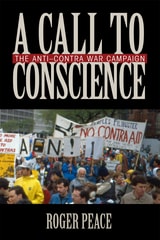
Unlike earlier U.S. interventions in Latin America, the Reagan administration's attempt to overthrow the Sandinista government of Nicaragua during the 1980s was not allowed to proceed quietly. Tens of thousands of American citizens organized and agitated against U.S. aid to the counterrevolutionary guerrillas, known as “contras.” Believing the Contra War to be unnecessary, immoral, and illegal, they challenged the administration's Cold War stereotypes, warned of “another Vietnam,” and called on the United States to abide by international norms.
A Call to Conscience offers the first comprehensive history of the anti–Contra War campaign and its Nicaragua connections. Roger Peace places this eight-year campaign in the context of previous American interventions in Latin America, the Cold War, and other grassroots oppositional movements. Based on interviews with American and Nicaraguan citizens and leaders, archival records of activist organizations, and official government documents, this book reveals activist motivations, analyzes the organizational dynamics of the anti–Contra War campaign, and contrasts perceptions of the campaign in Managua and Washington.
Peace shows how a variety of civic groups and networks—religious, leftist, peace, veteran, labor, women's rights—worked together in a decentralized campaign that involved extensive transnational cooperation.

A House Divided
Orthodoxy and Schism in Nineteenth-Century Central European JewryJacob Katz
University Press of New England, 2005
A Motorcycle on Hell Run
Tanzania, Black Power, and the Uncertain Future of Pan-Africanism, 1964–1974Seth M. Markle
Michigan State University Press, 2017
A People Divided
Judaism in Contemporary AmericaJack Wertheimer
Brandeis University Press, 1997
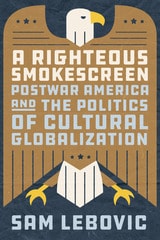
A Righteous Smokescreen
Postwar America and the Politics of Cultural GlobalizationSam Lebovic
University of Chicago Press, 2022
When the dust settled after World War II, the United States stood as the world’s unquestionably pre-eminent military and economic power. In the decades that followed, the country exerted its dominant force in less visible but equally powerful ways, too, spreading its trade protocols, its media, and—perhaps most importantly—its alleged values. In A Righteous Smokescreen, Sam Lebovic homes in on one of the most prominent, yet ethereal, of those professed values: the free flow of information. This trope was seen as capturing what was most liberal about America’s self-declared leadership of the free world. But as Lebovic makes clear, even though diplomats and public figures trumpeted the importance of widespread cultural exchange, these transmissions flowed in only one direction: outward from the United States. Though other countries did try to promote their own cultural visions, Lebovic shows that the US moved to marginalize or block those visions outright, highlighting the shallowness of American commitments to multilateral institutions, the depth of its unstated devotion to cultural and economic supremacy, and its surprising hostility to importing foreign cultures. His book uncovers the unexpectedly profound global consequences buried in such ostensibly mundane matters as visa and passport policy, international educational funding, and land purchases for embassies. Even more crucially, A Righteous Smokescreen does nothing less than reveal that globalization was not the inevitable consequence of cultural convergence or the natural outcome of putatively free flows of information—it was always political to its core.
A Service of Love
Paul McPartlan
Catholic University of America Press, 2013
A Service of Love
Paul McPartlan
Catholic University of America Press, 2016
A Suburb of Europe
Nineteenth-Century Polish Approaches to Western CivilizationJerzy Jedlicki
Central European University Press, 2000
In this lively and original book, the distinguished Polish historian Jerzy Jedlicki tells the story of a century-long Polish dispute over the merits and demerits of the Western model of liberal progress and industrial civilization.
As in several countries of Europe, also in Poland, intellectuals--conservatives, liberals, and (later) socialists--quarrelled about whether such a model would suit and benefit their nation, or whether it would spell the ruin of its distinctive cultural features.
This heated debate revolved around several pairs of opposing ideas: native cultures v. cosmopolitan civilization; natural v. artificial ways of economic development; Christian morals v. capitalist laissez-faire; traditional customs v. mobile society; romanticism v. scientism, and so on. It is these various aspects of the main issue which the author analyzes and links together here. He describes how difficult and painful the process of modernization was in a nation deprived of its political independence and cultural autonomy.
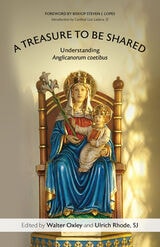
A Treasure to be Shared
Understanding <i>Anglicanorum coetibus</i>Walter Oxley
Catholic University of America Press, 2022
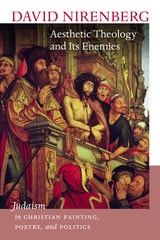
Aesthetic Theology and Its Enemies
Judaism in Christian Painting, Poetry, and PoliticsDavid Nirenberg
Brandeis University Press, 2015
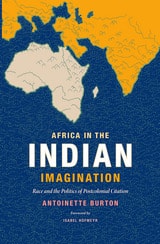
Africa in the Indian Imagination
Race and the Politics of Postcolonial CitationAntoinette Burton
Duke University Press, 2016
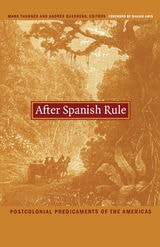
After Spanish Rule
Postcolonial Predicaments of the AmericasMark Thurner and Andrés Guerrero, eds.
Duke University Press, 2003
Challenging the universalizing tendencies of postcolonial theory as it has developed in the Anglophone academy, the contributors are attentive to the crucial ways in which the histories of Latin American countries—with their creole elites, hybrid middle classes, subordinated ethnic groups, and complicated historical relationships with Spain and the United States—differ from those of other former colonies in the southern hemisphere. Yet, while acknowledging such differences, the volume suggests a host of provocative, critical connections to colonial and postcolonial histories around the world.
Contributors
Thomas Abercrombie
Shahid Amin
Jorge Cañizares-Esguerra
Peter Guardino
Andrés Guerrero
Marixa Lasso
Javier Morillo-Alicea
Joanne Rappaport
Mauricio Tenorio-Trillo
Mark Thurner
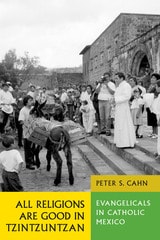
All Religions Are Good in Tzintzuntzan
Evangelicals in Catholic MexicoBy Peter S. Cahn
University of Texas Press, 2003
Since the 1960s, evangelical Christian denominations have made converts throughout much of Roman Catholic Latin America, causing clashes of faith that sometimes escalate to violence. Yet in one Mexican town, Tzintzuntzan, the appearance of new churches has provoked only harmony. Catholics and evangelicals alike profess that "all religions are good," a sentiment not far removed from "here we are all equal," which was commonly spoken in the community before evangelicals arrived.
In this paradigm-challenging study, Peter Cahn investigates why the coming of evangelical churches to Tzintzuntzan has produced neither the interfaith clashes nor the economic prosperity that evangelical conversion has brought to other communities in Mexico and Latin America. Drawing on extensive ethnographic fieldwork, he demonstrates that the evangelicals' energetic brand of faith has not erupted into violence because converts continue to participate in communal life, while Catholics, in turn, participate in evangelical practices. He also underscores how Tzintzuntzan's integration into global economic networks strongly motivates the preservation of community identity and encourages this mutual borrowing. At the same time, however, Cahn concludes that the suppression of religious difference undermines the revolutionary potential of religion.
Allies and Rivals
German-American Exchange and the Rise of the Modern Research UniversityEmily J. Levine
University of Chicago Press, 2021
During the nineteenth century, nearly ten thousand Americans traveled to Germany to study in universities renowned for their research and teaching. By the mid-twentieth century, American institutions led the world. How did America become the center of excellence in higher education? And what does that story reveal about who will lead in the twenty-first century?
Allies and Rivals is the first history of the ascent of American higher education seen through the lens of German-American exchange. In a series of compelling portraits of such leaders as Wilhelm von Humboldt, Martha Carey Thomas, and W. E. B. Du Bois, Emily J. Levine shows how academic innovators on both sides of the Atlantic competed and collaborated to shape the research university. Even as nations sought world dominance through scholarship, universities retained values apart from politics and economics. Open borders enabled Americans to unite the English college and German PhD to create the modern research university, a hybrid now replicated the world over.
In a captivating narrative spanning one hundred years, Levine upends notions of the university as a timeless ideal, restoring the contemporary university to its rightful place in history. In so doing she reveals that innovation in the twentieth century was rooted in international cooperation—a crucial lesson that bears remembering today.
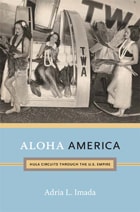
Aloha America
Hula Circuits through the U.S. EmpireAdria L. Imada
Duke University Press, 2012
At vaudeville theaters, international expositions, commercial nightclubs, and military bases, Hawaiian women acted as ambassadors of aloha, enabling Americans to imagine Hawai'i as feminine and benign, and the relation between colonizer and colonized as mutually desired. By the 1930s, Hawaiian culture, particularly its music and hula, had enormous promotional value. In the 1940s, thousands of U.S. soldiers and military personnel in Hawai'i were entertained by hula performances, many of which were filmed by military photographers. Yet, as Adria L. Imada shows, Hawaiians also used hula as a means of cultural survival and countercolonial political praxis. In Aloha America, Imada focuses on the years between the 1890s and the 1960s, examining little-known performances and films before turning to the present-day reappropriation of hula by the Hawaiian self-determination movement.
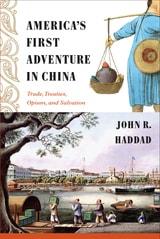
America's First Adventure in China
Trade, Treaties, Opium, and SalvationJohn R Haddad
Temple University Press, 2014
In America's First Adventure in China, John Haddad provides a colorful history of the evolving cultural exchange and interactions between these countries. He recounts how American expatriates adopted a pragmatic attitude-as well as an entrepreneurial spirit and improvisational approach-to their dealings with the Chinese. Haddad shows how opium played a potent role in the dreams of Americans who either smuggled it or opposed its importation, and he considers the missionary movement that compelled individuals to accept a hard life in an alien culture.
As a result of their efforts, Americans achieved a favorable outcome—they established a unique presence in China—and cultivated a relationship whose complexities continue to grow.
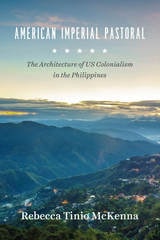
American Imperial Pastoral
The Architecture of US Colonialism in the PhilippinesRebecca Tinio McKenna
University of Chicago Press, 2017
In American Imperial Pastoral, Rebecca Tinio McKenna examines the design, construction, and use of Baguio, making visible the physical shape, labor, and sustaining practices of the US’s new empire—especially the dispossessions that underwrote market expansion. In the process, she demonstrates how colonialists conducted market-making through state-building and vice-versa. Where much has been made of the racial dynamics of US colonialism in the region, McKenna emphasizes capitalist practices and design ideals—giving us a fresh and nuanced understanding of the American occupation of the Philippines.
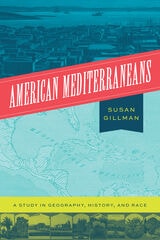
American Mediterraneans
A Study in Geography, History, and RaceSusan Gillman
University of Chicago Press, 2022
The naturalist Alexander von Humboldt, visiting the Gulf-Caribbean in the early nineteenth century, called it America’s Mediterranean. Almost a century later, Southern California was hailed as “Our Mediterranean, Our Italy!” Although “American Mediterranean” is not a household phrase in the United States today, it once circulated widely in French, Spanish, and English as a term of art and folk idiom. In this book, Susan Gillman asks what cultural work is done by this kind of unsystematic, open-ended comparative thinking.
American Mediterraneans tracks two centuries of this geohistorical concept, from Humboldt in the early 1800s, to writers of the 1890s reflecting on the Pacific world of the California coast, to writers of the 1930s and 40s speculating on the political past and future of the Caribbean. Following the term through its travels across disciplines and borders, American Mediterraneans reveals a little-known racialized history, one that paradoxically appealed to a range of race-neutral ideas and ideals.

American Orient
Imagining the East from the Colonial Era through the Twentieth CenturyDavid Weir
University of Massachusetts Press, 2011
Surveying the American fascination with the Far East since the mid-eighteenth century, this book explains why the Orient had a fundamentally different meaning in the United States than in Europe or Great Britain. David Weir argues that unlike their European counterparts, Americans did not treat the East simply as a site of imperialist adventure; on the contrary, colonial subjugation was an experience that early Americans shared with the peoples of China and India.
In eighteenth-century America, the East was, paradoxically, a means of reinforcing the enlightenment values of the West: Franklin, Jefferson, and other American writers found in Confucius a complement to their own political and philosophical beliefs. In the nineteenth century, with the shift from an agrarian to an industrial economy, the Hindu Orient emerged as a mystical alternative to American reality. During this period, Emerson, Thoreau, and other Transcendentalists viewed the “Oriental” not as an exotic other but as an image of what Americans could be, if stripped of all the commercialism and materialism that set them apart from their ideal. A similar sense of Oriental otherness informed the aesthetic discoveries of the early twentieth century, as Pound, Eliot, and other poets found in Chinese and Japanese literature an artistic purity and intensity absent from Western tradition. For all of these figures the Orient became a complex fantasy that allowed them to overcome something objectionable, either in themselves or in the culture of which they were a part, in order to attain some freer, more genuine form of philosophical, religious, or artistic expression.
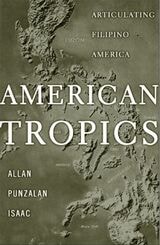
American Tropics
Articulating Filipino AmericaAllan Punzalan Isaac
University of Minnesota Press, 2006
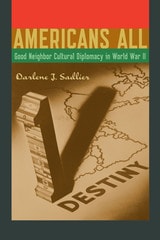
Americans All
Good Neighbor Cultural Diplomacy in World War IIBy Darlene J. Sadlier
University of Texas Press, 2012
Cultural diplomacy—“winning hearts and minds” through positive portrayals of the American way of life—is a key element in U.S. foreign policy, although it often takes a backseat to displays of military might. Americans All provides an in-depth, fine-grained study of a particularly successful instance of cultural diplomacy—the Office of the Coordinator of Inter-American Affairs (CIAA), a government agency established by President Franklin D. Roosevelt in 1940 and headed by Nelson A. Rockefeller that worked to promote hemispheric solidarity and combat Axis infiltration and domination by bolstering inter-American cultural ties.
Darlene J. Sadlier explores how the CIAA used film, radio, the press, and various educational and high-art activities to convince people in the United States of the importance of good neighbor relations with Latin America, while also persuading Latin Americans that the United States recognized and appreciated the importance of our southern neighbors. She examines the CIAA’s working relationship with Hollywood’s Motion Picture Society of the Americas; its network and radio productions in North and South America; its sponsoring of Walt Disney, Orson Welles, John Ford, Gregg Toland, and many others who traveled between the United States and Latin America; and its close ties to the newly created Museum of Modern Art, which organized traveling art and photographic exhibits and produced hundreds of 16mm educational films for inter-American audiences; and its influence on the work of scores of artists, libraries, book publishers, and newspapers, as well as public schools, universities, and private organizations.
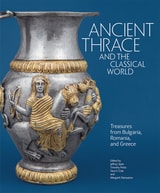
Ancient Thrace and the Classical World
Treasures from Bulgaria, Romania, and GreeceJeffrey Spier
J. Paul Getty Trust, The, 2024
The Thracians—a collection of tribal peoples who inhabited territories north of ancient Greece, an area that comprises present-day Bulgaria, much of Romania, and parts of Greece and Turkey—were renowned for their skill as warriors and horsemen, as well as for their wealth in precious metals. Thracians left few written records, and knowledge of their history and customs has long been dependent on brief accounts from ancient Greek authors. They appeared in Greek myth as formidable adversaries in the Trojan War, cruel kings, and followers of the ecstatic god Dionysos. Spectacular archaeological discoveries made in Thracian lands during modern times, however, have provided firsthand evidence of this remarkable culture, illuminating Thrace’s interactions with Greece, Persia, and Rome.
Ancient Thrace and the Classical World reproduces more than two hundred glorious objects dating from the end of the Bronze Age, around 1200 BC, to the end of the first century AD, when Thrace became part of the Roman Empire. Experts explore topics such as Thracian royal tombs, the Greek colonization of the Black Sea coast, Thracian religion, and more, placing Thracian culture in a broader historical context that highlights its complex relationships with the surrounding region.
This volume is published to accompany an exhibition on view at the J. Paul Getty Museum at the Getty Villa from November 6, 2024, to March 3, 2025.
Anglophilia
Deference, Devotion, and Antebellum AmericaElisa Tamarkin
University of Chicago Press, 2008
Anti-Japan
The Politics of Sentiment in Postcolonial East AsiaLeo T. S. Ching
Duke University Press, 2019
Aníbal Quijano
Foundational Essays on the Coloniality of PowerAnibal Quijano. Edited by Walter D. Mignolo, Rita Segato, and Catherine E. Walsh
Duke University Press, 2024

Architecture in Translation
Germany, Turkey, and the Modern HouseEsra Akcan
Duke University Press, 2012

Argentina, the United States, and the Anti-Communist Crusade in Central America, 1977–1984
Mis Lam#26Ariel Armony
Ohio University Press, 1997
Ariel Armony focuses, in this study, on the role played by Argentina in the anti–Communist crusade in Central America. This systematic examination of Argentina’s involvement in the Central American drama of the late 1970s and early 1980s fine–tunes our knowledge of a major episode of the Cold War era.
Basing his study on exhaustive research in the United States, Argentina, and Nicaragua, Armony adroitly demolishes several key assumptions that have shaped the work of scholars in U.S. foreign policy, Argentine military politics, and Central American affairs.
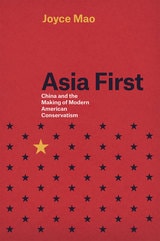
Asia First
China and the Making of Modern American ConservatismJoyce Mao
University of Chicago Press, 2015
Mao explores the deep resonance American conservatives felt with the defeat of Chiang Kai-Shek and his exile to Taiwan, which they lamented as the loss of China to communism and the corrosion of traditional values. In response, they fomented aggressive anti-communist positions that urged greater action in the Pacific, a policy known as “Asia First.” While this policy would do nothing to oust the communists from China, it was powerfully effective at home. Asia First provided American conservatives a set of ideals—American sovereignty, selective military intervention, strident anti-communism, and the promotion of a technological defense state—that would bring them into the global era with the positions that are now their hallmark.