Results by title
11 books match the query 'Religion historians'
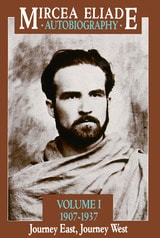
Autobiography, Volume 1
1907-1937, Journey East, Journey WestMircea Eliade
University of Chicago Press, 1990
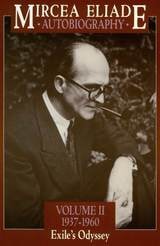
Autobiography, Volume 2
1937-1960, Exile's OdysseyMircea Eliade
University of Chicago Press, 1988
Chosen Path
A MemoirD. Michael Quinn
Signature Books, 2022
From the age of nine, Quinn felt convicted he would one day serve as an apostle of the Church of Jesus Christ of Latter-day Saints. He chose the path he believed would take him there, eventually living as a straight LDS family man in a mixed-orientation marriage. In the 1970s and 1980s he became a BYU professor and one of Mormonism’s most promising, prolific, and respected historians. But his uncompromising commitment to total honesty about his religion’s history, along with his homosexuality, set him on a collision course with church leaders and the end of his seemingly idyllic Mormon life. Throughout his telling, Quinn unflinchingly opens up about his feelings and experiences that shaped his enigmatic life.
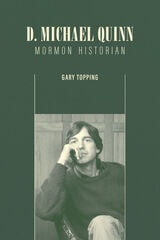
D. Michael Quinn
Mormon HistorianGary Topping
Signature Books, 2022
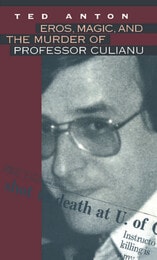
Eros, Magic, and the Murder of Professor Culianu
Ted Anton
Northwestern University Press, 1996
Winner of 1997 Carl Sandburg Award
On May 21, 1991, University of Chicago professor Ioan Culianu was murdered execution-style on campus. The crime stunned the school, terrified students, and mystified the FBI. The case remains unsolved. In Eros, Magic, and the Murder of Professor Culianu, award-winning investigative reporter Ted Anton shows that the murder is what Culianu's friends suspected all along: the first political assassination of a professor on American soil.
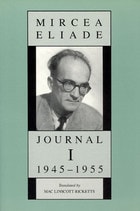
Journal I, 1945-1955
Mircea Eliade
University of Chicago Press, 1990
During the lean years in Paris Eliade lived and worked in small, cold rooms; prepared meals on a Primus stove; pawned his valuables; and asked friends for loans. Eventually he secured a research stipend from the Bollingen Foundation. His ten years in Paris were among his most productive; the books he wrote during this period brought him worldwide acclaim as a historian of religions. He records his first meetings with Carl Jung, Pierre Teilhard de Chardin, Gershom Scholem, Georges Bataille, André Breton, Raffaele Pettazzoni, and many other scholars and writers.
Eliade also continued to write literary works. Numerous entries describe his five-year struggle with his novel The Forbidden Forest. Spanning the twelve fateful years from 1936 to 1948, it expresses within a fictional framework the central themes of Eliade's work on religions. Writing the novel was a Herculean task in which Eliade summarized and memorialized his old Romanian life.
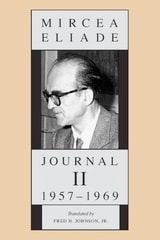
Journal II, 1957-1969
Mircea Eliade
University of Chicago Press, 1989

Journal III, 1970-1978
Mircea Eliade
University of Chicago Press, 1989
Quite apart from the personal, biographical interest the journal holds, it is a document of cultural and intellectual significance. Eliade remarks on such colleagues and friends as Jung, Dumézil, Ricoeur, Bellow, and Ionesco. Moreover, the period covered encompasses Eliade's most active years as a teacher, and the journal beautifully reflects his developing views on religion, history, and the nature of academic culture. Bits and pieces of Eliade's past life are juxtaposed with thoughts about ongoing projects and work yet to be undertaken as well as with anecdotes of his travels and comments on world events.
A genuine treat for Eliade readers and those interested in history of religions, Journal III provides new perspectives on many of Eliade's other works—the History of Religious Ideas, Ordeal by Labyrinth, the Autobiography. At the same time the journal is a mature scholar's record of the aftermath of the 1960s, a turbulent period that profoundly affected American university life. As such, these writings hold valuable insights into not only the life and work of one man but also the cultural history of an entire era.
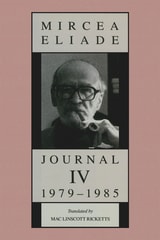
Journal IV, 1979-1985
Mircea Eliade
University of Chicago Press, 1989
Running like a fault line through the peak of his success, however, is Eliade's painful awareness of his physical decline—failing vision, arthritic hands, and continual fatigue. Again and again he repeats how little time he has to finish the projects he is working on—his autobiography, the third and fourth volumes of his History of Religious Ideas, and the duties associated with his editorship of the Encyclopedia of Religion. He poignantly recounts the sharpest blow: the disorganization and eventual destruction by fire of his personal library.
Within the scope of Journal IV Eliade and his world go to ruin. What does not decline is the vivid and persistent voice of Eliade the writer, an unbreaking voice that—with death only months away—plans a reply to critics, plots out an article, and ruminates on characters to people another novella.
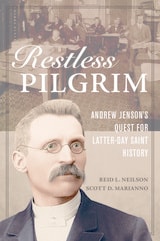
Restless Pilgrim
Andrew Jenson's Quest for Latter-day Saint HistoryReid L. Neilson and Scott D. Marianno
University of Illinois Press, 2022
Engaging and informed, Restless Pilgrim is a groundbreaking study of an important figure in Latter-day Saint intellectual life during a transformative era in Church history.
Writing Mormon History 2
Authors' Stories Behind Their WorksGeisner, Joseph W.
Signature Books, 2024
Like its predecessor, Writing Mormon History, this book delves into the captivating narratives of multiple historians as they unfold the backstories of their various publishing endeavors. The authors detail their journeys in crafting influential books, articles, newspaper pieces, and anthologies that have significantly shaped our comprehension of Mormon history. Beyond the polished final products that readers typically encounter, the book explores the driving forces compelling authors to explore their topics and the sacrifices they make along the way.
The volume invites readers to ponder the motivations that fuel an author’s commitment to rigorous research and writing, and sheds light on the substantial time, ranging from minutes to long hours, invested in the sources they cite. Through these narratives, readers gain an appreciation for the dedication and passion that goes into the making of historical scholarship.
Whether you're an avid historian, a student of history, a scholar, or an aspiring author, Writing Mormon History 2 offers an important glimpse into the minds of these writers. This anthology provides a unique opportunity to connect with the human stories behind the academic works that have left an indelible mark on our understanding of Mormon history.