Results by title
3 books match the query 'Religious Freedom'
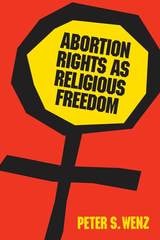
Abortion Rights as Religious Freedom
Peter S. Wenz
Temple University Press, 1992
"This excellent books is bound to stir debate on the abortion issue and to occupy a rather distinctive position."
--R.G. Frey, Bowling Green State University
With the current composition of the Supreme Court and recent challenges to Roe v. Wade, Peter S. Wenz's new approach to the ethical, moral, and legal issues related to a woman's right to elective abortion may turn the tide in this debate. He argues that the Supreme Court reached the right decision in Roe v. Wade but for the wrong reasons. Wenz contends that a woman's right to terminated her pregnancy should be based, not on her constitutional right to privacy, but on the constitutional guarantee of religious freedom, a basis for freedom of choice that is not subject to the legal criticisms advanced against Roe. At least up to the 20th week of a pregnancy, one's belief whether a human fetus is a human person or not is a religious decision. He maintains that because questions about the moral status of a fetus are religious, it follows that anti-abortion legislation, to the extent that it is predicated on such "inherently religious beliefs," is unconstitutional.
In this timely and topical book, Wenz also examines related cases that deal with government intervention in an individual's procreative life, the regulation of contraceptives, and other legislation that is either applied to or imposed upon select groups of people (e.g., homosexuals, drug addicts). He builds a concrete argument that could replace Roe v. Wade.
Reviews
"In this important study of abortion and the Constitiution, legal philosopher Peter Wenz contends that Roe v. Wade was wrongly argued but well conlcuded. Wenz presents a substantial review of Supreme Court decisions on abortion, then critically exposes flaws, including the privacy justification for abortion as well as the trimester scheme.
--Religious Studies Review
"In this major work, Peter Wenz has analyzed the relation of the Constitution's religion clauses to the abortion controversy. His principal contribution is to shift the argument from the right of privacy (invoked, he believes, unsuccessfully in Roe v. Wade) to the Establishment Clause. The Court's concern in Roe was whether the statute unduly burdened a fundamental right. But tested by the Establishment Clause, statutes may violate the Constitution by implicitly endorsing a religious belief, namely, the personhood of the unborn. Wenz concludes that the Establishment Clause permits abortions prior to the twenty-first week of pregnancy."
--C. Herman Prichett, Professor of Political Science Emeritus, University of California, Santa Barbara
"This is an original and scholarly exposition of the view that abortion rights fall under the religion clauses of the First Amendment. The view defended is an important alternative to the privacy defense upon which the Roe v. Wade decision was based and should help to expand the ethical and constitutional debate about abortion rights."
--Mary Anne Warren, Associate Professor of Philosophy, San Francisco State University, and author of Gendercide: The Implications of Sex Selection
Contents
Preface
Introduction
Roe v. Wade under Attack • Individual Rights and Majority Rule • Constitutional Interpretation • Preview of Chapters
1. The Derivation of Roe v. Wade
Economic Substantive Due Process • Due Process and the Family • Contraception and Privacy in Griswold v. Connecticut • Contraception and Privacy in Eisenstadt v. Baird • Blackmun's Privacy Rationale in Roe v. Wade • Stewart's Due Process Rationale in Roe v. Wade • Tribe on Substantive Due Process • Conclusion
2. Potentiality and Viability
The Roe v. Wade Decision • The Concept of Viability in Abortion Cases • Dividing the Gestational Continuum • The Genetic Approach to Personhood • Viability versus Similarity to Newborns • Two Consequentialist Arguments • Feminism and Viability • Conclusion
3. The Evolution of "Religion"
Religion in the Abortion Debate • The Original Understanding of the Religion Clauses • The Evolution of Religion Clause Doctrine • Incorporation of the Religion Clauses • From Belief to Practice • Alleviating Indirect Burdens on Religious Practice • Expanding the Meaning of "Religion" • The Original Understanding View • Bork: Conservative or Moderate? • Conflicts between the Religion Clauses • The Elusive Meaning of "Religion" • Conclusion
4. The Definition of "Religion"
The Adjectival Sense of Religion • Religious Beliefs Independent of Organized Religions • Religious Belief as Fundamental to Organized Religion • Secular Beliefs Related to Material Reality • Secular Beliefs Related to Social Interaction • Secular Facts versus Secular Values • The Court's Characterizations of Secular Beliefs • Secular (Nonreligious) Belief • The Epistemological Standard for Distinguishing Religious from Secular Belief • Judicial Examples of Religious Beliefs • General Characteristics of Religious Beliefs • Summary
5. "Religion" in Court
The Epistemological Standard Applied • Cults and Crazies • Secular Religions • Tensions between the Religion Clauses • The Unitary Definition of "Religion"
6. Fetal Personhood as Religious Belief
Anti-Contraception Laws and the Establishment Clause • Belief in the Existence of God • Belief in the Personhood of Young Fetuses • Distinguishing Religious from Secular Determinations of Fetal Personhood • Religious versus Secular Uncertainty • Environmental Preservation and Animal Protection versus Fetal Value • Greenawalt's Argument • The Reach of Secular Considerations • Secular versus Religious Matters • Conclusion
7. The Regulation of Abortion
The Trimester Framework and Its Exceptions • O'Connor's Objections to the Trimester Framework • Superiority of the Establishment Clause Approach to the Trimester Framework • Required Efforts to Save the Fetus • The Neutrality Principle • Appropriate Judicial Skepticism • Undue Burdens and Unconstitutional Endorsements • Conclusion
8. Abortion and Others
Public Funding of Abortion • The Establishment Clause Approach to Public Funding • The Court's Funding Rationale • The Court's Inconsistent Rationale • Publicly Funded Family Planning Clinics • Spousal Consent • The Court's Flawed Parental Consent Rationale • Information Requirements • Spousal and Parental Consent • The Establishment Clause Approach: Medical Dimension • The Establishment Clause Approach: Religious Dimension • Implications of the Establishment Clause Approach • The Court's Inconsistency • Equivalent Results • Parental Notification • Conclusion
Conclusion
Justice Scalia's View • The Fundamental Flaw in Roe • The Rationale for the Establishment Clause Approach • Advantages of the Establishment Clause Approach
Notes
Glossary of Terms
Annotated Table of Cases
Bibliography
Index
About the Author(s):
Peter S. Wenz is Professor of Philosophy and Legal Studies at Sangamon State University.
[more]
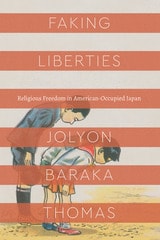
Faking Liberties
Religious Freedom in American-Occupied JapanJolyon Baraka Thomas
University of Chicago Press, 2019
Religious freedom is a founding tenet of the United States, and it has frequently been used to justify policies towards other nations. Such was the case in 1945 when Americans occupied Japan following World War II. Though the Japanese constitution had guaranteed freedom of religion since 1889, the United States declared that protection faulty, and when the occupation ended in 1952, they claimed to have successfully replaced it with “real” religious freedom.
Through a fresh analysis of pre-war Japanese law, Jolyon Baraka Thomas demonstrates that the occupiers’ triumphant narrative obscured salient Japanese political debates about religious freedom. Indeed, Thomas reveals that American occupiers also vehemently disagreed about the topic. By reconstructing these vibrant debates, Faking Liberties unsettles any notion of American authorship and imposition of religious freedom. Instead, Thomas shows that, during the Occupation, a dialogue about freedom of religion ensued that constructed a new global set of political norms that continue to form policies today.
Through a fresh analysis of pre-war Japanese law, Jolyon Baraka Thomas demonstrates that the occupiers’ triumphant narrative obscured salient Japanese political debates about religious freedom. Indeed, Thomas reveals that American occupiers also vehemently disagreed about the topic. By reconstructing these vibrant debates, Faking Liberties unsettles any notion of American authorship and imposition of religious freedom. Instead, Thomas shows that, during the Occupation, a dialogue about freedom of religion ensued that constructed a new global set of political norms that continue to form policies today.
[more]
Politics of Religious Freedom
Edited by Winnifred Fallers Sullivan, Elizabeth Shakman Hurd, Saba Mahmood, and Peter G. Danchin
University of Chicago Press, 2015
In a remarkably short period of time, the realization of religious freedom has achieved broad consensus as an indispensable condition for peace. Faced with widespread reports of religious persecution, public and private actors around the world have responded with laws and policies designed to promote freedom of religion. But what precisely is being promoted? What are the cultural and epistemological assumptions underlying this response, and what forms of politics are enabled in the process?
The fruits of the three-year Politics of Religious Freedom research project, the contributions to this volume unsettle the assumption—ubiquitous in policy circles—that religious freedom is a singular achievement, an easily understood state of affairs, and that the problem lies in its incomplete accomplishment. Taking a global perspective, the more than two dozen contributors delineate the different conceptions of religious freedom predominant in the world today, as well as their histories and social and political contexts. Together, the contributions make clear that the reasons for persecution are more varied and complex than is widely acknowledged, and that the indiscriminate promotion of a single legal and cultural tool meant to address conflict across a wide variety of cultures can have the perverse effect of exacerbating the problems that plague the communities cited as falling short.
The fruits of the three-year Politics of Religious Freedom research project, the contributions to this volume unsettle the assumption—ubiquitous in policy circles—that religious freedom is a singular achievement, an easily understood state of affairs, and that the problem lies in its incomplete accomplishment. Taking a global perspective, the more than two dozen contributors delineate the different conceptions of religious freedom predominant in the world today, as well as their histories and social and political contexts. Together, the contributions make clear that the reasons for persecution are more varied and complex than is widely acknowledged, and that the indiscriminate promotion of a single legal and cultural tool meant to address conflict across a wide variety of cultures can have the perverse effect of exacerbating the problems that plague the communities cited as falling short.
[more]