Results by title
31 books match the query 'Remembering'
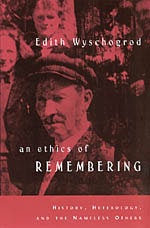
An Ethics of Remembering
History, Heterology, and the Nameless OthersEdith Wyschogrod
University of Chicago Press, 1998
Edith Wyschogrod animates such questions through the passionate figure of the "heterological historian." Realizing the philosophical impossibility of ever recovering "what really happened," this historian nevertheless acknowledges a moral imperative to speak for those who have been rendered voiceless, to give countenance to those who have become faceless, and hope to the desolate. Wyschogrod also weighs the impact of modern archival methods, such as photographs, film, and the Internet, which bring with them new constraints on the writing of history and which mandate a new vision of community. Drawing on the works of continental philosophers, historiographers, cognitive scientists, and filmmakers, Wyschogrod creates a powerful new framework for the understanding of history and the ethical duties of the historian.
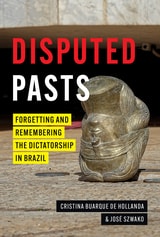
Disputed Pasts
Forgetting and Remembering the Dictatorship in BrazilCristina Buarque de Hollanda and José Szwako
University of Texas Press, 2026
How the memory of military dictatorship shapes Brazil's political divides and the far-right's rise.
Brazil’s military dictatorship ended in 1985, but its history still looms large over the country. Since the restoration of democracy, national politics have been shaped by heated contestation over the dictatorship’s legacy. Cristina Buarque de Hollanda and José Szwako examine how the state, the military, and civil society have variously mourned, celebrated, and suppressed memories of Brazil’s violent past—and to what ends.
As the dictatorship faltered under pressure from the opposition in the streets and in Congress, popular opinion favored democracy, which often meant forgetting. Today, the Brazilian left contends that the past has been silenced, paving the way for Jair Bolsonaro and the far right. Yet the past has been intensely contested: media outlets, social movements, and official commissions have long documented the dictatorship and spurred reparations. Disputed Pasts argues that the conservative ascendency is a reaction to these efforts of remembrance. The right seeks to rehabilitate the violent past by discrediting victims and elevating the dictatorship’s anti-communist ideology. Far from forgetting the past, Bolsonaro and Bolsonarismo actively remember and celebrate it.
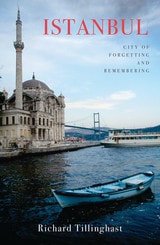
Istanbul
City of Forgetting and RememberingRichard Tillinghast
Haus Publishing, 2017
Istanbul was known in Byzantine times as the “Queen of Cities” and to the Ottoman Turks as the “Abode of Felicity.” Steeped in Istanbul’s history, Tillinghast takes his readers on a voyage of discovery through this storied cultural hub, and he is as comfortable talking about Byzantine mosaics and dervish ceremonies as Iznik ceramics and the imperial mosques. His lyrical writing brings Istanbul alive on the page as he accompanies readers to cafés, palaces, and taverns, perfectly conjuring the atmospheric delights, sounds, and senses of the city. Illuminating Istanbul’s great buildings with tales that bring Ottoman and Byzantine history to life, Tillinghast is adept at discovering both what the city remembers and what it chooses to forget.
Living with Stories
Telling, Re-telling, and RememberingSchneider, William
Utah State University Press, 2008
Lost Time
On Remembering and Forgetting in Late Modern CultureDavid Gross
University of Massachusetts Press, 2000
What is the value of memory in human culture? More specifically, what role should remembering—and forgetting—play in our daily lives? These are the central questions that David Gross addresses in this original and thought-provoking book.
For centuries, Gross points out, remembering was considered essential not only to the perpetuation of society but to the maintenance of individual existence. Survival often depended on the memory of how to perform specific tasks, what values to honor, and what personal or collective identity to assume. Remembering, in short, put one in touch with the things that mattered, engendering wholeness and wisdom. Forgetting, on the other hand, led to emptiness, ignorance, and death.
With the advent of modernity, however, doubts about the value of memory grew while the negative implications of forgetting were reevaluated. In many quarters, forgetting came to be defended for the way it frees us from the past, opening the door to new perceptions, new possibilities, and new beginnings.
Now, in late modernity, Gross argues, we find ourselves in an unprecedented situation. For the first time in history, we are able to decide, without the pressure of social or cultural constraints, whether we want to remember or forget and to live our lives accordingly. But which is the better choice? Should we build our lives upon the meanings and values of a faded past? If so, what ought we to remember, and for what purpose? Or should we instead opt to forget what has come before and focus our attention on the present and future, thereby perpetually reinventing ourselves and the world we inhabit? According to Gross, our answers to these questions will determine not only who we are but what we will become as we pass from late modernity into the terra incognita of the “postmodern” age.
Moving Performances
Divas, Iconicity, and Remembering the Modern StageScheper, Jeanne
Rutgers University Press, 2017
Music as Mao's Weapon
Remembering the Cultural RevolutionLei X. Ouyang
University of Illinois Press, 2022
China's Cultural Revolution (1966-1976) produced propaganda music that still stirs unease and, at times, evokes nostalgia. Lei X. Ouyang uses selections from revolutionary songbooks to untangle the complex interactions between memory, trauma, and generational imprinting among those who survived the period of extremes. Interviews combine with ethnographic fieldwork and surveys to explore both the Cultural Revolution's effect on those who lived through it as children and contemporary remembrance of the music created to serve the Maoist regime. As Ouyang shows, the weaponization of music served an ideological revolution but also revolutionized the senses. She examines essential questions raised by this phenomenon, including: What did the revolutionization look, sound, and feel like? What does it take for individuals and groups to engage with such music? And what is the impact of such an experience over time?
Perceptive and provocative, Music as Mao's Weapon is an insightful look at the exploitation and manipulation of the arts under authoritarianism.
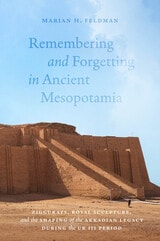
Remembering and Forgetting in Ancient Mesopotamia
Ziggurats, Royal Sculpture, and the Shaping of the Akkadian Legacy During the Ur III PeriodMarian H. Feldman
University of Chicago Press, 2026
In this innovative new study of ancient Mesopotamian art and architecture, Marian H. Feldman examines the complex legacy of the Akkadian dynasty, which spanned ca. 2350-2150 BCE in the region now known as southern Iraq. The Akkadian state played an essential role in the formation and expression of subsequent political entities in the region, yet our understanding of this period is based primarily on the historical lens of their successors, in particular the rulers of the Third Dynasty of Ur (ca. 2100-1000 BCE). Focusing on four remaining ziggurats in Ur, Eridu, Uruk, and Nippur, as well as surviving statues and steles, Feldman examines how the Ur III rulers selectively curated and erased Akkadian structures and monuments to serve their own political ambitions. Analyzing the archaeological evidence of Ur III building practices and the display of Akkadian royal sculpture, she considers the role of sacred spaces in our knowledge of the period and imagines how the cultivation of the Akkadian narrative helped the Ur III dynasty centralize its power. In so doing, this book proposes a new way to understand the impact of the survival—or erasure—of architectural and artistic remains on collective and historical memory.
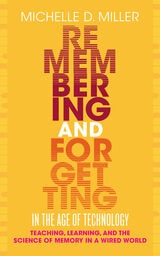
Remembering and Forgetting in the Age of Technology
Teaching, Learning, and the Science of Memory in a Wired WorldMichelle D Miller
West Virginia University Press, 2022
Human minds are made of memories, and today those memories have competition. Biological memory capacities are being supplanted, or at least supplemented, by digital ones, as we rely on recording—phone cameras, digital video, speech-to-text—to capture information we’ll need in the future and then rely on those stored recordings to know what happened in the past. Search engines have taken over not only traditional reference materials but also the knowledge base that used to be encoded in our own brains. Google remembers, so we don’t have to. And when we don’t have to, we no longer can. Or can we?
Remembering and Forgetting in the Age of Technology offers concise, nontechnical explanations of major principles of memory and attention—concepts that all teachers should know and that can inform how technology is used in their classes. Teachers will come away with a new appreciation of the importance of memory for learning, useful ideas for handling and discussing technology with their students, and an understanding of how memory is changing in our technology-saturated world.

Remembering and Repeating
On Milton's Theology and PoeticsRegina M. Schwartz
University of Chicago Press, 1993
"A brilliant study that quietly but powerfully recharacterizes many of the contexts of discussion in Milton criticism. Particularly noteworthy is Schwartz's ability to introduce advanced theoretical perspectives without ever taking the focus of attention away from the dynamics and problematics of Milton's poem."—Stanley Fish
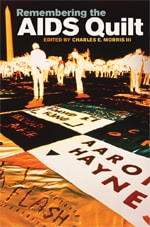
Remembering the AIDS Quilt
Charles E. Morris III
Michigan State University Press, 2011
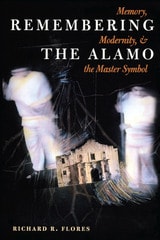
Remembering the Alamo
Memory, Modernity, and the Master SymbolBy Richard R. Flores
University of Texas Press, 2002
"Remember the Alamo!" reverberates through Texas history and culture, but what exactly are we remembering? Over nearly two centuries, the Mexican victory over an outnumbered band of Alamo defenders has been transformed into an American victory for the love of liberty. Why did the historical battle of 1836 undergo this metamorphosis in memory and mythology to become such a potent master symbol in Texan and American culture?
In this probing book, Richard Flores seeks to answer that question by examining how the Alamo's transformation into an American cultural icon helped to shape social, economic, and political relations between Anglo and Mexican Texans from the late nineteenth to the mid-twentieth centuries. In the first part of the book, he looks at how the attempts of heritage society members and political leaders to define the Alamo as a place have reflected struggles within Texas society over the place and status of Anglos and Mexicans. In the second part, he explores how Alamo movies and the transformation of Davy Crockett into an Alamo hero/martyr have advanced deeply racialized, ambiguous, and even invented understandings of the past.
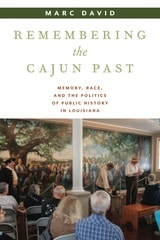
Remembering the Cajun Past
Memory, Race, and the Politics of Public History in LouisianaMarc David
University of Massachusetts Press, 2025
Exploring how public history creates collective memory of this white ethnic group through memorials
Cajuns arrived in southern Louisiana in the 18th century after the British exiled them from eastern Canada. Also known as Acadians, they retain a unique dialect of French, and their distinctive music, food, and other cultural traits characterized them as an ethnic group. Until the 1960s, authorities viewed them as a serious problem, allegedly blocking the state’s progress as they clung to their antiquated ways. Few Cajun residents in the region remembered the remote past of their ancestors, but by the 1970s, organizations ranging from local non-profits to the National Park Service created sites that commemorated their history, such as the Acadian Memorial in St. Martinville, allowing Cajuns to connect their lives to their past and claim it as their own.
In Remembering the Cajun Past, anthropologist Marc David studies the cultural and political dynamics that reconfigured Cajun memory and identity. Focusing on St. Martinville and the Acadian Memorial, he explores how authorities changed their minds about Cajuns and demonstrates how Cajuns’ historical memories took shape. Part ethnography and part history, David examines the racial aspects of the Memorial’s creation in the wake of the Civil Rights movement and the growth of a new Cajun history, one through which individual Cajuns rejected the label’s connotation of “white trash” and embraced belonging within a storied white ethnic group. Based on decades of fieldwork and deep engagement with public history practices, David explores how historical memory and the historic sites that foster it are intertwined with the politics of civic life.
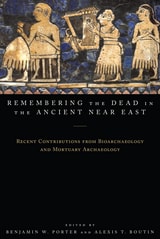
Remembering the Dead in the Ancient Near East
Recent Contributions from Bioarchaeology and Mortuary ArchaeologyBenjamin W. Porter
University Press of Colorado, 2016
Remembering the Dead in the Ancient Near East is among the first comprehensive treatments to present the diverse ways in which ancient Near Eastern civilizations memorialized and honored their dead, using mortuary rituals, human skeletal remains, and embodied identities as a window into the memory work of past societies.
In six case studies teams of researchers with different skillsets—osteological analysis, faunal analysis, culture history and the analysis of written texts, and artifact analysis—integrate mortuary analysis with bioarchaeological techniques. Drawing upon different kinds of data, including human remains, ceramics, jewelry, spatial analysis, and faunal remains found in burial sites from across the region’s societies, the authors paint a robust and complex picture of death in the ancient Near East.
Demonstrating the still underexplored potential of bioarchaeological analysis in ancient societies, Remembering the Dead in the Ancient Near East serves as a model for using multiple lines of evidence to reconstruct commemoration practices. It will be of great interest to students and scholars of ancient Near Eastern and Egyptian societies, the archaeology of death and burial, bioarchaeology, and human skeletal biology.
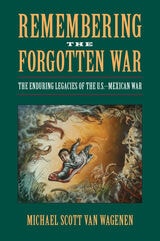
Remembering the Forgotten War
The Enduring Legacies of the U.S.-Mexican WarMichael Scott Van Wagenen
University of Massachusetts Press, 2012
On February 2, 1848, representatives of the United States and Mexico signed the Treaty of Guadalupe Hidalgo, officially ending hostilities between the two countries and ceding over one-half million square miles of land to the northern victors. In Mexico, this defeat has gradually moved from the periphery of dishonor to the forefront of national consciousness. In the United States, the war has taken an opposite trajectory, falling from its once-celebrated prominence into the shadowy margins of forgetfulness and denial.
Why is the U.S.–Mexican War so clearly etched in the minds of Mexicans and so easily overlooked by Americans? This book investigates that issue through a transnational, comparative analysis of how the tools of collective memory—books, popular culture, historic sites, heritage groups, commemorations, and museums—have shaped the war's multifaceted meaning in the 160 years since it ended. Michael Van Wagenen explores how regional, ethnic, and religious differences influence Americans and Mexicans in their choices of what to remember and what to forget. He further documents what happens when competing memories clash in a quest for dominance and control.
In the end, Remembering the Forgotten War addresses the deeper question of how remembrance of the U.S.–Mexican War has influenced the complex relationship between these former enemies now turned friends. It thus provides a new lens through which to view today's cross-border rivalries, resentments, and diplomatic pitfalls.
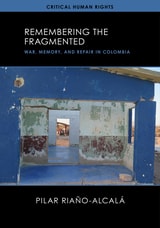
Remembering the Fragmented
War, Memory, and Repair in ColombiaPilar Riaño-Alcalá
University of Wisconsin Press, 2027
The South American nation of Colombia has experienced decades of violence involving state, guerrilla, and paramilitary actors, resulting in profound and enduring consequences. Scholars have examined both the violent events and the subsequent truth and reconciliation initiatives addressing this complex history. Pilar Riaño-Alcalá introduces a novel perspective by integrating Black, Indigenous, and memory studies in her analysis of two significant sites of mass violence: Bahia Portete, a Wayuu Indigenous territory in Upper Guajira, and Bojayá, a Black and Embera Indigenous territory in Chocó. By recognizing nonhuman and nonliving community members as actants and foregrounding Indigenous and Black ontologies in collective remembrance, Riaño-Alcalá reveals the processes through which these communities engage in social repair. She demonstrates how they interpret, restore, sustain, and reimagine their identities amid ongoing challenges posed by war and racial capitalism. This work advances scholarship in human rights studies, memory studies, Indigenous studies, Latin American studies, and the anthropology of social repair, offering significant new insights into a well-examined historical context.
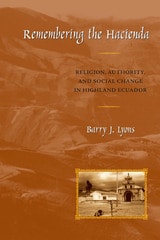
Remembering the Hacienda
Religion, Authority, and Social Change in Highland EcuadorBy Barry J. Lyons
University of Texas Press, 2006
From the colonial period through the mid-twentieth century, haciendas dominated the Latin American countryside. In the Ecuadorian Andes, Runa—Quichua-speaking indigenous people—worked on these large agrarian estates as virtual serfs. In Remembering the Hacienda: Religion, Authority, and Social Change in Highland Ecuador, Barry Lyons probes the workings of power on haciendas and explores the hacienda's contemporary legacy.
Lyons lived for three years in a Runa village and conducted in-depth interviews with elderly former hacienda laborers. He combines their wrenching accounts with archival evidence to paint an astonishing portrait of daily life on haciendas. Lyons also develops an innovative analysis of hacienda discipline and authority relations. Remembering the Hacienda explains the role of religion as well as the reshaping of Runa culture and identity under the impact of land reform and liberation theology.
This beautifully written book is a major contribution to the understanding of social control and domination. It will be valuable reading for a broad audience in anthropology, history, Latin American studies, and religious studies.
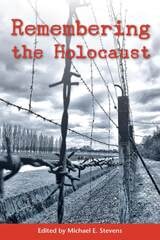
Remembering the Holocaust
Michael E. Stevens
Wisconsin Historical Society Press, 1997
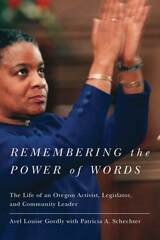
Remembering the Power of Words
The Life of an Oregon Activist, Legislator, and Community LeaderAvel Louise Gordly
Oregon State University Press, 2011
Remembering the Power of Words recounts the personal and professional journey of Avel Gordly, the first African-American woman elected to the Oregon State Senate.
The book is a brave and honest telling of Gordly’s life. She shares the challenges and struggles she faced growing up black in Portland in the 1950s and 1960s, as well as her determination to attend college, the dedication to activism that took her from Portland to Africa, and her eventual decision to run for a seat in the state legislature.
That words have power is a constant undercurrent in Gordly’s account and a truth she learned early in life. “Growing up, finding my own voice,” she writes, “was tied up with denying my voice or having it forcefully rejected and in all of that the memory of my father is very strong. To this day—and I am today a very experienced public speaker—preparation to speak takes a great deal of energy.” That this memoir has its origins as an oral history is fitting since Gordly has used her voice, out loud, to teach and inspire others for so many years.
Important as a biographical account of one significant Oregonian’s story, the book also contributes “broader narratives touching on Black history (and Oregon’s place within it), and most particularly the politics associated with being an African American woman,” according to series editor Melody Rose.
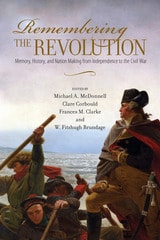
Remembering the Revolution
Memory, History, and Nation Making from Independence to the Civil WarMichael A. McDonnell
University of Massachusetts Press, 2013
In today's United States, the legacy of the American Revolution looms large. From presidential speeches to bestselling biographies, from conservative politics to school pageants, everybody knows something about the Revolution. Yet what was a messy, protracted, divisive, and destructive war has calcified into a glorified founding moment of the American nation. Disparate events with equally diverse participants have been reduced to a few key scenes and characters, presided over by well-meaning and wise old men.
Recollections of the Revolution did not always take today's form. In this lively collection of essays, historians and literary scholars consider how the first three generations of American citizens interpreted their nation's origins. The volume introduces readers to a host of individuals and groups both well known and obscure, from Molly Pitcher and “forgotten father” John Dickinson to African American Baptists in Georgia and antebellum pacifists. They show how the memory of the Revolution became politicized early in the nation's history, as different interests sought to harness its meaning for their own ends. No single faction succeeded, and at the outbreak of the Civil War the American people remained divided over how to remember the Revolution.
Remembering the University of Chicago
Teachers, Scientists, and ScholarsEdited by Edward Shils
University of Chicago Press, 1991
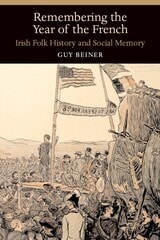
Remembering the Year of the French
Irish Folk History and Social MemoryGuy Beiner
University of Wisconsin Press, 2007
Beiner analyzes hundreds of hitherto unstudied historical, literary, and ethnographic sources. Though his focus is on 1798, his work is also a comprehensive study of Irish folk history and grass-roots social memory in Ireland. Investigating how communities in the West of Ireland remembered, well into the mid-twentieth century, an episode in the late eighteenth century, this is a “history from below” that gives serious attention to the perspectives of those who have been previously ignored or discounted. Beiner brilliantly captures the stories, ceremonies, and other popular traditions through which local communities narrated, remembered, and commemorated the past. Demonstrating the unique value of folklore as a historical source, Remembering the Year of the French offers a fresh perspective on collective memory and modern Irish history.
Winner, Wayland Hand Competition for outstanding publication in folklore and history, American Folklore Society
Finalist, award for the best book published about or growing out of public history, National Council on Public History
Winner, Michaelis-Jena Ratcliff Prize for the best study of folklore or folk life in Great Britain and Ireland
“An important and beautifully produced work. Guy Beiner here shows himself to be a historian of unusual talent.”—Marianne Elliott, Times Literary Supplement
“Thoroughly researched and scholarly. . . . Beiner’s work is full of empathy and sympathy for the human remains, memorials, and commemorations of past lives and the multiple ways in which they actually continue to live.”—Stiofán Ó Cadhla, Journal of British Studies
“A major contribution to Irish historiography.”—Maureen Murphy, Irish Literary Supplement
"A remarkable piece of scholarship . . . . Accessible, full of intriguing detail, and eminently teachable.”?—Ray Casman, New Hibernia Review
“The most important monograph on Irish history of the nineteenth and twentieth centuries to be published in recent years.”—Matthew Kelly, English Historical Review
“A strikingly ambitious work . . . . Elegantly constructed, lucidly written and inspired, and displaying an inexhaustible capacity for research”—Ciarán Brady, History IRELAND
“A closely argued, meticulously detailed and rich analysis . . . . providing such innovative treatment of a wide array of sources, his work will resonate with the concerns of many cultural and historical geographers working on social memory in quite different geographical settings and historical contexts.”—Yvonne Whelan, Journal of Historical Geography
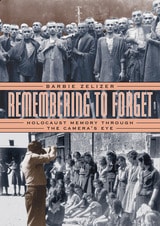
Remembering to Forget
Holocaust Memory through the Camera's EyeBarbie Zelizer
University of Chicago Press, 1998
"[A] fascinating study. . . . Here we have a completely fresh look at the emergence of photography as a major component of journalistic reporting in the course of the liberation of the camps by the Western Allies. . . . Well written and argued, superbly produced with more photographs of atrocity than most people would want to see in a lifetime, this is clearly an important book."—Omer Bartov, Times Literary Supplement
Remembering to Live
Illness at the Intersection of Anxiety and Knowledge in Rural IndonesiaM. Cameron Hay
University of Michigan Press, 2004

Space Monkeys!
Remembering the Nonhuman Astronauts in US Space ExplorationJohn A. Lynch
University of Alabama Press, 2026
Exposes how emotion, memory, and national pride shape the stories we tell about science, animals, and the history of the “race to space”
Before humans ever left Earth’s atmosphere, a handful of primates paved the way—earning fame and fascination but leaving behind a complicated and often highly debated legacy. As the Cold War intensified, the US space program turned to monkeys—Able, Baker, Ham, and Enos—to test and explore the limits of human survival in space. These animals became media sensations, museum exhibits, and symbols of American ingenuity, even as their suffering was often overlooked.
With insight and empathy, Lynch unpacks the stories we tell about these primates and how they are remembered through culture and time, both modern and historically. Lynch argues that the public memory of these animals often justifies their use in the name of scientific progress. Sometimes they are portrayed as tools, other times as human stand-ins, and frequently as objects of sympathy—but rarely as subjects of critique.
Lynch shows how feelings—compassion, cuteness, patriotism, and the technological sublime—shape the stories we tell about these animals and the ethical frameworks we build around them. Each chapter focuses on a different genre of memory-making, from newspaper and photojournalism to museum exhibits, children’s literature, and fictional films.
By reframing these animal pioneers, Lynch uncovers the ethical and emotional narratives that shape how we remember science. Space Monkeys! is a vital reflection on memory, identity, and the more-than-human costs of progress.

Sweet Mystery
A Book of RememberingJudith Hillman Paterson
University of Alabama Press, 2020
Judith Paterson was just nine years old in 1946 when her mother died of a virulent combination of alcoholism and mental illness at the age of 31. Sweet Mystery: A Book of Remembering is Paterson’s harrowing account of the memories of her mother, told with eloquence and understanding. Set largely in Montgomery, Alabama, the story plays out against a backdrop of relatives troubled almost as much by southern conflicts over race and class as by the fallout from a long family history of drinking, denial, and mental illness.
While rich in the details and flavor of small-town life in the South during the 1940s, Sweet Mystery transcends time and regionalism to evoke universal American themes. Ultimately, it confirms the damaging effects of early trauma on children as well as the innate and familial strengths that enable some children to survive, grow up, and heal.
Originally published in 1996 to critical acclaim in the national media, Sweet Mystery was called “a beautifully written, excruciating collision of form and emotion, joy and pain, willpower and self-examination, control and surrender” by the Washington Post. This edition contains a new afterword written by the author as well as a list of suggested readings.
The Art of Remembering
Essays on African American Art and HistoryGwendolyn DuBois Shaw
Duke University Press, 2024
The Last Jews in Baghdad
Remembering a Lost HomelandBy Nissim Rejwan
University of Texas Press, 2004
Once upon a time, Baghdad was home to a flourishing Jewish community. More than a third of the city's people were Jews, and Jewish customs and holidays helped set the pattern of Baghdad's cultural and commercial life. On the city's streets and in the bazaars, Jews, Muslims, and Christians—all native-born Iraqis—intermingled, speaking virtually the same colloquial Arabic and sharing a common sense of national identity. And then, almost overnight it seemed, the state of Israel was born, and lines were drawn between Jews and Arabs. Over the next couple of years, nearly the entire Jewish population of Baghdad fled their Iraqi homeland, never to return.
In this beautifully written memoir, Nissim Rejwan recalls the lost Jewish community of Baghdad, in which he was a child and young man from the 1920s through 1951. He paints a minutely detailed picture of growing up in a barely middle-class family, dealing with a motley assortment of neighbors and landlords, struggling through the local schools, and finally discovering the pleasures of self-education and sexual awakening. Rejwan intertwines his personal story with the story of the cultural renaissance that was flowering in Baghdad during the years of his young manhood, describing how his work as a bookshop manager and a staff writer for the Iraq Times brought him friendships with many of the country's leading intellectual and literary figures. He rounds off his story by remembering how the political and cultural upheavals that accompanied the founding of Israel, as well as broad hints sent back by the first arrivals in the new state, left him with a deep ambivalence as he bid a last farewell to a homeland that had become hostile to its native Jews.
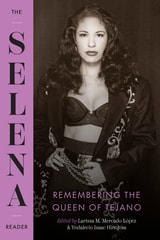
The Selena Reader
Remembering the Queen of TejanoEdited by Larissa M. Mercado-López and Yndalecio Isaac Hinojosa
University of Texas Press, 2026
A literary collection honoring and memorializing Selena, the Queen of Tejano.
Thirty years after her death, Selena Quintanilla-Pérez remains a cherished figure of Mexican American popular culture, her music and celebrity resounding across the decades. This unique collection of creative and scholarly works traces Selena’s lasting impact as an entertainer and focal point of community and identity.
Assembling essays, memoir, short stories, and poems, The Selena Reader memorializes a beloved singer while also exploring the politics and personal meaning of what we remember. Selena’s devoted admirers tell us what they took from her lyrics and stage presence, the official and fan tributes, and the media and products she inspired. In one essay, Tejana coming-of-age is sharply refracted through the prism of Selena’s art and social status. Another piece considers how Selena’s body and distinctive clothing have shaped the author’s sense of queer self. Honey Avila (aka Honey Andrews), the renowned Selena impersonator, shares vivid recollections of her hero. A father and daughter describe how their conversations about Selena changed their relationship and contributed to Chicana feminist consciousness in their lives. All told, this anthology amplifies the gratitude of generations who have loved, and learned from, Selena.
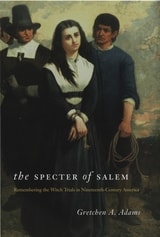
The Specter of Salem
Remembering the Witch Trials in Nineteenth-Century AmericaGretchen A. Adams
University of Chicago Press, 2008
In The Specter of Salem, Gretchen A. Adams reveals the many ways that the Salem witch trials loomed over the American collective memory from the Revolution to the Civil War and beyond. Schoolbooks in the 1790s, for example, evoked the episode to demonstrate the new nation’s progress from a disorderly and brutal past to a rational present, while critics of new religious movements in the 1830s cast them as a return to Salem-era fanaticism, and during the Civil War, southerners evoked witch burning to criticize Union tactics. Shedding new light on the many, varied American invocations of Salem, Adams ultimately illuminates the function of collective memories in the life of a nation.
“Imaginative and thoughtful. . . . Thought-provoking, informative, and convincingly presented, The Specter of Salem is an often spellbinding mix of politics, cultural history, and public historiography.”— New England Quarterly
“This well-researched book, forgoing the usual heft of scholarly studies, is not another interpretation of the Salem trials, but an important major work within the scholarly literature on the witch-hunt, linking the hysteria of the period to the evolving history of the American nation. A required acquisition for academic libraries.”—Choice, Outstanding Academic Title 2009

Thomas Hauser on Sports
Remembering the JourneyThomas Hauser
University of Arkansas Press, 2013