Results by title

4 books match the query 'Renewable Energy'

cover of Buying Time: Environmental Collapse and the Future of Energy

Buying Time

Environmental Collapse and the Future of Energy

Kaz Makabe

University Press of New England, 2017
WE KNOW, from repeated failures to predict and prevent catastrophes ranging from the Great Tohoku Earthquake to the global financial crisis of 2008, that complex adaptive systems, such as those found in nature or in economies, are actually very hard to predict, much less influence. Today, we face environmental degradation caused in large part by the use of fossil fuels, ever-declining efficiencies in extracting them, a pace of development for renewable energy insufficient for replacement of the fossil fuels we are burning through, and population growth that is likely to add two billion people globally by 2045. Despite partial recovery since the financial crisis of 2008, growth remains sluggish, and large budget deficits persist across much of the developed world. Meanwhile, developing states face their own challenges, stemming from unbalanced growth. Against this backdrop, and in light of the urgent need to pay closer heed to our environment, the last thing the world needs is an energy crisis triggered not merely by recurrent scares over supply, but by more lasting structural changes in our ability to use fossil fuels with reckless abandon. Buying Time applies lessons learned the hard way from the global economic crisis of the past decade, to offer an overview of the state of the environment and our energy future. Grounded in subtle thinking about complex systems, including the economy, energy, and the environment, this book underscores the connections linking them all. Kaz Makabe is a veteran financial systems expert who lived through the Fukushima Daiichi nuclear disaster. He nevertheless concludes that nuclear energy is the bridge than can help us cross over the abyss we face.
[more]
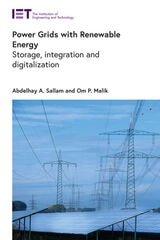
cover of Power Grids with Renewable Energy: Storage, integration and digitalization

Power Grids with Renewable Energy

Storage, integration and digitalization

Abdelhay A. Sallam

The Institution of Engineering and Technology, 2021
Generation of electricity from renewable sources has become a necessity, particularly due to environmental concerns. In order for renewable sources to provide reliable power, their sporadic availability under certain conditions and the lack of control over the resource must be addressed. Different renewable energy sources and storage technologies bring various properties to the table, and power systems must be adapted and constructed to accommodate these. Power electronics and micro-grids play key roles in enabling the use of renewable energy in the evolving smarter grids.
[more]
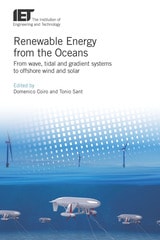
cover of Renewable Energy from the Oceans: From wave, tidal and gradient systems to offshore wind and solar

Renewable Energy from the Oceans

From wave, tidal and gradient systems to offshore wind and solar

Domenico P. Coiro

The Institution of Engineering and Technology, 2019
There are many ways to harness the renewable and emissions-free energy available from the Earth's oceans. The technologies include wave energy, tidal and current energy, and energy from thermal and salinity gradients. In addition, offshore wind energy and marine (floating) solar arrays offer a possibility to exploit vast resources that are far larger than those available onshore. The potential capacities range from many hundreds of gigawatts to terawatts of generation. These technologies could contribute a significant part of the global electricity demand; they are particularly suitable for providing sustainable power to marine regions and island communities and nations.
[more]
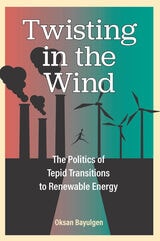
cover of Twisting in the Wind: The Politics of Tepid Transitions to Renewable Energy

Twisting in the Wind

The Politics of Tepid Transitions to Renewable Energy

Oksan Bayulgen

University of Michigan Press, 2022

Why do governments insist on fossil fuels? Why do renewables face uncertain and inconsistent legal and regulatory circumstances that slow their market-share growth against fossil fuels? Oksan Bayulgen studies the political determinants of partial energy reforms that result in tepid energy transitions and shifts the geographical focus from front-runner countries of energy innovation to developing countries, which have become the largest carbon emitters in the world. Her in-depth case study of energy policies in Turkey over the past two decades demonstrates that energy transitions are neither inevitable nor linear and that they are often initiated if and only when promoting renewables is in the interests of governing elites and stall when political dividends associated with energy rents change. This book contributes to the debates on the nature and pace of energy transitions by analyzing the power dynamics and political institutions under which energy reforms are initiated and implemented over time. This timely topic will be of interest to scholars, policymakers, energy investors, and anyone interested in environmental studies.

[more]