Results by title
8 books match the query 'Renewing'
Courts and Bureaucracies
Renewing the Rule of Law in Our TimesRobert P. Burns
University of Chicago Press, 2027
A novel meditation on how courts and bureaucracies function today and how they can be made better.
We live in a highly bureaucratic society, so much so that we often don’t even see it. Although we think of bureaucracies and courtrooms as different kinds of institutions, as Robert P. Burns argues in Courts and Bureaucracies, their functions and everyday operations often blur together. Today, courts are being used to address numerous social problems that the government is unable or unwilling to tackle, and consequently, the courts frequently emphasize bureaucratic goals—such as efficiency and social control—over the adjudicatory functions that they are supposed to embody.
Drawing on social theory, philosophy, public administration, and law, Burns clarifies the role of courts in today’s bureaucratic society and considers the distinctive contributions that specifically legal procedures can bring. After exploring the competing first principles of adjudication, Burns then examines our current administrative, civil, and criminal processes and describes new and looming changes to rules and practices that should affect our thinking about the rule of law and the role of the courts.
A broad reassessment—both philosophical and practical—of how criminal, civil, and administrative practices differ from one another and what benefits each bestows, Courts and Bureaucracies offers concrete suggestions for how we can better achieve the ideals already implicit in our judicial traditions and practices.
Education for Democracy
Renewing the Wisconsin IdeaEdited by Chad Alan Goldberg
University of Wisconsin Press, 2020
Using the Wisconsin Idea as a lens, Education for Democracy argues that public higher education institutions remain a bastion of collaborative problem solving. Examinations of partnerships between the state university and people of the state highlight many crucial and lasting contributions to issues of broad public concern such as conservation, LGBTQ+ rights, and poverty alleviation. The contributors restore the value of state universities and humanities education as a public good, contending that they deserve renewed and robust support.
Education in a New Society
Renewing the Sociology of EducationEdited by Jal Mehta and Scott Davies
University of Chicago Press, 2018
The sociology of education, the contributors show, largely works with themes, concepts, and theories that were generated decades ago, even as both the actual world of education and the discipline of sociology have changed considerably. The moment has come, they argue, to break free of the past and begin asking new questions and developing new programs of empirical study. Both rallying cry and road map, Education in a New Society will galvanize the field.

New Ideology of Imperialism
Renewing the Moral ImperativeFrank Furedi
Pluto Press, 1994
Prophetic Voices
Renewing and Reimagining HaftarahRabbi Barbara AB Symons
Central Conference of American Rabbis, 2023
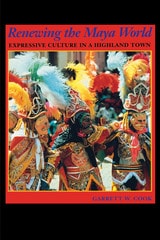
Renewing the Maya World
Expressive Culture in a Highland TownBy Garrett W. Cook
University of Texas Press, 2000
Each year in the Highland Guatemala town of Santiago Momostenango, Maya religious societies, dance teams, and cofradías perform the annual cycle of rituals and festivals prescribed by Costumbre (syncretized Maya Christian religion), which serves to renew the cosmic order. In this richly detailed ethnography, Garrett Cook explores how these festivals of Jesucristo and the saints derive from and reenact three major ancient Maya creation myths, thus revealing patterns of continuity between contemporary expressive culture and the myths, rituals, and iconography of the Classic and Postclassic Maya.
Drawing on fieldwork conducted in the 1970s and renewed in the 1990s, Cook describes the expressive culture tradition performed in and by the cofradías and their dance teams. He listens as dancers and cofrades explain the meaning of service and of the major ritual symbols in the cults of the saints and Jesucristo. Comparing these symbols to iconographic evidence from Palenque and myths from the Popol Vuh, Cook persuasively argues that the expressive culture of Momostenango enacts major Maya creation myths—the transformative sunrise, the representation of the year as the life cycle of anthropomorphized nature, and the erection of an axis mundi.
This research documents specific patterns of continuity and discontinuity in the communal expression of Maya religious and cosmogonic themes. Along with other recent research, it demonstrates the survival of a basic Maya pattern—the world-creating vegetative renewal cycle—in the highland Maya cults of the saints and Jesucristo.
Renewing the Mind
Ryan N.S. Topping
Catholic University of America Press, 2015
Renewing the World
Plains Indian Religion and MoralityHoward L. Harrod
University of Arizona Press, 1987
"Harrod's discussion of kinship and reciprocity in Northwest Plains cosmology contains valuable insight into Native American worldview, and his emphasis on the moral dimension of ritual process is a major addition to the too-often ignored subject of Native American moral life." —Journal of Religion
"Includes the major works on Blackfoot, Crow, Cheyennes, and Arapaho religion, the works to which anyone who wishes to understand the religious life of these tribes must continue to turn." —Choice
"Plains people, Harrod suggests, refracted nature and conceived an environmental ethic through a metaphor of kinship. He is particularly skillful in characterizing the ambiguity Plains people expressed at the necessity of killing and eating their animal kin. Renewing the World also contributes to another new and uncultivated science we might call 'ecology of mind'." —Great Plains Quarterly