Results by title

8 books match the query 'Restorative justice'
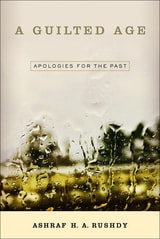
cover of A Guilted Age: Apologies for the Past

A Guilted Age

Apologies for the Past

Ashraf A. H. Rushdy

Temple University Press, 2015

Public apologies have become increasingly common scenes and representative moments in what appears to be a global process of forgiveness. The apology-forgiveness dynamic is familiar to all of us, but what do these rituals of atonement mean when they are applied to political and historical events? 

In his timely, topical, and incisive book A Guilted Age, Ashraf Rushdy argues that the proliferation of apologies by politicians, nations, and churches for past events—such as American slavery or the Holocaust—can be understood as a historical phenomenon. In our post–World War II world, Rushdy claims that we live in a “guilted age.”  

A Guilted Age identifies the two major forms of apologies—political and historical—and Rushdy defines the dynamics and strategies of each, showing how the evolution of one led to the other. In doing so, he reveals what apology and forgiveness do to the past events they respectively apologize for and forgive—and what happens when they fail.
[more]
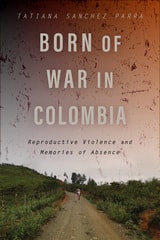
cover of Born of War in Colombia: Reproductive Violence and Memories of Absence

Born of War in Colombia

Reproductive Violence and Memories of Absence

Tatiana Sanchez Parra

Rutgers University Press, 2024

Born of War in Colombia addresses why people born of conflict-related sexual violence remain unseen within transitional justice agendas. In Colombia, there are generations of children born of conflict-related sexual violence across the country. Whispers of their presence have traveled outside their communities. They also exist within the country’s domestic reparations program, which entitles them to reparations. Drawing on an immersive feminist ethnography with a community that endured a paramilitary confinement, the book reveals how a past-oriented and harm-centered model of transitional justice has converged with a restricted notion of gendered victimhood and the patriarchal politics of reproduction to render the bodies and experiences of people born of conflict-related sexual violence unintelligible to those seeking to understand and address the consequences of war in Colombia.
[more]
cover of Implicating the System: Judicial Discourses in Sentencing of Indigenous Women

Implicating the System

Judicial Discourses in Sentencing of Indigenous Women

Elspeth Kaiser-Derrick

University of Manitoba Press, 2019

[more]
cover of Legacies of War: Violence, Ecologies, and Kin

Legacies of War

Violence, Ecologies, and Kin

Kimberly Theidon

Duke University Press, 2022

In Legacies of War Kimberly Theidon examines the lives of children born of wartime rape and the experiences of their mothers and communities to offer a gendered theory of harm and repair. Drawing on ethnographic research in postconflict Peru and Colombia, Theidon considers the multiple environments in which conception, pregnancy, and childbirth unfold. She reimagines harm by taking into account the impact of violence on individual people as well as on more-than-human lives, bodies, and ecologies, showing how wartime violence reveals the interdependency of all life. She also critiques policy makers, governments, and humanitarian organizations for their efforts at postconflict justice, which frequently take an anthropocentric rights-based approach that is steeped in liberal legalism. Rethinking the intergenerational reach of war while questioning what counts as sexual and reproductive violence, Theidon calls for an explicitly feminist peace-building and postconflict agenda that includes a full range of sexual and reproductive rights, including access to safe and affordable abortions.
[more]
cover of Oil and Water: A Novel

Oil and Water

A Novel

Mei Mei Evans

University of Alaska Press, 2013

What happens when the American dream collides head-on with a nation’s dependence on fossil fuels? Oil and Water, a novel by Mei Mei Evans, focuses on precisely this question. Starting with a star-crossed supertanker, a wayward fishing boat, and a well-known hazard in the Gulf of Alaska, the story presents a region plunged into an oil-slicked crisis. As thousands of miles of shoreline and sea are obliterated, the spill threatens the lives and livelihoods of the coastal community of Selby.

At the center of the disaster are Gregg, a down-on-his-luck skipper, and Lee, his lone deckhand. As they cross paths with the tanker and later the residents of Selby, they are faced with decisions that will have a lasting impact on the entire community. And when the residents are presented with a controversial deal—accept handouts in the form of work from the very company responsible for the disaster—they must learn just how important it is to find strength in the connections that bind humans to each other and the natural world. 

Evans’s compelling story, influenced by her own experiences during the Exxon Valdez oil spill, is a provocative look at the choice that must be made between environmental safety and economic survival. A PEN/Bellwether Prize finalist, it will have readers reconsidering where they draw their own lines.
[more]
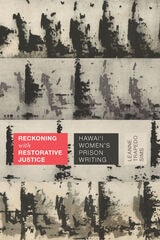
cover of Reckoning with Restorative Justice: Hawai'i Women's Prison Writing

Reckoning with Restorative Justice

Hawai'i Women's Prison Writing

Leanne Trapedo Sims

Duke University Press, 2023
In Reckoning with Restorative Justice, Leanne Trapedo Sims explores the experiences of women who are incarcerated at the Women’s Community Correctional Center, the only women’s prison in the state of Hawai‘i. Adopting a decolonial and pro-abolitionist lens, she focuses particularly on women’s participation in the Kailua Prison Writing Project and its accompanying Prison Monologues program. Trapedo Sims argues that while the writing project served as a vital resource for the inside women, it also remained deeply embedded within carceral logics at the institutional, state, and federal levels. She foregrounds different aspects of these programs, such as the classroom spaces and the dynamics that emerged between performers and audiences in the Prison Monologues. Blending ethnography, literary studies, psychological analysis, and criminal justice critique, Trapedo Sims centers the often-overlooked stories of incarcerated Native Hawaiian and Pacific Islander women in Hawai‘i in ways that resound with the broader American narrative: the disproportionate incarceration of people of color in the prison-industrial complex.
[more]
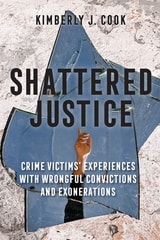
cover of Shattered Justice: Crime Victims' Experiences with Wrongful Convictions and Exonerations

Shattered Justice

Crime Victims' Experiences with Wrongful Convictions and Exonerations

Kimberly J. Cook

Rutgers University Press, 2022
Shattered Justice presents original crime victims' experiences with violent crime, investigations and trials, and later exonerations in their cases. Using in-depth interviews with 21 crime victims across the United States, Cook reveals how homicide victims’ family members and rape survivors describe the painful impact of the primary trauma, the secondary trauma of the investigations and trials, and then the tertiary trauma associated with wrongful convictions and exonerations. Important lessons and analyses are shared related to grief and loss, and healing and repair. Using restorative justice practices to develop and deliver healing retreats for survivors also expands the practice of restorative justice. Finally, policy reforms aimed at preventing, mitigating, and repairing the harms of wrongful convictions is covered.
[more]
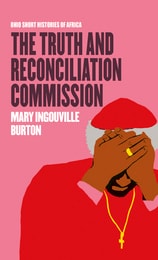
cover of The Truth and Reconciliation Commission

The Truth and Reconciliation Commission

Mary Ingouville Burton

Ohio University Press, 2017

In 1995, South Africa’s new government set up the Truth and Reconciliation Commission, a lynchpin of the country’s journey forward from apartheid. In contrast to the Nuremberg Trials and other retributive responses to atrocities, the TRC’s emphasis on reconciliation marked a restorative approach to addressing human rights violations and their legacies. The hearings, headed by Bishop Desmond Tutu, began in spring of 1996.

The commission was set up with three purposes: to investigate abuses, to assist victims with rehabilitation, and to consider perpetrators’ requests for amnesty. More than two decades after the first hearings, the TRC’s legacy remains mixed. Many families still do not know what became of their loved ones, and the commission came under legal challenges both from ex-president F. W. de Klerk and the African National Congress. Yet, the TRC fulfilled a vital role in the transition from apartheid to democracy, and has become a model for other countries.

This latest addition to the Ohio Short Histories of Africa series is a trenchant look at the TRC’s entire, stunningly ambitious project. And as a longtime activist for justice in South Africa and a former commissioner of the TRC, Mary Ingouville Burton is uniquely positioned to write this complex story.

[more]