Results by title
16 books match the query 'Shape'

Body Language
Sisters in Shape, Black Women's Fitness, and Feminist Identity PoliticsKimberly J. Lau
Temple University Press, 2011
In her evocative ethnographic study, Body Language, Kimberly Lau traces the multiple ways in which the success of an innovative fitness program illuminates what identity means to its Black female clientele and how their group interaction provides a new perspective on feminist theories of identity politics—especially regarding the significance of identity to political activism and social change.
Sisters in Shape, Inc., Fitness Consultants (SIS), a Philadelphia company, promotes balance in physical, mental, and spiritual health. Its program goes beyond workouts, as it educates and motivates women to make health and fitness a priority. Discussing the obstacles at home and the importance of the group's solidarity to their ability to stay focused on their goals, the women speak to the ways in which their commitment to reshaping their bodies is a commitment to an alternative future.
Body Language shows how the group's explorations of black women's identity open new possibilities for identity-based claims to recognition, justice, and social change.

Disoriented Disciplines
China, Latin America, and the Shape of World LiteratureRosario Hubert
Northwestern University Press, 2024
In the absence of specialized programs of study, abstract discussions of China in Latin America took shape in contingent critical infrastructures built at the crossroads of the literary market, cultural diplomacy, and commerce. As Rosario Hubert reveals, modernism flourishes comparatively, in contexts where cultural criticism is a creative and cosmopolitan practice.
Disoriented Disciplines: China, Latin America, and the Shape of World Literature understands translation as a material act of transfer, decentering the authority of the text and connecting seemingly untranslatable cultural traditions. In this book, chinoiserie, “coolie” testimonies, Maoist prints, visual poetry, and Cold War memoirs compose a massive archive of primary sources that cannot be read or deciphered with the conventional tools of literary criticism. As Hubert demonstrates, even canonical Latin American authors, including Jorge Luis Borges, Octavio Paz, and Haroldo de Campos, write about China from the edges of philology, mediating the concrete as well as the sensorial.
Advocating for indiscipline as a core method of comparative literary studies, Disoriented Disciplines challenges us to interrogate the traditional contours of the archives and approaches that define the geopolitics of knowledge.
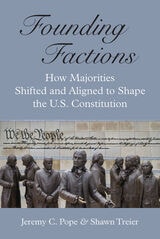
Founding Factions
How Majorities Shifted and Aligned to Shape the U.S. ConstitutionJeremy C. Pope and Shawn Treier
University of Michigan Press, 2020
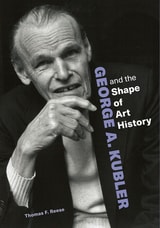
George A. Kubler and the Shape of Art History
Thomas F. Reese
J. Paul Getty Trust, The, 0
Art historian George A. Kubler (1912–1996) was a foundational scholar of ancient American art and archaeology as well as Spanish and Portuguese architecture. During over five decades at Yale University, he published seventeen books that included innovative monographs, major works of synthesis, and an influential theoretical treatise. In this biography, Thomas F. Reese analyzes the early formation, broad career, and writings of Kubler, casting nuanced light on the origins and development of his thinking.
Notable in Reese’s discussion and contextualization of Kubler’s writings is a revealing history and analysis of his Shape of Time—a book so influential to students, scholars, artists, and curious readers in multiple disciplines that it has been continuously in print since 1962. Reese reveals how pivotal its ideas were in Kubler’s own thinking: rather than focusing on problems of form as an ordering principle, he increasingly came to sequence works by how they communicate meaning. The author demonstrates how Kubler, who professed to have little interest in theory, devoted himself to the craft of art history, discovering and charting the rules that guided the propagation of structure and significance through time.

Reading the Shape of Nature
Comparative Zoology at the Agassiz MuseumMary P. Winsor
University of Chicago Press, 1991
In 1859, Louis Agassiz established the Museum of Comparative Zoology to house research on the ideal types that he believed were embodied in all living forms. Agassiz's vision arose from his insistence that the order inherent in the diversity of life reflected divine creation, not organic evolution. But the mortar of the new museum had scarcely dried when Darwin's Origin was published. By Louis Agassiz's death in 1873, even his former students, including his son Alexander, had defected to the evolutionist camp. Alexander, a self-made millionaire, succeeded his father as director and introduced a significantly different agenda for the museum.
To trace Louis and Alexander's arguments and the style of science they established at the museum, Winsor uses many fascinating examples that even zoologists may find unfamiliar. The locus of all this activity, the museum building itself, tells its own story through a wonderful series of archival photographs.
Sacred Uncertainty
Religious Difference and the Shape of Melville's CareerBrian Yothers
Northwestern University Press, 2015
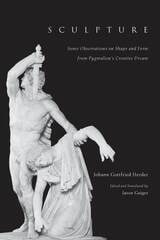
Sculpture
Some Observations on Shape and Form from Pygmalion's Creative DreamJohann Gottfried Herder
University of Chicago Press, 2002
Long recognized as one of the most important eighteenth-century works on aesthetics and the visual arts, Johann Gottfried Herder's Plastik (Sculpture, 1778) has never before appeared in a complete English translation. In this landmark essay, Herder combines rationalist and empiricist thought with a wide range of sources—from the classics to Norse legend, Shakespeare to the Bible—to illuminate the ways we experience sculpture.
Standing on the fault line between classicism and romanticism, Herder draws most of his examples from classical sculpture, while nevertheless insisting on the historicity of art and of the senses themselves. Through a detailed analysis of the differences between painting and sculpture, he develops a powerful critique of the dominance of vision both in the appreciation of art and in our everyday apprehension of the world around us. One of the key articulations of the aesthetics of Sturm und Drang, Sculpture is also important as an anticipation of subsequent developments in art theory.
Jason Gaiger's translation of Sculpture includes an extensive introduction to Herder's thought, explanatory notes, and illustrations of all the sculptures discussed in the text.

Shape of Things
A Philosophy of DesignVilém Flusser
Reaktion Books, 1999

The Librarian's Atlas
The Shape of Knowledge in Early Modern SpainSeth Kimmel
University of Chicago Press, 2024
A history of early modern libraries and the imperial desire for total knowledge—now in paperback.
Medieval scholars imagined the library as a microcosm of the world, but as novel early modern ways of managing information facilitated empire in both the New and Old Worlds, the world became a projection of the library. In The Librarian’s Atlas, Seth Kimmel offers a sweeping material history of how the desire to catalog books coincided in the sixteenth and seventeenth centuries with the aspiration to control territory. Through a careful study of library culture in Spain and Morocco—close readings of catalogs, marginalia, indexes, commentaries, and maps—Kimmel reveals how the booklover’s dream of a comprehensive and well-organized library shaped an expanded sense of the world itself.

The Shape and Shaping of the Book of Psalms
The Current State of ScholarshipNancy L. deClaissé-Walford
SBL Press, 2014
A new and innovative way to approach the Psalter that moves beyond form and cult-functional criticism
Drawing inspiration from Gerald H. Wilson’s The Editing of the Hebrew Psalter, this volume explores questions of the formation of the Psalter from the perspective of canonical criticism. Though called “canonical criticism,” the study actually employs a number of historically traditional and nontraditional approaches to reading the text including form criticism, historical criticism of individual psalms as well as of the whole Psalter, and redaction criticism.
Features:
- Exploration of collections of psalms, theological viewpoints, sovereignty, and the shape and shaping of Psalms
- Examination of the impact of canonical criticism on the study of the Psalter
- Sixteen essays from the Book of Psalms Consultation group and invited scholars

The Shape of Inca History
Narrative and Architecture in an Andean EmpireSusan A. Niles
University of Iowa Press, 1999

The Shape of Life
Genes, Development, and the Evolution of Animal FormRudolf A. Raff
University of Chicago Press, 1996
Raff uses the evolution of animal body plans to exemplify the interplay between developmental mechanisms and evolutionary patterns. Animal body plans emerged half a billion years ago. Evolution within these body plans during this span of time has resulted in the tremendous diversity of living animal forms.
Raff argues for an integrated approach to the study of the intertwined roles of development and evolution involving phylogenetic, comparative, and functional biology. This new synthesis will interest not only scientists working in these areas, but also paleontologists, zoologists, morphologists, molecular biologists, and geneticists.
The Shape of Populism
Serbia before the Dissolution of YugoslaviaMarko Grdešic
University of Michigan Press, 2019

The Shape of Utopia
The Architecture of Radical Reform in Nineteenth-Century AmericaIrene Cheng
University of Minnesota Press, 2023
How nineteenth-century social reformers devised a new set of radical blueprints for society
In the middle of the nineteenth century, a utopian impulse flourished in the United States through the circulation of architectural and urban plans predicated on geometrically distinct designs. Though the majority of such plans remained unrealized, The Shape of Utopia emphasizes the enduring importance of these radical propositions and their ability to visualize alternatives to what was then a newly emerging capitalist nation.
Drawing diagrammatic plans for structures such as octagonal houses, a hexagonal anarchist city, and circular centers of equitable commerce, these various architectural utopians applied geometric forms to envision a more just and harmonious society. Highlighting the inherent political capacity of architecture, Irene Cheng showcases how these visionary planners used their blueprints as persuasive visual rhetoric that could mobilize others to share in their aspirations for a better world.
Offering an extensive and uniquely focused view of mid-nineteenth-century America’s rapidly changing cultural landscape, this book examines these utopian plans within the context of significant economic and technological transformation, encompassing movements such as phrenology, anarchism, and spiritualism. Engaging equally with architectural history, visual culture studies, and U.S. history, The Shape of Utopia documents a pivotal moment in American history when ordinary people ardently believed in the potential to reshape society.
Urban Disorder and the Shape of Belief
The Great Chicago Fire, the Haymarket Bomb, and the Model Town of PullmanCarl Smith
University of Chicago Press, 1994
Urban Disorder and the Shape of Belief
The Great Chicago Fire, the Haymarket Bomb, and the Model Town of Pullman, Second EditionCarl Smith
University of Chicago Press, 2007
In Urban Disorder and the Shape of Belief, Carl Smith explores the imaginative dimensions of these events as he traces the evolution of interconnected beliefs and actions that increasingly linked city, disorder, and social reality in the minds of Americans. Examining a remarkable range of writings and illustrations, as well as protests, public gatherings, trials, hearings, and urban reform and construction efforts, Smith argues that these three events—and the public awareness of them—not only informed one another, but collectively shaped how Americans understood, and continue to understand, Chicago and modern urban life.
This classic of urban cultural history is updated with a foreword by the author that expands our understanding of urban disorder to encompass such recent examples as Hurricane Katrina, the Oklahoma City Bombing, and 9/11.
“Cultural history at its finest. By utilizing questions and methodologies of urban studies, social history, and literary history, Smith creates a sophisticated account of changing visions of urban America.”—Robin F. Bachin, Journal of Interdisciplinary History