Results by title
7 books match the query 'Revolutionary'
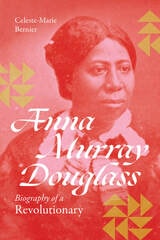
Anna Murray Douglass
Biography of a RevolutionaryCeleste-Marie Bernier
Duke University Press, 2026
Working with family descendants and based on thirty years of research digging through public and private archives, Celeste-Marie Bernier presents the first standalone biography of Anna Murray Douglass, wife and co-revolutionary of Frederick Douglass, honoring her history-making role as a campaigner, liberator, and freedom-fighter.
Anna Murray Douglass was born legally free in Maryland to Mary and Bambarra Murray. From working with her future husband, Frederick Douglass, to secure his self-liberation from enslavement to converting her family homes to command centers for the Underground Railroad, she dedicated her entire life to the fight for all freedoms and to supporting loved ones and strangers alike in their fight for equal, independent lives. Her deeds have long gone unsung until now.
In this first-ever standalone biography of the wife and co-revolutionary of Frederick Douglass, Celeste-Marie Bernier provides a detailed and illustrated history of Anna Murray Douglass’s leadership roles in fighting against the injustices of enslavement, racism, and white supremacy, as well as how she laid the foundation for her family to follow in her and her husband’s footsteps. After over three decades of archival research, Bernier presents a wide-ranging collection of stories, writings, letters, and photographs in a comprehensive and illuminating biography of Anna Murray Douglass’s life and work as an educator, activist, intellectual, orator, political thinker, artist, philosopher, and strategist. Ultimately, Bernier aims to combat the widespread misrepresentation that the liberation movement bearing the Douglass name was the work of one individual when it was, in reality, a family institution. Anna Murray Douglass is the first book in a ten-volume collection detailing the life and work of the entire Douglass family including their children, Rosetta, Lewis Henry, Frederick, Jr., Charles Remond and Annie Douglass, all freedom-fighters in their own right.
Che's Travels
The Making of a Revolutionary in 1950s Latin AmericaPaulo Drinot, ed.
Duke University Press, 2010
Contributors
Malcolm Deas
Paulo Drinot
Eduardo Elena
Judith Ewell
Cindy Forster
Patience A. Schell
Eric Zolov
Ann Zulawski
Memoirs of a Revolutionary
Victor Serge
University of Iowa Press, 2002
My Life As A Revolutionary
Reflections Of A Former GuerrilleraMaria Eugenia Vasquez Perdomo
Temple University Press, 2005
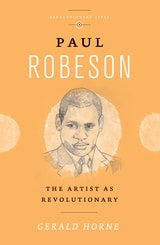
Paul Robeson
The Artist as RevolutionaryGerald Horne
Pluto Press, 2015
“A fine, taut analysis of the great African American athlete, singer, actor, and political activist.”
—Choice, Highly Recommended
Paul Robeson should be remembered today as the forerunner of Malcolm X, Dr. Martin Luther King, Jr. and Muhammad Ali. He sacrificed his fame and fortune a performer and athlete in order to fight for the rights of African Americans during the time of Jim Crow and U.S. Apartheid.
A world-famous singer and actor, a trained lawyer, an early star of American professional football and a polyglot who spoke over a dozen languages: these could be the crowning achievements of a life well-lived. Yet for Paul Robeson the higher calling of social justice led him to abandon both the NFL and Hollywood and become one of the most important political activists of his generation, a crusader for freedom and equality who battled both Jim Crow and US Senator Joseph McCarthy during the communist witch hunt of the 1950s.
In Paul Robeson: The Artist as Revolutionary, Gerald Horne discovers within Robeson's remarkable and revolutionary life the story of the twentieth century's great political struggles: against racism, against colonialism, against poverty—and for international socialism. Chapters include:
*”The Best Known American in the World"
*Rising Revolutionary
*From Moscow to Madrid
*"Black Stalin"?
*Robeson: Primary Victim of the "Blacklist"
*Triumph—and Tragedy
*Death of a Revolutionary
In the Introduction, Horne writes: “Paul Robeson—activist, artist, athlete—experienced a dramatic rise and fall, perhaps unparalleled in U.S. history. From mingling with the elite of London society and Hollywood in the 1930s, by the time he died in 1976, he was a virtual recluse in a plain abode in a working-class neighborhood of Philadelphia. What helps to explicate this tragic art of his life is a fateful decision he made when fascism was rising: he threw in his lot with those battling for socialism and decide to sacrifice his thriving artistic career on behalf of the struggle against Jim Crow—or U.S. apartheid.”
This critical and searching biography provides an opportunity for readers to comprehend the triumphs and tragedies of the revolutionary progressive movement of which Paul Robeson was not just a part, but perhaps its most resonant symbol.
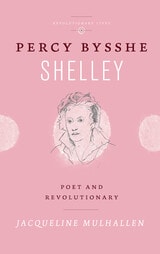
Percy Bysshe Shelley
Poet and RevolutionaryJaqueline Mulhallen
Pluto Press, 2015
An engaging look at one of English history and literature’s most compelling, complicated, and talented figures, Percy Bysshe Shelley will be a valuable contribution to our understanding of the man and his work.
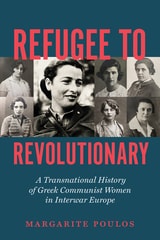
Refugee to Revolutionary
A Transnational History of Greek Communist Women in Interwar EuropeMargarite Poulos
Vanderbilt University Press, 2024
Refugee to Revolutionary examines the national and transnational world the female cadres of the Greek communist movement traversed, situated between their own aspirations, the objectives of the Greek Communist Party (KKE), and the global ambitions of the Comintern. Drawing largely on data contained in the individual files (anketas) of the KKE cadres located in the Comintern archive at the Russian State Archive for Socio-Political History (RGASPI), as well as Greek Communist Party archival materials, this history is told largely in the voice, albeit the “official” voice, of the subjects themselves. These voices reveal much about the personal, cultural, social, and gendered dimensions of their experience. They convey a story of opportunity and sacrifice and the sense of being part of something historic and extraordinary.
The overarching purpose of this book is two-pronged: The first is to address a historiographical void attributable to a combination of factors, which includes the inaccessibility of Soviet archival materials and a persistent hegemonic masculinity that continues to define the historiography of Greek communism. Second, this work is situated within a new literature represented by scholars such as Brigitte Studer, Lisa Kirschenbaum, Francisca De Haan, and others, which destabilizes Cold War paradigms that have long dominated evaluations of agency, identity, and subjectivity in the Western historiography of communism.