Results by title
231 books match the query 'Revolutionary Period (1775-1800)' and 18 start with a
A French Aristocrat in the American West
The Shattered Dreams of De Lassus De LuzièresCarl J. Ekberg & Foreword by Marie-Sol de La Tour d'Auvergne
University of Missouri Press, 2010
A History of the American Theatre from Its Origins to 1832
William Dunalp, Introduction by Tice L. Miller
University of Illinois Press, 2005
As America passed from a mere venue for English plays into a country with its own nationally regarded playwrights, William Dunlap lived the life of a pioneer on the frontier of the fledgling American theatre, full of adventures, mishaps, and close calls. He adapted and translated plays for the American audience and wrote plays of his own as well, learning how theatres and theatre companies operated from the inside out.
Dunlap's masterpiece, A History of American Theatre was the first of its kind, drawing on the author's own experiences. In it, he describes the development of theatre in New York, Philadelphia, and South Carolina as well as Congress's first attempts at theatrical censorship. Never before previously indexed, this edition also includes a new introduction by Tice L. Miller.
A Nation of Speechifiers
Making an American Public after the RevolutionCarolyn Eastman
University of Chicago Press, 2009
In the decades after the American Revolution, inhabitants of the United States began to shape a new national identity. Telling the story of this messy yet formative process, Carolyn Eastman argues that ordinary men and women gave meaning to American nationhood and national belonging by first learning to imagine themselves as members of a shared public.
She reveals that the creation of this American public—which only gradually developed nationalistic qualities—took place as men and women engaged with oratory and print media not only as readers and listeners but also as writers and speakers. Eastman paints vibrant portraits of the arenas where this engagement played out, from the schools that instructed children in elocution to the debating societies, newspapers, and presses through which different groups jostled to define themselves—sometimes against each other. Demonstrating the previously unrecognized extent to which nonelites participated in the formation of our ideas about politics, manners, and gender and race relations, A Nation of Speechifiers provides an unparalleled genealogy of early American identity.
A Slaveholders' Union
Slavery, Politics, and the Constitution in the Early American RepublicGeorge William Van Cleve
University of Chicago Press, 2010
After its early introduction into the English colonies in North America, slavery in the United States lasted as a legal institution until the passage of the Thirteenth Amendment to the Constitution in 1865. But increasingly during the contested politics of the early republic, abolitionists cried out that the Constitution itself was a slaveowners’ document, produced to protect and further their rights. A Slaveholders’ Union furthers this unsettling claim by demonstrating once and for all that slavery was indeed an essential part of the foundation of the nascent republic.
In this powerful book, George William Van Cleve demonstrates that the Constitution was pro-slavery in its politics, its economics, and its law. He convincingly shows that the Constitutional provisions protecting slavery were much more than mere “political” compromises—they were integral to the principles of the new nation. By the late 1780s, a majority of Americans wanted to create a strong federal republic that would be capable of expanding into a continental empire. In order for America to become an empire on such a scale, Van Cleve argues, the Southern states had to be willing partners in the endeavor, and the cost of their allegiance was the deliberate long-term protection of slavery by America’s leaders through the nation’s early expansion. Reconsidering the role played by the gradual abolition of slavery in the North, Van Cleve also shows that abolition there was much less progressive in its origins—and had much less influence on slavery’s expansion—than previously thought.
Deftly interweaving historical and political analyses, A Slaveholders’ Union will likely become the definitive explanation of slavery’s persistence and growth—and of its influence on American constitutional development—from the Revolutionary War through the Missouri Compromise of 1821.
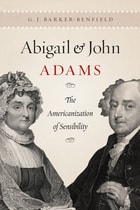
Abigail and John Adams
The Americanization of SensibilityG. J. Barker-Benfield
University of Chicago Press, 2010
During the many years that they were separated by the perils of the American Revolution, John and Abigail Adams exchanged hundreds of letters. Writing to each other of public events and private feelings, loyalty and love, revolution and parenting, they wove a tapestry of correspondence that has become a cherished part of American history and literature.
With Abigail and John Adams, historian G. J. Barker-Benfield mines those familiar letters to a new purpose: teasing out the ways in which they reflected—and helped transform—a language of sensibility, inherited from Britain but, amid the revolutionary fervor, becoming Americanized. Sensibility—a heightened moral consciousness of feeling, rooted in the theories of such thinkers as Descartes, Locke, and Adam Smith and including a “moral sense” akin to the physical senses—threads throughout these letters. As Barker-Benfield makes clear, sensibility was the fertile, humanizing ground on which the Adamses not only founded their marriage, but also the “abhorrence of injustice and inhumanity” they and their contemporaries hoped to plant at the heart of the new nation. Bringing together their correspondence with a wealth of fascinating detail about life and thought, courtship and sex, gender and parenting, and class and politics in the revolutionary generation and beyond, Abigail and John Adams draws a lively, convincing portrait of a marriage endangered by separation, yet surviving by the same ideas and idealism that drove the revolution itself.
A feast of ideas that never neglects the real lives of the man and woman at its center, Abigail and John Adams takes readers into the heart of an unforgettable union in order to illuminate the first days of our nation—and explore our earliest understandings of what it might mean to be an American.
Acholi Intellectuals
Knowledge, Power, and the Making of Colonial Northern Uganda, 1850–1960Patrick William Otim
Ohio University Press, 2024
After Tippecanoe
Some Aspects of the War of 1812Philip P. Mason
Michigan State University Press, 2011
Though the Shawnee chief Tecumseh attempted to form a confederacy of tribes to stem the tide of white settlement in the Old Northwest, in November of 1811, the Americans marched to his village at the mouth of Tippecanoe Creek. The ensuing battle ended all hope of an Indian federation and had far-reaching effects on American and British relations. The British, blamed for providing the Indians with arms, drew the ire of hawks in Congress, who clamored ever more loudly for a war to end England’s power in North America. Revised with a new introduction and updated biographical information, After Tippecanoe contains six papers originally presented as lectures in Windsor, Canada, and Detroit, Michigan, during the winter of 1961–62 by three American and three Canadian historians. Their focus is the War of 1812 as it unfolded in the Great Lakes region, with special emphasis on the conflict in Michigan, New York, and Ontario, Canada.
After Yorktown
The Final Struggle for American IndependenceDon Glickstein
Westholme Publishing, 2016
Although most people think the American Revolution ended with the British surrender at Yorktown, Virginia, on October 19, 1781, it did not. The war spread around the world, and exhausted men kept fighting—from the Arctic to Arkansas, from India and Ceylon to Schenectady and South America—while others labored to achieve a final diplomatic resolution.
After Cornwallis’s unexpected loss, George III vowed revenge, while Washington planned his next campaign. Spain, which France had lured into the war, insisted there would be no peace without seizing British-held Gibraltar. Yet the war had spun out of control long before Yorktown. Native Americans and Loyalists continued joint operations against land-hungry rebel settlers from New York to the Mississippi Valley. African American slaves sought freedom with the British. Soon, Britain seized the initiative again with a decisive naval victory in the Caribbean against the Comte de Grasse, the French hero of Yorktown.
In After Yorktown: The Final Struggle for American Independence, Don Glickstein tells the engrossing story of this uncertain and violent time, from the remarkable American and French success in Virginia to the conclusion of the fighting—in India—and then to the last British soldiers leaving America more than two years after Yorktown. Readers will learn about the people—their humor, frustration, fatigue, incredulity, worries; their shock at the savage terrorism each side inflicted; and their surprise at unexpected grace and generosity. Based on an extraordinary range of primary sources, the story encompasses a fascinating cast of characters: a French captain who destroyed a British trading post, but left supplies for Indians to help them through a harsh winter, an American Loyalist releasing a captured Spanish woman in hopes that his act of kindness will result in a prisoner exchange, a Native American leader caught “between two hells” of a fickle ally and a greedy enemy, and the only general to surrender to both George Washington and Napoleon Bonaparte. Finally, the author asks the question we face today: How do you end a war that doesn’t want to end?
Alexander Hamilton's Public Administration
Richard T. Green
University of Alabama Press, 2019
Examines how Hamilton’s thoughts and experiences about public administration theory and practice have shaped the nation
American public administration inherited from Alexander Hamilton a distinct republican framework through which we derive many of our modern governing standards and practices. His administrative theory flowed from his republican vision, prescribing not only the how of administration but also what should be done and why. Administration and policy merged seamlessly in his mind, each conditioning the other. His Anti-Federalist detractors clearly saw this and fought his vision tooth and nail.
That conflict endures to this day because Americans still have not settled on just one vision of the American republic. That is why, Richard Green argues, Hamilton is a pivotal figure in our current reckoning. If we want to more fully understand ourselves and our ways of governing today, we must start by understanding Hamilton, and we cannot do that without exploring his administrative theory and practice in depth.
Alexander Hamilton’s Public Administration considers Hamilton both as a founder of the American republic, steeped in the currents of political philosophy and science of his day, and as its chief administrative theorist and craftsman, deeply involved in establishing the early institutions and policies that would bring his interpretation of the written Constitution to life. Accordingly, this book addresses the complex mix of classical and modern ideas that informed his vision of a modern commercial and administrative republic; the administrative ideas, institutions, and practices that flowed from that vision; and the substantive policies he deemed essential to its realization. Green’s analysis grows out of an immersion in Hamilton’s extant papers, including reports, letters, pamphlets, and essays. Readers will find a comprehensive explanation of his theoretical contributions and a richly detailed account of his ideas and practices in historical context.
Alexander Hamilton
From Obscurity to GreatnessJohn P. Kaminski
Wisconsin Historical Society Press, 2016
Editor John P. Kaminski has gathered a remarkable collection of quotations by and about Alexander Hamilton that paint for us a nuanced portrait of a complex man. Through his own words and the words of his contemporaries -- including the man who killed him in a duel, Aaron Burr -- we can gain a better understanding of this fascinating man who rose from anonymity on a small Caribbean island to the corridors of power.

American Cosmos
Globes and the Global Imagination in Early AmericaTamara Plakins Thornton
University of Chicago Press, 2027
The first book to explore the forgotten terrestrial and celestial globes of early America—and the global imagination they shaped.
Ranging from early modern Europe to the modern United States, American Cosmos introduces the objects, people, practices, and ideas that constituted the long-forgotten world of globes. As Tamara Plakins Thornton shows, paired terrestrial and celestial globes were important components of early American social, cultural, and intellectual life. They served as markers of learnedness and social status, provided a material vision of a human-centered cosmos, and as 3-D problem-solving devices, offered distinctive imaginative perspectives on global connections and human difference. Only some had access to these globes—including genteel families, men of science, navigators, and students in colleges, academies, and missionary schools—but in the nineteenth century, many more encountered mass-produced, stripped-down globes in common school classrooms and parlors. Yet with new cultural concerns taking root, these modern globes assumed a much-diminished role in American life and thought, and an older world of globes, rich with meaning and possibility, disappeared.
As we increasingly encounter global-scale experience—climate change, pandemics, human migrations, the economy—and as American historians strive to look beyond national borders, we can learn about the origins of American global thinking by looking at globes themselves and the people who used them.
American Creed
Philanthropy and the Rise of Civil Society, 1700-1865Kathleen D. McCarthy
University of Chicago Press, 2003
The market revolution, participatory democracy, and voluntary associations have all been closely linked since the birth of the United States. American Creed explores the relationships among these three institutions, showing how charities and reform associations forged partnerships with government, provided important safety valves for popular discontent, and sparked much-needed economic development. McCarthy also demonstrates how the idea of philanthropy became crucially wedded to social activism during the Jacksonian era. She explores how acts of volunteerism and charity became involved with the abolitionist movement, educational patronage, the struggle against racism, and female social justice campaigns. What resulted, she contends, were heated political battles over the extent to which women and African Americans would occupy the public stage.
Tracing, then, the evolution of civil society and the pivotal role of philanthropy in the search for and exercise of political and economic power, this book will prove essential to anyone interested in American history and government.
American Elegy
The Poetry of Mourning from the Puritans to WhitmanMax Cavitch
University of Minnesota Press, 2007
American Intelligence
Small-Town News and Political Culture in Federalist New HampshireBen P. Lafferty
University of Massachusetts Press, 2020
Taking up the New Hampshire newspaper industry as its case study, American Intelligence unpacks the ways in which an unprecedented quantity of printed material was gathered, distributed, marketed, and consumed, as well as the strong influence that it had on the shaping of the American political imagination. Ben P. Lafferty also considers the lives of the printers themselves and asks why so many men chose to pursue such a fraught and turbulent profession. This snapshot resonates with the contemporary media-saturated and politically chaotic age.
American Taxation, American Slavery
Robin L. Einhorn
University of Chicago Press, 2006
For all the recent attention to the slaveholding of the founding fathers, we still know remarkably little about the influence of slavery on American politics. American Taxation, American Slavery tackles this problem in a new way. Rather than parsing the ideological pronouncements of charismatic slaveholders, it examines the concrete policy decisions that slaveholders and non-slaveholders made in the critical realm of taxation. The result is surprising—that the enduring power of antigovernment rhetoric in the United States stems from the nation’s history of slavery rather than its history of liberty.
We are all familiar with the states’ rights arguments of proslavery politicians who wanted to keep the federal government weak and decentralized. But here Robin Einhorn shows the deep, broad, and continuous influence of slavery on this idea in American politics. From the earliest colonial times right up to the Civil War, slaveholding elites feared strong democratic government as a threat to the institution of slavery. American Taxation, American Slavery shows how their heated battles over taxation, the power to tax, and the distribution of tax burdens were rooted not in debates over personal liberty but rather in the rights of slaveholders to hold human beings as property. Along the way, Einhorn exposes the antidemocratic origins of the popular Jeffersonian rhetoric about weak government by showing that governments were actually more democratic—and stronger—where most people were free.
A strikingly original look at the role of slavery in the making of the United States, American Taxation, American Slavery will prove essential to anyone interested in the history of American government and politics.
Anatomy of a Massacre
The Destruction of Gnadenhutten, 1782Eric Sterner
Westholme Publishing, 2027
On March 8, 1782, a group of western settlers killed nearly one hundred unarmed and peaceful Indians who had converted to Christianity under the tutelage of missionaries from the Church of the United Brethren. The murders were cold-blooded and heartless; roughly two-thirds of those executed were women and children. Its brutality stunned Benjamin Franklin in far-away France. He wrote: “the abominable Murders committed by some of the frontier People on the poor Moravian Indians, has given me infinite Pain and Vexation. The Dispensations of Providence in this World puzzle my weak Reason. I cannot comprehend why cruel Men should have been permitted thus to destroy their Fellow Creatures.” Since that maelstrom of violence struck the small Indian village of Gnadenhutten, history has treated the episode as a simple morality tale. While there were ample incidents of good and evil on March 8, that summation does not explain what brought murderers and victims together on the banks of the Muskingum River in today’s Ohio. It was actually the culmination of a series of events among different Indian tribes, the British, Congressional authorities at Pittsburgh, the Pennsylvania militia, and key individuals, all of which are lost in contemporary explanations of the massacre.
Anatomy of a Massacre: The Destruction of Gnadenhutten, 1782 fills that void by examining the political maneuvering among white settlers, Continental officials, British officers, western Indian tribes, missionaries, and the Indians practicing Christianity that culminated in the massacre. Uniquely, it follows the developing story from each perspective, using first-person accounts from each group to understand how they saw and experienced the changes on the American frontier. Along the way it profiles some of the key individuals responsible for the way the war unfolded. It is a fresh look at an often mentioned, but seldom understood, episode in the American Revolution.
As Various as Their Land
The Everyday Lives of Eighteenth-Century AmericansStephanie Grauman Wolf
University of Arkansas Press, 2000
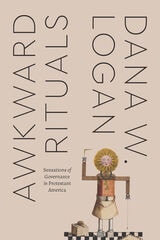
Awkward Rituals
Sensations of Governance in Protestant AmericaDana W. Logan
University of Chicago Press, 2022
In the years between the American Revolution and the Civil War, there was an awkward persistence of sovereign rituals, vestiges of a monarchical past that were not easy to shed. In Awkward Rituals, Dana Logan focuses our attention on these performances, revealing the ways in which governance in the early republic was characterized by white Protestants reenacting the hierarchical authority of a seemingly rejected king. With her unique focus on embodied action, rather than the more common focus on discourse or law, Logan makes an original contribution to debates about the relative completeness of America’s Revolution.
Awkward Rituals theorizes an under-examined form of action: rituals that do not feel natural even if they sometimes feel good. This account challenges common notions of ritual as a force that binds society and synthesizes the self. Ranging from Freemason initiations to evangelical societies to missionaries posing as sailors, Logan shows how white Protestants promoted a class-based society while simultaneously trumpeting egalitarianism. She thus redescribes ritual as a box to check, a chore to complete, an embarrassing display of theatrical verve. In Awkward Rituals, Logan emphasizes how ritual distinctively captures what does not change through revolution.