Results by title
1095 books match the query 'Rhetoric' and 94 start with a
A Communion of Friendship
Literacy, Spiritual Practice, and Women in RecoveryBeth Daniell
Southern Illinois University Press, 2003
Drawing on interviews and an array of scholarly work, Beth Daniell maps out the relations of literacy and spirituality in A Communion of Friendship: Literacy, Spiritual Practice, and Women in Recovery. Daniell tells the story of a group of women in “Mountain City” who use reading and writing in their search for spiritual growth. Diverse in socioeconomic status, the Mountain City women are, or have been, married to alcoholics. In Al-Anon, they use literacy to practice the Twelve Steps of Alcoholics Anonymous in order to find spiritual solutions to their problems.
In addition, Daniell demonstrates that in the lives of these women, reading, writing, and speaking are intertwined, embedded in one another in rich and complex ways. For the women, private literate practice is of the utmost importance because it aids the development and empowerment of the self. These women engage in literate practices in order to grow spiritually and emotionally, to live more self-aware lives, to attain personal power, to find or make meaning for themselves, and to create community. By looking at the changes in the women’s reading, Daniell shows that Al-Anon doctrine, particularly its oral instruction, serves as an interpretive tool. This discussion points out the subtle but profound transformations in these women’s lives in order to call for an inclusive notion of politics.
Foregrounding the women’s voices, A Communion of Friendship addresses a number of issues important in composition studies and reading instruction. This study examines the meaning of literacy within one specific community, with implications both for pedagogy and for empirical research in composition inside and outside the academy.
A Constructing Experience
Charles Bazerman
Southern Illinois University Press, 1994
Charles Bazerman’s newest book, a selection of both his published and unpublished essays from recent years, ranges from pedagogy to research to theory, exploring how all three levels are motivated by common concerns and how they are integrated through similar concepts and approaches. From this integrative perspective, Bazerman reveals his life-long inquiry into the nature of language—why it exists and what place it holds in the social world.
Presenting a powerful, action-oriented view of language that finds meaning in local circumstances and local uses, Bazerman divides his essays into four parts, beginning with an examination of the classroom experience. In describing the dynamics of the classroom and the relationship of the classroom to surrounding social arrangements, Bazerman notes how reading relates to writing, how interpersonal relations influence and structure acts of reading and writing, and how reading and writing are themselves forms of social action.
Bazerman, in parts 2 and 3, explains how larger forms of social structure are in dialectic with local acts of literacy, how experience of the world influences both everyday writing and empirically driven research, and how individuals conceive of social situations and actions to think about and plan activities. As he admittedly puzzles through conceptual obstacles, Bazerman explores many of the terms and theories evoked in rhetorical studies and provides a critical examination of the theories of James Kinneavy as well as more general thoughts on the nature of rhetorical study.
In part 4, Bazerman reinterprets the classical rhetorical concept of kairos in the light of theory and research in the social sciences, analyzes intertextuality in a scientific text, and offers a rereading of the writings of Adam Smith.
Throughout this book, Bazerman maintains that research into writing is the examination of what people do and have done, what influences what they do, and what texts do to people who write and read them. In addition, he reiterates the importance of literacy as a connecting device, essential to survival, growth, and change. Lack of literacy cuts people off from the institutions and means of life in a society.
A Feminist Legacy
The Rhetoric and Pedagogy of Gertrude BuckSuzanne Bordelon
Southern Illinois University Press, 2007
The first book-length investigation of a pioneering English professor and theorist at Vassar College, A Feminist Legacy: The Rhetoric and Pedagogy of Gertrude Buck explores Buck’s contribution to the fields of education and rhetoric during the Progressive Era. By contextualizing Buck’s academic and theoretical work within the rise of women’s educational institutions like Vassar College, the social and political movement toward suffrage, and Buck’s own egalitarian political and social ideals, Suzanne Bordelon offers a scholarly and well-informed treatment of Buck’s achievements that elucidates the historical and contemporary impact of her work and life.
Bordelon argues that while Buck did not call herself a feminist, she embodied feminist ideals by demanding the full participation of her female students and by challenging power imbalances at every academic, social, and political level.
A Feminist Legacy reveals that Vassar College is an undervalued but significant site in the history of women’s argumentation and pedagogy. Drawing on a rich variety of archival sources, including previously unexamined primary material, A Feminist Legacy traces the beginnings of feminist theories of argumentation and pedagogy and their lasting legacy within the fields of education and rhetoric.
A Minefield of Dreams
Triumphs and Travails of Independent Writing ProgramsJustin Everett
University Press of Colorado, 2017
A Nation of Speechifiers
Making an American Public after the RevolutionCarolyn Eastman
University of Chicago Press, 2009
In the decades after the American Revolution, inhabitants of the United States began to shape a new national identity. Telling the story of this messy yet formative process, Carolyn Eastman argues that ordinary men and women gave meaning to American nationhood and national belonging by first learning to imagine themselves as members of a shared public.
She reveals that the creation of this American public—which only gradually developed nationalistic qualities—took place as men and women engaged with oratory and print media not only as readers and listeners but also as writers and speakers. Eastman paints vibrant portraits of the arenas where this engagement played out, from the schools that instructed children in elocution to the debating societies, newspapers, and presses through which different groups jostled to define themselves—sometimes against each other. Demonstrating the previously unrecognized extent to which nonelites participated in the formation of our ideas about politics, manners, and gender and race relations, A Nation of Speechifiers provides an unparalleled genealogy of early American identity.
A Nation’s Undesirables
Mixed-Race Children and Whiteness in the Post-Nazi EraTracey Owens Patton
The Ohio State University Press, 2024
An innovative investigation of the entangled histories of race, transnational adoption, and post-Nazi Germany.
In a moving blend of family history and cutting-edge scholarship, Tracey Owens Patton’s A Nation’s Undesirables synthesizes work in rhetorical postmemory studies, critical adoption studies, Afrofuturism, and more to tell the story of her mother and aunt, Lore and Lilli. Two of thousands of children born to white German women and Black American men after World War II, the twins moved to the United States at age seven, where their mother renounced her parental rights and put them into the adoption system. They did not see her again for fifty-two years.Patton takes up the twins’ story and their reckoning with their mixed-race, Black German identity to disrupt standard narratives around World War II, Black experiences in Germany, and race and adoption. Combining family interviews, historical artifacts, and autoethnographic reflection, Patton composes a new narrative of women and Black German children in the postwar era. In examining the systemic racism of Germany’s efforts to move children like Lore and Lilli out of the country—and the suppression of German women’s bodily autonomy—Patton amplifies the once unacknowledged identities of these Black German children to broaden our understanding of citizenship, racism, and sexism after World War II.
A Pedagogy of Possibility
Bakhtinian Perspectives on Composition StudiesKay Halasek
Southern Illinois University Press, 1999
In a book that itself exemplifies the dialogic scholarship it proposes, Kay Halasek reconceives composition studies from a Bakhtinian perspective, focusing on both the discipline's theoretical assumptions and its pedagogies.
Framing her discussions at every level of the discipline—theoretical, historical, pedagogical—Halasek provides an overview of portions of the Bakhtinian canon relevant to composition studies, explores the implications of Mikhail Bakhtin's work in the teaching of writing and for current debates about the role of theory in composition studies, and provides a model of scholarship that strives to maintain dialogic balance between practice and theory, between composition studies and Bakhtinian thought.
Halasek's study ranges broadly across the field of composition, painting in wide strokes a new picture of the discipline, focusing on the finer details of the rhetorical situation, and teasing out the implications of Bakhtinian thought for classroom practice by examining the nature of critical reading and writing, the efficacy and ethics of academic discourse, student resistance, and critical and conflict pedagogy. The book ends by setting out a pedagogy of possibility, what Halasek terms elsewhere a "post-critical pedagogy" that redefines and redirects current discussions of home versus academic literacies and discourses.
A Perturbed System
Religion and Climate Change from the End of a WorldSusannah Crockford
University of Chicago Press, 2026
Our ecological system is disturbed, and with it, every other system we’ve built to inhabit it. We do not face inevitable destruction, yet many of us cannot conceive of climate change as anything but the end of the world, an apocalypse with all its biblical trappings. Why?
In A Perturbed System, anthropologist Susannah Crockford argues that we must understand the climate emergency as a spiritual crisis, a result of Christian colonialism that we (religious or not) still struggle to describe without religious language. Climate discourse in the United States and northern Europe, Crockford shows, is framed by the same theological motifs that drove extraction, including ideas about prophecy, mediation, sacrifice, original sin, cult, messiah, and apocalypse. By listening to people on the edge of the crisis, A Perturbed System reveals a world in transition, what happens when worlds end—ecologically, socially, politically, and personally—and how we might live through these endings together.
A Place for Dialogue
Language, Land Use, and Politics in Southern ArizonaSharon McKenzie Stevens
University of Iowa Press, 2007
In A Place for Dialogue, Sharon McKenzie Stevens views the contradictions and collaborations involved in the management of public land in southern Arizona—and by extension the entire arid West—through the lens of political rhetoric. Revealing the socioecological relationships among cattlemen and environmentalists as well as developers and recreationists, she analyzes the ways that language shapes landscape by shaping decisions about land use.
Stevens focuses on the collaborative Sonoran Desert Conservation Plan initiated by Pima County, Arizona, the ubiquitous use of scientific argument to defend contradictory practices, and the construction and negotiation of rancher/environmentalist identities to illuminate both literally and metaphorically the dynamics of land use politics. Drawing specifically upon extensive interviews with a diverse array of agents on all sides of the debate—ranchers, environmentalists, scientists, land managers, government officials—on historical narratives, and on her own conflicting experiences as someone who grew up with those who work the western lands, she demonstrates that it is possible to use differences to solve, rather than to aggravate, the entrenched problems that bridge land and language.
By integrating her richly textured case study of a fragile region with rhetorical approaches to narrative, science-based argument, and collective identities, Stevens makes a significant contribution to the fields of rhetoric, land management, and cultural studies.
A Question of Sex
Feminism, Rhetoric, and Differences That MatterKristan Poirot
University of Massachusetts Press, 2014
Poirot focuses on five case studies—the circulation of Sojourner Truth's "Ain't I a Woman?" in early and contemporary feminist contexts; the visual rhetorics of the feminist self-help health movement; the public discourse of Elizabeth Cady Stanton and early nineteenth-century ideas about suffrage, sex, and race; the conflicts over lesbian sexuality in the 1960s and 1970s; and the discourse that surrounds twenty-first-century SlutWalks. In the process, Poirot rethinks the terms through which we understand U.S. feminist movements to explore the ways feminism has questioned sexed distinctions and practices over time. She emphasizes the importance of reading feminist engagements with sex as rhetorical endeavors—practices that are shaped by the instrumental demands of movements, the exigent situations that call for feminists to respond, and the enduring philosophical traditions that circulate in U.S. political contexts., reviewing a previous edition or volume
A Rhetoric of Bourgeois Revolution
The Abbe Sieyes and What is the Third Estate?William H. Jr. Sewell
Duke University Press, 1994
This book studies the powerful rhetoric of the great pamphlet and the brilliant but enigmatic thought of its author. William H. Sewell’s insightful analysis reveals the fundamental role played by the new discourse of political economy in Sieyes’s thought and uncovers the strategies by which this gifted rhetorician gained the assent of his intended readers—educated and prosperous bourgeois who felt excluded by the nobility in the hierarchical social order of the old regime. He also probes the contradictions and incoherencies of the pamphlet’s highly polished text to reveal fissures that reach to the core of Sieyes’s thought—and to the core of the revolutionary project itself.
Combining techniques of intellectual history and literary analysis with a deep understanding of French social and political history, Sewell not only fashions an illuminating portrait of a crucial political document, but outlines a fresh perspective on the history of revolutionary political culture.

A Rhetoric of Doing
Essays on Written Discourse in Honor of James L. KinneavyEdited by Stephen P. Witte, Neil Nakadate, and Roger D. Cherry
Southern Illinois University Press, 1992
Concerned with both the nature and the practice of discourse, the eighteen essays collected here treat rhetoric as a dynamic enterprise of inquiry, exploration, and application, and in doing so reflect James L. Kinneavy’s firm belief in the vital relationship between theory and practice, his commitment to a spirit of accommodation and assimilation that promotes the development of ever more powerful theories and ever more useful practices.
A thorough introduction provides the reader with clear summaries of the essays by leading-edge theorists, researchers, and teachers of writing and rhetoric. A "field context" for the ideas presented in this book is provided through the division of the various chapters into four major sections that focus on classical rhetoric and rhetorical theory in historical contexts; on dimensions of discourse theory, aspects of discourse communities, and the sorts of knowledge people access and use in producing written texts; on writing in school-related contexts; and on several dimensions of nonacademic writing. A fifth section contains a bibliographic survey and an appreciation of James Kinneavy’s work. The exceptional range of these essays makes A Rhetoric of Doing an ecumenical examination of the current state of mind in rhetoric and written communication, a survey and description of what discourse and those in the field of discourse are, in fact, doing.

A Rhetoric of Irony
Wayne C. Booth
University of Chicago Press, 1975
In the first and longer part of his work, Booth deals with the workings of what he calls "stable irony," irony with a clear rhetorical intent. He then turns to intended instabilities—ironies that resist interpretation and finally lead to the "infinite absolute negativities" that have obsessed criticism since the Romantic period.
Professor Booth is always ironically aware that no one can fathom the unfathomable. But by looking closely at unstable ironists like Samuel Becket, he shows that at least some of our commonplaces about meaninglessness require revision. Finally, he explores—with the help of Plato—the wry paradoxes that threaten any uncompromising assertion that all assertion can be undermined by the spirit of irony.
A Rhetoric of Style
Barry Brummett
Southern Illinois University Press, 2008
Exploring style in a global culture
In A Rhetoric of Style, Barry Brummett illustrates how style is increasingly a global system of communication as people around the world understand what it means to dress a certain way, to dance a certain way, to decorate a certain way, to speak a certain way. He locates style at the heart of popular culture and asserts that it is the basis for social life and politics in the twenty-first century.
Brummett sees style as a system of signification grounded largely in image, aesthetics, and extrarational modes of thinking. He discusses three important aspects of this system—its social and commercial structuring, its political consequences, and its role as the chief rhetorical system of the modern world. He argues that aesthetics and style are merging into a major engine of the global economy and that style is becoming a way to construct individual identity, as well as social and political structures of alliance and opposition. It is through style that we stereotype or make assumptions about others’ political identities, their sexuality, their culture, and their economic standing.
To facilitate theoretical and critical analysis, Brummett develops a systematic rhetoric of style and then demonstrates its use through an in-depth exploration of gun culture in the United States. Armed with an understanding of how this rhetoric of style works methodologically, students and scholars alike will have the tools to do their own analyses. Written in clear and engaging prose, A Rhetoric of Style presents a novel discussion of the workings of style and sheds new light on a venerable and sometimes misunderstood rhetorical concept by illustrating how style is the key to constructing a rhetoric for the twenty-first century.

A Sense of Urgency
How the Climate Crisis Is Changing RhetoricDebra Hawhee
University of Chicago Press, 2023
Why is it difficult to talk about climate change? Debra Hawhee argues that contemporary rhetoric relies on classical assumptions about humanity and history that cannot conceive of the present crisis. How do we talk about an unprecedented future or represent planetary interests without privileging our own species? A Sense of Urgency explores four emerging answers, their sheer novelty a record of both the devastation and possible futures of climate change. In developing the arts of magnitude, presence, witness, and feeling, A Sense of Urgency invites us to imagine new ways of thinking with our imperiled planet.
A Shared History
Writing in the High School, College, and University, 1856-1886Amy J. Lueck
Southern Illinois University Press, 2020
Lueck explores Civil War- and Reconstruction-era challenges to the University of Louisville and nearby local high schools, their curricular transformations, and their fate in regard to national education reform efforts. These institutions reflect many of the educational trends and developments of the day: college and university building, the emergence of English education as the dominant curriculum for higher learning, student-centered pedagogies and educational theories, the development and transformation of normal schools, the introduction of manual education and its mutation into vocational education, and the extension of advanced education to women, African American, and working-class students.
Lueck demonstrates a complex genealogy of interconnections among high schools, colleges, and universities that demands we rethink our categories and standards of assessment and our field’s history. A shift in our historical narrative would promote a move away from an emphasis on the preparation, transition, and movement of student writers from high school to college or university and instead allow a greater focus on the fostering of rich rhetorical practices and pedagogies at all educational levels. As the definition of college-level writing becomes increasingly contested once again, Lueck invites a reassessment of the discipline’s understanding of contemporary programs based in high schools like dual-credit and concurrent enrollment.
A Sourcebook for Classical Logic
John Tomarchio
Catholic University of America Press, 2023
A Sourcebook for Classical Rhetoric
John Tomarchio
Catholic University of America Press, 2023
A Taste for Language
Literacy, Class, and English StudiesJames Ray Watkins Jr.
Southern Illinois University Press, 2009
“This is a book about the American Dream as it has become embodied in the university in general and in the English department in particular,” writes James Ray Watkins at the start of A Taste for Language: Literacy, Class, and English Studies. In it, Watkins argues that contemporary economic and political challenges require a clear understanding of the identity of English studies, making elementary questions about literacy, language, literature, education, and class once again imperative.
A personal history of university-level English studies in the twentieth century, A Taste for Language combines biography, autobiography, and critical analysis to explore the central role of freshman English and literary studies in the creation and maintenance of the middle class. It tells a multi-generational story of the author and his father, intertwined with close reading of texts and historical analysis. The story moves from depression-era Mississippi, where the author's father was born, to a contemporary English department, where the author now teaches.
Watkins looks at not only textbooks, scholars, and the academy but also at families and other social institutions. A rich combination of biography, autobiography, and critical analysis, A Taste for Language questions what purpose an education in English language and literature serves in the lives of the educated in a class-based society and whether English studies has become wholly irrelevant in the twenty-first century.

A Teaching Subject
Composition Since 1966, New EditionJoseph Harris
Utah State University Press, 2012
In this classic text, Joseph Harris traces the evolution of college writing instruction since the Dartmouth Seminar of 1966. A Teaching Subject offers a brilliant interpretive history of the first decades during which writing studies came to be imagined as a discipline separable from its partners in English studies. Postscripts to each chapter in this new edition bring the history of composition up to the present.
Reviewing the development of the field through five key ideas, Harris unfolds a set of issues and tensions that continue to shape the teaching of writing today. Ultimately, he builds a case, now deeply influential in its own right, that composition defines itself through its interest and investment in the literacy work that students and teachers do together. Unique among English studies fields, composition is, Harris contends, a teaching subject.
A War of Words in the Discourse of Trade
The Rhetorical Constitution of MetaphorPhilip Eubanks
Southern Illinois University Press, 2000
This study by Phillip Eubanks challenges traditional accounts of metaphor and significantly expands theories of "conceptual" metaphor by examining Trade Is War metaphor as it occurs in concrete discourse.
Although scholarly interest in metaphor as an aesthetic, linguistic, and cognitive phenomenon has long endured, Eubanks is among the first to consider metaphor in its sociohistorical role. Questioning major accounts of metaphor from Aristotle to the present, Eubanks argues that metaphor is not just influenced by but actually is constituted by its concrete operation.
Far-reaching in its implications for our understanding of metaphor, Eubanks’s premise enables us to see metaphor as a sweeping rhetorical entity even as it accounts for the more localized operations of metaphor of interest to linguists, philosophers of language, and cognitive scientists. Providing a new model of metaphoric functioning, Eubanks reconsiders the most promising account of metaphor to date, the notion of "conceptual metaphor.”
Eubanks focuses on the conceptual metaphor Trade Is War—a metaphor found wherever people discuss business and commerce—to develop his rhetorical model of metaphor. He analyzes Trade Is War as it occurs in the print news media, on television discussion shows, in academic works, in popular nonfiction and novels, in historic economic commentary, and in focus group talk. While these examples do reveal a rich variety in the make-up of Trade Is War, much more than mere variety is at stake.
Trade Is War is implicated in an extended and rhetorically complex conversation with other metaphors and literal concepts: trade is peace, Trade Is a Game, Trade Is Friendship, Trade is a Journey, and Markets Are Containers. The recognition and analysis of this constituting conversation furthers a reevaluation theory. What also emerges, however, is a valuable portrait of the discourse of trade itself, a discourse that depends importantly upon a responsive interchange of metaphors.
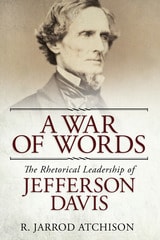
A War of Words
The Rhetorical Leadership of Jefferson DavisR. Jarrod Atchison
University of Alabama Press, 2017
Numerous biographies of Jefferson Davis have been penned; however, until now, there had been no substantive analysis of his public discourse as president of the Confederacy. R. Jarrod Atchison’s A War of Words uses concepts from rhetorical theory and public address to help answer a question that has intrigued scholars from a variety of disciplines since the collapse of the Confederacy: what role, if any, did Davis play in the collapse of Confederate nationalism?
Most discussions of Davis and nationalism focus on the military outcomes of his controversial wartime decisions. A War of Words focuses less on military outcomes and argues instead that, in the context of the Confederacy, Jefferson Davis’s rhetorical leadership should have been responsible for articulating a vision for the nation—including the core tenets of its identity, the values the nation should hold dear, the principles it should never compromise, and the goals it should set for its future. Undoubtedly, Davis possessed the skills necessary to make a persuasive public argument. It is precisely because Davis’s oratory skills were so powerful that there is room to judge how he used them. In short, being a great orator is not synonymous with successful rhetorical leadership.
Atchison posits that Davis’s initial successes constrained his rhetorical options later in the war. A War of Words concludes that, in the end, Davis’s rhetorical leadership was a failure because he was unable to articulate a coherent Confederate identity in light of the sacrifices endured by the populace in order to sustain the war effort.
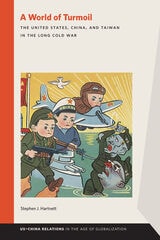
A World of Turmoil
The United States, China, and Taiwan in the Long Cold Warstephen hartnett
Michigan State University Press, 2021
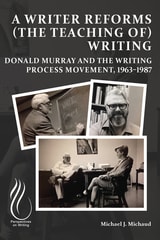
A Writer Reforms (the Teaching of) Writing
Donald Murray and the Writing Process Movement, 1963–1987Michael J. Michaud
University Press of Colorado, 2024
A Writer's Guide to Mindful Reading
Ellen C. Carillo
University Press of Colorado, 2017
Abducting Writing Studies
Edited by Sidney I. Dobrin and Kyle Jensen
Southern Illinois University Press, 2017
Each of the twelve essays that comprise this collection sparks new insights about the phenomenon of writing. A must-read for rhetoric and composition scholars and students, Abducting Writing Studies is sure to foster vibrant discussions about what is possible in writing research and instruction.
Abstinence Cinema
Virginity and the Rhetoric of Sexual Purity in Contemporary FilmCasey Ryan Kelly
Rutgers University Press, 2016
From the perspective of cultural conservatives, Hollywood movies are cesspools of vice, exposing impressionable viewers to pernicious sexually-permissive messages. Offering a groundbreaking study of Hollywood films produced since 2000, Abstinence Cinema comes to a very different conclusion, finding echoes of the evangelical movement’s abstinence-only rhetoric in everything from Easy A to Taken.

Abysmal
A Critique of Cartographic ReasonGunnar Olsson
University of Chicago Press, 2007
People rely on reason to think about and navigate the abstract world of human relations in much the same way they rely on maps to study and traverse the physical world. Starting from that simple observation, renowned geographer Gunnar Olsson offers in Abysmal an astonishingly erudite critique of the way human thought and action have become deeply immersed in the rhetoric of cartography and how this cartographic reasoning allows the powerful to map out other people’s lives.
A spectacular reading of Western philosophy, religion, and mythology that draws on early maps and atlases, Plato, Kant, and Wittgenstein, Thomas Pynchon, Gilgamesh, and Marcel Duchamp, Abysmal is itself a minimalist guide to the terrain of Western culture. Olsson roams widely but always returns to the problems inherent in reason, to question the outdated assumptions and fixed ideas that thinking cartographically entails. A work of ambition, scope, and sharp wit, Abysmal will appeal to an eclectic audience—to geographers and cartographers, but also to anyone interested in the history of ideas, culture, and art.
Academic Writing for Graduate Students, 3rd Edition
Essential Tasks and SkillsJohn M. Swales & Christine B. Feak
University of Michigan Press, 2012
Among the many changes in the third edition:
*newer, longer, and more authentic texts and examples
*greater discipline variety in texts (added texts from hard sciences and engineering)
*more in-depth treatment of research articles
*greater emphasis on vocabulary issues
*revised flow-of-ideas section
*additional tasks that require students to do their own research
*more corpus-informed content
*binding that allows the book to lay flat when open.
The Commentary (teacher's notes and key) (978-0-472-03506-9) has been revised expanded.
Academic and Professional Writing in an Age of Accountability
Edited by Shirley Wilson Logan and Wayne H. Slater, with an Afterword by Jessica Enoch and Scott Wible
Southern Illinois University Press, 2018
The first two essays in the book provide a history of the academic and professional writing program at the University of Maryland. Subsequent essays explore successes and challenges in the establishment and development of writing programs at four other major institutions, identify the features of language that facilitate academic and professional communication, look at the ways digital practices in academic and professional writing have shaped how writers compose and respond to texts, and examine the role of assessment in curriculum and pedagogy. An afterword by distinguished rhetoric and composition scholars Jessica Enoch and Scott Wible offers perspectives on the future of academic and professional writing.
This collection takes stock of the historical, rhetorical, linguistic, digital, and evaluative aspects of the teaching of writing in higher education. Among the critical issues addressed are how university writing programs were first established and what early challenges they faced, where writing programs were housed and who administered them, how the language backgrounds of composition students inform the way writing is taught, the ways in which current writing technologies create new digital environments, and how student learning and programmatic outcomes should be assessed.
Across Property Lines
Textual Ownership in Writing GroupsCandace Spigelman
Southern Illinois University Press, 2000
Candace Spigelman investigates the dynamics of ownership in small group writing workshops, basing her findings on case studies involving two groups: a five-member creative writing group meeting monthly at a local Philadelphia coffee bar and a four-member college-level writing group meeting in their composition classroom. She explores the relationship between particular notions of intellectual property within each group as well as the effectiveness of writing groups that embrace these notions. Addressing the negotiations between the public and private domains of writing within these groups, she discovers that for both the committed writers and the novices, “values associated with textual ownership play a crucial role in writing group performance.”
Spigelman discusses textual ownership, intellectual property, and writing group processes and then reviews theories relating to authorship and knowledge making. After introducing the participants in each group, discussing their texts, and describing their workshop sessions, she examines the writers’ avowed and implied beliefs about exchanging ideas and protecting individual property rights.
Spigelman stresses the necessary tension between individual and social aspects of writing practices: She argues for the need to foster more collaborative activity among student writers by replicating the processes of writers working in nonacademic settings but also contends that all writers must be allowed to imagine their individual agency and authority as they compose.
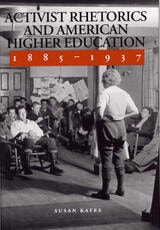
Activist Rhetorics and American Higher Education, 1885-1937
Susan Kates
Southern Illinois University Press, 2000
In this study of the history of rhetoric education, Susan Kates focuses on the writing and speaking instruction developed at three academic institutions founded to serve three groups of students most often excluded from traditional institutions of higher education in late-nineteenth-and early-twentieth-century America: white middle-class women, African Americans, and members of the working class.
Kates provides a detailed look at the work of those students and teachers ostracized from rhetorical study at traditional colleges and universities. She explores the pedagogies of educators Mary Augusta Jordan of Smith College in Northhampton, Massachusetts; Hallie Quinn Brown of Wilberforce University in Wilberforce, Ohio; and Josephine Colby, Helen Norton, and Louise Budenz of Brookwood Labor College in Katonah, New York.
These teachers sought to enact forms of writing and speaking instruction incorporating social and political concerns in the very essence of their pedagogies. They designed rhetoric courses characterized by three important pedagogical features: a profound respect for and awareness of the relationship between language and identity and a desire to integrate this awareness into the curriculum; politicized writing and speaking assignments designed to help students interrogate their marginalized standing within the larger culture in terms of their gender, race, or social class; and an emphasis on service and social responsibility.
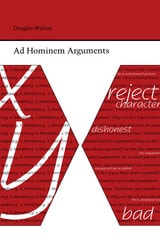
Ad Hominem Arguments
Douglas Walton
University of Alabama Press, 2009
A vital contribution to legal theory and media and civic discourse
In the 1860s, northern newspapers attacked Abraham Lincoln's policies by attacking his character, using the terms "drunk," "baboon," "too slow," "foolish," and "dishonest." Steadily on the increase in political argumentation since then, the argumentum ad hominem, or personal attack argument, has now been carefully refined as an instrument of "oppo tactics" and "going negative" by the public relations experts who craft political campaigns at the national level. In this definitive treatment of one of the most important concepts in argumentation theory and informal logic, Douglas Walton presents a normative framework for identifying and evaluating ad hominem or personal attack arguments.
Personal attack arguments have often proved to be so effective, in election campaigns, for example, that even while condemning them, politicians have not stopped using them. In the media, in the courtroom, and in everyday confrontation, ad hominem arguments are easy to put forward as accusations, are difficult to refute, and often have an extremely powerful effect on persuading an audience.
Walton gives a clear method for analyzing and evaluating cases of ad hominem arguments found in everyday argumentation. His analysis classifies the ad hominem argument into five clearly defined subtypes—abusive (direct), circumstantial, bias, "poisoning the well," and tu quoque ("you're just as bad") arguments—and gives methods for evaluating each type. Each subtype is given a well-defined form as a recognizable type of argument. The numerous case studies show in concrete terms many practical aspects of how to use textual evidence to identify and analyze fallacies and to evaluate argumentation as fallacious or not in particular cases.

Adam Smith
The Rhetoric of ProprietyStephen J. McKenna
Southern Illinois University Press, 2006
Adapting VALUEs
Tracing the Life of a Rubric through Institutional EthnographyJennifer Grouling
University Press of Colorado, 2023
Adapting the Past to Reimagine Possible Futures
Celebrating and Critiquing WAC at 50Megan J. Kelly
University Press of Colorado, 2024
Addressing Postmodernity
Kenneth Burke, Rhetoric, and a Theory of Social ChangeBarbara Biesecker
University of Alabama Press, 2000
In Addressing Postmodernity, Barbara Biesecker examines the relationship between rhetoric and social change and the ways human beings transform social relations through the purposeful use of symbols. In discerning the conditions of possibility for social transformation and the role of human beings and rhetoric in it, Biesecker turns to the seminal work of Kenneth Burke.
Through a close reading of Burke's major works, A Grammar of Motives, A Rhetoric of Motives, and The Rhetoric of Religion: Studies in Logology, the author addresses the critical topic of the
fragmentation of the contemporary lifeworld revealing postmodernity will have a major impact on Burkeian scholarship and on the rhetorical critique of social relations in general.
Directly confronting the challenges posed by postmodernity to social theorists and critics alike and juxtaposing the work of Burke and Jurgen Habermas, Biesecker argues that a radicalized rereading of Burke's theory of the negative opens the way toward a resolutely rhetorical theory of social change and human agency.
Adequate
Rewriting the Logics of Success in Rhetoric and CompositionTimothy Oleksiak
Utah State University Press, 2025
Fourteen essays from established scholars, ranging from deeply personal, to darkly humorous, to impassioned and blunt, offer theoretical and pragmatic resources for responding to unjust labor extraction and the discipline’s demands that teachers do it all. Drawing on an array of intellectual traditions including labor studies, feminist rhetoric, disability studies, Jewish rhetoric, and theories of writing program administrations, authors assert the reasonable position of being enough and thriving outside of work in the face of growing demands for professional excellence and even perfection.
Adequate reimagines what the concept of adequacy holds for the future of academic work. An invaluable resource for scholars, graduate students, and advanced undergraduate students in the rhetoric and composition field, this volume covers the realities of teaching rhetoric and composition in the modern college environment, as well as potential paths forward for educators in need of a better work-life balance.
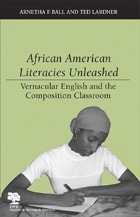
African American Literacies Unleashed
Vernacular English and the Composition ClassroomArnetha F. Ball and Ted Lardner
Southern Illinois University Press, 2005
This pioneering study of African American students in the composition classroom lays the groundwork for reversing the cycle of underachievement that plagues linguistically diverse students. African American Literacies Unleashed: Vernacular English and the Composition Classroom approaches the issue of African American Vernacular English (AAVE) in terms of teacher knowledge and prevailing attitudes, and it attempts to change current pedagogical approaches with a highly readable combination of traditional academic discourse and personal narratives.
Realizing that composition is a particular form of social practice that validates some students and excludes others, Arnetha Ball and Ted Lardner acknowledge that many African American students come to writing and composition classrooms with talents that are not appreciated. To empower and inform practitioners, administrators, teacher educators, and researchers, Ball and Lardner provide knowledge and strategies that will help unleash the potential of African American students and help them imagine new possibilities for their successes as writers.
African American Literacies Unleashed asserts that necessary changes in theory and practice can be addressed by refocusing attention from teachers’ knowledge deficits to the processes through which teachers engage information relevant to culturally informed pedagogy. Providing strategies for unlearning racism in the classroom and changing the status quo, this volume stresses the development and maintenance of a real sense of teaching efficacy—teachers’ beliefs in their abilities to connect with and work effectively with all students—and reflective optimism—teachers’ informed expectations that all students have the potential to succeed.
African American Rhetoric(s)
Interdisciplinary PerspectivesEdited By Elaine B. Richardson and Ronald L. Jackson II. Foreword by Jacqueline Jones Royster. Introduction by Keith Gilyard
Southern Illinois University Press, 2007
Afrocentric Idea Revised
Molefi Asante
Temple University Press, 1998
After Plato
Rhetoric, Ethics, and the Teaching of WritingJohn Duffy
Utah State University Press, 2020
After Plato redefines the relationships of rhetoric for scholars, teachers, and students of rhetoric and writing in the twenty-first century. Featuring essays by some of the most accomplished scholars in the field, the book explores the diversity of ethical perspectives animating contemporary writing studies—including feminist, postmodern, transnational, non-Western, and virtue ethics—and examines the place of ethics in writing classrooms, writing centers, writing across the curriculum programs, prison education classes, and other settings.
When truth is subverted, reason is mocked, racism is promoted, and nationalism takes center stage, teachers and scholars of writing are challenged to articulate the place of rhetorical ethics in the writing classroom and throughout the field more broadly. After Plato demonstrates the integral place of ethics in writing studies and provides a roadmap for future conversations about ethical rhetoric that will play an essential role in the vitality of the field.
Contributors: Fred Antczak, Patrick W. Berry, Vicki Tolar Burton, Rasha Diab, William Duffy, Norbert Elliot, Gesa E. Kirsch, Don J. Kraemer, Paula Mathieu, Robert J. Mislevy, Michael A. Pemberton, James E. Porter, Jacqueline Jones Royster, Xiaoye You, Bo Wang
After Rhetoric
The Study of Discourse Beyond Language and CultureStephen R. Yarbrough
Southern Illinois University Press, 1999
Aware that categorical thinking imposes restrictions on the ways we communicate, Stephen R. Yarbrough proposes discourse studies as an alternative to rhetoric and philosophy, both of which are structuralistic systems of inquiry.
Discourse studies, Yarbrough argues, does not support the idea that languages, cultures, or conceptual schemes in general adequately describe linguistic competence. He asserts that a belief in languages and cultures "feeds a false dichotomy: either we share the same codes and conventions, achieving community but risking exclusivism, or we proliferate differences, achieving choice and freedom but risking fragmentation and incoherence." Discourse studies, he demonstrates, works around this dichotomy.
Drawing on philosopher Donald Davidson, Yarbrough establishes the idea that community can be a consequence of communication but is not a prerequisite for it. By disassociating our thinking from conceptual schemes, we can avoid the problems that come with believing in an abstract structure that predates any utterance.
Yarbrough also draws on Mikhail Bakhtin's dialogism to define how utterances operate in life and to show how utterances are involved with power and how power relates to understanding. His discussion of Michel Meyer's problematology treats the questions implied by a statement as the meaning of the statement.
Yarbrough introduces readers to a credible theoretical framework for focusing on discourse rather than on conceptual schemes that surround it and to the potential advantages of our using this approach in daily life.
After the Public Turn
Composition, Counterpublics, and the Citizen BricoleurFrank Farmer
Utah State University Press, 2013
Farmer examines two very different kinds of publics, cultural and disciplinary, and discusses two counterpublics within those broad categories: zine discourses and certain academic discourses. By juxtaposing these two significantly different kinds of publics, Farmer suggests that each discursive world can be seen, in its own distinct way, as a counterpublic, an oppositional social formation that has a stake in widening or altering public life as we know it.
Drawing on major figures in rhetoric and cultural theory, Farmer builds his argument about composition teaching and its relation to the public sphere, leading to a more sophisticated understanding of public life and a deeper sense of what democratic citizenship means for our time.
Agents of Integration
Understanding Transfer as a Rhetorical ActRebecca S. Nowacek
Southern Illinois University Press, 2011
While many studies of transfer are longitudinal, with data collected over several years, Nowacek’s is synchronous, a rich cross-section of the writing and classroom discussions produced by a team-taught learning community—three professors and eighteen students enrolled in a one-semester general education interdisciplinary humanities seminar that consisted of three linked courses in history, literature, and religious studies. With extensive field notes, carefully selected student and teacher self-reports in the form of interviews and focus groups, and thorough examinations of recorded classroom discussions, student papers with professor comments, and student notebooks, Nowacek presents a nuanced and engaging analysis that outlines how transfer is not simply a cognitive act but a rhetorical one that involves both seeing connections and presenting them to the instructors who are institutionally positioned to recognize and value them.
Considering the challenges facing instructors teaching for transfer and the transfer of writing-related knowledge, Nowacek develops and outlines a new theoretical framework and methodological model of transfer and illustrates the practical implications through case studies and other classroom examples. She proposes transfer is best understood as an act of recontextualization, and she builds on this premise throughout the book by drawing from previous work in cognitive psychology, activity theory, and rhetorical genre theory, as well as her own analyses of student work.
This focused examination complements existing longitudinal studies and will help readers better understand not only the opportunities and challenges confronting students as they work to become agents of integration but also the challenges facing instructors as they seek to support that student work.
Algorithmic Worldmaking
The Rhetorical Craft of Networked OrderJeremy David Johnson
University of Alabama Press, 2025
Illuminates how algorithms, intertwined with human biases, damage political discourse and civic engagement.
Algorithmic Worldmaking is an urgent exploration of the dynamic relationship between algorithms that encode their human creators’ assumptions and the humans whose choices are shaped by these algorithms in search engines, social media, and other digital spaces. Transcending discussions of one or the other, Jeremy David Johnson traces the corrupting political and social influences that arise from their mutual interaction.
Johnson uses the concept of kosmos in its sense of a dynamic order to frame the interplay between algorithms, humans, and their environments. He first shows how algorithms, far from being objective or unbiased, perpetuate human errors. Johnson then suggests a framework of four parts—navigation, exploration, maintenance, and monetization—to map the variety of political consequences to a society influenced by these four factors.
Citing controversies at major platforms such as Google, YouTube, and Facebook, Johnson demonstrates how algorithms limit and shape human thought. He makes several persuasive arguments. First, algorithms and humans share agency but humans have exceptional responsibility. Second, the algorithmic kosmos mirrors and shapes social oppression. Third, algorithms incentivize capitalist exploitation. Last, these influences damage democratic deliberation.
This landmark study is essential for scholars and students of political science, media studies, and those interested in the perilous implications of algorithmic systems on civic and political life.
Ambiguities of Domination
Politics, Rhetoric, and Symbols in Contemporary SyriaLisa Wedeen
University of Chicago Press, 1999
Wedeen concludes that Asad's cult acts as a disciplinary device, generating a politics of public dissimulation in which citizens act as if they revered their leader. By inundating daily life with tired symbolism, the regime exercises a subtle, yet effective form of power. The cult works to enforce obedience, induce complicity, isolate Syrians from one another, and set guidelines for public speech and behavior. Wedeen's ethnographic research demonstrates how Syrians recognize the disciplinary aspects of the cult and seek to undermine them. Provocative and original, Ambiguities of Domination is a significant contribution to comparative politics, political theory, and cultural studies.
Ambiguities of Domination
Politics, Rhetoric, and Symbols in Contemporary SyriaLisa Wedeen
University of Chicago Press, 2015
Wedeen shows how such flagrantly fictitious claims were able to produce a politics of public dissimulation in which citizens acted as if they revered the leader. By inundating daily life with tired symbolism, the regime exercised a subtle, yet effective form of power. The cult worked to enforce obedience, induce complicity, isolate Syrians from one another, and set guidelines for public speech and behavior. Wedeen‘s ethnographic research demonstrates how Syrians recognized the disciplinary aspects of the cult and sought to undermine them. In a new preface, Wedeen discusses the uprising against the Syrian regime that began in 2011 and questions the usefulness of the concept of legitimacy in trying to analyze and understand authoritarian regimes.
American Catastrophe
Fundamentalism, Climate Change, Gun Rights, and the Rhetoric of Donald J. TrumpLuke Winslow
The Ohio State University Press, 2020
Luke Winslow introduces the rhetorical homology as a critical tool useful for understanding how catastrophic appeals unite Americans across disparate religious, ecological, cultural, and political spheres. More specifically, the four case study chapters examining Christian fundamentalism, anti-environmentalism, gun rights messaging, and the administration of Donald Trump reveal a consistent formal pattern oriented toward catastrophe. In teasing out this orientation toward catastrophe, Winslow offers a fresh, provocative, and insightful contribution to our most pressing social challenges.
American Corruption Talk
A Political EtymologyRobert G. Boatright and Molly Brigid McGrath
Temple University Press, 2025
Robert Boatright and Molly Brigid McGrath focus on the role corruption talk plays in American political discourse. They distinguish between two ways people speak about corruption—corruption talk in the style of a purifier, who wishes to expunge the evil forces or drain the swamp, and corruption talk in the style of the mender, who thinks of managing, replacing, or repairing.
American Corruption Talk begins by tracing how the concept of political corruption was developed by philosophers and political thinkers, leading up to its use in the American context, especially in the Progressive Era. It also compares modes of contemporary corruption talk in different areas of public life. In doing so, the authors hope to resolve confusion and partisan disagreements about what corruption is and to discourage the tendency to label actions, events, and ideas that we merely disagree with as corrupt.