Results by title
60 books match the query 'Right' and 8 start with a

A Death of One's Own
Literature, Law, and the Right to DieJared Stark
Northwestern University Press, 2018
More than a survey or work of advocacy, A Death of One’s Own examines the consequences and limits of the three reasons most often cited for supporting a person’s right to die: that it is justified as an expression of personal autonomy or self-ownership; that it constitutes an act of self-authorship, of “choosing a final chapter” in one’s life; and that it enables what has come to be called “death with dignity.” Probing the intersections of law and literature, Stark interweaves close discussion of major legal, political, and philosophical arguments with revealing readings of literary and testimonial texts by writers including Balzac, Melville, Benjamin, and Améry.
A thought-provoking work that will be of interest to those concerned with law and humanities, biomedical ethics, cultural history, and human rights, A Death of One’s Own opens new and suggestive paths for thinking about the history of modern death as well as the unsettled future of the right to die.

A Right to Childhood
The U.S. Children's Bureau and Child Welfare, 1912-46Kriste Lindenmeyer
University of Illinois Press, 1997
for their political agendas as Americans try to determine the role--if
any--of the federal government in the lives of children. But what is the
history of child welfare policy in the United States? What can we learn
from the efforts to found the U.S. Children's bureau in 1903 and its eventual
dismemberment in 1946?
This is the first history of the Children's Bureau and the first in-depth
examination of federal child welfare policy from the perspective of that
agency. Its goal was to promote "a right to childhood," and
Kriste Lindenmeyer unflinchingly examines the successes--and the failures--of
the Bureau. She analyzes infant and maternal mortality, the promotion
of child health care, child labor reform, and the protection of children
with "special needs" from the Bureau's inception through the
Depression, and through all the legislation that impacted on its work
for children. The meaningful accomplishments and the demise of the Children's
Bureau have much to tell parents, politicians, and policy-makers everywhere.
A Right to Health
Medicine, Marginality, and Health Care Reform in Northeastern BrazilBy Jessica Scott Jerome
University of Texas Press, 2015
In 1988, a new health care system, the Sistema Único de Saúde (Unified Health Care System or SUS) was formally established in Brazil. The system was intended, among other goals, to provide universal access to health care services and to redefine health as a citizen’s right and a duty of the state. A Right to Health explores how these goals have unfolded within an urban peripheral community located on the edges of the northeastern city of Fortaleza. Focusing on the decade 1998–2008 and the impact of health care reforms on one low-income neighborhood, Jessica Jerome documents the tensions that arose between the ideals of the reforms and their entanglement with pervasive socioeconomic inequality, neoliberal economic policy, and generational tension with the community.
Using ethnographic and historical research, the book traces the history of political activism in the community, showing that, since the community’s formation in the early 1930s, residents have consistently fought for health care services. In so doing, Jerome develops a multilayered portrait of urban peripheral life and suggests that the notion of health care as a right of each citizen plays a major role not only in the way in which health care is allocated, but, perhaps more importantly, in how health care is understood and experienced.
A Right to Housing
Foundation for a New Social AgendaRachel Bratt
Temple University Press, 2006
The contributors to A Right to Housing consider the key issues related to America's housing crisis, including income inequality and insecurity, segregation and discrimination, the rights of the elderly, as well as legislative and judicial responses to homelessness. The book offers a detailed examination of how access to adequate housing is directly related to economic security.
With essays by leading activists and scholars, this book presents a powerful and compelling analysis of the persistent inability of the U.S. to meet many of its citizens' housing needs, and a comprehensive proposal for progressive change.
A Right to Read
Segregation and Civil Rights in Alabama's Public Libraries, 1900–1965Patterson Toby Graham
University of Alabama Press, 2006
This original and significant contribution to the historiography of the civil rights movement and education in the South details a dramatic and disturbing chapter in American cultural history.
The tradition of American public libraries is closely tied to the perception that these institutions are open to all without regard to social background. Such was not the case in the segregated South, however, where public libraries barred entry to millions of African Americans and provided tacit support for a culture of white supremacy. A Right to Read is the first book to examine public library segregation from its origins in the late 19th century through its end during the tumultuous years of the 1960s civil rights movement. Graham focuses on Alabama, where African Americans, denied access to white libraries, worked to establish and maintain their own "Negro branches." These libraries-separate but never equal-were always underfunded and inadequately prepared to meet the needs of their constituencies.
By 1960, however, African Americans turned their attention toward desegregating the white public libraries their taxes helped support. They carried out "read-ins" and other protests designed to bring attention and judicial pressure upon the segregationists. Patterson Toby Graham contends that, for librarians, the civil rights movement in their institutions represented a conflict of values that pitted their professional ethics against regional mores. He details how several librarians in Alabama took the dangerous course of opposing segregationists, sometimes with unsettling results.
This groundbreaking work built on primary evidence will have wide cross-disciplinary appeal. Students and scholars of southern and African-American history, civil rights, and social science, as well as academic and public librarians, will appreciate Graham's solid research and astute analysis.
Amending the Past
Europe's Holocaust Commissions and the Right to HistoryAlexander Karn
University of Wisconsin Press, 2017
Alexander Karn analyzes more than a dozen Holocaust commissions—in Germany, Switzerland, France, Poland, Austria, Latvia, Lithuania, and elsewhere—in a comparative framework, situating each in the context of past and present politics, to evaluate their potential for promoting justice and their capacity for bringing the perspectives of rival groups more closely together. Karn also evaluates the media coverage these commissions received and probes their public reception from multiple angles.
Arguing that historical commissions have been underused as a tool for conflict management, Karn develops a program for historical mediation and moral reparation that can deepen democratic commitment and strengthen human rights in both transitional regimes and existing liberal states.
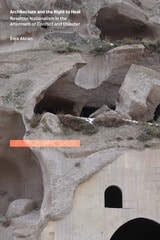
Architecture and the Right to Heal
Resettler Nationalism in the Aftermath of Conflict and DisasterEsra Akcan
Duke University Press, 2025
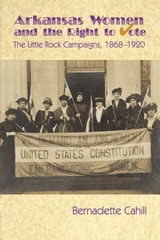
Arkansas Women and the Right to Vote
The Little Rock Campaigns: 1868-1920Bernadette Cahill
Butler Center for Arkansas Studies, 2015