Results by title
21 books match the query 'Rituals'
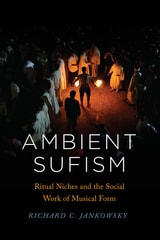
Ambient Sufism
Ritual Niches and the Social Work of Musical FormRichard C. Jankowsky
University of Chicago Press, 2021
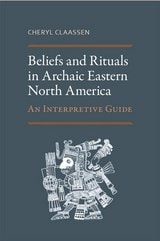
Beliefs and Rituals in Archaic Eastern North America
An Interpretive GuideCheryl Claassen
University of Alabama Press, 2015
A comprehensive and essential field reference, Beliefs and Rituals in Archaic Eastern North America reveals the spiritual landscape in the American Archaic period.
Beliefs and Rituals in Archaic Eastern North America describes, illustrates, and offers nondogmatic interpretations of rituals and beliefs in Archaic America. In compiling a wealth of detailed entries, author Cheryl Claassen has created both an exhaustive reference as well as an opening into new archaeological taxonomies, connections, and understandings of Native American culture.
The material is presented in an introductory essay about Archaic rituals followed by two sections of entries that incorporate reports and articles discussing archaeological sites; studies of relevant practices of ritual and belief; data related to geologic features, artifact attributes, and burial settings; ethnographies; and pilgrimages to specific sites. Claassen’s work focuses on the American Archaic period (marked by the end of the Ice Age approximately 11,000 years ago) and a geographic area bounded by the edge of the Great Plains, Newfoundland, and southern Florida. This period and region share specific beliefs and practices such as human sacrifice, dirt mound burial, and oyster shell middens.
This interpretive guide serves as a platform for new interpretations and theories on this period. For example, Claassen connects rituals to topographic features and posits the Pleistocene-Holocene transition as a major stimulus to Archaic beliefs. She also expands the interpretation of existing data previously understood in economic or environmental terms to include how this same data may also reveal spiritual and symbolic practices. Similarly, Claassen interprets Archaic culture in terms of human agency and social constraint, bringing ritual acts into focus as drivers of social transformation and ethnogenesis.
Richly annotated and cross-referenced for ease of use, Beliefs and Rituals in Archaic Eastern North America will benefit scholars and students of archaeology and Native American culture. Claassen’s overview of the archaeological record should encourage the development of original archaeological and historical connections and patterns. Such an approach, Claassen suggests, may reveal patterns of influence extending from early eastern Americans to the Aztec and Maya.
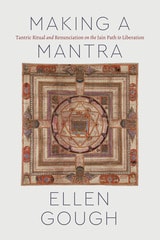
Making a Mantra
Tantric Ritual and Renunciation on the Jain Path to LiberationEllen Gough
University of Chicago Press, 2021
Typically, Jainism is characterized as a celibate, ascetic path to liberation in which one destroys karma through austerities, while the tantric path to liberation is characterized as embracing the pleasures of the material world, requiring the ritual use of mantras to destroy karma. Gough, however, argues that asceticism and Tantra should not be viewed in opposition to one another. She does so by showing that Jains perform “tantric” rituals of initiation and meditation on mantras and maṇḍalas. Jainism includes kinds of tantric practices, Gough provocatively argues, because tantric practices are a logical extension of the ascetic path to liberation.

Mecca and Eden
Ritual, Relics, and Territory in IslamBrannon Wheeler
University of Chicago Press, 2006
Integrating Islamic examples into the comparative study of religion, Brannon Wheeler shows how the treatment of rituals, relics, and territory is related to the more general mythological depiction of the origins of Islamic civilization. Along the way, Wheeler considers the contrast between Mecca and Eden in Muslim rituals, the dispersal and collection of relics of the prophet Muhammad, their relationship to the sanctuary at Mecca, and long tombs associated with the gigantic size of certain prophets mentioned in the Quran.
Mecca and Eden succeeds, as few books have done, in making Islamic sources available to the broader study of religion.
Monks and Magic
Revisiting a Classic Study of Religious Ceremonies in ThailandBarend Jan Terwiel
National University of Singapore Press, 2012
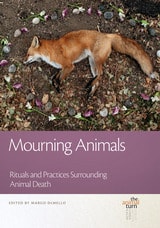
Mourning Animals
Rituals and Practices Surrounding Animal DeathMargo DeMello
Michigan State University Press, 2016
Mythography
The Study of Myths and RitualsWilliam G. Doty
University of Alabama Press, 2000
This new edition of William Doty's critically acclaimed study provides a comprehensive guidebook to the many schools of interpretation in this burgeoning field
William Doty's popular text has been hailed as the most comprehensive work of its kind. Extensively rewritten and completely restructured, the new edition provides further depth and perspective and is even more accessible to students of myth. It includes expanded coverage of postmodern and poststructuralist perspectives, the Gernet Center, mythic iconography, neo-Jungian approaches, and cultural studies, and it summarizes what is new in the study of Greek myth, iconography, French classical scholarship, and ritual studies. It also features a comprehensive index of names and topics, a glossary, an up-to-date annotated bibliography, and a guide to myth on the Internet.
Presenting all major myth theorists from antiquity to the present, Mythography is an encyclopedic work that offers a cross-disciplinary approach to the study of myth. By reflecting the dramatic increase in interest in myth among both scholars and general readers since publication of the first edition, it remains a key study of modern approaches to myth and
an essential guide to the wealth of mythographic research available today.
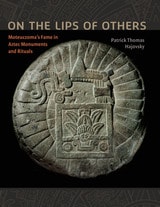
On the Lips of Others
Moteuczoma's Fame in Aztec Monuments and RitualsBy Patrick Thomas Hajovsky
University of Texas Press, 2015
Moteuczoma, the last king who ruled the Aztec Empire, was rarely seen or heard by his subjects, yet his presence was felt throughout the capital city of Tenochtitlan, where his deeds were recorded in hieroglyphic inscriptions on monuments and his command was expressed in highly refined ritual performances. What did Moteuczoma’s “fame” mean in the Aztec world? How was it created and maintained? In this innovative study, Patrick Hajovsky investigates the king’s inscribed and spoken name, showing how it distinguished his aura from those of his constituencies, especially other Aztec nobles, warriors, and merchants, who also vied for their own grandeur and fame. While Tenochtitlan reached its greatest size and complexity under Moteuczoma, the “Great Speaker” innovated upon fame by tying his very name to the Aztec royal office.
As Moteuczoma’s fame transcends Aztec visual and oral culture, Hajovsky brings together a vast body of evidence, including Nahuatl language and poetry, indigenous pictorial manuscripts and written narratives, and archaeological and sculptural artifacts. The kaleidoscopic assortment of sources casts Moteuczoma as a divine king who, while inheriting the fame of past rulers, saw his own reputation become entwined with imperial politics, ideological narratives, and eternal gods. Hajovsky also reflects on posthumous narratives about Moteuczoma, which created a very different sense of his fame as a conquered subject. These contrasting aspects of fame offer important new insights into the politics of personhood and portraiture across Aztec and colonial-period sources.
Religious Bodies Politic
Rituals of Sovereignty in Buryat BuddhismAnya Bernstein
University of Chicago Press, 2013
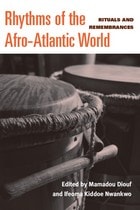
Rhythms of the Afro-Atlantic World
Rituals and RemembrancesEdited by Mamadou Diouf and Ifeoma Kiddoe Nwankwo
University of Michigan Press, 2010
"Collecting essays by fourteen expert contributors into a trans-oceanic celebration and critique, Mamadou Diouf and Ifeoma Kiddoe Nwankwo show how music, dance, and popular culture turn ways of remembering Africa into African ways of remembering. With a mix of Nuyorican, Cuban, Haitian, Kenyan, Senegalese, Trinidagonian, and Brazilian beats, Rhythms of the Afro-Atlantic World proves that the pleasures of poly-rhythm belong to the realm of the discursive as well as the sonic and the kinesthetic."
---Joseph Roach, Sterling Professor of Theater, Yale University
"As necessary as it is brilliant, Rhythms of the Afro-Atlantic World dances across, beyond, and within the Black Atlantic Diaspora with the aplomb and skill befitting its editors and contributors."
---Mark Anthony Neal, author of Soul Babies: Black Popular Culture and the Post-Soul Aesthetic
Along with linked modes of religiosity, music and dance have long occupied a central position in the ways in which Atlantic peoples have enacted, made sense of, and responded to their encounters with each other. This unique collection of essays connects nations from across the Atlantic---Senegal, Kenya, Trinidad, Cuba, Brazil, and the United States, among others---highlighting contemporary popular, folkloric, and religious music and dance. By tracking the continuous reframing, revision, and erasure of aural, oral, and corporeal traces, the contributors to Rhythms of the Afro-Atlantic World collectively argue that music and dance are the living evidence of a constant (re)composition and (re)mixing of local sounds and gestures.
Rhythms of the Afro-Atlantic World distinguishes itself as a collection focusing on the circulation of cultural forms across the Atlantic world, tracing the paths trod by a range of music and dance forms within, across, or beyond the variety of locales that constitute the Atlantic world. The editors and contributors do so, however, without assuming that these paths have been either always in line with national, regional, or continental boundaries or always transnational, transgressive, and perfectly hybrid/syncretic. This collection seeks to reorient the discourse on cultural forms moving in the Atlantic world by being attentive to the specifics of the forms---their specific geneses, the specific uses to which they are put by their creators and consumers, and the specific ways in which they travel or churn in place.
Mamadou Diouf is Leitner Family Professor of African Studies, Director of the Institute of African Studies, and Professor of History at Columbia University.
Ifeoma Kiddoe Nwankwo is Associate Professor of English at Vanderbilt University.
Jacket photograph by Elias Irizarry
Rituals Of Mediation
International Politics And Social MeaningFrancois Debrix
University of Minnesota Press, 2003
A timely consideration of the meaning of transnational cultural interactions today
In an era of increasing globalization, the cultural and the international have borders as permeable as most nations’s—and an understanding of one requires making sense of the other. Foregrounding the role of mediation—understood here as a site of representation, transformation, and pluralization—the authors engage two specific questions: How might we make theoretical and practical sense of transnational cultural interactions? And how are we to understand the ways in which the sites of mediation represent, transform, and remediate internationals? Accordingly, the authors consider international issues like security, development, political activism, and the war against terrorism through the lens of cultural practices such as traveling through airports, exhibiting art and photography, logging on to the Internet, and spinning news stories.
Contributors: Robin Brown, U of Leeds; David Campbell, U of Newcastle upon Tyne; Michael Dillon, U of Lancaster; Debbie Lisle, Queen’s U, Belfast; Moya Lloyd, Queen’s U, Belfast; Timothy W. Luke, Virginia Polytechnic Institute and State U; Patricia L. Price, Florida International U; Jayne Rodgers, U of Leeds; Marysia Zalewski, Queen’s U, Belfast.
Rituals and Ceremonies in Popular Culture
Edited by Ray B. Browne
University of Wisconsin Press, 1980
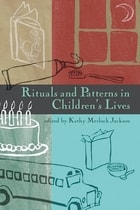
Rituals and Patterns in Children's Lives
Edited by Kathy Merlock Jackson
University of Wisconsin Press, 2005
Trick-or-treating. Flower girls. Bedtime stories. Bar and bat mitvah. In a nation of increasing ethnic, familial, and technological complexity, the patterns of children's lives both persist and evolve. This book considers how such events shape identity and transmit cultural norms, asking such questions as:
* How do immigrant families negotiate between old traditions and new?
* What does it mean when children engage in ritual insults and sick jokes?
* How does playing with dolls reflect and construct feelings of racial identity?
* Whatever happened to the practice of going to the Saturday matinee to see a Western?
* What does it mean for a child to be (in the words of one bride) "flower-girl material"? How does that role
cement a girl's bond to her family and initiate her into society?
* What is the function of masks and costumes, and why do children yearn for these accoutrements of disguise?
Rituals and Patterns in Children's Lives suggests the manifold ways in which America's children come to know their society and themselves.
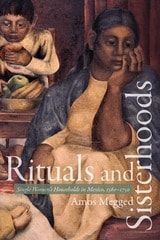
Rituals and Sisterhoods
Single Women's Households in Mexico, 1560–1750Amos Megged
University Press of Colorado, 2019
Megged analyzes these women’s life stories recorded during the Spanish Inquisition, as well as wills and bequests, petitions, parish records, and private letters that describe—in their own words—how they exercised agency in male-dominated and religious spaces. Translations of select documents and accompanying analysis illustrate the conditions in which women dissolved their marriages, remained in long-lasting extramarital cohabitations, and formed female-led households and “sisterhoods” of their own. Megged provides evidence that single women in colonial Mexico played a far more active and central role in economic systems, social organizations, cults, and political activism than has been previously thought, creating spaces for themselves in which they could initiate and maintain autonomy and values distinct from those of elite society.
The institutionalization of female-headed households in mid-colonial Mexico had wide-ranging repercussions and effects on general societal values. Rituals and Sisterhoods details the particular relevance of these changes to the history of emotions, sexuality, gender concepts, perceptions of marriage, life choices, and views of honor and shame in colonial society. This book will be of significant interest to students and scholars of colonial Latin American history, the history of Early Modern Spain and Europe, and gender and women’s studies.
Rituals of Fertility and the Sacrifice of Desire
Nazarite Women's Performance in South AfricaCarol Ann Muller
University of Chicago Press, 1999
Against the backdrop of South Africa's turbulent history, Muller shows how Shembe's ideas of female ritual purity developed as a response to a regime and culture that pushed all things associated with women, cultural expression, and Africanness to the margins.
Carol Muller breaks new ground in the study of this changing region and along the way includes fascinating details of her own poignant journey, as a young, white South African woman, to the "other" side of a divided society.
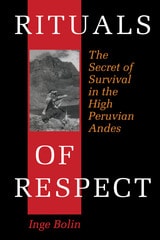
Rituals of Respect
The Secret of Survival in the High Peruvian AndesBy Inge Bolin
University of Texas Press, 1998
"In the remoteness of their mountain retreat, the herders of Chillihuani, Peru, recognize that respect for others is the central and most significant element of all thought and action," observes Inge Bolin. "Without respect, no society, no civilization, can flourish for long. Without respect, humanity is doomed and so is the earth, sustainer of all life."
In this beautifully written ethnography, Bolin describes the rituals of respect that maintain harmonious relations among people, the natural world, and the realm of the gods in an isolated Andean community of llama and alpaca herders that reaches up to 16,500 feet. Bolin was the first foreigner to visit Chillihuani, and she was permitted to participate in private family rituals, as well as public ceremonies. In turn, she allows the villagers to explain the meaning of their rituals in their own words.
From these first-hand experiences, Bolin offers an intimate portrait of an annual ritual cycle that dates back to Inca and pre-Inca times, including the ancient Pukllay; weddings; the Fiesta de Santiago, with its horse races on the top of the world; and Peru's Independence Day, when the Rituals of Respect for elders and young people alike are carried out within male and female hierarchies reminiscent of Inca times.
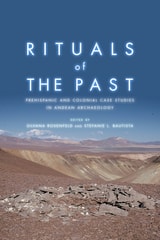
Rituals of the Past
Prehispanic and Colonial Case Studies in Andean ArchaeologySilvana Rosenfeld
University Press of Colorado, 2017
Rituals of the Past explores the various approaches archaeologists use to identify ritual in the material record and discusses the influence ritual had on the formation, reproduction, and transformation of community life in past Andean societies. A diverse group of established and rising scholars from across the globe investigates how ritual influenced, permeated, and altered political authority, economic production, shamanic practice, landscape cognition, and religion in the Andes over a period of three thousand years.
Contributors deal with theoretical and methodological concerns including non-human and human agency; the development and maintenance of political and religious authority, ideology, cosmologies, and social memory; and relationships with ritual action. The authors use a diverse array of archaeological, ethnographic, and linguistic data and historical documents to demonstrate the role ritual played in prehispanic, colonial, and post-colonial Andean societies throughout the regions of Peru, Chile, Bolivia, and Argentina. By providing a diachronic and widely regional perspective, Rituals of the Past shows how ritual is vital to understanding many aspects of the formation, reproduction, and change of past lifeways in Andean societies.
Contributors: Sarah Abraham, Carlos Angiorama, Florencia Avila, Camila Capriata Estrada, David Chicoine, Daniel Contreras, Matthew Edwards, Francesca Fernandini, Matthew Helmer, Hugo Ikehara, Enrique Lopez-Hurtado, Jerry Moore, Axel Nielsen, Yoshio Onuki, John Rick, Mario Ruales, Koichiro Shibata, Hendrik Van Gijseghem, Rafael Vega-Centeno, Verity Whalen
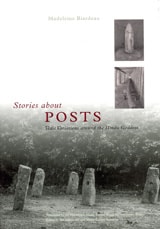
Stories about Posts
Vedic Variations around the Hindu GoddessMadeleine Biardeau
University of Chicago Press, 2004
After exploring several ethnographic facts that have escaped the notice of previous observers, Biardeau presents a variety of hunches, hypotheses, and insights building up to the provocative thesis of Stories about Posts: that the variations found in the contemporary cult of the Goddess—in both her royal and rural village aspects—reveal untraced regional histories of the Vedic sacrificial post, the yupa. Biardeau's work opens up new ways of thinking about Vedic sacrificial themes and elements as they recur in post-Vedic texts and iconographies. It also connects wayside stones in Maharashtra named after the buffalo to stones, posts, and people named after a so-called Buffalo King in Maharashtra, Andhra Pradesh, Karnataka, and Tamilnadu.
A work of magnificent scholarship and fieldwork, Stories about Posts, in ways no previous work has attempted, much less accomplished, unravels much of the mystery surrounding contemporary Hindu ritual by connecting it to the ancient Sanskrit epics. As such, it will fascinate students of Indology, religious studies, and anthropology for years to come.
The Entablo Manuscript
Water Rituals and Khipu Boards of San Pedro de Casta, PeruSarah Bennison
University of Texas Press, 2022
A unique study of an Andean community’s water rituals and the extraordinary document describing how they should be performed
In the dry season in the Andes, water from springs, lakes, reservoirs, and melting glaciers feeds irrigation canals that have sustained communities for thousands of years. Managing and maintaining these water infrastructures is essential, and in 1921, in the village of San Pedro de Casta, Peru, local authorities recorded their ritual canal-cleaning duties in a Spanish-language document called the Entablo. It is only the second book (along with the Huarochirí Manuscript) ever seen by scholars in which an Andean community explains its customs and ritual laws in its own words.
Sarah Bennison offers a critical introduction to the Entablo, a Spanish transcription of the document, and an English translation. Among its other revelations, the Entablo delves into the use of khipu boards, devices that meld the traditional knotted strings known as khipus with a written alphabet. Only in the Entablo do we learn that there were multiple khipu boards associated with a single canal-cleaning ritual, or that there were separate khipu records for men and women. The Entablo manuscript furnishes unparalleled insights into Andean rituals, religion, and community history at a historical moment when rural highland communities were changing rapidly.
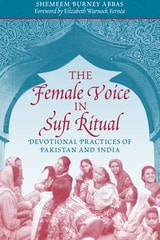
The Female Voice in Sufi Ritual
Devotional Practices of Pakistan and IndiaBy Shemeem Burney Abbas
University of Texas Press, 2002
The female voice plays a more central role in Sufi ritual, especially in the singing of devotional poetry, than in almost any other area of Muslim culture. Female singers perform sufiana-kalam, or mystical poetry, at Sufi shrines and in concerts, folk festivals, and domestic life, while male singers assume the female voice when singing the myths of heroines in qawwali and sufiana-kalam. Yet, despite the centrality of the female voice in Sufi practice throughout South Asia and the Middle East, it has received little scholarly attention and is largely unknown in the West.
This book presents the first in-depth study of the female voice in Sufi practice in the subcontinent of Pakistan and India. Shemeem Burney Abbas investigates the rituals at the Sufi shrines and looks at women's participation in them, as well as male performers' use of the female voice. The strengths of the book are her use of interviews with both prominent and grassroots female and male musicians and her transliteration of audio- and videotaped performances. Through them, she draws vital connections between oral culture and the written Sufi poetry that the musicians sing for their audiences. This research clarifies why the female voice is so important in Sufi practice and underscores the many contributions of women to Sufism and its rituals.
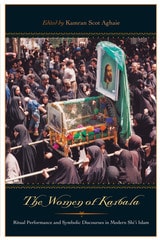
The Women of Karbala
Ritual Performance and Symbolic Discourses in Modern Shi'i IslamEdited by Kamran Scot Aghaie
University of Texas Press, 2005
Commemorating the Battle of Karbala, in which the Prophet Mohammad's grandson Hosayn and seventy-two of his family members and supporters were martyred in 680 CE, is the central religious observance of Shi'i Islam. Though much has been written about the rituals that reenact and venerate Karbala, until now no one has studied women's participation in these observances. This collection of original essays by a multidisciplinary team of scholars analyzes the diverse roles that women have played in the Karbala rituals, as well as the varied ways in which gender-coded symbols have been used within religious and political discourses.
The contributors to this volume consider women as participants in and observers of the Karbala rituals in Iran, Iraq, Lebanon, India, Pakistan, and the United States. They find that women's experiences in the Shi'i rituals vary considerably from one community to another, based on regional customs, personal preferences, religious interpretations, popular culture, and socioeconomic background. The authors also examine the gender symbolism within the rituals, showing how it reinforces distinctions between the genders while it also highlights the centrality of women to the symbolic repertory of Shi'ism. Overall, the authors conclude that while Shi'i rituals and symbols have in some ways been used to restrict women's social roles, in other ways they have served to provide women with a sense of independence and empowerment.