Results by title

31 books match the query 'Robotics'
cover of Active and Assisted Living: Technologies and applications

Active and Assisted Living

Technologies and applications

Francisco Florez-Revuelta

The Institution of Engineering and Technology, 2016

Active and Assisted Living (AAL) systems aim at improving the quality of life and supporting independent and healthy living of older or impaired people by using a distributed network of sensors and actuators to create a ubiquitous technological layer, able to interact transparently with the users, observing and interpreting their actions and intentions, learning their preferences and adjusting the parameters of the system to improve their quality of life and work. This book provides a comprehensive review of the technologies and applications for AAL.
[more]
cover of Advanced Robotics and Intelligent Machines

Advanced Robotics and Intelligent Machines

J.O. Gray

The Institution of Engineering and Technology, 1996
The term 'advanced robotics' came in the 1980s to describe the application of advanced sensors and new developments in cognitive science and artificial intelligence to the traditional robot. Today, advanced robots have come far beyond the limitations of the crude 'pick-and-place' machines of the 1980s assembly line, and have a vast range of applications in manufacturing, construction and health care, as well as hostile environments such as space, underwater and nuclear applications.
[more]
cover of Advances in Cognitive Systems

Advances in Cognitive Systems

Samia Nefti

The Institution of Engineering and Technology, 2010
This book has been inspired by the portfolio of recent scientific outputs from a range of European and national research initiatives in cognitive science. It presents an overview of recent developments in cognition research and unites the various emerging research strands within a single text as a reference point for progress in the subject. It also provides guidance for new researchers on the breadth of the field and the interconnections between the various research strands identified here.
[more]
cover of Application of Dimensional Analysis in Systems Modeling and Control Design

Application of Dimensional Analysis in Systems Modeling and Control Design

Pedro Balaguer

The Institution of Engineering and Technology, 2013
Dimensional analysis is an engineering tool that is widely applied to numerous engineering problems, but has only recently been applied to control theory and problems such as identification and model reduction, robust control, adaptive control, and PID control.
[more]
cover of Bulletproof Feathers: How Science Uses Nature's Secrets to Design Cutting-Edge Technology

Bulletproof Feathers

How Science Uses Nature's Secrets to Design Cutting-Edge Technology

Edited by Robert Allen

University of Chicago Press, 2010

Fabrics that are not only stain resistant but actually clean themselves. Airplane wings that change shape in midair to take advantage of shifts in wind currents. Hypodermic needles that use tiny serrations to render injections virtually pain free.

Though they may sound like the stuff of science fiction, in fact such inventions represent only the most recent iterations of natural mechanisms that are billions of years old—the focus of the rapidly growing field of biomimetics. Based on the realization that natural selection has for countless eons been conducting trial-and-error experiments with the laws of physics, chemistry, material science, and engineering, biomimetics takes nature as its laboratory, looking to the most successful developments and strategies of an array of plants and animals as a source of technological innovation and ideas. Thus the lotus flower, with its waxy, water-resistant surface, gives us stainproofing; the feathers of raptors become transformable airplane wings; and the nerve-deadening serrations on a mosquito’s proboscis are adapted to hypodermics.

With Bulletproof Feathers, Robert Allen brings together some of the greatest minds in the field of biomimetics to provide a fascinating—at times even jaw-dropping—overview of cutting-edge research in the field. In chapters packed with illustrations, Steven Vogel explains how architects and building engineers are drawing lessons from prairie dogs, termites, and even sand dollars in order to heat and cool buildings more efficiently; Julian Vincent goes to the very building blocks of nature, revealing how different structures and arrangements of molecules have inspired the development of some fascinating new materials, such as waterproof clothing based on shark skin; Tomonari Akamatsu shows how sonar technology has been greatly improved through detailed research into dolphin communication; Yoseph Bar-Cohen delves into the ways that robotics engineers have learned to solve design problems through reference to human musculature; Jeannette Yen explores how marine creatures have inspired a new generation of underwater robots; and Robert Allen shows us how cooperative behavior between birds, fish, and insects has inspired technological innovations in fields ranging from Web hosting to underwater exploration.

A readable, yet authoritative introduction to a field that is at the forefront of design and technology—and poised to become even more important in the coming decades as population pressures and climate change make the need for efficient technological solutions more acute—Bulletproof Feathers offers adventurous readers a tantalizing peek into the future, by way of our evolutionary past.
[more]
cover of Control of Permanent Magnet Actuators for Robotics Applications

Control of Permanent Magnet Actuators for Robotics Applications

Chao Gong

The Institution of Engineering and Technology, 2025
Motivated by the expanding role of robotics in a wide range of industrial applications, the imperative for a specialized exploration into the control dynamics of permanent magnet actuators has become apparent. These actuators are integral to contemporary robotic systems but they pose distinct challenges necessitating a dedicated exploration. The subject area encompasses a comprehensive examination of control requirements, spanning from conventional high-performance strategies to avant-garde non-position control approaches, multi-motor coordination, and fault-tolerant methodologies.
[more]
cover of Fault Diagnosis and Fault-Tolerant Control of Robotic and Autonomous Systems

Fault Diagnosis and Fault-Tolerant Control of Robotic and Autonomous Systems

Andrea Monteriù

The Institution of Engineering and Technology, 2020
Robotic systems have experienced exponential growth thanks to their incredible adaptability. Modern robots require an increasing level of autonomy, safety and reliability. This book addresses the challenges of increasing and ensuring reliability and safety of modern robotic and autonomous systems. The book provides an overview of research in this field to-date, and addresses advanced topics including fault diagnosis and fault-tolerant control, and the challenging technologies and applications in industrial robotics, robotic manipulators, mobile robots, and autonomous and semi-autonomous vehicles.
[more]
cover of Flexible Robot Manipulators: Modelling, simulation and control

Flexible Robot Manipulators

Modelling, simulation and control

M.O. Tokhi

The Institution of Engineering and Technology, 2017
Industrial automation is driving the development of robot manipulators in various applications, with much of the research effort focussed on flexible manipulators and their advantages compared to their rigid counterparts. This book reports recent advances and new developments in the analysis and control of these robot manipulators.
[more]
cover of Human-Robot Collaboration: Unlocking the potential for industrial applications

Human-Robot Collaboration

Unlocking the potential for industrial applications

Zoe Doulgeri

The Institution of Engineering and Technology, 2023
Human-robot collaboration (HRC) is a widely studied research topic that investigates how humans and robots can work together and achieve a common goal. Over the past few years, HRC has created exciting new applications for robots that can revolutionize manufacturing and introduce them to entirely different domains such as healthcare and agriculture. It is an interdisciplinary research area comprising robotics, artificial intelligence, design and cognitive sciences.
[more]
cover of I, Cyborg

I, Cyborg

Kevin Warwick

University of Illinois Press, 2002

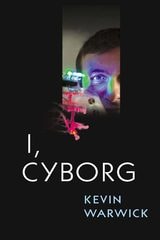
Now available for the first time in America, I, Cyborg is the story of Kevin Warwick, the cybernetic pioneer advancing science by upgrading his own body.
 
Warwick, the world's leading expert in cybernetics, explains how he has deliberately crossed over a perilous threshold to take the first practical steps toward becoming a cyborg--part human, part machine--using himself as a guinea pig and undergoing surgery to receive technological implants connected to his central nervous system.
 
Believing that machines with intelligence far beyond that of humans will eventually make the important decisions, Warwick investigates whether we can avoid obsolescence by using technology to improve on our comparatively limited capabilities. Warwick also discusses the implications for human relationships, and his wife's participation in the experiments.
 
Beyond the autobiography of a scientist who became, in part, a machine, I, Cyborg is also a story of courage, devotion, and endeavor that split apart personal lives. The results of these amazing experiments have far-reaching implications not only for e-medicine, extra-sensory input, increased memory and knowledge, and even telepathy, but for the future of humanity as well.
 
 
[more]
cover of Introduction to Biomechatronics: Mechatronic considerations, Volume 1

Introduction to Biomechatronics

Mechatronic considerations, Volume 1

Graham M. Brooker

The Institution of Engineering and Technology, 2025
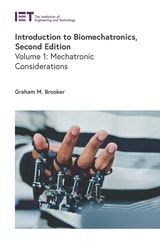
Introduction to Biomechatronics, Second Edition, combines fundamental mechatronic (mechanics, electronics, robotics) engineering knowledge with state-of-the-art device designs that improve quality of life for patients worldwide. This new edition is comprehensively updated and includes new chapters on brain-machine interfaces and exoskeletons.
[more]
cover of Introduction to Biomechatronics: Systems and applications, Volume 2

Introduction to Biomechatronics

Systems and applications, Volume 2

Graham M. Brooker

The Institution of Engineering and Technology, 2025

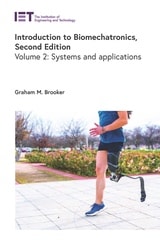
Introduction to Biomechatronics, Second Edition, combines fundamental mechatronic (mechanics, electronics, robotics) engineering knowledge with state-of-the-art device designs that improve quality of life for patients worldwide. This new edition is comprehensively updated and includes new chapters on brain-machine interfaces and exoskeletons.
[more]
cover of Killer Apps: War, Media, Machine

Killer Apps

War, Media, Machine

Jeremy Packer and Joshua Reeves

Duke University Press, 2020
In Killer Apps Jeremy Packer and Joshua Reeves provide a detailed account of the rise of automation in warfare, showing how media systems are central to building weapons systems with artificial intelligence in order to more efficiently select and eliminate military targets. Drawing on the insights of a wide range of political and media theorists, Packer and Reeves develop a new theory for understanding how the intersection of media and military strategy drives today's AI arms race. They address the use of media to search for enemies in their analyses of the history of automated radar systems, the search for extraterrestrial life, and the development of military climate science, which treats the changing earth as an enemy. As the authors demonstrate, contemporary military strategy demands perfect communication in an evolving battlespace that is increasingly inhospitable to human frailties, necessitating humans' replacement by advanced robotics, machine intelligence, and media systems.
[more]
cover of Language and Learning for Robots

Language and Learning for Robots

Colleen Crangle and Patrick Suppes

CSLI, 1994

Robot technology will find wide-scale use only when a robotic device can be given commands and taught new tasks in a natural language. How could a robot understand instructions expressed in English? How could a robot learn from instructions? Crangle and Suppes begin to answer these questions through a theoretical approach to language and learning for robots and by experimental work with robots.

The authors develop the notion of an instructable robot—one which derives its intelligence in part from interaction with humans. Since verbal interaction with a robot requires a natural language semantics, the authors propose a natural-model semantics which they then apply to the interpretation of robot commands. Two experimental projects are described which provide natural-language interfaces to robotic aids for the physically disabled. The authors discuss the specific challenges posed by the interpretation of "stop" commands and the interpretation of spatial prepositions.

The authors also examine the use of explicit verbal instruction to teach a robot new procedures, propose ways a robot can learn from corrective commands containing qualitative spatial expressions, and discuss the machine-learning of a natural language use to instruct a robot in the performance of simple physical tasks. Two chapters focus on probabilistic techniques in learning.
[more]
cover of Life by Algorithms: How Roboprocesses Are Remaking Our World

Life by Algorithms

How Roboprocesses Are Remaking Our World

Edited by Catherine Besteman and Hugh Gusterson

University of Chicago Press, 2019

Computerized processes are everywhere in our society. They are the automated phone messaging systems that businesses use to screen calls; the link between student standardized test scores and public schools’ access to resources; the algorithms that regulate patient diagnoses and reimbursements to doctors. The storage, sorting, and analysis of massive amounts of information have enabled the automation of decision-making at an unprecedented level. Meanwhile, computers have offered a model of cognition that increasingly shapes our approach to the world. The proliferation of “roboprocesses” is the result, as editors Catherine Besteman and Hugh Gusterson observe in this rich and wide-ranging volume, which features contributions from a distinguished cast of scholars in anthropology, communications, international studies, and political science.
 
Although automatic processes are designed to be engines of rational systems, the stories in Life by Algorithms reveal how they can in fact produce absurd, inflexible, or even dangerous outcomes. Joining the call for “algorithmic transparency,” the contributors bring exceptional sensitivity to everyday sociality into their critique to better understand how the perils of modern technology affect finance, medicine, education, housing, the workplace, food production, public space, and emotions—not as separate problems but as linked manifestations of a deeper defect in the fundamental ordering of our society.

Contributors
Catherine Besteman, Alex Blanchette, Robert W. Gehl, Hugh Gusterson, Catherine Lutz, Ann Lutz Fernandez, Joseph Masco, Sally Engle Merry, Keesha M. Middlemass, Noelle Stout, Susan J. Terrio

[more]
cover of Maritime Autonomous Vehicles: Methods and measurements

Maritime Autonomous Vehicles

Methods and measurements

Frank Ehlers

The Institution of Engineering and Technology, 2025
The maritime domain is of an enormous interest to our society, from the economy to health, and security. Operating in the maritime domain, on the other hand, is dangerous, expensive, and most of the time at low execution speed. Unmanned systems are in many ways suited to such environments, but the successful realisation of maritime autonomous vehicles requires an overarching design and development cycle, starting from design and modelling of unmanned systems, to control and implementation exhibiting a reliable and explainable level of autonomy and self-organization amidst the sudden and possibly extreme disturbances occurring in the uncertain and dynamic maritime environment.
[more]
cover of Mechatronic Hands: Prosthetic and robotic design

Mechatronic Hands

Prosthetic and robotic design

Paul H. Chappell

The Institution of Engineering and Technology, 2016
This book describes the technical design characteristics of the main components that go into forming an artificial hand, whether it is a simple design that does not have a natural appearance, or a more complicated design where there are multiple movements of the fingers and thumb. Mechanical components obviously form the structure of any hand, while there are some lesser known ideas that need to be explored such as how to process a slip signal.
[more]
cover of Miracles and Machines: A Sixteenth-Century Automaton and Its Legend

Miracles and Machines

A Sixteenth-Century Automaton and Its Legend

Elizabeth King

J. Paul Getty Trust, The, 0

An abundantly illustrated narrative that draws from the history of art, science, technology, artificial intelligence, psychology, religion, and conservation in telling the extraordinary story of a Renaissance robot that prays.
 
This volume tells the singular story of an uncanny, rare object at the cusp of art and science: a 450-year-old automaton known as “the monk.” The walking, gesticulating figure of a friar, in the collection of the Smithsonian Institution’s National Museum of American History, is among the earliest extant ancestors of the self-propelled robot. According to legend connected to the court of Philip II of Spain, the monk represents a portrait of Diego de Alcalá, a humble Franciscan lay brother whose holy corpse was said to be agent to the miraculous cure of Spain’s crown prince as he lay dying in 1562.
 
In tracking the origins of the monk and its legend, the authors visited archives, libraries, and museums across the United States and Europe, probing the paradox of a mechanical object performing an apparently spiritual act. They identified seven kindred automata from the same period, which, they argue, form a paradigmatic class of walking “prime movers,” unprecedented in their combination of visual and functional realism. While most of the literature on automata focuses on the Enlightenment, this enthralling narrative journeys back to the late Renaissance, when clockwork machinery was entirely new, foretelling the evolution of artificial life to come.

[more]
cover of My Fair Ladies: Female Robots, Androids, and Other Artificial Eves

My Fair Ladies

Female Robots, Androids, and Other Artificial Eves

Wosk, Julie

Rutgers University Press, 2015

Runner-up for the 2015 Science Fiction and Technoculture Studies Book Prize 

The fantasy of a male creator constructing his perfect woman dates back to the Greek myth of Pygmalion and Galatea. Yet as technology has advanced over the past century, the figure of the lifelike manmade woman has become nearly ubiquitous, popping up in everything from Bride of Frankenstein to Weird Science to The Stepford Wives. Now Julie Wosk takes us on a fascinating tour through this bevy of artificial women, revealing the array of cultural fantasies and fears they embody. 
 
My Fair Ladies considers how female automatons have been represented as objects of desire in fiction and how “living dolls” have been manufactured as real-world fetish objects. But it also examines the many works in which the “perfect” woman turns out to be artificial—a robot or doll—and thus becomes a source of uncanny horror. Finally, Wosk introduces us to a variety of female artists, writers, and filmmakers—from Cindy Sherman to Shelley Jackson to Zoe Kazan—who have cleverly crafted their own images of simulated women. 
 
Anything but dry, My Fair Ladies draws upon Wosk’s own experiences as a young female Playboy copywriter and as a child of the “feminine mystique” era to show how images of the artificial woman have loomed large over real women’s lives. Lavishly illustrated with film stills, artwork, and vintage advertisements, this book offers a fresh look at familiar myths about gender, technology, and artistic creation. 
 
 
[more]
cover of Nonlinear Optimal and Flatness-based Control Methods and Applications for Complex Dynamical Systems

Nonlinear Optimal and Flatness-based Control Methods and Applications for Complex Dynamical Systems

Gerasimos Rigatos

The Institution of Engineering and Technology, 2025
Robotics, mechatronics and autonomous systems can exhibit complex nonlinear dynamics which can lead to unsatisfactory transients and deviation from setpoints or even to instability. A standard approach in the control of these systems had been the concept of diffeomorphisms to bring a system into a linear form. However, these methods are not straightforward and result in complicated state-space model transformations. In this monograph, new methods have been investigated which are not constrained by the shortcomings of global linearization-based control schemes. They can be implemented in a computationally simple manner, are followed by global stability proofs, and perform better than previous optimal control approaches for a wider class of nonlinear dynamical systems and applications.
[more]
cover of Practical Robotics and Mechatronics: Marine, space and medical applications

Practical Robotics and Mechatronics

Marine, space and medical applications

Ikuo Yamamoto

The Institution of Engineering and Technology, 2016

The world is experiencing the beginning of a revolution in robotics and mechatronics. A key part of this revolution is integration with the Internet of Things and machine-to-machine interfaces. This networking of robotics and mechatronics promises significant market opportunities for a new generation of robots.
[more]
cover of Robots and Automated Manufacture

Robots and Automated Manufacture

J. Billingsley

The Institution of Engineering and Technology, 1985
To serve its purpose, an industrial robot must be harnessed to a manufacturing task, be it welding, assembly, adjustment or the inspection of food products. Complex tasks are likely to require offline programming, both for economy of equipment use and to permit computer simulations for collision avoidance. Vision and other sensory systems are helping to extend the capabilities of robots, while advanced programming techniques are making their use more accessible to the shop floor.
[more]
cover of Romantic Automata: Exhibitions, Figures, Organisms

Romantic Automata

Exhibitions, Figures, Organisms

Michael Demson

Bucknell University Press, 2020

For most of the eighteenth century, automata were deemed a celebration of human ingenuity, feats of science and reason. Among the Romantics, however, they prompted a contradictory apprehension about mechanization and contrivance: such science and engineering threatened the spiritual nature of life, the source of compassion in human society. A deep dread of puppets and the machinery that propels them consequently surfaced in late eighteenth and early nineteenth century literature. Romantic Automata is a collection of essays examining the rise of this cultural suspicion of mechanical imitations of life.

Recent scholarship in post-humanism, post-colonialism, disability studies, post-modern feminism, eco-criticism, and radical Orientalism has significantly affected the critical discourse on this topic. In engaging with the work and thought of Coleridge, Poe, Hoffmann, Mary Shelley, and other Romantic luminaries, the contributors to this collection open new methodological approaches to understanding human interaction with technology that strives to simulate, supplement, or supplant organic life.


Published by Bucknell University Press. Distributed worldwide by Rutgers University Press. 
[more]
cover of Soft Robots for Healthcare Applications: Design, modelling, and control

Soft Robots for Healthcare Applications

Design, modelling, and control

Shane Xie

The Institution of Engineering and Technology, 2017
Robot-assisted healthcare offers benefits for repetitive, intensive and task specific training compared to traditional manual manipulation performed by physiotherapists. However, a majority of existing rehabilitation devices use rigid actuators such as electric motors or hydraulic cylinders which cannot guarantee the safety of patients; novel soft robots combining soft and compliant actuators with stiff skeletons offer a better alternative. This book focuses on the development of these soft robotics for rehabilitation purposes.
[more]
cover of Space Robotics and Autonomous Systems: Technologies, advances and applications

Space Robotics and Autonomous Systems

Technologies, advances and applications

Yang Gao

The Institution of Engineering and Technology, 2021
Space robotics and autonomous systems (Space RAS) play a critical role in the current and future development of mission-defined machines that can survive in space while performing exploration, assembly, construction, maintenance and servicing tasks. They represent a multi-disciplinary emerging field at the intersection of space engineering, terrestrial robotics, computer science and materials. The field is essential to humankind's ability to explore or operate in space; providing greater access beyond human spaceflight limitations in the harsh environment of space, and offering greater operational handling that extends astronauts' capabilities. Space RAS covers all types of robotics for the exploration of planet surfaces as well as robotics used in orbit around the Earth and the sensors needed by the platform for navigation or control.
[more]
cover of Surrogate Humanity: Race, Robots, and the Politics of Technological Futures

Surrogate Humanity

Race, Robots, and the Politics of Technological Futures

Neda Atanasoski and Kalindi Vora

Duke University Press, 2019
In Surrogate Humanity Neda Atanasoski and Kalindi Vora trace the ways in which robots, artificial intelligence, and other technologies serve as surrogates for human workers within a labor system entrenched in racial capitalism and patriarchy. Analyzing myriad technologies, from sex robots and military drones to sharing-economy platforms, Atanasoski and Vora show how liberal structures of antiblackness, settler colonialism, and patriarchy are fundamental to human---machine interactions, as well as the very definition of the human. While these new technologies and engineering projects promise a revolutionary new future, they replicate and reinforce racialized and gendered ideas about devalued work, exploitation, dispossession, and capitalist accumulation. Yet, even as engineers design robots to be more perfect versions of the human—more rational killers, more efficient workers, and tireless companions—the potential exists to develop alternative modes of engineering and technological development in ways that refuse the racial and colonial logics that maintain social hierarchies and inequality.
[more]
cover of The American Robot: A Cultural History

The American Robot

A Cultural History

Dustin A. Abnet

University of Chicago Press, 2020

Although they entered the world as pure science fiction, robots are now very much a fact of everyday life. Whether a space-age cyborg, a chess-playing automaton, or simply the smartphone in our pocket, robots have long been a symbol of the fraught and fearful relationship between ourselves and our creations. Though we tend to think of them as products of twentieth-century technology—the word “robot” itself dates to only 1921—as a concept, they have colored US society and culture for far longer, as Dustin A. Abnet shows to dazzling effect in The American Robot.

In tracing the history of the idea of robots in US culture, Abnet draws on intellectual history, religion, literature, film, and television. He explores how robots and their many kin have not only conceptually connected but literally embodied some of the most critical questions in modern culture. He also investigates how the discourse around robots has reinforced social and economic inequalities, as well as fantasies of mass domination—chilling thoughts that the recent increase in job automation has done little to quell. The American Robot argues that the deep history of robots has abetted both the literal replacement of humans by machines and the figurative transformation of humans into machines, connecting advances in technology and capitalism to individual and societal change. Look beneath the fears that fracture our society, Abnet tells us, and you’re likely to find a robot lurking there.
[more]
cover of The Freudian Robot: Digital Media and the Future of the Unconscious

The Freudian Robot

Digital Media and the Future of the Unconscious

Lydia H. Liu

University of Chicago Press, 2011

The identity and role of writing has evolved in the age of digital media. But how did writing itself make digital media possible in the first place? Lydia H. Liu offers here the first rigorous study of the political history of digital writing and its fateful entanglement with the Freudian unconscious.

Liu’s innovative analysis brings the work of theorists and writers back into conversation with one another to document significant meetings of minds and disciplines. She shows how the earlier avant-garde literary experiments with alphabetical writing and the word-association games of psychoanalysis contributed to the mathematical making of digital media. Such intellectual convergence, she argues, completed the transformation of alphabetical writing into the postphonetic, ideographic system of digital media, which not only altered the threshold of sense and nonsense in communication processes but also compelled a new understanding of human-machine interplay at the level of the unconscious.

Ranging across information theory, cybernetics, modernism, literary theory, neurotic machines, and psychoanalysis, The Freudian Robot rewrites the history of digital media and the literary theory of the twentieth century.
[more]
cover of The Inverted Pendulum in Control Theory and Robotics: From theory to new innovations

The Inverted Pendulum in Control Theory and Robotics

From theory to new innovations

Olfa Boubaker

The Institution of Engineering and Technology, 2018
The inverted pendulum is a classic problem in dynamics and control theory and is widely used as a benchmark for testing control algorithms. It is also an area of active study, with many new innovations and applications - for example the problem is solved in the technology of the Segway, a self-balancing transportation device.
[more]
cover of Wearable Exoskeleton Systems: Design, control and applications

Wearable Exoskeleton Systems

Design, control and applications

Shaoping Bai

The Institution of Engineering and Technology, 2018
Wearable exoskeletons are electro-mechanical systems designed to assist, augment, or enhance motion and mobility in a variety of human motion applications and scenarios. The applications, ranging from providing power supplementation to assist the wearers to situations where human motion is resisted for exercising applications, cover a wide range of domains such as medical devices for patient rehabilitation training recovering from trauma, movement aids for disabled persons, personal care robots for providing daily living assistance, and reduction of physical burden in industrial and military applications. The development of effective and affordable wearable exoskeletons poses several design, control and modelling challenges to researchers and manufacturers. Novel technologies are therefore being developed in adaptive motion controllers, human-robot interaction control, biological sensors and actuators, materials and structures, etc.
[more]
cover of Wearable Exoskeleton Systems: Design, control and applications

Wearable Exoskeleton Systems

Design, control and applications

Shaoping Bai

The Institution of Engineering and Technology, 2026

Wearable exoskeletons are electro-mechanical systems designed to assist, augment, or enhance motion and mobility in a variety of human motion applications and scenarios. The applications cover a wide range of domains including medical devices for patient rehabilitation training in trauma recovery, movement aids for disabled persons, personal care robots for providing daily living assistance, and reduction of physical burden in industrial, manufacturing, security and military applications. The development of effective and affordable wearable exoskeletons poses several design, control and modelling challenges to researchers and manufacturers. Novel technologies are therefore being developed in a wide range of applications including adaptive motion controllers, human-robot interaction control, biological sensors and actuators, and materials and structures.
[more]