Results by title
12 books match the query 'Run'
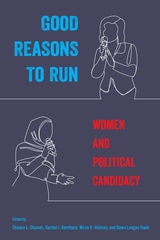
Good Reasons to Run
Women and Political CandidacyEdited by Shauna L. Shames, Rachel I. Bernhard, Mirya R. Holman, and Dawn Langan Teele
Temple University Press, 2020
After the 2016 U.S. Presidential election, a large cohort of women emerged to run for office. Their efforts changed the landscape of candidates and representation. However, women are still far less likely than men to seek elective office, and face biases and obstacles in campaigns. (Women running for Congress make twice as many phone calls as men to raise the same contributions.)
The editors and contributors to Good Reasons to Run, a mix of scholars and practitioners, examine the reasons why women run—and do not run—for political office. They focus on the opportunities, policies, and structures that promote women’s candidacies. How do nonprofits help recruit and finance women as candidates? And what role does money play in women’s campaigns?
The essays in Good Reasons to Run ask not just who wants to run, but how to activate and encourage such ambition among a larger population of potential female candidates while also increasing the diversity of women running for office.
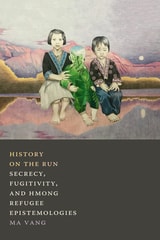
History on the Run
Secrecy, Fugitivity, and Hmong Refugee EpistemologiesMa Vang
Duke University Press, 2021
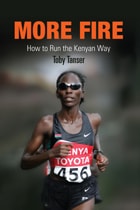
More Fire
How to Run the Kenyan WayToby Tanser
Westholme Publishing, 2008
An Essential Book for Runners of All Abilities
All of the Author’s Proceeds Go to Shoes4Africa to Support the Construction of Children’s Hospitals in Kenya
Kenya has produced the greatest concentration of world-class runners, and fellow athletes have long been intrigued by their remarkable success. Toby Tanser has devoted much of his professional career living and training among Kenyan runners in order to better understand the unique status of East African athletes. In More Fire: How to Run the Kenyan Way, the author builds upon the success of his acclaimed Train Hard, Win Easy, the first book to provide insights into the Kenyan "magic" that so many runners and coaches had sought. Instead of special foods or secret techniques, Tanser found that Kenyan runners simply trained incredibly hard, much harder than anyone had realized. By adapting their training regime—which includes three workouts a day—and following their example, runners, whether novices or champions, are able to improve both their performance and enjoyment in running. For those training for a marathon or any other distance race, this book is both practical and inspirational.
Divided into four parts, the book begins with a description of running in Kenya, the landscape, the physical conditions, and the people; the second part concentrates on details of Kenyan training camps, training methods, and their typical training diet; the third profiles individual runners and coaches from the past and present, with each explaining their approach to running so that readers can gain further insight into their methods. The book ends with a discussion on how the reader can adapt Kenyan training practices for their own running requirements. More Fire: How to Run the Kenyan Way is essential reading for runners of all levels and experience.

No Way to Run an Economy
Why the System Failed and How to Put It RightGraham Turner
Pluto Press, 2009
In The Credit Crunch, Graham Turner predicted that banks would be nationalised and interest rates would be reduced too slowly to halt the crisis. His predictions were correct. His new book, No Way to Run an Economy, is the essential guide to the turbulent times ahead.
Turner recommended radical measures, such as quantitative easing, in early 2008 but argues that action has been taken too late and been too timid to make a real difference. He dissects the policy mistakes of the last 12 months including Obama's doomed market-led response to the crisis and the obsession of central banks with the red herring of inflation.
There is no doubt the economy is still in serious trouble, but Turner shows that learning from the mistakes made so far can prevent a situation worse than that of the 1930s crisis.
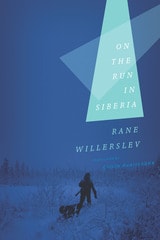
On the Run in Siberia
Rane Willerslev
University of Minnesota Press, 2012
If I had let myself be ruled by reason alone, I would surely be lying dead somewhere or another in the Siberian frost.
The Siberian taiga: a massive forest region of roughly 4.5 million square miles, stretching from the Ural Mountains to the Bering Sea, breathtakingly beautiful and the coldest inhabited region in the world. Winter temperatures plummet to a bitter 97 degrees below zero, and beneath the permafrost lie the fossilized remains of mammoths, woolly rhinoceroses, and other ice age giants. For the Yukaghir, an indigenous people of the taiga, hunting sable is both an economic necessity and a spiritual experience—where trusting dreams and omens is as necessary as following animal tracks. Since the fall of Communism, a corrupt regional corporation has monopolized the fur trade, forcing the Yukaghir hunters into impoverished servitude.
Enter Rane Willerslev, a young Danish anthropologist who ventures into this frozen land on an idealistic mission to organize a fair-trade fur cooperative with the hunters. From the outset, things go terribly wrong. The regional fur company, with ties to corrupt public officials, proves it will stop at nothing to maintain its monopoly: one of Willerslev’s Yukaghir business partners is arrested on spurious charges of poaching and illegal trading; another drowns mysteriously. When police are sent to arrest him, Willerslev fears for his life, and he and a local hunter flee to a remote hunting lodge even deeper in the icy wilderness. Their situation turns even more desperate right away: they manage to kill a moose but lose the meat to predators and begin to starve, frostbitten and isolated in the frozen taiga.
Thus begins Willerslev’s extraordinary, chilling tale of one year living in exile among Yukaghir hunters in the stark Siberian taiga region. At turns shocking and quietly moving, On the Run in Siberia is a pulse-pounding tale of idealism, political corruption, starvation, and survival (with a timely assist from Vladimir Putin) as well as a striking portrait of the Yukaghirs’ shamanistic tradition and their threatened way of life, a drama unfolding daily in one of the world’s coldest, most enthralling landscapes.
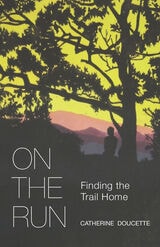
On the Run
Finding the Trail HomeCatherine Doucette
Oregon State University Press, 2021
For over a decade, Doucette chased winter around the world to ski, from the White Mountains of her native New Hampshire to the slopes of Alaska, British Columbia, California, Argentina, Switzerland, and beyond. But she always kept one eye toward living a more settled life and putting her heart on the line if someone would just ask her to. Like other women who choose or yearn to be in the wilderness, she wrestled to reconcile her outdoor ambitions with society’s expectations of women.
The personal essays collected in On the Run touch on the author’s origins in New Hampshire while focusing on the lure of big mountains in the West. They celebrate the comfort, challenge, and community found in expanses of wilderness while confronting the limitations and sacrifices that come with a transient, outdoor lifestyle. In a voice both searching and deeply grounded, Doucette contends with avalanches and whitewater along with the less dramatic but equally important questions of belonging. Anyone who has searched to define home, who has been called by mountains, or by movement, will feel at home in these pages.
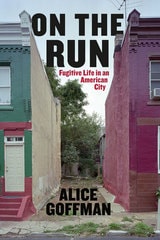
On the Run
Fugitive Life in an American CityAlice Goffman
University of Chicago Press, 2014
Alice Goffman spent six years living in one such neighborhood in Philadelphia, and her close observations and often harrowing stories reveal the pernicious effects of this pervasive policing. Goffman introduces us to an unforgettable cast of young African American men who are caught up in this web of warrants and surveillance—some of them small-time drug dealers, others just ordinary guys dealing with limited choices. All find the web of presumed criminality, built as it is on the very associations and friendships that make up a life, nearly impossible to escape. We watch as the pleasures of summer-evening stoop-sitting are shattered by the arrival of a carful of cops looking to serve a warrant; we watch—and can’t help but be shocked—as teenagers teach their younger siblings and cousins how to run from the police (and, crucially, to keep away from friends and family so they can stay hidden); and we see, over and over, the relentless toll that the presumption of criminality takes on families—and futures.
While not denying the problems of the drug trade, and the violence that often accompanies it, through her gripping accounts of daily life in the forgotten neighborhoods of America's cities, Goffman makes it impossible for us to ignore the very real human costs of our failed response—the blighting of entire neighborhoods, and the needless sacrifice of whole generations.

Run in Such a Way
PoemsJustin Danzy
Northwestern University Press, 2027
A poet’s candid and probing exploration of faith, Blackness, and masculinity
With poems that closely examine familial bonds and heritage, biblical teachings, a shifting understanding of home, and the violence of toxic masculinity, Justin Danzy’s Run in Such a Way sits at the crossroads of religion, race, gender, and more. A collection about pursuit, tracking the narrative of its speaker’s journey toward a deeper understanding of himself and of his community as he moves from child to man, the book wrestles with the way an identity is constructed, deconstructed, and reconstructed again throughout one’s life. Playful and sincere in equal measure, Danzy’s command of the line carries us through as we travel with the speaker to the precipice of belief. Danzy’s lyrical voice and fealty to his people pays homage to the world that made him, and considers all that the speaker of this tremendous debut has—both wisely and foolishly—run toward and away from in the search for truth.
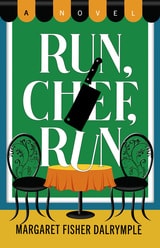
Run, Chef, Run
A NovelMargaret Fisher Dalrymple
University of Nevada Press, 2027
When restaurateur Liliane “Lili” Chabrier and her cook, Ricky, discover a crashed plane while hiking in the mountains near Lake Tahoe, they stumble into a criminal enterprise that reaches far beyond the kitchen of Lili’s upscale Reno-area restaurant, the Bistro Bellevue.
Unaware that Ricky has taken a fortune in cartel money from the wreckage, Lili returns to the restaurant and the demanding rhythms of fine dining. But someone is watching her. As suspicion, violence, and betrayal close in, Lili must navigate a dangerous world of money laundering and organized crime while trying to protect the restaurant and the people she loves. Her growing relationship with Mac, a veteran of the Middle East wars, offers an unexpected source of strength as the danger escalates.
Fast-paced and atmospheric, Run, Chef, Run offers an insider’s view of the high-pressure world of fine dining, from the controlled chaos of a professional kitchen to the intricate codes of behavior that restaurant guests rarely see. Rich descriptions of food and the daily lives of restaurant workers give the novel a vivid sense of place, while Lili’s sharp observations and resilience drive a story of crime, loyalty, and survival.
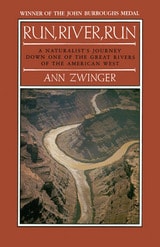
Run, River, Run
A Naturalist's Journey Down One of the Great Rivers of the WestAnn Zwinger
University of Arizona Press, 1984
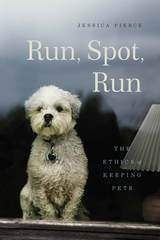
Run, Spot, Run
The Ethics of Keeping PetsJessica Pierce
University of Chicago Press, 2016
That’s the question that animates Jessica Pierce’s powerful Run, Spot, Run. A lover of pets herself (including, over the years, dogs, cats, fish, rats, hermit crabs, and more), Pierce understands the joys that pets bring us. But she also refuses to deny the ambiguous ethics at the heart of the relationship, and through a mix of personal stories, philosophical reflections, and scientifically informed analyses of animal behavior and natural history, she puts pet-keeping to the test. Is it ethical to keep pets at all? Are some species more suited to the relationship than others? Are there species one should never attempt to own? And are there ways that we can improve our pets’ lives, so that we can be confident that we are giving them as much as they give us?
Deeply empathetic, yet rigorous and unflinching in her thinking, Pierce has written a book that is sure to help any pet owner, unsettling assumptions but also giving them the knowledge to build deeper, better relationships with the animals with whom they’ve chosen to share their lives.
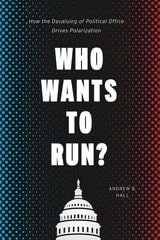
Who Wants to Run?
How the Devaluing of Political Office Drives PolarizationAndrew B. Hall
University of Chicago Press, 2019
Andrew B. Hall argues that we have missed one of the most important reasons for this ideological gulf: the increasing reluctance of moderate citizens to run for office. While political scientists, journalists, and pundits have largely focused on voters, worried that they may be too partisan, too uninformed to vote for moderate candidates, or simply too extreme in their own political views, Hall argues that our political system discourages moderate candidates from seeking office in the first place. Running for office has rarely been harder than it is in America today, and the costs dissuade moderates more than extremists. Candidates have to wage ceaseless campaigns, dialing for dollars for most of their waking hours while enduring relentless news and social media coverage. When moderate candidates are unwilling to run, voters do not even have the opportunity to send them to office. To understand what is wrong with our legislatures, then, we need to ask ourselves the question: who wants to run? If we want more moderate legislators, we need to make them a better job offer.