Results by title
5 books match the query 'São Paulo (State)'
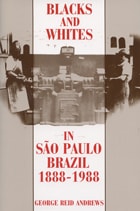
Blacks and Whites in Sao Paulo, Brazil, 1888-1988
George Reid Andrews
University of Wisconsin Press, 1991
For much of the twentieth century Brazil enjoyed an international reputation as a “racial democracy,” but that image has been largely undermined in recent decades by research suggesting the existence of widespread racial inequality. George Reid Andrews provides the first thoroughly documented history of Brazilian racial inequality from the abolition of slavery in 1888 up to the late 1980s, showing how economic, social, and political changes in Brazil during the last one hundred years have shaped race relations.
No laws of segregation or apartheid exist in Brazil, but by looking carefully at government policies, data on employment, mainstream and Afro-Brazilian newspapers, and a variety of other sources, Andrews traces pervasive discrimination against Afro-Brazilians over time. He draws his evidence from the country’s largest and most economically important state, São Paulo, showing how race relations were affected by its transformation from a plantation-based economy to South America’s most urban, industrialized society.
The book focuses first on Afro-Brazilians' entry into the agricultural and urban working class after the abolition of slavery. This transition, Andrews argues, was seriously hampered by state policies giving the many European immigrants of the period preference over black workers. As immigration declined and these policies were overturned in the late 1920s, black laborers began to be employed in agriculture and industry on nearly equal terms with whites. Andrews then surveys efforts of blacks to move into the middle class during the 1900s. He finds that informal racial solidarity among middle-class whites has tended to exclude Afro-Brazilians from the professions and other white-collar jobs.
Andrews traces how discrimination throughout the century led Afro-Brazilians to mobilize, first through the antislavery movement of the 1880s, then through such social and political organizations of the 1920s and 1930s as the Brazilian Black Front, and finally through the anti-racism movements of the 1970s and 1980s. These recent movements have provoked much debate among Brazilians over their national image as a racial democracy. It remains to be seen, Andrews concludes, whether that debate will result in increased opportunities for black Brazilians.
Winner of the 1993 Arthur P. Whitaker Prize
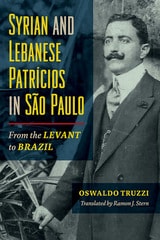
Syrian and Lebanese Patricios in São Paulo
From the Levant to BrazilOswaldo Truzzi. Translated by Ramon J. Stern
University of Illinois Press, 2018
Oswaldo Truzzi's original work on these so-called patrícios changed the face of Brazilian studies. Now available in an English translation, Truzzi's pioneering book identifies the complex social paths blazed by Syrian and Lebanese immigrants and their descendants from the 1890s to the 1960s. He considers their relationships to other groups within São Paulo's kaleidoscopic mix of cultures. He also reveals the differences--real and perceived--between Syrians and Lebanese in terms of religious and ethnic affinities and in the economic sphere. Finally, he compares the two groups with their counterparts in the United States and looks at the wave of Lebanese Muslims to São Paulo that began in the 1960s.
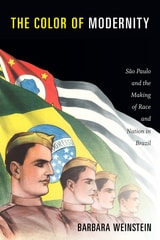
The Color of Modernity
São Paulo and the Making of Race and Nation in BrazilBarbara Weinstein
Duke University Press, 2015
The Industrialization of São Paulo, 1800-1945
By Warren Dean
University of Texas Press, 1969
São Paulo is one of the few places in the underdeveloped world where an advanced industrial system has grown out of a tropical raw-material-exporting economy. By 1960 there were 830,000 industrial workers in the state, producing $3.3 billion worth of goods. It had become Latin America’s largest industrial center.
This is a study of the early years of manufacturing in São Paulo: how it was influenced by the growth and decline of the coffee trade; where it found its markets, its credit, and its labor force; and how it confronted the competition of imports. The principal focus, however, is on the manufacturers themselves, whose perceptions of their opportunities determined how industrialization was brought about. Warren Dean discusses their social origins, their connections with other sectors of the elite, their attitudes toward workers and consumers, and their view of the potentialities of economic development. He analyzes the political activities of the manufacturers, to discover both how they promoted their interests and how they confronted the larger challenge of social and political transformation.
Paradoxically, the industrialization of São Paulo is not a “success story” of private entrepreneurship. Until after World War II manufacturing grew quite slowly, and its hallmarks were always low productivity, technical backwardness, and consumer hostility. More than half of the state’s present large-scale factory production and nearly all of its heavy industry was built by foreign capital or state enterprise, not by privately owned firms. Dean shows that this outcome is partly a consequence of the historical experience of domestic manufacture.
Throughout the book the author points out the “peculiar articulations” of the industrial system of São Paulo—the significant social and political interests that determined what kinds of development were possible. The result is an exposition of an unusual case study in twentieth-century economic development.

View from the Fazenda
A Tale of the Brazilian HeartlandsEllen Bromfield Geld
Ohio University Press, 2012
“I imagine everyone has a center of gravity,” says Ellen Bromfield Geld. “Something which binds one to the earth and gives sense and direction to what one does.” For Ellen, this center is a writing table before a window that looks out upon groves of pecan trees and mahogany-colored cattle in seas of grass. The place is Fazenda Pau D’Alho, Brazil, where she and her husband, Carson, have lived and farmed since 1961.
Healing the ravaged coffee plantation, rearing five children, exploring the outposts, the Gelds have created a dynamic yet peaceful life far from Ellen’s native Ohio. Their practice of sustainable agriculture, and Ellen’s plea for the preservation of Brazil’s remaining wilderness areas, reflect the legacy of her father, the novelist and farm visionary Louis Bromfield. Their shared vision is crystallized in her account of a cattle drive across the Pantanal, the vast flood plain on Brazil’s side of the Paraguay River. She describes a two-hundred year symbiosis between ranchers and a fragile ecosystem that is being threatened by development.
View from the Fazenda is distilled from fifty years of living in Brazil, weaving daily life on the farm into her quest to understand a nation. It portrays a true melting pot of people who—as conquerers, immigrants, or slaves, their blood and history mingled with those of native Indians—have created the character of Brazil. This huge, diverse county, living in several eras at the same time, is ever changing through its people’s amazing ability to “find a way.”
Ellen Bromfield Geld evokes the land and people of Brazil and offers readers an invigorating glimpse into a soulful life. “It seems to me that being a bit of a poet is perhaps the only way one can survive as a farmer,” she explains. “For in the end, more than anything, farming is a way of life you either love or become bitter enduring.”