Results by title
12 books match the query 'Sagas'
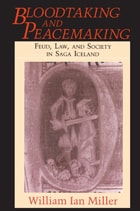
Bloodtaking and Peacemaking
Feud, Law, and Society in Saga IcelandWilliam Ian Miller
University of Chicago Press, 1990
People in the saga world negotiated a maze of violent possibility, with strategies that frequently put life and limb in the balance. But there was a paradox in striking the balance—one could not get even without going one better. Miller shows how blood vengeance, law, and peacemaking were inextricably bound together in the feuding process.
This book offers fascinating insights into the politics of a stateless society, its methods of social control, and the role that a uniquely sophisticated and self-conscious law played in the construction of Icelandic society.
"Illuminating."—Rory McTurk, Times Literary Supplement
"An impressive achievement in ethnohistory; it is an amalgam of historical research with legal and anthropological interpretation. What is more, and rarer, is that it is a pleasure to read due to the inclusion of narrative case material from the sagas themselves."—Dan Bauer, Journal of Interdisciplinary History
Djinns
Fatma Aydemir, Translated by Jon Cho-Polizzi
University of Wisconsin Press, 2024
In this epic tale, Fatma Aydemir explores the lives of characters who could not be more different from one another—except in their insatiable desires to be understood. Rather than a seamless narrative, the novel circles around suppressed memories, unspoken trauma, and buried pasts. Turning expectations and stereotypes of the immigrant experience on their side, Aydemir shows how we all grapple with power and beauty, the holes in our lives, and the demons that hover just out of sight.
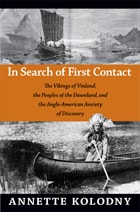
In Search of First Contact
The Vikings of Vinland, the Peoples of the Dawnland, and the Anglo-American Anxiety of DiscoveryAnnette Kolodny
Duke University Press, 2012
Kolodny considers what the sagas reveal about the Native peoples encountered by the Norse in Vinland around the year A.D. 1000, and she recovers Native American stories of first contacts with Europeans, including one that has never before been shared outside of Native communities. These stories contradict the dominant narrative of "first contact" between Europeans and the New World. Kolodny rethinks the lingering power of a mythic American Viking heritage and the long-standing debate over whether Leif Eiriksson or Christopher Columbus should be credited as the first discoverer. With this paradigm-shattering work, Kolodny shows what literary criticism can bring to historical and social scientific endeavors.
Land of Milk and Money
A NovelAnthony Barcellos
Tagus Press, 2012

Moon Lily
(a novel)Susan Lang
University of Nevada Press, 2008
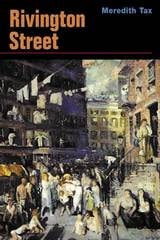
Rivington Street
A NOVELMeredith Tax
University of Illinois Press, 1982
An absorbing, epic novel, Rivington Street is also suitable for use as a classroom text.
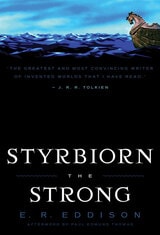
Styrbiorn the Strong
E. R. Eddison
University of Minnesota Press, 2011
E. R. Eddison’s classic saga novel now in paperback—includes for the first time Eddison’s remarkable letter of introduction and his unabridged closing note
Styrbiorn the Strong tells the grand tale of Styrbiorn Olafsson, heir to the Swedish throne and known both for his impressive size and strength and his unruly, quarrelsome nature. Denied his birthright and exiled from Sweden, Styrbiorn becomes the leader of the Jomsvikings and sets out to reclaim the Swedish throne in the epic Battle of Fýrisvellir. A rediscovered classic, Styrbiorn the Strong is a tale reminiscent of the Old Norse sagas, a historical novel from one of the twentieth century’s most influential masters of fantasy.
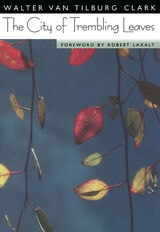
The City Of Trembling Leaves
Walter Van Tilburg Clark
University of Nevada Press, 2012
The City of Trembling Leaves by Walter Van Tilburg Clark was first published in 1945 by Random House and reprinted by the University of Nevada Press in paperback in 1991 with a new foreword by Robert Laxalt.
Clark’s novel broke new ground in his telling of the story of the rites of passage of a boy, Tim Hazard, into adulthood in the setting of the Western town of Reno, Nevada. The descriptions of Reno’s landscape and the realistic characters depict the role of nature during the tumultuous stages of adolescence and the potential risk of obstruction and loss in the attainment of maturity.
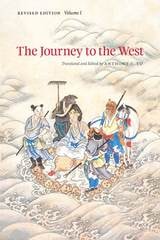
The Journey to the West, Revised Edition, Volume 1
Translated and Edited by Anthony C. Yu
University of Chicago Press, 2012
Read the legendary Chinese classic that inspired the hit game Black Myth: Wukong!
With over a hundred chapters written in both prose and poetry, The Journey to the West has always been a complicated and difficult text to render in English while preserving the lyricism of its language and the content of its plot. But Yu has successfully taken on the task, and in this new edition he has made his translations even more accurate and accessible. The explanatory notes are updated and augmented, and Yu has added new material to his introduction, based on his original research as well as on the newest literary criticism and scholarship on Chinese religious traditions. He has also modernized the transliterations included in each volume, using the now-standard Hanyu Pinyin romanization system. Perhaps most important, Yu has made changes to the translation itself in order to make it as precise as possible.
One of the great works of Chinese literature, The Journey to the West is not only invaluable to scholars of Eastern religion and literature, but, in Yu’s elegant rendering, also a delight for any reader.
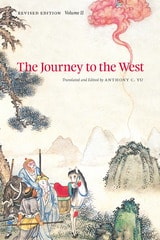
The Journey to the West, Revised Edition, Volume 2
Translated and Edited by Anthony C. Yu
University of Chicago Press, 2012
Read the legendary Chinese classic that inspired the hit game Black Myth: Wukong!
With over a hundred chapters written in both prose and poetry, The Journey to the West has always been a complicated and difficult text to render in English while preserving the lyricism of its language and the content of its plot. But Yu has successfully taken on the task, and in this new edition he has made his translations even more accurate and accessible. The explanatory notes are updated and augmented, and Yu has added new material to his introduction, based on his original research as well as on the newest literary criticism and scholarship on Chinese religious traditions. He has also modernized the transliterations included in each volume, using the now-standard Hanyu Pinyin romanization system. Perhaps most important, Yu has made changes to the translation itself in order to make it as precise as possible.
One of the great works of Chinese literature, The Journey to the West is not only invaluable to scholars of Eastern religion and literature, but, in Yu’s elegant rendering, also a delight for any reader.
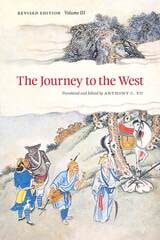
The Journey to the West, Revised Edition, Volume 3
Translated and Edited by Anthony C. Yu
University of Chicago Press, 2012
Read the legendary Chinese classic that inspired the hit game Black Myth: Wukong!
With over a hundred chapters written in both prose and poetry, The Journey to the West has always been a complicated and difficult text to render in English while preserving the lyricism of its language and the content of its plot. But Yu has successfully taken on the task, and in this new edition he has made his translations even more accurate and accessible. The explanatory notes are updated and augmented, and Yu has added new material to his introduction, based on his original research as well as on the newest literary criticism and scholarship on Chinese religious traditions. He has also modernized the transliterations included in each volume, using the now-standard Hanyu Pinyin romanization system. Perhaps most important, Yu has made changes to the translation itself in order to make it as precise as possible.
One of the great works of Chinese literature, The Journey to the West is not only invaluable to scholars of Eastern religion and literature, but, in Yu’s elegant rendering, also a delight for any reader.
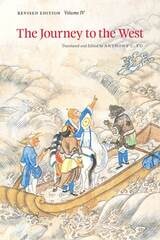
The Journey to the West, Revised Edition, Volume 4
Translated and Edited by Anthony C. Yu
University of Chicago Press, 2012
Read the legendary Chinese classic that inspired the hit game Black Myth: Wukong!
With over a hundred chapters written in both prose and poetry, The Journey to the West has always been a complicated and difficult text to render in English while preserving the lyricism of its language and the content of its plot. But Yu has successfully taken on the task, and in this new edition he has made his translations even more accurate and accessible. The explanatory notes are updated and augmented, and Yu has added new material to his introduction, based on his original research as well as on the newest literary criticism and scholarship on Chinese religious traditions. He has also modernized the transliterations included in each volume, using the now-standard Hanyu Pinyin romanization system. Perhaps most important, Yu has made changes to the translation itself in order to make it as precise as possible.
One of the great works of Chinese literature, The Journey to the West is not only invaluable to scholars of Eastern religion and literature, but, in Yu’s elegant rendering, also a delight for any reader.