Results by title
11 books match the query 'Salt Lake City'
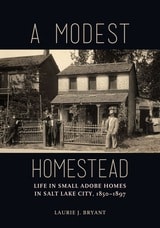
A Modest Homestead
Life in Small Adobe Homes in Salt Lake City, 1850-1897Laurie J. Bryant
University of Utah Press, 2016
Copublished with the Utah State Historical Society. Affiliated with the Utah Division of State History, Utah Department of Heritage & Arts.
Stories of the ordinary people who helped build Salt Lake City emerge from a study of their often humble adobe houses. Rather than focusing on men and women in positions of power and influence, the emphasis here is on the lives of people who built their sturdy, simple homes from mud.
A Modest Homestead provides architectural descriptions of ninety-four extant adobe houses. These homes are for the most part unremarkable, except for their perhaps unexpected construction material. They are as basic as the people who built them—small tradesmen and farmers, laborers and domestics. Author Laurie Bryant discusses the neighborhoods in Salt Lake City where adobe houses have survived, often much renovated and disguised, and she showcases the houses not just as they appear today but as they were originally built. Almost all the houses now have additions and improvements, and without some dissection, they are not always recognizable. They now appear both comfortable and pleasant, which was not always the case in the nineteenth century. What emerges through closer examination and Bryant’s research is a fuller picture of the roughhewn life of many early Utahns.
Finalist for the Utah State Historical Society Best Book Award.

Bags to Riches
The Story of I J WagnerGale, Don
University of Utah Press, 2007
His sense of humor was legendary. His tenacity in pursuit of goals was unwavering. His grasp of past, present, and future opportunities was profound. Bags to Riches shows the personal side of an 'outsider' who became an 'insider' through congeniality, good humor, and integrity.
Before the Manifesto
The Life Writings of Mary Lois Walker MorrisMelissa Lambert Milewski
Utah State University Press, 2007
Mary Morris's memoir frames her 1879 to 1887 diary with both reflections on earlier years and passages that parallel entries in the day book, giving readers a better understanding of how she retrospectively saw her life. The thoroughly annotated diary offers the daily experience of a woman who kept a largely self-sufficient household, had a wide social network, ran her own business, wrote poetry, and was intellectually curious. The years of "the Raid" (federal prosecution of polygamists) led Mary and Elias Morris to hide their marriage on "the underground," and her to perjury in court during Elias's trial for unlawful cohabitation. The book ends with Mary Lois's arrival at the Salt Lake Depot after three years in exile in Mexico with a polygamist colony.

Dance with the Bear
The Joe Rosenblatt StoryNorman Rosenblatt
University of Utah Press, 2013
The “Little Hoover Commission” was modeled after the 1947 initiative of President Harry Truman, who created the Commission on Organization of the Executive Branch of Government to recommend administrative changes and appointed former president Herbert Hoover to chair it. Rosenblatt, a perceptive and outspoken figure, brought a much-needed dose of urgency and pragmatism to the Utah process and formulated a number of far-reaching suggestions to the legislature—many of which were adopted and still exist to this day. His work with the commission coupled with his later role on the San Francisco Federal Reserve Board did much to modernize Utah. Rosenblatt’s legacy as a perpetual champion of the community is further exemplified by his role as cultural conduit between Salt Lake’s Jewish community and the leaders of the Church of Jesus Christ of Latter-day Saints.
This readable work will serve as an integral addition to Utah business and political history, enriching the library of anyone looking for an engaging story of a remarkable and transformative figure.
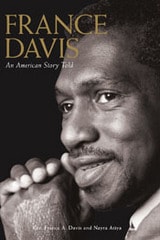
France Davis
An American Story ToldDavis, France
University of Utah Press, 2007
As I was coming up, it was painful to me not to have been given my own nickname. It made me feel different, or rather that I was being treated differently from other family members. I wondered why everybody else was spoken to in terms of their identity, their character, their behavior, and I was simply identified by the 'tag,' my given name. But then, when I read in a book that France meant free, I began to think of it as imbuing me with a sense of flight, of movement. Ultimately, I came to believe my name spoke for itself and that I did not need any other.'—from the book
Imbued with rich detail of family life in a rural community, as well as a system of values at a time of transition in American history, this is the life story of France Davis, the dynamic pastor of the Calvary Baptist Church in Salt Lake City. It is an engaging story of courage and vision that describes coming of age in the segregation-era South, of dreaming, enduring with honor, and living at the forefront of major issues within the United States.
Recorded and skillfully written by Nayra Atiya, France Davis: An American Story Told, is an oral history, ethnography, memoir, perhaps even a life-enhancing sermon delivered with the strong voice of a preacher. The gathered strands of a life lived with conviction and grace will appeal to a broad spectrum of readers from the curious to those seeking inspiration.
Winner of the Utah Book Award in Nonfiction.
Gravity Hill
A MemoirMaximilian Werner
University of Utah Press, 2013
“The sound of parenthood is the sigh.” So begins Gravity Hill, written from the perspective of a new father seeking hope, beauty, and meaning in an uncertain world. Many memoirs recount the author’s experiences of growing up and struggling with demons; Werner’s shows how old demons sometimes return on the heels of something as beautiful as children. Werner’s memoir is about growing up, getting older, looking back, and wondering what lies ahead—a process that becomes all the more complicated and intense when parenting is involved. Moving backward and forward between past, present, and future, Gravity Hill does not delineate time so much as collapse it.
Werner narrates his struggle growing up in suburban Utah as anon-Mormon and what it took for him, his siblings, and his friends to feel like they belonged. Bonding in separation, they indulged in each other, in natural and urban landscapes, and sometimes in the destructive behaviors that are the native resort of outsidersincluding promiscuous and occasionally violent sexual behavior—and for some, paths to death and suicide. Gravity Hill is the story of the author’s descent into and eventual emergence from his dysfunction and into a newfound life. Infused with humor, honesty, and reflection, this literary memoir will resonate with readers young and old.
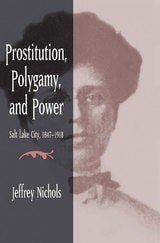
Prostitution, Polygamy, and Power
Salt Lake City, 1847-1918Jeffrey Nichols
University of Illinois Press, 2002
Jeffrey Nichols examines how prostitution became a focal point in the moral contest between Mormons and gentiles and aided in the construction of gender systems, moral standards, and the city's physical and economic landscapes. Gentiles likened polygamy to prostitution and accused polygamous Mormons of violating Christian norms of family structure and sexual behavior. Defending their church and its ideals, Mormons blamed gentiles for introducing the sinful business of prostitution into their honorable city. Nichols traces the interplay of prostitution and reform from the 1890s, when the Church of Jesus Christ of Latter-day Saints began to move away from polygamy, to World War I, when Mormon and gentile moral codes converged at the expense of prostitutes. He also considers how the conflict over polygamy distinguished Salt Lake City from other cities struggling to abolish prostitution in the Progressive Era.
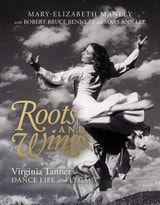
Roots and Wings
Virginia Tanner's Dance Life and LegacyMary-Elizabeth Manley with Mary Ann Lee and Robert Bruce Bennett
University of Utah Press, 2023
Roots and Wings recounts Virginia Tanner’s remarkable career as a dancer, artist, and educator. From her early experiences assisting at Evelyn Davis’s dance school in Washington, DC, to the creation of the Tanner Dance Program at the University of Utah, her influence on the field was pervasive. She channeled children’s energy, sharpened their senses, and encouraged youthful, authentic dance expression.
Manley’s extensive archival research and personal interviews depict Virginia Tanner as an innovative dance artist and ambitious leader in the field of modern dance. While exploring Tanner’s story, Roots and Wings emphasizes the value of unique instructional methodologies for teaching dance to young children and the vital role the arts play in children’s lives. Tanner’s work endures, continuing to echo with sensitivity and spirit in young dancers throughout the United States and abroad.
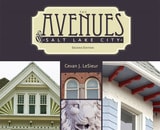
The Avenues of Salt Lake City
Cevan J. LeSieur
University of Utah Press, 2012
Salt Lake City’s oldest residential historic district is a neighborhood known as the Avenues. During the late nineteenth century this area was home to many of the most influential citizens of Salt Lake City. Built from 1860 until 1930, it contains a mix of middle and upper middle class homes of varying architectural styles. This architectural diversity makes the Avenues unique among Utah's historic districts. For the past thirty years, as citizens have rediscovered the value of living in historic properties near downtown and the University of Utah, preservation efforts have soared in the area.
In 1980, the Avenues was established as a historic district and the Utah Historical Society published The Avenues of Salt Lake City. That book’s authors, Karl T. Haglund and Philip F. Notarianni, gleaned much about the area’s history by using information found on the historic district applications. This newly revised edition of The Avenues of Salt Lake City by Cevan J. LeSieur updates the original with a greatly expanded section on the historic homes in the neighborhood, including more than 600 new photos, and additional material covering the history of the Avenues since 1980.
The book is designed so that readers can take it along as a guide when exploring the neighborhoods. All the pictures of Avenues homes are accompanied with architectural information and brief histories of the properties. This volume makes a valuable resource for those interested in the history of the Avenues and its diverse architecture, and for anyone interested in Utah history, Utah architecture, and historic preservation.
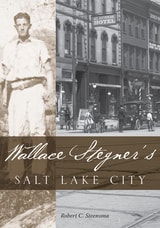
Wallace Stegners Salt Lake City
Robert C. Steensma
University of Utah Press, 2007
As he was later to say in his essay 'At Home in the Fields of the Lord,' he eventually realized that, if he had to have a hometown, it was Salt Lake City. He came to use the 'City of the Saints' for settings in three novels: The Big Rock Candy Mountain, Recapitulation, and The Preacher and the Slave (later retitled Joe Hill). His years in Utah helped develop the environmental ethic he espoused so eloquently in his famous 'Wilderness Letter.'
Robert Steensma has meticulously searched through archival photographs, quotations from Stegner’s writings, and interpretive essays in order to recreate the Salt Lake City of the 1920s and 1930s, the city of Stegner’s youth and young adulthood. This is a book that will appeal to all who have been moved by Stegner’s novels, nonfiction, or his urgent appeals for conservation.
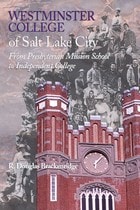
Westminster College Of Salt Lake City
R. Douglas Brackenridge
Utah State University Press, 1998