Results by title
5 books match the query 'Salt industry and trade'

Boundaries of Ancient Trade
Kings, Commoners, and the Aksumite Salt Trade of EthiopiaHelina Solomon Woldekiros
University Press of Colorado, 2023
trade routes in the world.
For thousands of years, farmers in the Tigray, Amhara, and Afar regions of Ethiopia and Eritrea have run caravans of nearly 250,000 people and pack animals annually along an eighty-mile route through both cold, high-altitude farmlands and some of the hottest volcanic desert terrain on earth. In her fieldwork, archaeologist Helina Solomon Woldekiros followed the route with her own donkey and camel caravan, observing and interviewing over 150 Arho (caravaners), salt miners, salt cutters, warehouse owners, brokers, shop owners, and salt village residents to model the political economy of the ancient Aksumite state. The first integrated ethnoarchaeological and archaeological research on this legendary route, this volume provides evidence that informal economies and local participation have played a critical role in regional trade and, ultimately, in maintaining the considerable power of the Aksumite state. Woldekiros also contributes new insights into the logistics of pack animal–based trade and variability in the central and regional organization of global ancient trade.
Using a culturally informed framework for understanding the organization of the ancient salt route and its role in linking the Aksumite state to rural highland agricultural and lowland mobile pastoralist populations, The Boundaries of Ancient Trade makes a key contribution to theoretical discussions of hierarchy and more diffuse power structures in ancient states. This work generates new interest in the region as an area of global relevance in archaeological and anthropological debates on landscape, social interaction, and practice theories.
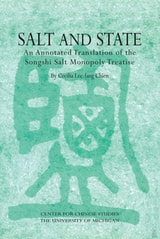
Salt and State
An Annotated Translation of the <em>Songshi</em> Salt Monopoly TreatiseCecilia Lee-fang Chien
University of Michigan Press, 2004
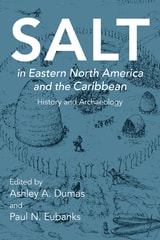
Salt in Eastern North America and the Caribbean
History and ArchaeologyEdited by Ashley A. Dumas and Paul N. Eubanks
University of Alabama Press, 2021
Case studies examining the archaeological record of an overlooked mineral
Salt, once a highly prized trade commodity essential for human survival, is often overlooked in research because it is invisible in the archaeological record. Salt in Eastern North America and the Caribbean: History and Archaeology brings salt back into archaeology, showing that it was valued as a dietary additive, had curative powers, and was a substance of political power and religious significance for Native Americans. Major salines were embedded in collective memories and oral traditions for thousands of years as places where physical and spiritual needs could be met. Ethnohistoric documents for many Indian cultures describe the uses of and taboos and other beliefs about salt.
The volume is organized into two parts: Salt Histories and Salt in Society. Case studies from prehistory to post-Contact and from New York to Jamaica address what techniques were used to make salt, who was responsible for producing it, how it was used, the impact it had on settlement patterns and sociopolitical complexity, and how economies of salt changed after European contact. Noted salt archaeologist Heather McKillop provides commentary to conclude the volume.
.
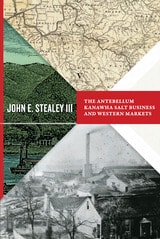
The Antebellum Kanawha Salt Business and Western Markets
John E. Stealey
West Virginia University Press, 2016
In his illuminating study, now available with a new preface by the author, John Stealey examines the legal basis of this industry, its labor practices, and its marketing and distribution patterns. Through technological innovation, salt producers harnessed coal and steam as well as men and animals, constructed a novel evaporative system, and invented drilling tools later employed in oil and natural gas exploration. Thus in many ways the salt industry was the precursor of the American extractive and chemical industries. Stealey's informative study is an important contribution to American economic, business, labor, and legal history.
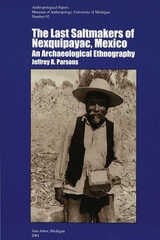
The Last Saltmakers of Nexquipayac, Mexico
An Archaeological EthnographyJeffrey R. Parsons
University of Michigan Press, 2001