Results by title
3 books match the query 'Sands, Kathleen Mullen'
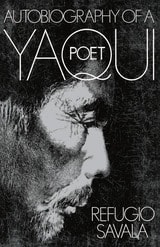
Autobiography of a Yaqui Poet
Refugio Savala; Edited by Kathleen M. Sands
University of Arizona Press, 1980
This is the major literary achievement of a sensitive, gifted man. The author is a Yaqui Indian, a railroad gandy dancer who sees beauty in iron spikes and rail clamps as well as in twilight-purple mountains and glossy-leafed cottonwood trees. In the seventy years following his flight from the Yaqui-Mexican wars in Sonora, Savala became a talented poet and loving recorder of his people's cultural heritage. A large sampling of his original works appears in the interpretations section of this book. Together with the beautifully written autobiography, they offer a unique view of Arizona Yaqui culture and history, railroading in the American West, and the personal and artistic growth of a Native American man of letters.
[more]
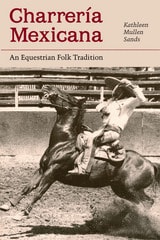
Charrería Mexicana
An Equestrian Folk TraditionKathleen Mullen Sands
University of Arizona Press, 1993
In this first major English-language interpretation of charrería, Kathleen Mullen Sands describes the evolution of this equestrian tradition, highlighting the role of horsemen and women throughout Mexico's history. For those who believe cowboy culture and rodeo represent historic horsemanship in the United States, Charrería Mexicana reveals a festival of equal complexity and distinction.
[more]
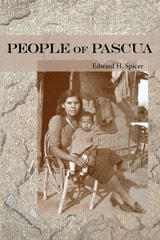
People of Pascua
Edward H. Spicer; Edited by Kathleen M. Sands and Rosamond B. Spicer
University of Arizona Press, 1988
“[People of Pascua] sketches the history and culture of the Tucson area Yaqui and contains case studies of a number of the informants. What constituted ‘Yaquiness’ in Pascua was mainly a common language, a shared historical tradition, and an aberrant form of Catholic Christianity laced with Yaqui concepts. This clearly and concisely written book is very important in its own terms both as an early example of the use of life histories in ethnology and as a significant contribution to Yaqui studies.”—Choice
[more]