Results by title
2 books match the query 'Saylor, Eric'
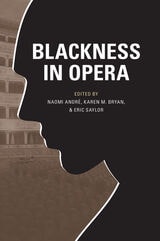
Blackness in Opera
Edited by Naomi André, Karen M. Bryan, and Eric Saylor
University of Illinois Press, 2012
Blackness in Opera critically examines the intersections of race and music in the multifaceted genre of opera. A diverse cross-section of scholars places well-known operas (Porgy and Bess, Aida, Treemonisha) alongside lesser-known works such as Frederick Delius's Koanga, William Grant Still's Blue Steel, and Clarence Cameron White's Ouanga! to reveal a new historical context for re-imagining race and blackness in opera. The volume brings a wide-ranging, theoretically informed, interdisciplinary approach to questions about how blackness has been represented in these operas, issues surrounding characterization of blacks, interpretation of racialized roles by blacks and whites, controversies over race in the theatre and the use of blackface, and extensions of blackness along the spectrum from grand opera to musical theatre and film. In addition to essays by scholars, the book also features reflections by renowned American tenor George Shirley.
Contributors are Naomi André, Melinda Boyd, Gwynne Kuhner Brown, Karen M. Bryan, Melissa J. de Graaf, Christopher R. Gauthier, Jennifer McFarlane-Harris, Gayle Murchison, Guthrie P. Ramsey Jr., Eric Saylor, Sarah Schmalenberger, Ann Sears, George Shirley, and Jonathan O. Wipplinger.
[more]
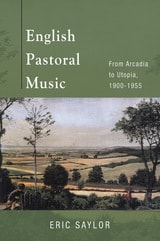
English Pastoral Music
From Arcadia to Utopia, 1900-1955Eric Saylor
University of Illinois Press, 2017
Covering works by popular figures like Ralph Vaughan Williams and Gustav Holst as well as less familiar English composers, Eric Saylor's pioneering book examines pastoral music's critical, theoretical, and stylistic foundations alongside its creative manifestations in the contexts of Arcadia, war, landscape, and the Utopian imagination. As Saylor shows, pastoral music adapted and transformed established musical and aesthetic conventions that reflected the experiences of British composers and audiences during the early twentieth century. By approaching pastoral music as a cultural phenomenon dependent on time and place, Saylor forcefully challenges the body of critical opinion that has long dismissed it as antiquated, insular, and reactionary.
[more]