Results by title
9 books match the query 'Selected Plays'
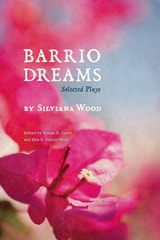
Barrio Dreams
Selected PlaysSilviana Wood; Edited by Norma E. Cantú and Rita E. Urquijo-Ruiz
University of Arizona Press, 2016
Barrio Dreams is the first book to collect the work of one of Arizona’s foremost teatristas, playwright Silviana Wood. During her decades-long involvement in theater, Wood forged a reputation as a playwright, actor, director, and activist. Her works form a testimonio of Chicana life, steeped in art, politics, and the borderlands. Wood’s plays challenge, question, and incite women to consider their lot in life. She ruptures stereotypes and raises awareness of social issues via humor and with an emphasis on the use of the physical body on stage.
The play Una vez, en un barrio de sueños . . . offers a glimpse into familiar terrain—the barrio and its dwellers—in three actos. In Amor de hija, a fraught mother-daughter relationship in contemporary working-class Arizona is dealt an additional blow as the family faces Alzheimer’s disease. In the tragedy A Drunkard’s Tale of Melted Wings and Memories, and in the trilingual (Spanish, English, and Yaqui) tragicomedy Yo, Casimiro Flores, characters love, live, die, travel through time and space, and visit the afterlife. And in Anhelos por Oaxaca, a grandfather travels back in time through flashbacks, as he and his grandson travel through homelands from Arizona to Oaxaca.
Part of Wood’s genius is the way she portrays life in what Gloria Anzaldúa called “el mundo zurdo,” that space inhabited by the people of color, the poor, the female, and the outsiders. It is a place for the atravesados, the odd, the different, those who do not fit the mainstream. The people who inhabit Wood’s plays are common folk—janitors, mothers, grandmothers, and teenagers—hardworking people who, in one way or another, have made their way in life and who embody life in the barrio.
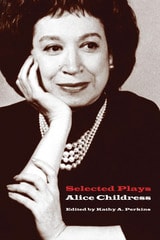
Selected Plays
Alice Childress
Northwestern University Press, 2011
Spanning the 1940s to the 1960s, the plays collected here are the ones Childress herself believed were her best, and offer a realistic portrait of the racial inequalities and social injustices that characterized these decades. Her plays often feature strong-willed female protagonists whose problems bring into harsh relief the restrictions faced by African American women. This is the first volume devoted exclusively to the work of a major playwright whose impact on the American theater was profound and lasting.
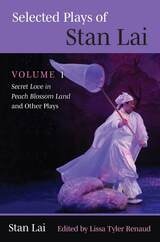
Selected Plays of Stan Lai
Volume 1: Secret Love in Peach Blossom Land and Other PlaysStan Lai, edited by Lissa Tyler Renaud
University of Michigan Press, 2021
Volume One contains:
Secret Love in Peach Blossom Land
Look Who's Crosstalking Tonight
The Island and the Other Shore
I Me She Him
Ménage à 13
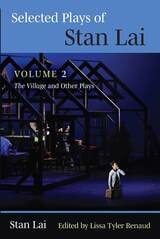
Selected Plays of Stan Lai
Volume 2: The Village and Other PlaysStan Lai, edited by Lissa Tyler Renaud
University of Michigan Press, 2021
Volume Two contains:
Millennium Teahouse
Sand on a Distant Star
Like Shadows
The Village
Writing in Water
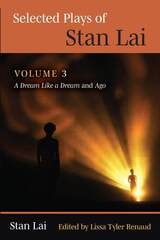
Selected Plays of Stan Lai
Volume 3: A Dream Like a Dream and AgoStan Lai, edited by Lissa Tyler Renaud
University of Michigan Press, 2021
Volume Three contains:
A Dream Like a Dream
Ago
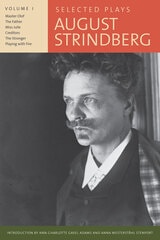
Selected Plays, Volume I
August Strindberg
University of Minnesota Press, 2012
August Strindberg is often considered the father of modern Swedish literature. His vast output of plays was innovative in style and form. Volume 1 of Selected Plays presents selections from the beginning of his career, before Strindberg’s period of psychotic attacks in the 1890s. Master Olof (1872) is a historical drama set in early Reformation Sweden, influenced by Ibsen and Shakespeare. Two of his most produced plays today, The Father (1887) and Miss Julie (1888), are examples of his naturalistic plays. Strindberg described Creditors (1888), a tragicomedy, as his “most mature work.” The Stronger (1889), a playlet, is a favorite in acting classes. Playing with Fire (1893) is one of his few comedies. These plays deal with Strindberg’s preoccupation with power struggles and sexual warfare.

Selected Plays, Volume II
August Strindberg
University of Minnesota Press, 2012
This second volume of the great Swedish writer August Strindberg’s plays begins with To Damascus I (1898), the first of a trilogy. It mirrors his own departure from the naturalism he had explored in several of his earlier works, as he set forth on a spiritual odyssey. Crimes and Crimes (1899), from the beginning of his symbolist mode, is a lighter take on the themes in To Damascus I. The first of a two-part play, Dance of Death I (1900) depicts a dysfunctional marriage. A Dream Play (1901), which is one of Strindberg’s most influential, shows reality converted into a dream; many critics consider it his greatest play. In 1907, Strindberg founded the Intimate Theater in Stockholm; The Ghost Sonata (1907) and The Pelican (1907), which were written for its opening, are two examples of a chamber play, a genre that Strindberg helped to originate.
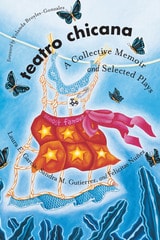
Teatro Chicana
A Collective Memoir and Selected PlaysEdited by Laura E. Garcia, Sandra M. Gutierrez, and Felicitas Nuñez
University of Texas Press, 2008
Winner, Susan Koppelman Award, Best Edited Volume in Women's Studies in Popular and American Culture, 2008
The 1970s and 1980s saw the awakening of social awareness and political activism in Mexican-American communities. In San Diego, a group of Chicana women participated in a political theatre group whose plays addressed social, gender, and political issues of the working class and the Chicano Movement. In this collective memoir, seventeen women who were a part of Teatro de las Chicanas (later known as Teatro Laboral and Teatro Raíces) come together to share why they joined the theatre and how it transformed their lives. Teatro Chicana tells the story of this troupe through chapters featuring the history and present-day story of each of the main actors and writers, as well as excerpts from the group's materials and seven of their original short scripts.

Toward a Feminist Theater
Selected PlaysKate Hamill and Kristin Leahey
Northwestern University Press, 2025
Bringing together seven critically acclaimed feminist adaptations of literary classics and one delightfully original new work, this collection demonstrates why Kate Hamill is one of the most electrifying and widely produced playwrights working today. Whether probing the power of toxic leaders (The Piper), revitalizing Jane Austen for the stage (Sense and Sensibility, Pride and Prejudice, Emma), “cheerfully desecrating” Arthur Conan Doyle through a post-pandemic lens (Ms. Holmes & Ms. Watson—Apt. 2B), reexamining an American classic’s gender roles (Little Women), or dramatizing the nineteenth-century classic of puritanical New England through the lens of an ostracized mother and daughter (The Scarlet Letter), Hamill’s work has transformed the theatrical landscape over the past decade.
An introduction from editor Kristin Leahey and an interview with Hamill frame this landmark anthology, with reflections on the current state of American drama, Hamill’s unique dramaturgical practice, and how the art form may move further and faster toward a feminist theater.