Results by title
5 books match the query 'Senses and sensation in literature'
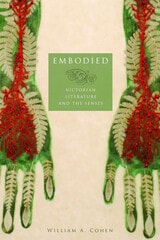
Embodied
Victorian Literature and the SensesWilliam A. Cohen
University of Minnesota Press, 2008
Making sense of the body in Victorian literature
What does it mean to be human? British writers in the Victorian period found a surprising answer to this question. What is human, they discovered, is nothing more or less than the human body itself. In literature of the period, as well as in scientific writing and journalism, the notion of an interior human essence came to be identified with the material existence of the body. The organs of sensory perception were understood as crucial routes of exchange between the interior and the external worlds.
Anatomizing Victorian ideas of the human, William A. Cohen considers the meaning of sensory encounters in works by writers including Charles Dickens, Charlotte Brontë, Anthony Trollope, Thomas Hardy, and Gerard Manley Hopkins. Rather than regarding the bodily exterior as the primary location in which identity categories—such as gender, sexuality, race, and disability—are expressed, he focuses on the interior experience of sensation, whereby these politics come to be felt. In these elegant engagements with literary works, cultural history, and critical theory, Cohen advances a phenomenological approach to embodiment, proposing that we encounter the world not through our minds or souls but through our senses.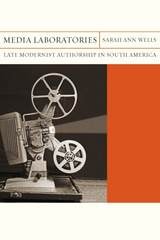
Media Laboratories
Late Modernist Authorship in South AmericaSarah Ann Wells
Northwestern University Press, 2017
Media Laboratories explores a pivotal time for South American literature of the 1930s and ’40s. Cinema, radio, and the typewriter, once seen as promising catalysts for new kinds of writing, began to be challenged by authors, workers, and the public. What happens when media no longer seem novel and potentially democratic but rather consolidated and dominant? Moving among authors from Brazil, Argentina, and Uruguay, and among the genres of fiction, the essay, popular journalism, and experimental little magazines, Sarah Ann Wells shows how writers on the periphery of global modernity were fashioning alternative approaches to these media. Analyzing authors such as Clarice Lispector, Jorge Luis Borges, and Felisberto Hernández, along with their lesser-known contemporaries, Media Laboratories casts a wide net: from spectators of Hollywood and Soviet montage films, to inventors of imaginary media, to proletarian typists who embodied the machine-human encounters of the period. The text navigates contemporary scholarly and popular debates about the relationship of literature to technological innovation, media archaeology, sound studies, populism, and global modernisms. Ultimately, Wells underscores a question that remains relevant: what possibilities emerge when the enthusiasm for new media has been replaced by anxiety over their potentially pernicious effects in a globalizing, yet vastly unequal, world?
Never on Time, Always in Time
Narrative Form and the Queer SensoriumKate McCullough
The Ohio State University Press, 2024
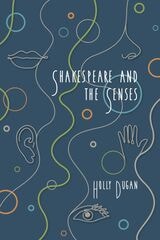
Shakespeare and the Senses
Holly E. Dugan
Arizona Center for Medieval and Renaissance Studies, 2024
Could something as seemingly natural as a smell, taste, sight, or sound be socially constructed and change over time? Shakespeare and the Senses argues that understanding the original conditions in which Shakespeare’s plays were performed allows us to explore the senses as both visceral, bodily experiences and constructed, social phenomena. As Ben Jonson famously wrote in the First Folio of 1623, Shakespeare can seem to be “not of an age, but for all time.” While this is clever marketing, Shakespeare did write his plays in a particular time and place far removed from our own. Many of his most powerful metaphors rely on sensory details—Aaron’s black hue; Cleopatra’s strange, invisible perfumes; Fluellen’s Welsh accent; Lady Macbeth’s overly scrubbed hands; Malvolio’s yellow stockings—which Elizabethan-era audiences may have understood very differently from us.
Shakespeare and the Senses draws on interdisciplinary research methods in the new field of sensory studies to expand our understanding of what Shakespeare meant to his first audiences.
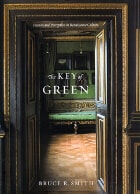
The Key of Green
Passion and Perception in Renaissance CultureBruce R. Smith
University of Chicago Press, 2008
Contending that color is a matter of both sensation and emotion, Bruce R. Smith examines Renaissance material culture—including tapestries, clothing, and stonework, among others—as well as music, theater, philosophy, and nature through the lens of sense perception and aesthetic pleasure. At the same time, Smith offers a highly sophisticated meditation on the nature of consciousness, perception, and emotion that will resonate with students and scholars of the early modern period and beyond. Like the key to a map, The Key of Green provides a guide for looking, listening, reading, and thinking that restores the aesthetic considerations to criticism that have been missing for too long.