Results by title
13 books match the query 'Shamans'

Across the Shaman's River
John Muir, the Tlingit Stronghold, and the Opening of the NorthDaniel Lee Henry
University of Alaska Press, 2017
Tucked in the corner of Southeast Alaska, the Tlingits had successfully warded off the Anglo influences that had swept into other corners of the territory. This tribe was viewed by European and American outsiders as the last wild tribe and a frustrating impediment to access. Missionaries and prospectors alike had widely failed to bring the Tlingit into their power. Yet, when John Muir arrived in 1879, accompanied by a fiery preacher, it only took a speech about “brotherhood”—and some encouragement from the revered local shaman Skandoo’o—to finally transform these “hostile heathens.”
Using Muir’s original journal entries, as well as historic writings of explorers juxtaposed with insights from contemporary tribal descendants, Across the Shaman’s River reveals how Muir’s famous canoe journey changed the course of history and had profound consequences on the region’s Native Americans.
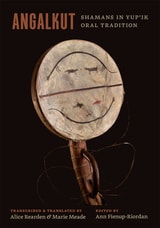
Angalkut/Shamans in Yup'ik Oral Tradition
Ann Fienup-Riordan
University of Alaska Press, 2025
The book begins with an English introduction that places Yup’ik oral traditions in the context of shamanism in Alaska and other parts of the Arctic. Then first-person accounts presented in the original Yup’ik with accompanying English translations discuss the importance of shamans and shamanism in general, good and bad shamans, and shamans as healers. Narratives from Nelson Island, Canineq, Kuskokwim River, Akulmiut, and Yukon River describe shamans as healers, shaman journeys and performances, shamans and masked dances requesting abundance, shamans and the dead, malicious shamans, shaman confrontations, becoming a shaman, and those who have shaman abilities today. A detailed glossary and references are also included.
Today, not only are these angalkut gone, but so are those who witnessed and participated in their activities. Angalkut/Shamans in Yup’ik Oral Tradition is the first book devoted exclusively to Yup’ik angalkut; never before has the variety of angalkut roles been profiled in publication, including the richness of elders’ recollections of these individuals and their roles. There is great value in the stories they left behind. This fine-grained presentation of unique, bilingual first-person narratives is an essential resource for scholars and students interested in Yup’ik heritage, Yugtun language, shaman ethnography, and Alaska Native oral traditions.
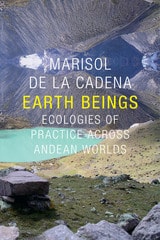
Earth Beings
Ecologies of Practice across Andean WorldsMarisol de la Cadena
Duke University Press, 2015
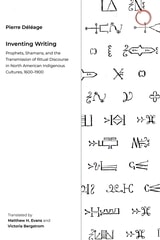
Inventing Writing
Prophets, Shamans, and the Transmission of Ritual Discourse in North American Indigenous Cultures, 1600–1900Pierre Déléage
HAU, 2026
Why have humans repeatedly devoted immense intellectual energy to inventing writing? In world history, writing was independently created four times—by the Sumerians, Egyptians, Chinese, and Mayans. These traditions developed universal scripts, systems of symbols theoretically capable of recording any utterance in the spoken language. On this basis, a long-standing scholarly view has held that the origins of writing are inseparable from the rise of states and bureaucracies.
However, this book turns our attention to another trajectory. Between 1700 and 1900, prophets and shamans in Native American societies devised “bounded” forms of writing. Unlike universal scripts, these were not intended to capture the entirety of speech. Instead, they served a precise function: to ensure the faithful transmission of ritual discourses within ceremonial frameworks. Their principles of notation differed profoundly from those of the great phonographic traditions.
Pierre Déléage’s analysis not only illuminates these overlooked episodes in the history of writing but also advances a methodological shift: rather than treating selective scripts as “failed” or “incomplete,” he interprets them on their own terms. In doing so, he opens up a broader framework for understanding writing as a diverse cultural practice, one that can emerge outside of state power, bureaucracy, or universal phonographic systems.
Now published in English translation, Inventing Writing makes the work of a leading French scholar available to new readers. It offers a groundbreaking perspective: writing does not emerge only as a universal technology of language, but also as a bounded tool shaped by ritual, institution, and culture.
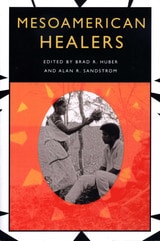
Mesoamerican Healers
Edited by Brad R. Huber and Alan R. Sandstrom
University of Texas Press, 2001
Healing practices in Mesoamerica span a wide range, from traditional folk medicine with roots reaching back into the prehispanic era to westernized biomedicine. These sometimes cooperating, sometimes competing practices have attracted attention from researchers and the public alike, as interest in alternative medicine and holistic healing continues to grow.
Responding to this interest, the essays in this book offer a comprehensive, state-of-the-art survey of Mesoamerican healers and medical practices in Mexico and Guatemala. The first two essays describe the work of prehispanic and colonial healers and show how their roles changed over time. The remaining essays look at contemporary healers, including bonesetters, curers, midwives, nurses, physicians, social workers, and spiritualists. Using a variety of theoretical approaches, the authors examine such topics as the intersection of gender and curing, the recruitment of healers and their training, healers' compensation and workload, types of illnesses treated and recommended treatments, conceptual models used in diagnosis and treatment, and the relationships among healers and between indigenous healers and medical and political authorities.
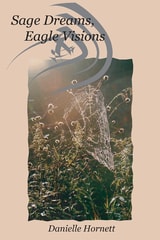
Sage Dreams, Eagle Visions
Danielle M. Hornett
Michigan State University Press, 2004
Amanda Aaron, a woman of mixed Ojibwe and white heritage, spent twenty years living in Milwaukee, away from her home and family. After the deaths of her parents, a short-lived marriage to an abusive non-Indian, and finally a tragic accident in which her friends were killed, she is pushed into a state of depression. Acting on her doctor’s orders, she returns to her grandparents’ cabin on her home reservation in northern Wisconsin, seeking the solitude she needs to recover.
Migizi, the Eagle, the Grandfather’s messenger, gifts Amanda with a feather, then visits her one night in her bedroom. Wanting to believe it was a dream, but knowing it was not, Amanda seeks the advice and counsel of Elders on the reservation who, in turn, introduce Amanda to Noah, a spiritual man who can guide and advise her as her life becomes complicated with unwanted responsibilities. Eventually, Amanda is forced to admit that the void she has been experiencing can only be filled by a return to the reservation—a life that has always enriched her and provided her with the needed strength to achieve her goals.
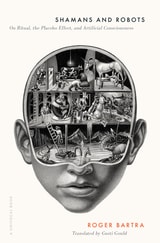
Shamans and Robots
On Ritual, the Placebo Effect, and Artificial ConsciousnessRoger Bartra
University of Minnesota Press, 2024
A profound exploration of the external influences that shape human consciousness, from healing rituals to digital devices
In this voyage through thousands of years of psychosomatic healing, distinguished anthropologist and sociologist Roger Bartra examines the placebo effect as a key to our understanding of human consciousness. Shamans and Robots demonstrates how biology and technology become intertwined within human culture by using the various histories of ritual and symbolic healing to speculate about future developments in artificial intelligence.
Charting the extensive history of the placebo effect through medieval healing, shamanism, and early psychoanalytic practices, Bartra posits that consciousness is not simply the province of the mind but something equally shaped by external systems and objects. He finds evidence of this “exocerebrum”—the extension of our brains outside the body—in the shamanistic concept of the placebo, in which external objects heal our bodies, and in modern technical devices like prostheses or robots, whose development of a mechanical consciousness would have to mimic, and in turn elucidate, the processes involved in the creation of consciousness in humans. Through this radical concept, he analyzes digital media’s relationship to the functions of the human brain and probes the possibility of artificial consciousness.
Both a look at the human body’s potential to restore itself and a profound reflection on the curative power of symbolic structures, Shamans and Robots explores how our technologies increasingly serve as extensions of our cognitive selves.
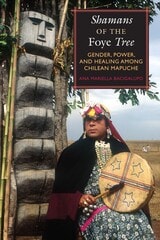
Shamans of the Foye Tree
Gender, Power, and Healing among Chilean MapucheBy Ana Mariella Bacigalupo
University of Texas Press, 2007
Drawing on anthropologist Ana Mariella Bacigalupo's fifteen years of field research, Shamans of the Foye Tree: Gender, Power, and Healing among Chilean Mapuche is the first study to follow shamans' gender identities and performance in a variety of ritual, social, sexual, and political contexts.
To Mapuche shamans, or machi, the foye tree is of special importance, not only for its medicinal qualities but also because of its hermaphroditic flowers, which reflect the gender-shifting components of machi healing practices. Framed by the cultural constructions of gender and identity, Bacigalupo's fascinating findings span the ways in which the Chilean state stigmatizes the machi as witches and sexual deviants; how shamans use paradoxical discourses about gender to legitimatize themselves as healers and, at the same time, as modern men and women; the tree's political use as a symbol of resistance to national ideologies; and other components of these rich traditions.
The first comprehensive study on Mapuche shamans' gendered practices, Shamans of the Foye Tree offers new perspectives on this crucial intersection of spiritual, social, and political power.
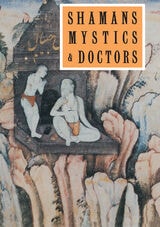
Shamans, Mystics and Doctors
A Psychological Inquiry into India and its Healing TraditionsSudhir Kakar
University of Chicago Press, 1990
"With extraordinary sympathy, open-mindedness, and insight Sudhir Kakar has drawn from both his Eastern and Western backgrounds to show how the gulf that divides native healer from Western psychiatrist can be spanned."—Rosemary Dinnage, New York Review of Books
"Each chapter describes the geographical and cultural context within which the healers work, their unique approach to healing mental illness, and . . . the philosophical and religious underpinnings of their theories compared with psychoanalytical theory."—Choice
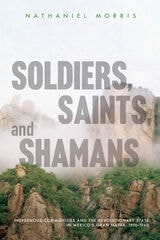
Soldiers, Saints, and Shamans
Indigenous Communities and the Revolutionary State in Mexico's Gran Nayar, 1910–1940Nathaniel Morris
University of Arizona Press, 2020
To make sense of this complex history, Nathaniel Morris offers the first systematic understanding of the participation of the Náayari, Wixárika, O’dam, and Mexicanero peoples in the Mexican Revolution. They are known for being among the least “assimilated” of all Mexico’s Indigenous peoples. It’s often been assumed that they were stuck up in their mountain homeland—“the Gran Nayar”—with no knowledge of the uprisings, civil wars, military coups, and political upheaval that convulsed the rest of Mexico between 1910 and 1940.
Based on extensive archival research and years of fieldwork in the rugged and remote Gran Nayar, Morris shows that the Náayari, Wixárika, O’dam, and Mexicanero peoples were actively involved in the armed phase of the revolution. This participation led to serious clashes between an expansionist, “rationalist” revolutionary state and the highly autonomous communities and heterodox cultural and religious practices of the Gran Nayar’s inhabitants. Morris documents confrontations between practitioners of subsistence agriculture and promoters of capitalist development, between rival Indian generations and political factions, and between opposing visions of the world, of religion, and of daily life. These clashes produced some of the most severe defeats that the government’s state-building programs suffered during the entire revolutionary era, with significant and often counterintuitive consequences both for local people and for the Mexican nation as a whole.

Stories Find You, Places Know
Yup'ik Narratives of a Sentient WorldHolly Cusack-McVeigh
University of Utah Press, 2017
For the Yup’ik people, places are also social actors that react to human actions and emotions. Stories tell how people learn about each other through encounters on the land, and thereby places also learn about people. Places comment on human behavior through the land's responses to specific actions. Stories variously reveal ideas about human associations and relationships between humans and nonhuman beings. Pointing to a systematic correlation between places and narrative elements that has not been previously explored, this volume makes a unique contribution to the literature on place.
Winner of the Brian McConnell Book Award from the International Society for Contemporary Legend Research.
Susto
Tommy Archuleta
University Press of Colorado, 2023
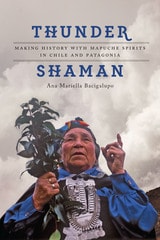
Thunder Shaman
Making History with Mapuche Spirits in Chile and PatagoniaBy Ana Mariella Bacigalupo
University of Texas Press, 2016
As a “wild,” drumming thunder shaman, a warrior mounted on her spirit horse, Francisca Kolipi’s spirit traveled to other historical times and places, gaining the power and knowledge to conduct spiritual warfare against her community’s enemies, including forestry companies and settlers. As a “civilized” shaman, Francisca narrated the Mapuche people’s attachment to their local sacred landscapes, which are themselves imbued with shamanic power, and constructed nonlinear histories of intra- and interethnic relations that created a moral order in which Mapuche become history’s spiritual victors.
Thunder Shaman represents an extraordinary collaboration between Francisca Kolipi and anthropologist Ana Mariella Bacigalupo, who became Kolipi’s “granddaughter,” trusted helper, and agent in a mission of historical (re)construction and myth-making. The book describes Francisca’s life, death, and expected rebirth, and shows how she remade history through multitemporal dreams, visions, and spirit possession, drawing on ancestral beings and forest spirits as historical agents to obliterate state ideologies and the colonialist usurpation of indigenous lands. Both an academic text and a powerful ritual object intended to be an agent in shamanic history, Thunder Shaman functions simultaneously as a shamanic “bible,” embodying Francisca’s power, will, and spirit long after her death in 1996, and an insightful study of shamanic historical consciousness, in which biography, spirituality, politics, ecology, and the past, present, and future are inextricably linked. It demonstrates how shamans are constituted by historical-political and ecological events, while they also actively create history itself through shamanic imaginaries and narrative forms.