Results by title
2 books match the query 'Shetley, Vernon'
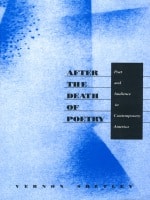
After the Death of Poetry
Poet and Audience in Contemporary AmericaVernon Shetley
Duke University Press, 1993
In this deft analysis, Vernon Shetley shows how writers and readers of poetry, operating under very different conventions and expectations, have drifted apart, stranding the once-vital poetic enterprise on the distant margins of contemporary culture. Along with a clear understanding of where American poetry stands and how it got there, After the Death of Poetry offers a compelling set of prescriptions for its future, prescriptions that might enable the art to regain its lost stature in our intellectual life.
In exemplary case studies, Shetley identifies the very different ways in which three postwar poets—Elizabeth Bishop, James Merrill, and John Ashbery—try to restore some of the challenge and risk that characterized modernist poetry's relation to its first readers. Sure to be controversial, this cogent analysis offers poets and readers a clear sense of direction and purpose, and so, the hope of reaching each other again.
In exemplary case studies, Shetley identifies the very different ways in which three postwar poets—Elizabeth Bishop, James Merrill, and John Ashbery—try to restore some of the challenge and risk that characterized modernist poetry's relation to its first readers. Sure to be controversial, this cogent analysis offers poets and readers a clear sense of direction and purpose, and so, the hope of reaching each other again.
[more]

Dark Film, Blood Money
The Economic Unconscious of American Neo-Noir CinemaVernon Shetley
Intellect Books, 2027
This groundbreaking study reads neo-noir cinema as a response to the transformations in the American economy and society in the long era of national decline.
Neo-noir films exert their fascination not only through their suspense, shadowy atmosphere, and moral ambiguity, but also through their registration of the experience of American life in the long twilight of the American Dream. With a sharp curatorial eye and an elegant critical voice, Vernon Shetley interprets landmark works from the noir revival of the early 1970s to the present, showing how neo-noir reflects the darkening national mood as postwar prosperity gave way to economic stagnation and inequality, social alienation, and a deepening sense of crisis.
Through close readings of key films and overviews of neo-noir’s treatment of the genre’s defining themes and archetypes—desire and betrayal, corruption and alienation, the private detective and the femme fatale—Shetley delineates neo-noir’s exploration of anxieties about work, money, trust, and exchange. From Chinatown to Mulholland Drive, from Night Moves to Nightmare Alley, neo-noir’s marginalized characters and extreme situations emerge in Shetley’s account as powerful representations of concerns central to economic and social life. Combining illuminating analysis with lucid prose, this book offers scholars and general readers alike a fresh, penetrating understanding of the dynamics of neo-noir filmmaking and its continually renewed vitality over the last five decades.
[more]