Results by title
42 books match the query 'Short History'
A Desired Past
A Short History of Same-Sex Love in AmericaLeila J. Rupp
University of Chicago Press, 1999
"Most extraordinary about Leila J. Rupp's indeed short, two-hundred-page history of 'same-sex love and sexuality' is not that it manages to account for such a variety of individuals, races, and classes or take in such a broad chronological and thematic range, but rather that it does all this with such verve, lucidity, and analytical rigor. . . . [A]n elegant, inspiring survey." —John Howard, Journal of American History
A Short History Of Reno
Barbara Land
University of Nevada Press, 1995

A Short History of Bath
Richard Tames
Haus Publishing, 2027
This highly readable guide to Bath details the entire history of the historic city, from the Roman period to the present day, as well as its historic architecture, thermal springs, and other attractions.
Any time spent in Bath is a pleasure. The historic city buzzes with vitality and its designation as one of UNESCO's World Heritage Sites is confirmed by the annual arrival of some four million visitors from Britain and all over the world. Whereas most accounts of Bath's history focus on the Roman and Georgian periods, skipping over much of the rest, this short history offers a chronological survey of the entire span of Bath's existence, supplemented by lively accounts of its food, its fashions, its theatrical and artistic heritage, its music, and its memorials. Almost two-thirds of the city center is a conservation area, the largest in Britain. One in six of the city's houses was built before 1850, almost half before the twentieth century. The city's highlights include not only the Roman baths, the elegant Pump Room, the majestic abbey, and half a dozen museums, but also one of only four bridges in the world with shops on both sides and Britain's last remaining Georgian pleasure gardens. With the opening of the striking new Thermae Spa complex, Bath entered the twenty-first century by reasserting its original identity as a uniquely therapeutic location.
A Short History of Beijing
Jonathan Clements
Haus Publishing, 2022
Before China’s capital became a sprawling megacity and international center of business and culture, its fortunes fluctuated under a dozen dynasties. It has been a capital for several states, including those headed by Mongolian chiefs and the glorious Ming emperors, whose tombs can still be found on its outskirts. And before all that, it was a campsite for primitive hominids, known as the Peking Man. A Short History of Beijing tells the story of this remarkable city, from its more famous residents—Khubilai Khan, Marco Polo, and Chairman Mao—right up to the twenty-first century, as modern construction wiped out so much of the old city to make way for its twenty-million-strong population. Through his timely and intimate portrait of the world’s most populous capital city, Jonathan Clements reveals the history of China itself.

A Short History of Cambridge
Richard Tames
Haus Publishing, 2025
A Short History of Cambridge provides a narrative of the city and university, from the Middle Ages to the present day. Going beyond the world-renowned research attractions of Cambridge University, this revised paperback edition explores the vast cultural output of the town, from art and literature to theater and comedy. Richard Tames sheds light on the very origins of academia in the area, the intricate lives of the students and scholars who studied there, and how this community interacted with the townsfolk over the past eight hundred years.
Cambridge offers the splendor of King's College Chapel and the beauty of “the Backs” as well as outstanding collections of fans and fritillaries, sculpture and stained glass, and medieval coins and oriental manuscripts. Attractions include the world-class Fitzwilliam Museum and Botanic Gardens, quirky Kettle’s Yard, and museums devoted to archaeology, anthropology, zoology, earth sciences, polar research, and the history of science, plus Britain's oldest bookshop. Enter the world of “Bumps and Bedders” and learn why May Week is in June. This joyful history of the town to which more than eight million visitors flock every year will delight both readers familiar with the cobbles of Cambridge and those who have seen no further than the stained-glass windows of King’s College Chapel.

A Short History of Cambridge
Richard Tames
Haus Publishing, 2025

A Short History of Canada for Americans
Alfred Leroy Burt
University of Minnesota Press, 1942
A Short History of Canada for Americans was first published in 1942. Minnesota Archive Editions uses digital technology to make long-unavailable books once again accessible, and are published unaltered from the original University of Minnesota Press editions.
A Short History of Carson City
Richard Moreno
University of Nevada Press, 2011
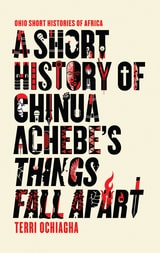
A Short History of Chinua Achebe’s Things Fall Apart
Terri Ochiagha
Ohio University Press, 2018
The publication of Chinua Achebe’s Things Fall Apart (1958) is heralded as the inaugural moment of modern African fiction, and the book remains the most widely read African novel of all time. Translated into dozens of languages, it has sold more than twelve million copies and has become a canonical reading in schools the world over. While Things Fall Apart is neither the first African novel to be published in the West nor necessarily the most critically valued, its iconic status has surpassed even that of its author.
Until now—in the sixtieth anniversary year of its publication—there has not been an updated history that moves beyond the book’s commonly discussed contexts and themes. In the accessible and concise A Short History of Chinua Achebe’s Things Fall Apart, Terri Ochiagha provides that history, asking new questions and bringing to wider attention unfamiliar but crucial elements of the Things Fall Apart story. These include new insights into questions of canonicity and into literary, historiographical, and precolonial aesthetic influences. She also assesses adaptations and appropriations not just in films but in theater, hip-hop, and popular literary genres such as Onitsha Market Literature.
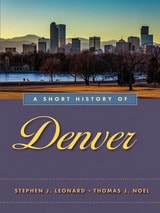
A Short History of Denver
Stephen J. Leonard
University of Nevada Press, 2016
A Short History of Denver portrays the city’s twentieth-century ups and downs, including the City Beautiful movement, political corruption, the rise of the Ku Klux Klan in the 1920s, and the Great Depression of the 1930s. Here readers will find the meat and potatoes of economic and political history and much more, including sports history, social history, and the history of metropolitan-wide efforts to preserve the past.
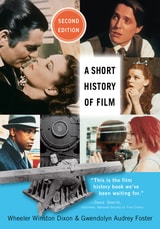
A Short History of Film
Dixon, Wheeler Winston
Rutgers University Press, 2013
Wheeler Winston Dixon and Gwendolyn Audrey Foster present new and amended coverage of the industry in addition to updating the birth and death dates and final works of notable directors. Their expanded focus on key films brings the book firmly into the digital era and chronicles the death of film as a production medium.
The book takes readers through the invention of the kinetoscope, the introduction of sound and color between the two world wars, and ultimately the computer-generated imagery of the present day. It details significant periods in world cinema, including the early major industries in Europe, the dominance of the Hollywood studio system in the 1930s and 1940s, and the French New Wave of the 1960s. Attention is given to small independent efforts in developing nations and the more personal independent film movement that briefly flourished in the United States, the significant filmmakers of all nations, and the effects of censorship and regulation on production everywhere. In addition, the authors incorporate the stories of women and other minority filmmakers who have often been overlooked in other texts.
Engaging and accessible, this is the best one-stop source for the history of world film available for students, teachers, and general audiences alike.
A Short History of Film
Dixon, Wheeler Winston
Rutgers University Press, 2008
Beginning with precursors of what we call moving pictures, Wheeler Winston Dixon and Gwendolyn Audrey Foster lead a fast-paced tour through the invention of the kinetoscope, the introduction of sound and color between the two world wars, and ultimately the computer generated imagery of the present day. They detail significant periods in world cinema, including the early major industries in Europe, the dominance of the Hollywood studio system in the 1930s and 1940s, and the French New Wave of the 1960s. Special attention is also given to small independent efforts in developing nations and the corresponding more personal independent film movement that briefly flourished in the United States, the significant filmmakers of all nations, censorship and regulation and how they have affected production everywhere, and a wide range of studios and genres. Along the way, the authors take great care to incorporate the stories of women and other minority filmmakers who have often been overlooked in other texts.
Compact and easily readable, this is the best one-stop source for the history of world film available to students, teachers, and general audiences alike.
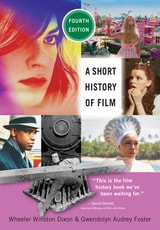
A Short History of Film, Fourth Edition
Wheeler Winston Dixon
Rutgers University Press, 2026
This updated and expanded edition of A Short History of Film provides an accessible overview of the major movements, directors, studios, and genres from the 1880s to the present. Succinct yet comprehensive, with more than 250 rare stills and illustrations, this edition provides new information on contemporary horror, comic book, and franchise films; issues surrounding women and minority filmmakers; the effects of the COVID-19 pandemic on movies worldwide; the shift from film to digital production; the rising use of artificial intelligence in cinema; and the impact of streaming on the industry.
Beginning with the precursors of moving pictures, Wheeler Winston Dixon and Gwendolyn Audrey Foster lead a fast-paced tour through the invention of the kinetoscope, the introduction of sound and color between the two world wars, and ultimately the computer-generated imagery of the present day. They detail significant periods in world cinema, including the creation of early major industries in Europe, the dominance of the Hollywood studio system in the 1930s and 1940s, and the French New Wave of the 1960s. They also highlight independent efforts in developing nations and the corresponding more personal independent film movement that briefly flourished in the United States.
Compact and easily readable, this is a vital history of international cinema is a one-stop resource for students, teachers, and general readers alike.
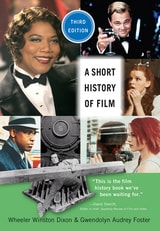
A Short History of Film, Third Edition
Dixon, Wheeler Winston
Rutgers University Press, 2018
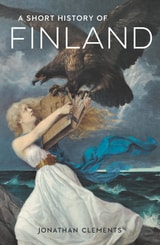
A Short History of Finland
Jonathan Clements
Haus Publishing, 2022
The modern nation of Finland is the heir to centuries of history, as a wilderness at the edge of early Europe, a borderland of the Swedish empire, and a Grand Duchy of tsarist Russia. And, as Jonathan Clements’s vivid, concise volume shows, it is a tale paved with oddities and excitements galore: from prehistoric reindeer herders to medieval barons, Christian martyrs to Viking queens, and, in the twentieth century, the war heroes who held off the Soviet Union against impossible odds.
Offering accounts of public artworks, literary giants, legends, folktales, and famous figures, Clements provides an indispensable portrait of this fascinating nation.
This updated edition includes expanded coverage on the Second World War, as well as new sections on Finns in America and Russia, the centenary of the republic, and Finland’s battle with COVID-19, right up to its historic application to join NATO.
A Short History of Greek Literature
Jacqueline de Romilly
University of Chicago Press, 1985
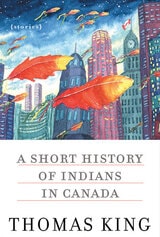
A Short History of Indians in Canada
StoriesThomas King
University of Minnesota Press, 2013
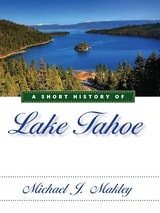
A Short History of Lake Tahoe
Michael J. Makley
University of Nevada Press, 2011
Lake Tahoe is one of the scenic wonders of the American West, a sapphire jewel that attracts millions of visitors each year. But the lake drew Native Americans to its summer shores for millennia, as well as more recent fortune hunters, scientists, and others.
A Short History of Lake Tahoe recounts the long, fascinating history of Lake Tahoe. Author Michael J. Makley examines the geology and natural history of the lake and introduces the people who shaped its history, including the Washoe Indians and such colorful characters as Mark Twain and legendary teamster Hank Monk, and later figures like entertainer Frank Sinatra and Olympic skier Julia Mancuso. He also covers the development of the lake's surrounding valley, including the impacts of mining, logging, and tourism, and the economic, political, and social controversies regarding the use and misuse of the lake's resources.
Generously illustrated with historic photographs, this book is an engaging introduction to one of the most magnificent sites in the world. It also illuminates the challenges of protecting natural beauty and a fragile environment while preserving public access and a viable economy in the surrounding communities.
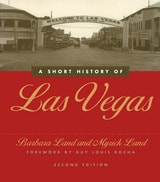
A Short History of Las Vegas
Barbara Land
University of Nevada Press, 2004
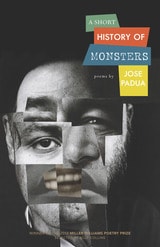
A Short History of Monsters
PoemsJose Padua
University of Arkansas Press, 2019
Winner, 2019 Miller Williams Poetry Prize
“We are the happy riders on the stream of Padua’s consciousness . . . a smart, sympathetic mind at work.”
—Billy Collins
Drawing on the spirit of New York City in decades past, A Short History of Monsters presents the sins and obsessions of a poet nimble in beat and slam traditions. In his first full-length collection, Jose Padua wrestles with an American dream interrupted by failure, excess, and other nightmares. Often brash and unruly, these poems range from recollections of lost, drunken days to unadorned manifestations of hope. Throughout, the speaker redefines his relationship to pop culture, praising it, skewering it, and mourning it by turns.
The poems that make up A Short History of Monsters tend toward both dark humor and epiphany, diving deeply into their own despair and rising up again with existential absurdity. This is a poetry that gets down into the grit and grime of the real world, digging out a space to experience being alive as miraculous in and of itself.

A Short History of Parliament
1295-1642Faith Thompson
University of Minnesota Press, 1953
A Short History of Parliament was first published in 1953. Minnesota Archive Editions uses digital technology to make long-unavailable books once again accessible, and are published unaltered from the original University of Minnesota Press editions.
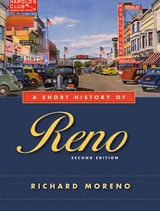
A Short History of Reno, Second Edition
Richard Moreno
University of Nevada Press, 2015
Moreno brings the city’s history up-to-date with coverage of the businesspeople and civic leaders who helped make Reno an attraction that still lures millions of visitors each year. Today’s travelers and residents explore Reno’s flamboyant heart and scenic wonders, topics the author examines in an accessible and lively fashion.
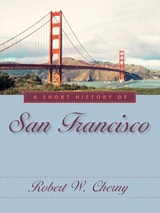
A Short History of San Francisco
Robert W. Cherny
University of Nevada Press, 2026
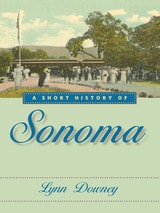
A Short History of Sonoma
Lynn Downey
University of Nevada Press, 2013
The book also addresses such topics as the development of local ranching and businesses and of transportation links to San Francisco that helped to make Sonoma and the surrounding Valley of the Moon a popular location for summer homes and resorts. It discusses the role of the nearby hot springs in attracting visitors and permanent residents, including people seeking cures for various ailments. There are also accounts of some of the famous people who lived in or near Sonoma and helped establish its mystique, including Mexican general Mariano Vallejo, the town’s first leader; Hungarian winemaker Agoston Haraszthy, who first saw the region’s potential for producing superior wines; and writers Jack London and M. F. K. Fisher, who made their homes in the Valley of the Moon, drawn by its beauty and bucolic lifestyle.
A Short History of Sonoma is generously illustrated with vintage photographs. It is a delightful account of one of America’s most charming towns and its evolution from rowdy frontier settlement to the paragon of sophisticated living that it is today.
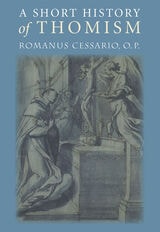
A Short History of Thomism
Romanus Cessario, O.P.
Catholic University of America Press, 2005
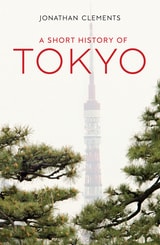
A Short History of Tokyo
Jonathan Clements
Haus Publishing, 2020
In this compact history, Jonathan Clements traces Tokyo’s fascinating story from the first forest clearances and the samurai wars to the hedonistic “floating world” of the last years of the Shogunate. He illuminates the Tokyo of the twentieth century with its destruction and redevelopment, boom and bust without forgoing the thousand years of history that have led to the Eastern Capital as we know it. Tokyo is so entwined with the history of Japan that it can be hard to separate them, and A Short History of Tokyo tells both the story of the city itself and offers insight into Tokyo’s position at the nexus of power and people that has made the city crucial to the events of the whole country.
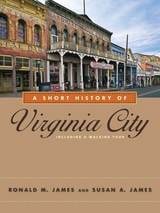
A Short History of Virginia City
Ronald M. James
University of Nevada Press, 2014
The city’s story did not end when the Comstock Lode played out. Beginning in the 1930s, bohemian artists, literati, and tourists were intrigued by this remnant of the Old West. The leader of Manhattan’s café society, Lucius Beebe, moved here and relaunched the Territorial Enterprise in 1950. Television’s most popular western from 1959 to 1973, Bonanza, located its fictional Ponderosa Ranch nearby. In the summer of 1965, a handful of Bay Area musicians, including Big Brother and the Holding Company, performed at the Red Dog Saloon and launched psychedelic rock, part of the inspiration for a defining decade of youth culture. Today it is both a National Historic Landmark District and a living community. Visitors come to enjoy its saloons and restaurants, admire its architecture, and learn from its museums and exhibits. A Short History of Virginia City will enhance their experience and will also be enjoyed by anyone interested in the history of Nevada, mining, and the Old West.
• Includes an illustrated walking tour describing more than thirty buildings and sites

A Short History of Wisconsin
Erika Janik
Wisconsin Historical Society Press, 2010
Rediscover Wisconsin history from the very beginning. A Short History of Wisconsin recounts the landscapes, people, and traditions that have made the state the multifaceted place it is today. With an approach both comprehensive and accessible, historian Erika Janik covers several centuries of Wisconsin's remarkable past, showing how the state was shaped by the same world wars, waves of new inhabitants, and upheavals in society and politics that shaped the nation.
Swift, authoritative, and compulsively readable, A Short History of Wisconsin commences with the glaciers that hewed the region's breathtaking terrain, the Native American cultures who first called it home, and French explorers and traders who mapped what was once called "Mescousing." Janik moves through the Civil War and two world wars, covers advances in the rights of women, workers, African Americans, and Indians, and recent shifts involving the environmental movement and the conservative revolution of the late 20th century. Wisconsin has hosted industries from fur-trapping to mining to dairying, and its political landscape sprouted figures both renowned and reviled, from Fighting Bob La Follette to Joseph McCarthy. Janik finds the story of a state not only in the broad strokes of immigration and politics, but also in the daily lives shaped by work, leisure, sports, and culture. A Short History of Wisconsin offers a fresh understanding of how Wisconsin came into being and how Wisconsinites past and present share a deep connection to the land itself.

A Short History of the Future
W. Warren Wagar
University of Chicago Press, 1992
A Short History of the Future
W. Warren Wagar
University of Chicago Press, 1999
"Thanks to Wagar's magisterial command of futurist information and theory, his extrapolated near-term future is an incisive, dynamic vision of where we may indeed be heading."—H. Bruce Franklin, Washington Post
"A comprehensive, massively detailed script of a possible near future. . . . Intriguing."—San Francisco Chronicle
"A Short History of the Future reads with ease, raises provocative possibilities and presents challenging occasions for thought and argument."—Chicago Tribune
"A breathtaking future history in the manner of Wells and Stapledon, unnerving in its mixture of fact, fiction, and personal perspectives."—George Zebrowski, New York Review of Science Fiction
A Short History of the Future
W. Warren Wagar
University of Chicago Press, 1989
Jensen's tale traces the flow of the future from the early twenty-first-century reign of a megacorporate global economy, to its sudden collapse in 2044, when nuclear catastrophe envelops the world. In the traumatic aftermath, a socialist world commonwealth comes into being in the year 2062, followed by a lengthy transition to a decentralized order of technologically mature autonomous societies, many located in outer space. The riveting literary interludes that follow each chapter take the form of letters and documents from the history of Jensen's family, evoking the everyday lives of people in the midst of these global-historical events. Here we meet a woman in Brazil whose son is dying from a new immuno-deficiency disease, two brothers comparing life on earth with life in a space colony, and many more.
Neither fiction nor nonfiction, Wagar's brilliantly creative work is not meant to forecast the future, but rather to draw attention to possibilities and alternatives for humankind and planet Earth. In doing so, it also serves as an unforgettable reminder that the future is being made now.
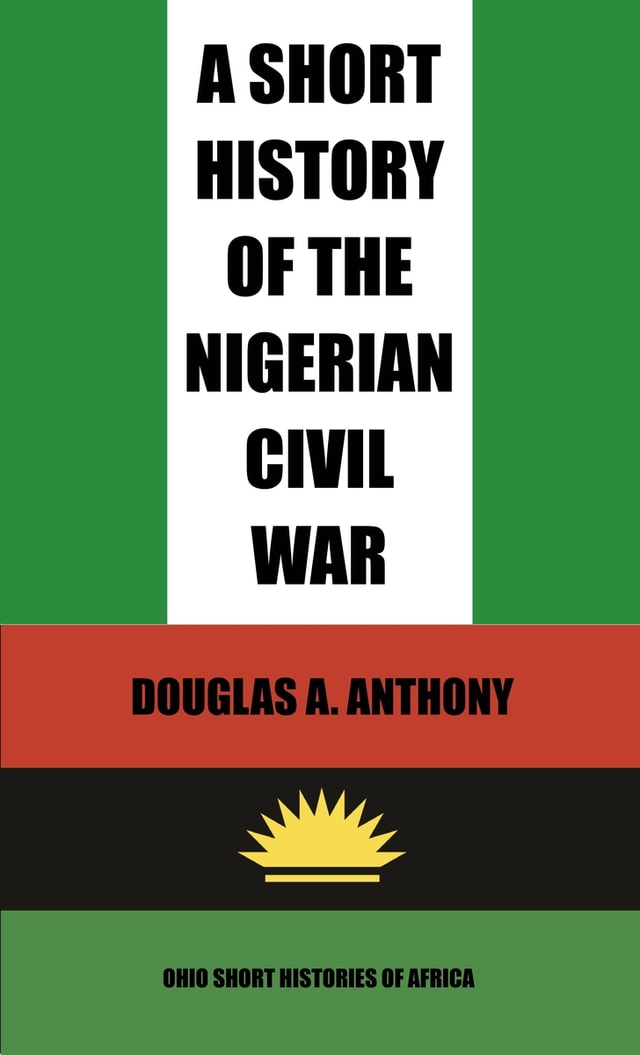
A Short History of the Nigerian Civil War
Douglas A. Anthony
Ohio University Press, 2027
A Short History of the Nigerian Civil War is an accessible and balanced scholarly account of the 1967–70 conflict (also remembered as the Nigeria-Biafra War or simply the Biafran War). More than a seminal event in the history of Africa’s most populous country, the war marked a tragic milestone in the narrative of African decolonization. It also helped shape both international humanitarianism and media coverage of conflicts in developing countries, and offers an interesting, counterintuitive footnote to Cold War history. Interest in the war remains high, though recent book-length treatments have gravitated to memoir and specialized accounts. This book offers readers a concise, evenhanded introduction to the war’s causes, major events, and consequences, presented with a balance of narrative and analysis.
Author Douglas A. Anthony begins by explaining the influence of British imperialism on the country’s historical trajectory. Colonial geography and governance presented the leaders of newly independent Nigeria a template for ongoing polarization and suspicion, and when a military coup toppled the country’s short-lived First Republic (1960–66), existing geopolitical, economic, and ethnic tensions reached unprecedented levels. A second coup, accompanied by lethal coordinated attacks by civilians and soldiers on members of the Igbo ethnic group, triggered the return of most Igbos to their home region in southeastern Nigeria. Here, in May 1967, they declared independence as the Republic of Biafra, led by Chukwuemeka Odumegwu Ojukwu.
The war that followed, which Nigerian military leader Yakubu Gowon had promised would be a brief police action, lasted thirty months. During that time, Biafra, blockaded and diplomatically isolated, confronted larger and better-supplied Nigerian forces, an economic embargo, and escalating starvation. What the Nigerian government described as a war of unification was for most Biafrans a defensive war against a genocidal threat. By most accounts one million people died, the vast majority Biafran civilians.
With the war’s end in 1970, Biafra’s people and greatly diminished territory rejoined Nigeria. But behind formal declarations of “No victor, no vanquished” lingered the war’s enormous human, economic, and political consequences, felt most acutely by Igbos, many of whom continue to contend with a legacy of marginalization.
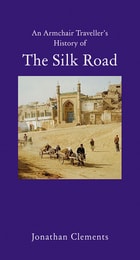
A Short History of the Silk Road
Jonathan Clements
Haus Publishing, 2017
Black and White Cinema
A Short HistoryWheeler Winston Dixon
Rutgers University Press, 2015
Black and White Cinema is the first study to consider the use of black-and-white as an art form in its own right, providing a comprehensive and global overview of the era when it flourished, from the 1900s to the 1960s. Acclaimed film scholar Wheeler Winston Dixon introduces us to the masters of this art, discussing the signature styles and technical innovations of award-winning cinematographers like James Wong Howe, Gregg Toland, Freddie Francis, and Sven Nykvist. Giving us a unique glimpse behind the scenes, Dixon also reveals the creative teams—from lighting technicians to matte painters—whose work profoundly shaped the look of black-and-white cinema.
More than just a study of film history, this book is a rallying cry, meant to inspire a love for the artistry of black-and-white film, so that we might work to preserve this important part of our cinematic heritage. Lavishly illustrated with more than forty on-the-set stills, Black and White Cinema provides a vivid and illuminating look at a creatively vital era.

Ecocide
A Short History of the Mass Extinction of SpeciesFranz Broswimmer
Pluto Press, 2002
From Stone to Flesh
A Short History of the BuddhaDonald S. Lopez Jr.
University of Chicago Press, 2013
Germany, Third Edition
A Short HistoryDonald S. Detwiler
Southern Illinois University Press, 1999
This new edition of a best-selling history of Germany, originally published in 1976, includes the great watershed of 1989–90 and its aftermath. With twelve maps, a chronology of events, and an updated bibliographical essay, Germany: A Short History provides a thorough introduction to German history from antiquity to the present.

Madagascar
A Short HistorySolofo Randrianja and Stephen Ellis
University of Chicago Press, 2009
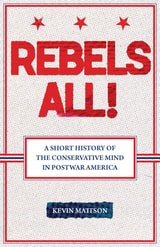
Rebels All!
Rebels All! A Short History of the Conservative Mind in Postwar AmericaMattson, Kevin
Rutgers University Press, 2008
Outstanding Academic Title of 2008
Do you ever wonder why conservative pundits drop the word “faggot” or talk about killing and then Christianizing Muslims abroad? Do you wonder why the right’s spokespeople seem so confrontational, rude, and over-the-top recently? Does it seem strange that conservative books have such apocalyptic titles? Do you marvel at why conservative writers trumpeted the “rebel” qualities of George W. Bush just a few years back?
There is no doubt that the style of the political right today is tough, brash, and by many accounts, not very conservative sounding. After all, isn’t conservatism supposed to be about maintaining standards, upholding civility, and frowning upon rebellion? Historian Kevin Mattson explains the apparent contradictions of the party in this fresh examination of the postwar conservative mind. Examining a big cast of characters that includes William F. Buckley, Whittaker Chambers, Norman Podhoretz, Irving Kristol, Kevin Phillips, David Brooks, and others, Mattson shows how right-wing intellectuals have always, but in different ways, played to the populist and rowdy tendencies in America’s political culture. He boldly compares the conservative intellectual movement to the radical utopians among the New Left of the 1960s and he explains how conservatism has ingested central features of American culture, including a distrust of sophistication and intellectualism and a love of popular culture, sensation, shock, and celebrity.
Both a work of history and political criticism, Rebels All! shows how the conservative mind made itself appealing, but also points to its endemic problems. Mattson’s conclusion outlines how a recast liberalism should respond to the conservative ascendancy that has marked our politics for the last thirty years.
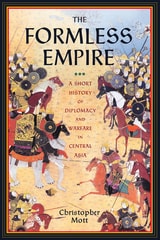
The Formless Empire
A Short History of Diplomacy and Warfare in Central AsiaChristopher Mott
Westholme Publishing, 2015
Central Asia, a vast region extending from eastern Russia and across Kazakhstan, Uzbekistan, Turkmenistan, Afghanistan, Tajikistan, Kyrgystan, Mongolia, and western China, has its own tradition of foreign policy rooted in the ancient nomadic culture of many of its peoples as well as the region’s distinctive geography. From the thundering hooves of Mongol or Cossack cavalry across the steppes to the clanking of tanks on parade in Moscow or Beijing, elements of this system still cast a shadow on the region at the heart of Earth’s largest continent. By tracing the evolution of Central Asian warfare and diplomacy through a series of historical examples, ranging from the ancient Xiongnu people and medieval Mongol Empire to the fall of the Soviet Union, historian Christopher Mott argues that the original system of informal relationships, indirect rule, and rapid military movement did not entirely fade from the region with the eclipse of the nomadic powers during the Middle Ages. In fact, many states like China, Iran, and Russia had already been influenced by nomadic people, and in so doing adapted their own diplomatic and military policies accordingly. The Formless Empire: A Short History of Diplomacy and Warfare in Central Asia is an engaging study of the nature of non-Western imperialism and great-power strategy. In addition, the book demonstrates that regional histories can show us the variety of political possibilities in the past and how they were adapted to changing circumstances—a point made even more important by the rapid changes facing global security and new forms of empire building.
“Christopher Mott’s extremely erudite and wide-ranging examination of the history of Central Asia shows us that we have been far too narrow-minded and Eurocentric in thinking about power and how the global system changes historically. Given the current interest in ‘caliphates’ we need to reflect on the history of the areas of the world that dance to a different historical drum than we do in the West.” —Andrew John Williams, author of France, Britain, and the United States in the Twentieth Century

The War of 1812, A Short History
Donald R. Hickey
University of Illinois Press, 2012
This abridged edition of Donald R. Hickey's comprehensive and authoritative The War of 1812: A Forgotten Conflict has been thoroughly revised for the 200th anniversary of the historic conflict. A myth-shattering study that will inform and entertain students and general readers alike, The War of 1812: A Short History explores the military, diplomatic, and domestic history of our second war with Great Britain, bringing the study up to date with recent scholarship on all aspects of the war, from the Gulf of Mexico to Canada.
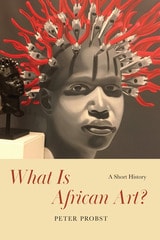
What Is African Art?
A Short HistoryPeter Probst
University of Chicago Press, 2022
This book examines the invention and development of African art as an art historical category. It starts with a simple question: What do we mean when we talk about African art? By confronting the historically shifting answers to this question, Peter Probst identifies “African art” as a conceptual vessel that manifests wider societal transformations.
What Is African Art? covers three key stages in the field’s history. Starting with the late nineteenth through the mid-twentieth centuries, the book first discusses the colonial formation of the field by focusing on the role of museums, collectors, and photography in disseminating visual cultures as relations of power. It then explores the remaking of the field at the dawn of African independence with the shift toward contemporary art and the rise of Black Atlantic studies in the 1970s and 1980s. Finally, it examines the post- and decolonial reconfiguration of the field driven by questions of representation, repair, and restitution.