Results by title
2 books match the query 'Silver Screen'
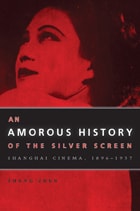
An Amorous History of the Silver Screen
Shanghai Cinema, 1896-1937Zhang Zhen
University of Chicago Press, 2005
Shanghai in the early twentieth century was alive with art and culture. With the proliferation of popular genres such as the martial arts film, the contest among various modernist filmmakers, and the advent of sound, Chinese cinema was transforming urban life. But with the Japanese invasion in 1937, all of this came to a screeching halt. Until recently, the political establishment has discouraged comprehensive studies of the cultural phenomenon of early Chinese film, and this momentous chapter in China's history has remained largely unexamined.
The first sustained historical study of the emergence of cinema in China, An Amorous History of the Silver Screen is a fascinating narrative that illustrates the immense cultural significance of film and its power as a vehicle for social change. Named after a major feature film on the making of Chinese cinema, only part of which survives, An Amorous History of the Silver Screen reveals the intricacies of this cultural movement and explores its connections to other art forms such as photography, architecture, drama, and literature. In light of original archival research, Zhang Zhen examines previously unstudied films and expands the important discussion of how they modeled modern social structures and gender roles in early twentieth-century China.
The first volume in the new and groundbreaking series Cinema and Modernity, An Amorous History of the Silver Screen is an innovative—and well illustrated—look at the cultural history of Chinese modernity through the lens of this seminal moment in Shanghai cinema.
[more]
Nixon and the Silver Screen
Mark Feeney
University of Chicago Press, 2004
Richard Nixon and the film industry arrived in Southern California in the same year, 1913. In Nixon and the Silver Screen, Mark Feeney offers a new and often revelatory way of thinking about one of our most controversial presidents: by looking not just at Nixon's career—but Hollywood's. Nixon viewed more movies while in office than any other president, and Feeney argues that Nixon’s story, both in politics and in his personal life, is nothing if not quintessentially American. Bearing in mind the events that shaped his presidency from 1969 to 1974, Feeney sees aspects of Nixon’s character—and the nation’s—refracted and reimagined in the more than 500 films Nixon watched during his tenure in the White House. The verdict? Nixon’s legacy, for better or worse, is forever representative of the “Silver Age” in Hollywood, shaping and being shaped by that flickering silver screen.
[more]