Results by title
39 books match the query 'Singers'
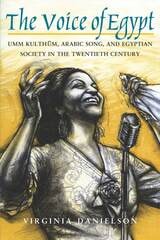
"The Voice of Egypt"
Umm Kulthum, Arabic Song, and Egyptian Society in the Twentieth CenturyVirginia Danielson
University of Chicago Press, 1997
Danielson examines the careful construction of Umm Kulthum's phenomenal popularity and success in a society that discouraged women from public performance. From childhood, her mentors honed her exceptional abilities to accord with Arab and Muslim practice, and as her stature grew, she remained attentive to her audience and the public reception of her work. Ultimately, she created from local precendents and traditions her own unique idiom and developed original song styles from both populist and neo-classical inspirations. These were enthusiastically received, heralded as crowning examples of a new, yet authentically Arab-Egyptian, culture. Danielson shows how Umm Kulthum's music and public personality helped form popular culture and contributed to the broader artistic, societal, and political forces that surrounded her.
This richly descriptive account joins biography with social theory to explore the impact of the individual virtuoso on both music and society at large while telling the compelling story of one of the most famous musicians of all time.
"She is born again every morning in the heart of 120 million beings. In the East a day without Umm Kulthum would have no color."—Omar Sharif
All Shook Up
Collected Poems about ElvisWill Clemens
University of Arkansas Press, 2001
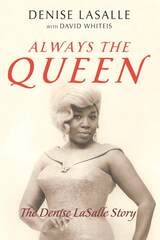
Always the Queen
The Denise LaSalle StoryDenise LaSalle, with David Whiteis
University of Illinois Press, 2020
As honest and no-nonsense as the artist herself, Always the Queen is LaSalle's in-her-own-words story of a lifetime in music. Moving to Chicago as a teen, LaSalle launched a career in gospel and blues that eventually led to the chart-topping 1971 smash ”Trapped by a Thing Called Love” and a string of R&B hits. She reinvented herself as a soul-blues artist as tastes changed and became a headliner on the revitalized southern soul circuit and at festivals nationwide and overseas. Revered for a tireless dedication to her music and fans, LaSalle continued to tour and record until shortly before her death.

Asmahan's Secrets
Woman, War, and SongBy Sherifa Zuhur
University of Texas Press, 2001
The great Arab singer Asmahan was the toast of Cairo song and cinema in the late 1930s and early 1940s, as World War II approached. She remained a figure of glamour and intrigue throughout her life and lives on today in legend as one of the shaping forces in the development of Egyptian popular culture. In this biography, author Sherifa Zuhur does a thorough study of the music and film of Asmahan and her historical setting.
A Druze princess actually named Amal al-Atrash, Asmahan came from an important clan in the mountains of Syria but broke free from her traditional family background, left her husband, and became a public performer, a role frowned upon for women of the time.
This unique biography of the controversial Asmahan focuses on her public as well as her private life. She was a much sought-after guest in the homes of Egypt's rich and famous, but she was also rumored to be an agent for the Allied forces during World War II.
Through the story of Asmahan, the reader glimpses not only aspects of the cultural and political history of Egypt and Syria between the two world wars, but also the change in attitude in the Arab world toward women as public performers on stage. Life in wartime Cairo comes alive in this illustrated account of one of the great singers of the Arab world, a woman who played an important role in history.
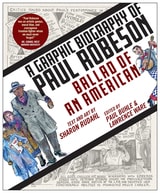
Ballad of an American
A Graphic Biography of Paul RobesonSharon Rudahl
Rutgers University Press, 2021
The first-ever graphic biography of Paul Robeson, Ballad of an American, charts Robeson’s career as a singer, actor, scholar, athlete, and activist who achieved global fame. Through his films, concerts, and records, he became a potent symbol representing the promise of a multicultural, multiracial American democracy at a time when, despite his stardom, he was denied personal access to his many audiences.
Robeson was a major figure in the rise of anti-colonialism in Africa and elsewhere, and a tireless campaigner for internationalism, peace, and human rights. Later in life, he embraced the civil rights and antiwar movements with the hope that new generations would attain his ideals of a peaceful and abundant world. Ballad of an American features beautifully drawn chapters by artist Sharon Rudahl, a compelling narrative about his life, and an afterword on the lasting impact of Robeson’s work in both the arts and politics. This graphic biography will enable all kinds of readers—especially newer generations who may be unfamiliar with him—to understand his life’s story and everlasting global significance.
Ballad of an American: A Graphic Biography of Paul Robeson is published in conjunction with Rutgers University’s centennial commemoration of Robeson’s 1919 graduation from the university.
Study guide for Ballad of an American: A Graphic Biography of Paul Robeson (https://d3tto5i5w9ogdd.cloudfront.net/wp-content/uploads/2021/05/10201015/YA_Adult-Study-Guide-for-A-Graphic-Biography-of-Paul-Robeson.pdf).
View the blad for Ballad of an American.

Blue Guitar Highway
Paul Metsa
University of Minnesota Press, 2011
This is a musician’s tale: the story of a boy growing up on the Iron Range, playing his guitar at family gatherings, coming of age in the psychedelic seventies, and honing his craft as a pro in Minneapolis, ground zero of American popular music in the mid-eighties. “There is a drop of blood behind every note I play and every word I write,” Paul Metsa says. And it’s easy to believe, as he conducts us on a musical journey across time and country, navigating switchbacks, detours, dead ends, and providing us the occasional glimpse of the promised land on the blue guitar highway.
His account captures the thrill of the Twin Cities when acts like the Replacements, Husker Dü, and Prince were remaking pop music. It takes us right onto the stages he shared with stars like Billy Bragg, Pete Seeger, and Bruce Springsteen. And it gives us a close-up, dizzying view of the roller-coaster ride that is the professional musician’s life, played out against the polarizing politics and intimate history of the past few decades of American culture. Written with a songwriter’s sense of detail and ear for poetry, Paul Metsa’s book conveys all the sweet absurdity, dry humor, and passion for the language of music that has made his story sing.
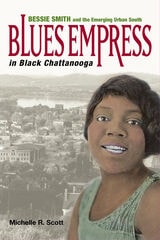
Blues Empress in Black Chattanooga
Bessie Smith and the Emerging Urban SouthMichelle R. Scott
University of Illinois Press, 2007
As one of the first African American vocalists to be recorded, Bessie Smith is a prominent figure in American popular culture and African American history. Michelle R. Scott uses Smith's life as a lens to investigate broad issues in history, including industrialization, Southern rural to urban migration, black community development in the post-emancipation era, and black working-class gender conventions.
Arguing that the rise of blues culture and the success of female blues artists like Bessie Smith are connected to the rapid migration and industrialization in the late nineteenth and early twentieth centuries, Scott focuses her analysis on Chattanooga, Tennessee, the large industrial and transportation center where Smith was born. This study explores how the expansion of the Southern railroads and the development of iron foundries, steel mills, and sawmills created vast employment opportunities in the postbellum era. Chronicling the growth and development of the African American Chattanooga community, Scott examines the Smith family's migration to Chattanooga and the popular music of black Chattanooga during the first decade of the twentieth century, and culminates by delving into Smith's early years on the vaudeville circuit.
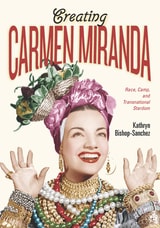
Creating Carmen Miranda
Race, Camp, and Transnational StardomKathryn Bishop-Sanchez
Vanderbilt University Press, 2016
This final performance in many ways exemplified the power of Carmen Miranda. The actress, singer, and dancer pursued a relentless mission to demonstrate the provocative theatrical force of her cultural roots in Brazil. Armed with bare-midriff dresses, platform shoes, and her iconic fruit-basket headdresses, Miranda stole the show in films like That Night in Rio and The Gang's All Here. For American film audiences, her life was an example of the exoticism of a mysterious, sensual South America. For Brazilian and Latin American audiences, she was an icon. For the gay community, she became a work of art personified and a symbol of courage and charisma.
In Creating Carmen Miranda, Kathryn Bishop-Sanchez takes the reader through the myriad methods Miranda consciously used to shape her performance of race, gender, and camp culture, all to further her journey down the road to becoming a legend.

Fantasies of Nina Simone
Jordan Alexander Stein
Duke University Press, 2024
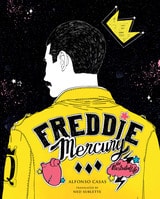
Freddie Mercury
An Illustrated LifeAlfonso Casas; translated by Ned Sublette
University of Texas Press, 2020
The music of Queen and powerhouse lead singer Freddie Mercury are best experienced with the volume turned all the way up. Alfonso Casas’s Freddie Mercury delivers a sonorous homage to the formidable singer and the turning points that produced a game-changing body of music that continues to inspire fans around the globe.
First published in Spain and now available worldwide, this luminous work covers Freddie's three “births”: his birth as Farrokh Bulsara in Zanzibar; his adoption of the last name of Mercury and the launch of Queen with Brian May and Roger Taylor; and the emergence of the lasting legend after Freddie’s death at the age of forty-five. Casas's evocative illustrations highlight the key moments in the singer’s transformation from child prodigy to superstar, bringing to life the bold innovator who broke free of his conventional upbringing. Chronicling events from Freddie’s marriage to Mary Austin and early fame in London’s 1970s glam scene, to the making of multiple megahits (including the six-minute chart-topper “Bohemian Rhapsody”), to his final years in a lasting relationship with Jim Hutton, Freddie Mercury is an exhilarating, poignant portrait of a creative genius who lived life to the hilt.
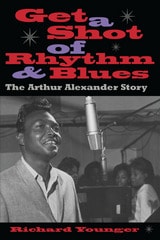
Get a Shot of Rhythm and Blues
The Arthur Alexander StoryRichard Younger
University of Alabama Press, 2000
The first book-length biography of an influential country/soul legend whose songs have been recorded by the Beatles, the Rolling Stones, and Bob Dylan.
Get a Shot of Rhythm and Blues chronicles the rise, fall, and rebirth of Arthur Alexander, an African American singer-songwriter whose music influenced many of the rock and soul musicians of the 1960s. Although his name is not well known today, Alexander's musical legacy is vast. His 1962 song "You Better Move On" was the first hit to emerge from the fledgling Muscle Shoals FAME studio in Alabama, and his fusion of country and soul and his heartfelt vocals on such songs as "Anna (Go to Him)" and "Every Day I Have to Cry" were revered by musicians including the Beatles, the Rolling Stones, and Bob Dylan, all of whom recorded his songs.
Alexander's story is a tragic one, with a brief, redemptive finale. His meteoric rise after the release of "You Better Move On" gave way to lean years caused both by his drug and alcohol abuse and by the mishandling of his career by producers and managers. In 1977, he quit the music business, but his music lived on. In 1992, Alexander returned to
the studio and recorded the critically praised album Lonely Just Like Me. Just three months after the album's release in March 1993, he suffered a heart attack in the offices of his music publisher in Nashville and died three days later.
In telling Alexander's story, Richard Younger captures the burgeoning music scenes in Muscle Shoals and Nashville during the 1960s and 1970s and recovers the life of a fascinating musician whose influence was international. Younger's account is enriched by his interviews with more than 200 artists, family members, and friends--such as Rick Hall, Billy Sherrill, Charlie McCoy, Chuck Jackson, Gerry Marsden, and Kris Kristofferson--and includes an abundance of never-before-seen photographs.

Haunted Heart
A Biography of Susannah McCorkleLinda Dahl
University of Michigan Press, 2006
"In this comprehensive biography, compiled from meticulous research and interviews with many of McCorkle's confidants . . . Dahl reconstructs a career distinguished by great promise and great sadness . . . doing her best to address a large, looming 'Why?' that can never be completely answered."
—New York Times
"A compelling, sympathetic but often chilling view not only of McCorkle's complexities but also of the difficult business of music itself and of the widespread always potentially fatal illness now better known as bipolar disorder, which the singer hid from so many, even from herself for many years."
—Newsweek
“Susannah's life was dark and daunting. Her music was suave and sunny. Both are honored in this remarkably well-researched and constantly revealing keyhole peek into a haunted life that is both chilling and exhilarating. I could not put it down.”
—Rex Reed
“Susannah McCorkle was a mesmerizing singer with a dark side she hid even from her closest friends. Now, thanks to this probing and courageous biography, we can understand the gut ambition that took her to the top of her field and the turmoil that brought her down.”
—James Gavin, author of Deep in a Dream: The Long Night of Chet Baker
“Haunted Heart strikingly resembles the woman it describes: it is vivacious, tender, saturnine, industrious, and deeply intelligent. Like Susannah's way with certain ballads, it opens a wound and begins the work of healing it. I am grateful for Linda Dahl's diligence and sympathy.”
—Leon Wieseltier
Linda Dahl is the author of Stormy Weather: The Music and Lives of a Century of Jazzwomen and Morning Glory: A Biography of Mary Lou Williams. Visit the author’s website at www.dahljazz.com.

Highway 61 Revisited
Bob Dylan’s Road from Minnesota to the WorldColleen J. Sheehy
University of Minnesota Press, 2009
New essays consider Dylan’s latest work, his Minnesota roots, and his global reach
The young man from Hibbing released Highway 61 Revisited in 1965, and the rest, as they say, is history. Or is it? From his roots in Hibbing, to his rise as a cultural icon in New York, to his prominence on the worldwide stage, Colleen J. Sheehy and Thomas Swiss bring together the most eminent Dylan scholars at work today—as well as people from such far-reaching fields as labor history, African American studies, and Japanese studies—to assess Dylan’s career, influences, and his global impact on music and culture.
The Dylan effect has extended far beyond the United States in recent decades, and the essays here analyze his contribution to the people and cultures of the United Kingdom, Italy, and Japan. With a special focus on his Minnesota roots, including Greil Marcus’s spectacular tour of Dylan’s hometown, authors also take into account his most recent work and Martin Scorsese’s documentary No Direction Home.The first cultural and historical geography of his dramatic rise, storied career, and unmatched iconic status, Highway 61 Revisited maps the terrain of Bob Dylan’s music in the world.Contributors: John Barner, U of Georgia; Daphne Brooks, Princeton U; Court Carney, Stephen F. Austin State U; Alessandro Carrera, U of Houston; Michael Cherlin, U of Minnesota; Marilyn J. Chiat; Susan Clayton; Mick Cochrane, Canisius College; Thomas Crow, New York U; Kevin J. H. Dettmar, Pomona College, Carbondale; Sumanth Gopinath, U of Minnesota; Charles Hughes; C. P. Lee, U of Salford, Manchester, England; Alex Lubet, U of Minnesota; Greil Marcus, U of California, Berkeley; Aldon Lynn Nielsen, Pennsylvania State U; Roberto Polito, The New School; Robert Reginio, Frostburg State U; Heather Stur, U of Southern Mississippi; Mikiko Tachi, Chiba U, Japan; Gayle Wald, George Washington U; Anne Waldman, Naropa U; David Yaffe, Syracuse U.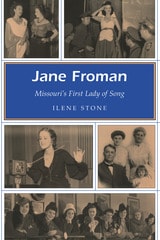
Jane Froman
Missouri's First Lady of SongIlene Stone
University of Missouri Press, 2003
King of the Cowboys, Queen of the West
Roy Rogers and Dale EvansRaymond E. White
University of Wisconsin Press, 2006
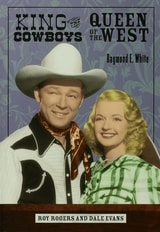
King of the Cowboys, Queen of the West presents these two celebrities in the most comprehensive and inclusive account to date. Part narrative, part reference, this impeccably researched, highly accessible survey spans the entire scope of Rogers's and Evans's careers, illuminating and celebrating their place in twentieth-century American popular culture. Following the pair through each stage of their professional and personal trajectories, author Raymond E. White explores the unique alchemy of the singing cowboy and his free-spirited yet feminine partner. In a dual biography, he shows how Rogers and Evans carefully husbanded their public image and—of particular note—incorporated their Christian faith into their performances. And in a series of exhaustive appendixes, he documents their contributions to each medium they worked in. Testifying to both the breadth and the longevity of their careers, the book includes radio logs, discographies, filmographies, and comicographies that will delight historians and collectors alike. With its engaging tone and meticulous research, King of the Cowboys, Queen of the West is bound to become the definitive source on the lives of these two great American icons.

Living in the Woods in a Tree
Remembering Blaze FoleySybil Rosen
University of North Texas Press, 2008

Madonnaland
And Other Detours into Fame and FandomBy Alina Simone
University of Texas Press, 2016
When Alina Simone agreed to write a book about Madonna, she thought it might provide an interesting excuse to indulge her own eighties nostalgia. Wrong. What Simone discovered instead was a tidal wave of already published information about Madonna—and her own ambivalence about, maybe even jealousy of, the Material Girl’s overwhelming commercial success. With the straight-ahead course stymied, Simone set off on a quirky detour through the backroads of celebrity and fandom and the people who love or loathe Madonna.
In this witty, sometimes acerbic, always perceptive chronicle, Simone begins by trying to understand why Madonna’s birthplace, Bay City, Michigan, won’t even put up a sign to celebrate its most famous citizen, and ends by asking why local bands who make music that’s authentic and true can disappear with barely a trace. In between, she ranges from Madonna fans who cover themselves with tattoos of the singer’s face and try to make fortunes off selling her used bustiers and dresses, to Question Mark and the Mysterians—one-hit wonders best known for “96 Tears”—and Flying Wedge, a Detroit band that dropped off an amazing two-track record in the office of CREEM magazine in 1972 and vanished, until Simone tracked it down.
Filled with fresh insights about the music business, fandom, and what it takes to become a superstar, Madonnaland is as much a book for people who, like Simone, prefer “dark rooms, coffee, and state-subsidized European films filled with existential despair” as it is for people who can’t get enough of Madonna.
Maybe We'll Make It
A MemoirMargo Price
University of Texas Press, 2022
An October 2022 IndieNext pick
”[An] engaging and beautifully narrated quest for personal fulfillment and musical recognition...This is a fast-paced tale in which music and love always take center stage...A truly gifted musician, Price writes about her journey with refreshing candor.”—Kirkus, starred review
”Brutally honest…a vivid and poignant memoir.”—The Guardian
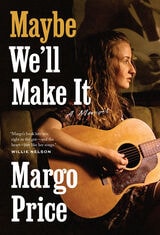
Country music star Margo Price shares the story of her struggle to make it in an industry that preys on its ingenues while trying to move on from devastating personal tragedies.
When Margo Price was nineteen years old, she dropped out of college and moved to Nashville to become a musician. She busked on the street, played open mics, and even threw out her TV so that she would do nothing but write songs. She met Jeremy Ivey, a fellow musician who would become her closest collaborator and her husband. But after working on their craft for more than a decade, Price and Ivey had no label, no band, and plenty of heartache.
Maybe We’ll Make It is a memoir of loss, motherhood, and the search for artistic freedom in the midst of the agony experienced by so many aspiring musicians: bad gigs and long tours, rejection and sexual harassment, too much drinking and barely enough money to live on. Price, though, refused to break, and turned her lowest moments into the classic country songs that eventually comprised the debut album that launched her career. In the authentic voice hailed by Pitchfork for tackling "Steinbeck-sized issues with no-bullshit humility," Price shares the stories that became songs, and the small acts of love and camaraderie it takes to survive in a music industry that is often unkind to women. Now an award-winning artist with a global fanbase, Price tells a love story of music, collaboration, and the struggle to build a career while trying to maintain her singular voice and style.
Meet Me with Your Black Drawers On
My Life in MusicBy Jeannie Cheatham
University of Texas Press, 2006
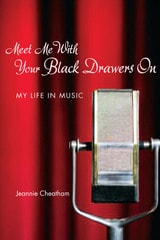
Jeannie Cheatham is a living legend in jazz and blues. A pianist, singer, songwriter, and co-leader of the Sweet Baby Blues Band, she has played and sung with many of the greats in blues and jazz—T-Bone Walker, Dinah Washington, Cab Callaway, Joe Williams, Al Hibbler, Odetta, and Jimmy Witherspoon. Cheatham toured with Big Mama Thornton off and on for ten years and was featured with Thornton and Sippie Wallace in the award-winning PBS documentary Three Generations of the Blues. Her music, which has garnered national and international acclaim, has been described as unrestrained, exuberant, soulful, rollicking, wicked, virtuous, wild, and truthful. Cheatham's signature song, "Meet Me with Your Black Drawers On" is a staple in jazz and blues clubs across America and in Europe, Africa, and Japan.
In this delightfully frank autobiography, Jeannie Cheatham recalls a life that has been as exuberant, virtuous, wild, and truthful as her music. She begins in Akron, Ohio, where she grew up in a vibrant multiethnic neighborhood surrounded by a family of strong women. From those roots, she launched a musical career that took her from the Midwest to California, doing time along the way everywhere from a jail cell in Dayton, Ohio, where she was innocently caught in a police raid, to the University of Wisconsin-Madison—where she and Jimmy Cheatham taught music. Cheatham writes of a life spent fighting racism and sexism, of rage and resolve, misery and miracles, betrayals and triumphs, of faith almost lost in dark places, but mysteriously regained in a flash of light. Cheatham's autobiography is also the story of her fifty-years-and-counting love affair and musical collaboration with her husband and band partner, Jimmy Cheatham.

Never Givin' Up
The Life and Music of Al JarreauKurt Dietrich
Wisconsin Historical Society Press, 2023
This is the first biography to chronicle the life and career of one of the most distinguished and beloved musical artists to come out of Wisconsin: Al Jarreau. From his earliest days singing in the 1940s until his death in 2017, Jarreau defied categorization. While his biggest hit, “We’re In This Love Together,” is pure pop, he smashed music industry stereotypes as the first artist to win Grammy Awards in three genres: jazz, pop, and R&B.
Never Givin’ Up traces Jarreau’s singing career from humble beginnings in his hometown of Milwaukee to international fame. The narrative includes his formative student days at Ripon College and the University of Iowa, as well as the years spent honing his craft at nightspots in Milwaukee, San Francisco, and the Twin Cities. After he was signed by Warner Bros. Records in 1975 at the age of 35, Jarreau achieved stardom with his innovative vocal stylings and electric live performances.
This book includes more than 20 sidebars with bonus information about every Jarreau album and behind-the-scenes stories about the making of the records. Author Kurt Dietrich conducted interviews with dozens of Al's friends, fellow musicians, professional associates, and family members—most notably Al’s sister, Rose Marie Freeman, who was a major contributor to the project. Featuring 54 images spanning Jarreau’s life, from never-before-seen family snapshots to stills from his legendary stage performances, Never Givin’ Up celebrates a Milwaukee hometown hero and global sensation.
Silver Medal Winner for the 2023 Foreword INDIES Book of the Year Award for Performing Arts and Music
Finalist for the Association for Recorded Sound Collections’ Award for Best Historical Research in Recorded Jazz
“Kurt Dietrich has created a masterful book, revealing and depicting a detailed version of my brother, Al Jarreau, through his music and career. In these pages, I see Al’s determination and his admirable goal of ‘Never Givin’ Up’ on his joy of singing. It was my distinct pleasure to work with Kurt Dietrich in the process, establishing what has become a bond of family-like friendship that will endure for a lifetime and beyond.”
—Rose Marie (Jarreau) Freeman
“Dietrich captures Jarreau’s simultaneously gregarious and shy charm while revealing his own affection for this gifted and gracious performer. It’s his love letter to a Milwaukee legend.”
—Bill Milkowski, author of Jaco: The Extraordinary and Tragic Life of Jaco Pastorius and Ode to a Tenor Titan: The Life and Times and Music of Michael Brecker
"Written in an approachable style and carefully documented, this book will be valuable for fans and researchers of Jarreau’s music. Summing Up: Highly recommended."
—Choice Reviews

Overweight Sensation
The Life and Comedy of Allan ShermanMark Cohen
Brandeis University Press, 2013
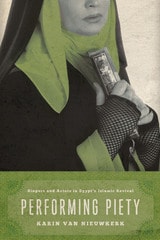
Performing Piety
Singers and Actors in Egypt's Islamic RevivalBy Karin van Nieuwkerk
University of Texas Press, 2013
In the 1980s, Egypt witnessed a growing revival of religiosity among large sectors of the population, including artists. Many pious stars retired from art, “repented” from “sinful” activities, and dedicated themselves to worship, preaching, and charity. Their public conversions were influential in spreading piety to the Egyptian upper class during the 1990s, which in turn enabled the development of pious markets for leisure and art, thus facilitating the return of artists as veiled actresses or religiously committed performers.
Revisiting the story she began in “A Trade like Any Other”: Female Singers and Dancers in Egypt, Karin van Nieuwkerk draws on extensive fieldwork among performers to offer a unique history of the religious revival in Egypt through the lens of the performing arts. She highlights the narratives of celebrities who retired in the 1980s and early 1990s, including their spiritual journeys and their influence on the “pietization” of their fans, among whom are the wealthy, relatively secular, strata of Egyptian society. Van Nieuwkerk then turns to the emergence of a polemic public sphere in which secularists and Islamists debated Islam, art, and gender in the 1990s. Finally, she analyzes the Islamist project of “art with a mission” and the development of Islamic aesthetics, questioning whether the outcome has been to Islamize popular art or rather to popularize Islam. The result is an intimate thirty-year history of two spheres that have tremendous importance for Egypt—art production and piety.

Pistol Packin' Mama
Aunt Molly Jackson and the Politics of FolksongShelly Romalis
University of Illinois Press, 1999
A coal miner's daughter, Jackson grew up in eastern Kentucky, married a miner, and became a midwife, labor activist, and songwriter. Fusing hard experience with the rich Appalachian musical tradition, her songs became weapons of struggle. In 1931, at age fifty, she was "discovered" and brought north. There, she was sponsored and befriended by an illustrious circle of left-wing intellectuals and musicians that included Theodore Dreiser, Alan Lomax, and Charles and Pete Seeger. Along with Sarah Ogan Gunning, Jim Garland (two of Aunt Molly's half-siblings), Woody Guthrie, Leadbelly, and other folk musicians, Jackson served as a cultural broker who linked the rural working poor to big-city, left-wing activism.
Shelly Romalis combines interviews with archival materials to construct an unforgettable portrait of an Appalachian woman who remained radical, raucous, proud, poetic, offensive, self-involved, and in spirit the "real" pistol packin' mama of the song.
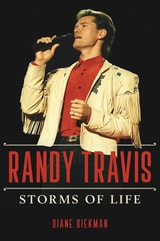
Randy Travis
Storms of LifeDiane Diekman
University of Illinois Press, 2025
Randy Travis’s 1986 breakthrough put him at the forefront of Nashville’s new traditionalist sound and, in the words of Garth Brooks, saved country music. The singer’s warm baritone and all-time classic songs like “Forever and Ever, Amen” landed him atop the charts sixteen times. His cross-genre appeal brought a level of multiplatinum success that no country artist before him had ever achieved.
Diane Diekman’s biography follows the life and career of one of country music’s most beloved figures. Steered from a troubled path as a teen, Travis served a long apprenticeship under manager and future wife Lib Hatcher before being rejected by the Nashville music industry as “too country.” The single “On the Other Hand” and his smash debut album did away with the doubters and began a dominant four-year run that stretched into ongoing success as a recording artist, trailblazing live performer, and actor in film and television. Diekman uses dozens of interviews and in-depth research to fill in the details of Travis’s pre-fame life and his enormous impact on country, popular, and gospel music. From there, she pivots to telling the story of the singer’s difficult divorce from Hatcher, subsequent problems with alcohol and run-ins with the law, and the challenges he overcame in the aftermath of a devastating 2013 stroke.
Informed by a wealth of new research and interviews, Randy Travis is the first in-depth biography of the country music legend.
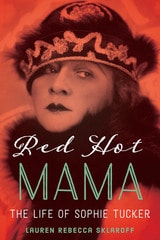
Red Hot Mama
The Life of Sophie TuckerLauren Rebecca Sklaroff
University of Texas Press, 2018
The “First Lady of Show Business” and the “Last of the Red Hot Mamas,” Sophie Tucker was a star in vaudeville, radio, film, and television. A gutsy, song-belting stage performer, she entertained audiences for sixty years and inspired a host of younger women, including Judy Garland, Carol Channing, and Bette Midler. Tucker was a woman who defied traditional expectations and achieved success on her own terms, becoming the first female president of the American Federation of Actors and winning many other honors usually bestowed on men. Dedicated to social justice, she advocated for African Americans in the entertainment industry and cultivated friendships with leading black activists and performers. Tucker was also one of the most generous philanthropists in show business, raising over four million dollars for the religious and racial causes she held dear.
Drawing from the hundreds of scrapbooks Tucker compiled, Red Hot Mama presents a compelling biography of this larger-than-life performer. Lauren Rebecca Sklaroff tells an engrossing story of how a daughter of Russian Jewish immigrants set her sights on becoming one of the most formidable women in show business and achieved her version of the American dream. More than most of her contemporaries, Tucker understood how to keep her act fresh, to change branding when audiences grew tired and, most importantly, how to connect with her fans, the press, and entertainment moguls. Both deservedly famous and unjustly forgotten today, Tucker stands out as an exemplar of the immigrant experience and a trailblazer for women in the entertainment industry.
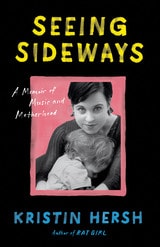
Seeing Sideways
A Memoir of Music and MotherhoodBy Kristin Hersh
University of Texas Press, 2021
Doony, Ryder, Wyatt, Bodhi. The names of Kristin Hersh’s sons are the only ones included in her new memoir, Seeing Sideways. As the book unfolds and her sons’ voices rise from its pages, it becomes clear why: these names tell the story of her life.
This story begins in 1990, when Hersh is the leader of the indie rock group Throwing Muses, touring steadily, and the mother of a young son, Doony. The chapters that follow reveal a woman and mother whose life and career grow and change with each of her sons: the story of a custody battle for Doony is told alongside that of Hersh’s struggles with her record company and the resulting PTSD; the tale of breaking free from her record label stands in counterpoint to her recounting of her pregnancy with Ryder; a period of writer’s block coincides with the development of Wyatt as an artist and the family’s loss of their home; and finally, soon after Bodhi’s arrival, Hersh and her boys face crises from which only strange angels can save them. Punctuated with her own song lyrics, Seeing Sideways is a memoir about a life strange enough to be fiction, but so raw and moving that it can only be real.

Singers Die Twice
A Journey to the Land of DhrupadPeter Pannke
Seagull Books, 2013
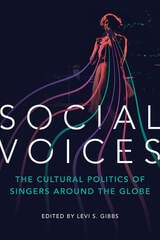
Social Voices
The Cultural Politics of Singers around the GlobeEdited by Levi S. Gibbs
University of Illinois Press, 2023
Around the world and across time, singers and their songs stand at the crossroads of differing politics and perspectives. Levi S. Gibbs edits a collection built around the idea of listening as a political act that produces meaning. Contributors explore a wide range of issues by examining artists like Romani icon Esma Redžepova, Indian legend Lata Mangeshkar, and pop superstar Teresa Teng. Topics include gendered performances and the negotiation of race and class identities; the class-related contradictions exposed by the divide between highbrow and pop culture; links between narratives of overcoming struggle and the distinction between privileged and marginalized identities; singers’ ability to adapt to shifting notions of history, borders, gender, and memory in order to connect with listeners; how the meanings we read into a singer’s life and art build on one another; and technology’s ability to challenge our ideas about what constitutes music.
Cutting-edge and original, Social Voices reveals how singers and their songs equip us to process social change and divergent opinions.
Contributors: Christina D. Abreu, Michael K. Bourdaghs, Kwame Dawes, Nancy Guy, Ruth Hellier, John Lie, Treva B. Lindsey, Eric Lott, Katherine Meizel, Carol A. Muller, Natalie Sarrazin, Anthony Seeger, Carol Silverman, Andrew Simon, Jeff Todd Titon, and Elijah Wald
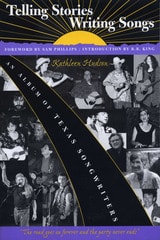
Telling Stories, Writing Songs
An Album of Texas SongwritersBy Kathleen Hudson
University of Texas Press, 2001
Willie Nelson, Joe Ely, Marcia Ball, Tish Hinojosa, Stevie Ray Vaughan, Lyle Lovett...the list of popular songwriters from Texas just goes on and on. In this collection of thirty-four interviews with these and other songwriters, Kathleen Hudson pursues the stories behind the songs, letting the singers' own words describe where their songs come from and how the diverse, eclectic cultures, landscapes, and musical traditions of Texas inspire the creative process.
Conducted in dance halls, dressing rooms, parking lots, clubs-wherever the musicians could take time to tell their stories-the interviews are refreshingly spontaneous and vivid. Hudson draws out the songwriters on such topics as the sources of their songs, the influence of other musicians on their work, the progress of their careers, and the nature of Texas music. Many common threads emerge from these stories, while the uniqueness of each songwriter becomes equally apparent. To round out the collection, Hudson interviews Larry McMurtry and Darrell Royal for their perspectives as longtime friends and fans of Texas musicians. She also includes a brief biography and discography of each songwriter.

The Italian Opera Singers in Mozart's Vienna
Dorothea Link
University of Illinois Press, 2022
Authoritative and insightful, The Italian Opera Singers in Mozart's Vienna offers a singular look at a musical milieu and a key to addressing the performance-practice problem of how to cast the Mozart roles today.
The Late Great Johnny Ace and the Transition from R&B to Rock 'n' Roll
James M. Salem
University of Illinois Press, 1999
Johnny Ace's crooning style and stirring ballads made him the first postwar African American artist to cross over to a white audience. After a string of R&B hits, Ace released the million-selling "Pledging My Love," a song headed to the top of the charts when the singer accidentally shot himself in his dressing room between sets at a show.
James M. Salem captures the enigmatic, captivating, and influential R&B legend. Venturing from raucous Beale Street to Houston's vibrant Fourth Ward, Salem places Johnny Ace within a multifaceted world of postwar rhythm and blues that included B. B. King, Johnny Otis, Big Mama Thornton, and Gatemouth Brown. Salem also examines how entrepreneur Don D. Robey and his wife Evelyn Johnson promoted Ace to the top of the charts. Yet fame, as always, had a price. Ace's tours on the Chitlin' Circuit meant endless one-night stands and a grueling schedule that kept him on the road 340 days per year.
Comprehensive and filled with anecdotes, The Late Great Johnny Ace and the Transition from R&B to Rock 'n' Roll tells the story of the star who fused black and white styles and changed American popular music forever.
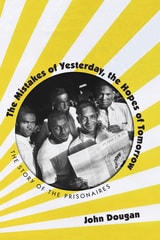
The Mistakes of Yesterday, the Hopes of Tomorrow
The Story of the PrisonairesJohn Dougan
University of Massachusetts Press, 2012
Early in the morning on June 1, 1953, five African American men boarded a van to make the 200-mile trip from Nashville to Memphis for a daylong recording session at the legendary Sun Studios, to be overseen by Sun founder Sam Phillips. One of the two tracks cut that day, “Just Walkin' in the Rain,” would go on to become a regional R&B hit, Sun Records' biggest record of the pre-Elvis era. It would, however, be the group's only hit. They were the Prisonaires, a vocal quintet who had honed their skills while inmates at the Tennessee State Penitentiary in Nashville.
In this book, John Dougan tells the story of the Prisonaires, their hit single, and the afterlife of this one remarkable song. The group and the song itself represent a compelling concept: imprisoned men using music as a means of cultural and personal survival. The song was re-recorded by white singer Johnnie Ray, who made it a huge hit in 1956. Over the years, other singers and groups would move the song further away from its origins, recasting the deep emotions that came from creating music in a hostile, controlled environment.
The story of the Prisonaires, for all of its triumphs, reflects the disappointment of men caught in a paradoxical search for personal independence while fully cognizant of a future consigned to prison. Their brief career and the unusual circumstances under which it flourished sheds light on the harsh realities of race relations in the pre–Civil Rights South. The book also provides a portrait of Nashville just as it was gaining traction as a nationally recognized music center.

The Republic of Love
Cultural Intimacy in Turkish Popular MusicMartin Stokes
University of Chicago Press, 2010
At the heart of The Republic of Love are the voices of three musicians—queer nightclub star Zeki Müren, arabesk originator Orhan Gencebay, and pop diva Sezen Aksu—who collectively have dominated mass media in Turkey since the early 1950s. Their fame and ubiquity have made them national icons—but, Martin Stokes here contends, they do not represent the official version of Turkish identity propagated by anthems or flags; instead they evoke a much more intimate and ambivalent conception of Turkishness.
Using these three singers as a lens, Stokes examines Turkey’s repressive politics and civil violence as well as its uncommonly vibrant public life in which music, art, literature, sports, and journalism have flourished. However, Stokes’s primary concern is how Müren, Gencebay, and Aksu’s music and careers can be understood in light of theories of cultural intimacy. In particular, he considers their contributions to the development of a Turkish concept of love, analyzing the ways these singers explore the private matters of intimacy, affection, and sentiment on the public stage.
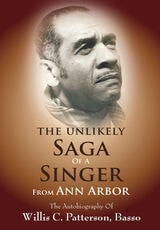
The Unlikely Saga of a Singer from Ann Arbor
The Autobiography of Willis C. Patterson, BassoWillis Patterson
Michigan Publishing Services, 2015
The book’s main character begins his life, similar to a diamond in the rough, and over time evolves into a rare gem at maturity. These pages will reveal how Willis Patterson of Ann Arbor, Michigan developed from somewhat of a lost child in the 1930s into a: sophisticated academician (Ph.D. in Higher Education Administration and Supervision from Wayne State University in Detroit, MI); a superior vocal performer; Voice Department Chair, Fulbright Scholar; esteemed Master Voice Teacher; Choral and Glee Club director extraordinaire; University Leader in the recruitment and retention of Minority students (Voice/Performing/Composition); an established Church Choir Director; and Associate Academic Dean of the School of Music at one of America’s finest universities, the University of Michigan.
This book is about a very humble man of significant stature. Although he was motivated and driven to become the best he could be in his quest for excellence—by kicking open the door of opportunity whenever it was presented (audition ready)—he never forgot his family members or hometown acquaintances.
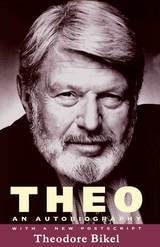
Theo
An AutobiographyTheodore Bikel
University of Wisconsin Press, 2002
An award-winning actor on screen and stage (The Defiant Ones, The African Queen, The Sound of Music, My Fair Lady, Fiddler on the Roof), an activist for civil rights and progressive causes worldwide, and a singer whose voice has won him great applause, Theodore Bikel here tells his own compelling life story. Born in Austria, raised in Palestine, educated in England, and with a stellar career in the United States and around the world, Bikel offers a personal history parallel to momentous events of the twentieth century. In an eloquent, fiercely committed voice, he writes of the Third Reich, the birth of the State of Israel, the McCarthy witch hunts of the 1950s, and the tumultuous 1960s in America. In a new postscript to this paperback edition, he looks at recent events in the Middle East and takes both sides to task for their excesses.
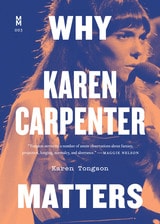
Why Karen Carpenter Matters
By Karen Tongson
University of Texas Press, 2019
In the '60s and '70s, America's music scene was marked by raucous excess, reflected in the tragic overdoses of young superstars such as Jimi Hendrix and Janis Joplin. At the same time, the uplifting harmonies and sunny lyrics that propelled Karen Carpenter and her brother, Richard, to international fame belied a different sort of tragedy—the underconsumption that led to Karen's death at age thirty-two from the effects of an eating disorder.
In Why Karen Carpenter Matters, Karen Tongson (whose Filipino musician parents named her after the pop icon) interweaves the story of the singer’s rise to fame with her own trans-Pacific journey between the Philippines—where imitations of American pop styles flourished—and Karen Carpenter’s home ground of Southern California. Tongson reveals why the Carpenters' chart-topping, seemingly whitewashed musical fantasies of "normal love" can now have profound significance for her—as well as for other people of color, LGBT+ communities, and anyone outside the mainstream culture usually associated with Karen Carpenter’s legacy. This hybrid of memoir and biography excavates the destructive perfectionism at the root of the Carpenters’ sound, while finding the beauty in the singer's all too brief life.
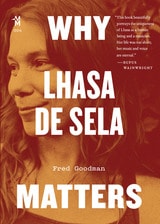
Why Lhasa de Sela Matters
By Fred Goodman
University of Texas Press, 2019
An artist in every sense of the word, Lhasa de Sela wowed audiences around the globe with her multilingual songs and spellbinding performances, mixing together everything from Gypsy music to Mexican rancheras, Americana and jazz, chanson française, and South American folk melodies. In Canada, her album La Llorona won the Juno Award and went gold, and its follow-up, The Living Road, won a BBC World Music Award. Tragically, de Sela succumbed to breast cancer in 2010 at the age of thirty-seven after recording her final album, Lhasa.
Tracing de Sela’s unconventional life and introducing her to a new generation, Why Lhasa de Sela Matters is the first biography of this sophisticated creative icon. Raised in a hippie family traveling between the United States and Mexico in a converted school bus, de Sela developed an unquenchable curiosity, with equal affinities for the romantic, mystic, and cerebral. Becoming a sensation in Montreal and Europe, the trilingual singer rejected a conventional path to fame, joining her sisters’ circus troupe in France. Revealing the details of these and other experiences that inspired de Sela to write such vibrant, otherworldly music, Why Lhasa de Sela Matters sings with the spirit of this gifted firebrand.
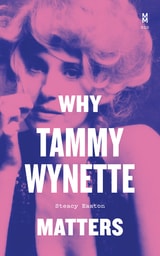
Why Tammy Wynette Matters
Steacy Easton
University of Texas Press, 2023
How Tammy Wynette channeled the conflicts of her life into her music and performance.
With hits such as “Stand By Your Man” and “Golden Ring,” Tammy Wynette was an icon of American domesticity and femininity. But there were other sides to the first lady of country. Steacy Easton places the complications of Wynette’s music and her biography in sharp-edged relief, exploring how she made her sometimes-tumultuous life into her work, a transformation that was itself art.
Wynette created a persona of high femininity to match the themes she sang about—fawning devotion, redemption in heterosexual romance, the heartbreak of loneliness. Behind the scenes, her life was marked by persistent class anxieties; despite wealth and fame, she kept her beautician’s license. Easton argues that the struggle to meet expectations of southernness, womanhood, and southern womanhood, finds subtle expression in Wynette’s performance of “Apartment #9”—and it’s because of these vocal subtleties that it came to be called the saddest song ever written. Wynette similarly took on elements of camp and political critique in her artistry, demonstrating an underappreciated genius. Why Tammy Wynette Matters reveals a musician who doubled back on herself, her façade of earnestness cracked by a melodrama that weaponized femininity and upended feminist expectations, while scoring twenty number-one hits.
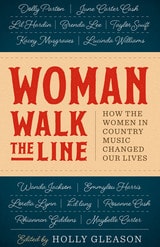
Woman Walk the Line
How the Women in Country Music Changed Our LivesBy Holly Gleason
University of Texas Press, 2017
Full-tilt, hardcore, down-home, and groundbreaking, the women of country music speak volumes with every song. From Maybelle Carter to Dolly Parton, k.d. lang to Taylor Swift—these artists provided pivot points, truths, and doses of courage for women writers at every stage of their lives. Whether it’s Rosanne Cash eulogizing June Carter Cash or a seventeen-year-old Taylor Swift considering the golden glimmer of another precocious superstar, Brenda Lee, it’s the humanity beneath the music that resonates.
Here are deeply personal essays from award-winning writers on femme fatales, feminists, groundbreakers, and truth tellers. Acclaimed historian Holly George Warren captures the spark of the rockabilly sensation Wanda Jackson; Entertainment Weekly’s Madison Vain considers Loretta Lynn’s girl-power anthem “The Pill”; and rocker Grace Potter embraces Linda Ronstadt’s unabashed visual and musical influence. Patty Griffin acts like a balm on a post-9/11 survivor on the run; Emmylou Harris offers a gateway through paralyzing grief; and Lucinda Williams proves that greatness is where you find it.
Part history, part confessional, and part celebration of country, Americana, and bluegrass and the women who make them, Woman Walk the Line is a very personal collection of essays from some of America’s most intriguing women writers. It speaks to the ways in which artists mark our lives at different ages and in various states of grace and imperfection—and ultimately how music transforms not just the person making it, but also the listener.