Results by title

7 books match the query 'Slovakia'
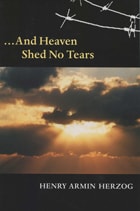
cover of ... And Heaven Shed No Tears

... And Heaven Shed No Tears

Henry Armin Herzog

University of Wisconsin Press, 2005

Henry Herzog survived the liquidation of the Rzeszow ghetto in Poland and endured terrible hardships in forced labor camps. He documents the increasing severity of Nazi rule in Rzeszow and the complicity of the Jewish council (the Judenrat) and Jewish police in the round-ups for deportation to the Belzec concentration camp. One of these deportations took his parents to their deaths. His brothers were caught, tortured, and killed by the Gestapo. Herzog and his sister escaped to Hungary where—although she found refuge—he was betrayed, arrested, and finally put on a train to the concentration camps. Escaping by jumping off the train and fleeing into the Tatra Mountains, he joined a group of Russian partisans to fight the Nazis.

1995 paperback, Saga Publishers / Folio Private
[more]
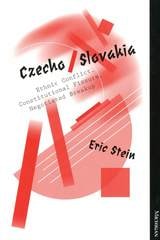
cover of Czecho/Slovakia: Ethnic Conflict, Constitutional Fissure, Negotiated Breakup

Czecho/Slovakia

Ethnic Conflict, Constitutional Fissure, Negotiated Breakup

Eric Stein

University of Michigan Press, 2000
As the clock struck midnight on December 31, 1992, Czechoslovakia, the only genuine democracy in post-World War I Central-Eastern Europe, broke up into two independent successor states. This book explores the failed search for a postcommunist constitution and it records in a lively style a singular instance of the peaceful settlement of an ethnic dispute.
For more than three years after the implosion of the Communist regime in 1989, the Czechs and Slovaks negotiated the terms of a new relationship to succeed the centralized federation created under communism. After failing to agree to the terms of a new union, the parties agreed on an orderly breakup.
In the background of the narrative loom general issues such as: What are the sources of ethnic conflict and what is the impact of nationalism? Why do ethnic groups choose secession and what makes for peaceful rather than violent separation? What factors influence the course of postcommunist constitutional negotiations, which are inevitably conducted in the context of institutional and societal transformation? The author explores these issues and the reasons for the breakup.
Eric Stein, a well-known scholar of comparative law and a native of Czechoslovakia, was invited by the Czechoslovak government to assist in the drafting of a new constitution. This book is based on his experiences during years of work on these negotiations as well as extensive interviews with political figures, journalists, and academics and extensive research in the primary documents. It will appeal to historians, lawyers, and social scientists interested in the process of transformation in Eastern Europe and the study of ethnic conflict, as well as the general reader interested in modern European history.
Eric Stein is Hessel E. Yntema Professor Emeritus, University of Michigan Law School. He previously served with the United States Department of State in the Legal Advisor's Office. He is the author of many books and articles on comparative law and the law of the European Community.
[more]
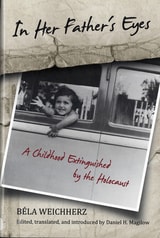
cover of In Her Father's Eyes: A Childhood Extinguished by the Holocaust

In Her Father's Eyes

A Childhood Extinguished by the Holocaust

Béla Weichherz, Edited by Daniel H. Magilow

Rutgers University Press, 2008

Translated from the German for the first time, In Her Father's Eyes is the diary of Béla Weichherz, in which he documents the life of his only daughter, Kitty, in prewar Czechoslovakia. Started as a baby book before her birth in 1929, the journal contains frequent entries about the ups and downs of Kitty's childhood, often written in vivid detail. Weichherz included photographs, developmental charts, and Kitty's own drawings to enhance the text. The journal entries stop in early spring 1942, just days before the family's deportation to a Nazi death camp. In its final pages, a recognizable tale of one anonymous life becomes a heartbreaking story about how anti-Semitism and nationalism in Slovakia shattered this normalcy.

In Her Father's Eyes is a moving tale about Jewish life and a father's profound love for his only child. By bridging prewar and wartime periods, the diary also provides a rich context for understanding the history from which the Holocaust emerged.
[more]
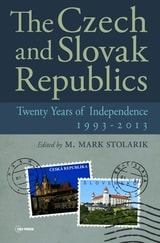
cover of The Czech and Slovak Republics: Twenty years of Independence, 1993–2013

The Czech and Slovak Republics

Twenty years of Independence, 1993–2013

M. Mark Stolarik

Central European University Press, 2017
The essays in the book compare the Czech Republic and Slovakia since the breakup of Czechoslovakia in 1993. The papers deal with the causes of the divorce and discuss the political, economic and social developments in the new countries. This is the only English-language volume that presents the synoptic findings of leading Czech, Slovak, and North American scholars in the field.The authors include two former Prime Ministers of the Czech Republic and Slovakia, eight leading scholars (four Czechs and four Slovaks), and eight knowledgeable commentators from North America. The most significant new insight is that in spite of predictions by various pundits in the Western World that Czechia would flourish after the breakup and Slovakia would languish, the opposite has happened. While the Czech Republic did well in its early years, it is now languishing while Slovakia, which had a rough start, is now doing very well. Anyone interested in the history of the Czech and Slovak Republics over the last twenty years will find gratification in reading this book.
[more]
cover of The Origins Of Postcommunist Elites: From Prague Spring To The Breakup Of Czechoslovakia

The Origins Of Postcommunist Elites

From Prague Spring To The Breakup Of Czechoslovakia

Gil Eyal

University of Minnesota Press, 2003

How is it that Czechoslovakia’s separation into two countries in 1993 was accomplished so peacefully—especially when compared with the experiences of its neighbors Russia and Yugoslavia? This book provides a sociological answer to this question—and an empirical explanation for the breakup of Czechoslovakia—by tracing the political processes begun in the Prague Spring of 1968.

Gil Eyal’s main argument is that Czechoslovakia’s breakup was caused by a struggle between two fractions of what sociologists call the “new class,” which consisted primarily of intellectuals and technocrats. Focusing on the process of polarization that created these two distinct political elites, Eyal shows how, in response to the events of the ill-fated Prague Spring, Czech and Slovak members of the “new class” embarked on divergent paths and developed radically different, even opposed, identities, worldviews, and interests. Unlike most accounts of postcommunist nationalist conflict, this book suggests that what bound together each of these fractions—and what differentiated each from the other—were not national identities and nationalist sentiments per se, but their distinctive visions of the social role of intellectuals.
[more]
cover of The Paradox of Authenticity: Folklore Performance in Post-Communist Slovakia

The Paradox of Authenticity

Folklore Performance in Post-Communist Slovakia

Joseph Grim Feinberg

University of Wisconsin Press, 2018

Observing the activities of urban folk dance enthusiasts in Slovakia, Joseph Grim Feinberg sets out to scrutinize the processes by which "authentic folklore" is identified, talked about, represented, reconstructed, reenacted, and revived.

In Slovakia and elsewhere in Eastern Europe after World War II, Communist governments promoted folklore revivals and staged performances of song and dance as representations of "the people." When the Communists fell from power in Slovakia in 1989, folklore was also discredited in the eyes of many. By the early twenty-first century, however, a new generation launched a movement to revive folklore's reputation and reintroduce it to a broad public.

Weaving together personal narrative, ethnographic analysis, and philosophical reflection, Feinberg examines the aspirations and difficulties of young folk dance devotees as they recognize that authenticity is more easily prized than achieved. He sheds new light on the problems of specialized performance and broad participation, the uneasy relationship between folklore and the public sphere, and the paradoxical pursuit of authenticity in the modern world.
[more]
cover of Turning Prayers into Protests: Religious-based Activism and its Challenge to State Power in Socialist Slovakia and East Germany

Turning Prayers into Protests

Religious-based Activism and its Challenge to State Power in Socialist Slovakia and East Germany

David Doellinger

Central European University Press, 2013

Turning Prayers into Protests is a comparative study of religious-based oppositional activity in Slovakia and East Germany prior to 1989.
[more]