Results by title
7 books match the query 'Slovenia'
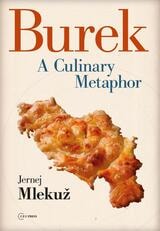
Burek
A Culinary MetaphorJernej Mlekuz
Central European University Press, 2015
“As simple as burek” is a popular phrase used by many young people in Slovenia. In this book Jernej Mlekuž maintains that the truth is just the opposite. The burek is a pie made of pastry dough filled with various fillings that is well-known in the Balkans, and also in Turkey and the Near East by other names. Whether on the plate or as a cultural artifact, it is in fact, not that simple. After a brief stroll through its innocent history, Mlekuž focuses on the present state of the burek, after parasitical ideologies had attached themselves to it and poisoned its discourses. In Slovenia, the burek has become a loaded metaphor for the Balkans and immigrants from the republics of the former Socialist Federal Republic of Yugoslavia. Without the burek it would be equally difficult to consider the jargon of Slovenian youth, the imagined world of Slovenian chauvinism and the rhetorical arsenal of advertising agents when promoting healthy foods. In this analysis, Mlekuž refers to the burek as the “metaburek.” All at the same time it is greasy, Balkan, Slovene, not-Slovene, Yugoslavian, familiar, foreign, the greatest, the worst, disturbingly unhealthy, plebeian, junk food, and finally, a cherub (burek spelled backwards is kerub, the Slovene word for cherub). And this metaburek, the protagonist of this book, is never a completely pure, innocent, unconditioned burek. It is much more. A word of warning: after consuming this text, the burek will never be the same.
[more]
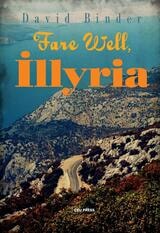
Fare Well, Illyria
David Binder
Central European University Press, 2014
As a reporter for the prestigious New York Times the author interviewed many of the leading political figures of the Balkans (Illyria). He also sought out the area's intellectuals, many of them critical of their leaders, and everyday people who provide a sense of daily life. He devotes a chapter to each ethnic group from Vlachs to Serbs, talks about their differences and similarities, and does so without giving offense. He also provides a short historical account of the various places he visits, which deepens our understanding of the local cultures. The reader meets people from all walks of life: politicians, poets, literary and art critics, journalists, handymen, car mechanics, fishermen and farmers. From Milovan Djilas and Nicolae Ceausescu to Markos Vafiadis and Sali Berisha to the Serbian “majstor” Misha and an un-named Bosnian bar singer, Binder's book features a remarkable gallery of people whose presence contributes authenticity and human warmth to the narrative.
[more]
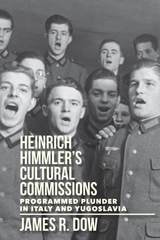
Heinrich Himmler's Cultural Commissions
Programmed Plunder in Italy and YugoslaviaJames R. Dow
University of Wisconsin Press, 2018
German scholars were early pioneers in folklore and historical linguistics. As the Nazis rose to power, however, these disciplines were distorted into racist pseudoscience. Under the direction of Heinrich Himmler's SS-Ahnenerbe (Ancestral Inheritance), folklore became a tool for constructing a unified German realm and a manufactured lineage from ancient and "pure" Germanic and Nordic blood.
Drawing on extensive research in public and private archives and interviews with family members of fieldworkers, James R. Dow uncovers both details of the SS cultural commissions' work and the continuing vestiges of the materials they assembled. Teams of poorly qualified and ideologically motivated collectors were sent to South Tyrol in Italy and Gottschee in Slovenian Yugoslavia, from which ethnically German communities were to be resettled in the German Reich. Although a mass of information on narratives, songs and dances, beliefs, customs, local clothing and architecture, and folk speech was collected, the research was deeply tainted and skewed by racialist and nationalist preconditions. Dow sharply critiques the continued use of these ersatz archives.
Drawing on extensive research in public and private archives and interviews with family members of fieldworkers, James R. Dow uncovers both details of the SS cultural commissions' work and the continuing vestiges of the materials they assembled. Teams of poorly qualified and ideologically motivated collectors were sent to South Tyrol in Italy and Gottschee in Slovenian Yugoslavia, from which ethnically German communities were to be resettled in the German Reich. Although a mass of information on narratives, songs and dances, beliefs, customs, local clothing and architecture, and folk speech was collected, the research was deeply tainted and skewed by racialist and nationalist preconditions. Dow sharply critiques the continued use of these ersatz archives.
[more]
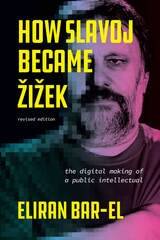
How Slavoj Became Zizek
The Digital Making of a Public IntellectualEliran Bar-El
University of Chicago Press, 2025
An engrossing account of the meteoric rise of contemporary philosophy’s most contentious and prolific intellectual.
This revised edition corrects several erroneous and insufficient references in the first edition of this book.
Slovenian philosopher bad boy Slavoj Žižek is one of the most famous intellectuals of our time, publishing at a breakneck speed and lecturing around the world. With his unmistakable speaking style and set of mannerisms that have made him ripe material for internet humor and meme culture, he is recognizable to a wide spectrum of fans and detractors. But how did an intellectual from a small Eastern European country come to such popular notoriety? In How Slavoj Became Žižek, sociologist Eliran Bar-El plumbs the emergence, popularization, and development of the phenomenon called “Žižek.”
Beginning with Žižek’s early years as a thinker and political figure in Slovenian civil society, Bar-El traces Žižek’s rise from Marxist philosopher to political candidate to eventual intellectual celebrity, as Žižek perfected his unique performative style and a rhetorical arsenal of “Hegelacanese.” Following 9/11, Žižek’s career as a global op-ed writer and TV commentator married his rhetoric with global events such as the war on terror, the financial crisis of 2008, and the Arab Spring of 2011. Yet, at the same time, this mainstream popularity, as well as a series of politically incorrect views, almost entirely estranged the Slovenian from the normal workings of academia. Ultimately, this account shows how Žižek has harnessed the power of the digital era in his own self-fashioning as a public intellectual.
[more]
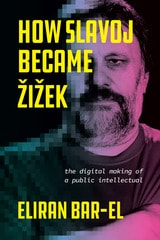
How Slavoj Became Žižek
The Digital Making of a Public IntellectualEliran Bar-El
University of Chicago Press, 2023
An engrossing account of the meteoric rise of contemporary philosophy’s most contentious and prolific intellectual.
Slovenian philosopher bad boy Slavoj Žižek is one of the most famous intellectuals of our time, publishing at a breakneck speed and lecturing around the world. With his unmistakable speaking style and set of mannerisms that have made him ripe material for internet humor and meme culture, he is recognizable to a wide spectrum of fans and detractors. But how did an intellectual from a remote Eastern European country come to such popular notoriety? In How Slavoj Became Žižek, sociologist Eliran Bar-El plumbs the emergence, popularization, and development of this phenomenon called “Žižek.”
Beginning with Žižek’s early years as a thinker and political figure in Slovenian civil society, Bar-El traces Žižek’s rise from Marxist philosopher to a political candidate to eventual intellectual celebrity as Žižek perfects his unique performative style and a rhetorical arsenal of “Hegelacanese.” Following 9/11, Žižek’s career as a global op-ed writer and TV commentator married his rhetoric with global events such as the War on Terror, the financial crisis of 2008, and the Arab Spring of 2011. Yet, at the same time, this mainstream popularity, as well as a series of politically incorrect views, almost entirely estranged the Slovenian from the normal workings of academia. Ultimately, this account shows how Žižek harnessed the power of the digital era in his own self-fashioning as a public intellectual.
[more]
Martin Kacur
The Biography of an IdealistIvan Cankar
Central European University Press, 2009
The novel Martin Kacur, which dates from 1907, tells the engrossing story of a young schoolteacher who moves from one provincial Slovene town to the next, trying to enlighten his countrymen and countrywomen but instead receiving only the mistrust and scorn of the traditional-minded and petty population. The novel is ruthless in its analysis and self-analysis of the failure of this abstract idealist. Brilliant descriptions of Slovenia’s natural beauty alternate with the haze of alcoholic despair, rural violence, marital alienation, and the death of a young and beloved child. The Slovene prose writer, poet, and dramatist Cankar’s characterizations of duplicitous political and religious leaders (the village priest, the mayor, other teachers, doctors, etc.) and the treacherous social scene are remarkable in their engaging clarity. No doubt the raw emotional impact of Martin Kacur derives partly from Cankar’s portrayal of the way society isolates people, denying them sympathy and solidarity. Cankar's style here owes a debt both to naturalism and to symbolism and contains, in its sometimes frantic pace and associative interior monologues, hints of early expressionism.
[more]
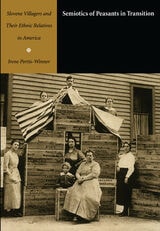
Semiotics of Peasants in Transition
Slovene Villagers and Their Ethnic Relatives in AmericaIrene Portis-Winner
Duke University Press, 2002
In Semiotics of Peasants in Transition Irene Portis-Winner examines the complexities of ethnic identity in a traditional Slovene village with unique ties to an American city. At once an investigation into a particular anthropological situation and a theoretical exploration of the semiotics of ethnic culture—in this case a culture permeated by transnational influences—Semiotics of Peasants in Transition describes the complex relationships that have existed between and among the villagers remaining in Slovenia and those who, throughout the nineteenth and twentieth centuries, emigrated to Cleveland, Ohio.
Describing a process of continuous and enduring interaction between these geographically separate communities, Portis-Winner explains how, for instance, financial assistance from the emigrants enabled their Slovenian hometown to survive the economic depressions of the 1890s and 1930s. She also analyzes the extent to which memories, rituals, myths, and traditional activities from Slovenia have sustained their Cleveland relatives. The result is a unique anthropological investigation into the signifying practices of a strongly cohesive—yet geographically split—ethnic group, as well as an illuminating application of semiotic analyses to communities and the complex problems they face.
Describing a process of continuous and enduring interaction between these geographically separate communities, Portis-Winner explains how, for instance, financial assistance from the emigrants enabled their Slovenian hometown to survive the economic depressions of the 1890s and 1930s. She also analyzes the extent to which memories, rituals, myths, and traditional activities from Slovenia have sustained their Cleveland relatives. The result is a unique anthropological investigation into the signifying practices of a strongly cohesive—yet geographically split—ethnic group, as well as an illuminating application of semiotic analyses to communities and the complex problems they face.
[more]