Results by title
5 books match the query 'Smith, Paul'
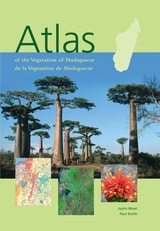
Atlas of the Vegetation of Madagascar
Justin Moat and Paul Smith
Royal Botanic Gardens, Kew, 2007
This first vegetation atlas for Madagascar, supported by the Critical Ecosystem Partnership Fund, has combined vegetation data from fieldwork and satellite images into a map-based information system. The result is a conservation tool which will help Madagascar’s government and people to plan a more sustainable future. This atlas is also of great use to anyone studying or visiting the island.
Presented in both French and English, the atlas gives a brief history of vegetation mapping in Madagascar; the methodology used in compiling these new maps; and detailed descriptions of each vegetation type, illustrated with photographs and diagrams. Trends in deforestation, extent of occurrence and levels of protection are assessed for each vegetation type. Additional information includes roads, trails, rivers, airports, reserves and a full place name index.
The atlas comprises 36 maps in A3 format, all in high resolution colour.
Discerning The Subject
Paul Smith
University of Minnesota Press, 1988
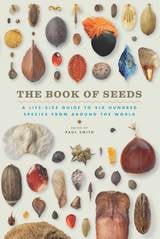
The Book of Seeds
A Life-Size Guide to Six Hundred Species from around the WorldEdited by Paul Smith
University of Chicago Press, 2018
The Book of Seeds takes readers through six hundred of the world’s seed species, revealing their extraordinary beauty and rich diversity. Each page pairs a beautifully composed photo of a seed—life-size, and, in some cases, enlarged to display fine detail—with a short description, a map showing distribution, and information on conservation status. The whole spectrum of seeds is covered here. There are prolific species like corn and less widely distributed species, like the brilliant blue seeds of the traveler’s palm or the bird of paradise flower, aptly named for its distinctive orange coiffure. There are tiny seeds and seeds weighing up to forty pounds. And while seeds in all their shapes, sizes, and colors grant us sustenance, there are even some we would be wise to treat with caution, such as the rosary pea, whose seeds are considered more toxic than ricin.
The essential guide to these complex plant creations, The Book of Seeds offers readers a rare, up-close look that will inspire scientists and nature lovers alike.
The Renewal of Cultural Studies
Edited by Paul Smith
Temple University Press, 2011
Cultural Studies, once a burgeoning academic field, developed into a discipline in which just about any cultural text, object or event could be studied. The Renewal of Cultural Studies offers a panoramic view of the field, its assumptions, and its methodologies. Editor Paul Smith and thirty contributors map out new directions that will redefine and sustain the field of cultural studies.
In twenty-seven original essays, cultural studies is examined in relation to other disciplines—history, anthropology, literature, media, and American studies. The discipline is reviewed in the context of globalization, in relation to topics such as war, public policy, and labor, its pedagogy and politics, and in Marxist, feminist, and environmentalist contexts.
Smith wants to establish theoretical and methodological common ground among cultural studies scholars. Providing a “state of the discipline,” The Renewal of Cultural Studies asks, “What can and should the field of Cultural Studies be doing now?”
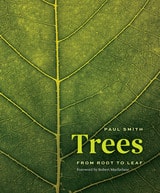
Trees
From Root to LeafPaul Smith
University of Chicago Press, 2022
Trees seen like never before—a world expert presents a stunning compendium, illuminating science, conservation, and art.
Trees provoke deep affection, spirituality, and creativity. They cover about a third of the world’s land and play a crucial role in our environmental systems—influencing the water, carbon, and nutrient cycles and the global climate. This puts trees at the forefront of research into mitigating our climate emergency; we cannot understate their importance in shaping our daily lives and our planet’s future.
In these lavish pages, ecologist Paul Smith celebrates all that trees have inspired across nearly every human culture throughout history. Generously illustrated with over 450 images and organized according to tree life cycle—from seeds and leaves to wood, flowers, and fruit—this book celebrates the great diversity and beauty of the 60,000 tree species that inhabit our planet. Surprising photography and infographics will inspire readers, illustrating intricate bark and leaf patterns, intertwined ecosystems, colorful flower displays, archaic wooden wheels, and timber houses. In this lavishly illustrated book, Smith presents the science, art, and culture of trees. As we discover the fundamental and fragile nature of trees and their interdependence, we more deeply understand the forest without losing sight of the magnificent trees.