Results by title
33 books match the query 'Social & Behavioral'
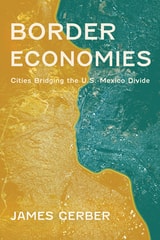
Border Economies
Cities Bridging the U.S.-Mexico DivideJames Gerber
University of Arizona Press, 2024
Enormous legal cross-border flows of people, goods, and finance are embedded in the region’s history and prompted by the need to respond to new opportunities and challenges that originate on the other side. In Border Economies James Gerber examines how the interactivity and sensitivity of communities to conditions across the border differentiates them from communities in the interiors of Mexico and the United States. Gerber explains what makes the region not only unique but uniquely interesting.
In Border Economies readers who want to understand the conditions that make the border controversial but also want to go beyond shallow political narratives will find an in-depth exploration of the economic forces shaping the region and an antidote to common prejudices and misunderstandings.
Experimental Economics
Theory and PracticeJohn A. List
University of Chicago Press, 2025
A landmark practical guide from the twenty-first-century pioneer in economics.
Experimental economics—generating and interpreting data to understand human decisions, motivations, and outcomes—is today all but synonymous with economics as a discipline. The advantages of the experimental method for understanding causal effects make it the gold standard for an increasingly empirical field. But until now the discipline has lacked comprehensive and definitive guidance for how to optimally design and conduct economic experiments.
For more than 30 years, John A. List has been at the forefront of using experiments to advance economic knowledge, expanding the domain of economic experiments from the lab to the real-world. Experimental Economics is his A-to-Z compendium for students and researchers on the ground floor of designing, conducting, analyzing, and interpreting data that they generate. List seeks not only to guide readers on how to develop and implement their experimental projects—everything from design to administrative and ethical considerations—but to help them avoid all the mistakes he’s made in his career, too. Experimental Economics codifies its author’s refined approach to the design, execution, and analysis of laboratory and field experiments. It is a milestone work poised to become the definitive reference for the next century of economics (and economists).
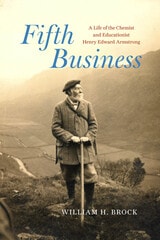
Fifth Business
A Life of the Chemist and Educationist Henry Edward ArmstrongWilliam H. Brock
University of Chicago Press, 2025
Fifth Business is a biography of the English chemist, educator, and scientific critic Henry Edward Armstrong. Today, Armstrong, who was a central figure in the development of the science of chemistry between 1885 and 1914, is more remembered for his campaigns to improve the teaching of chemistry, and science generally, and less for his theory of residual affinity and reverse electrolysis—or his hostility toward physical chemistry. However, right up until his retirement, Armstrong was a significant and prolific organic chemist, as well as a major figure in the academic and social life of the Chemical Society.
Fifth Business is structured as chronologically as possible, with Armstrong’s life and achievements as an active chemist in Part I (1848–1911) and as a critic in his long retirement in Part II (1911–1937). Brock’s authoritative biography provides a unique inside look at its subject, allowing us to better understand the history of British science, scientific institutions, scientific education, pedagogical theory, and social relations of science during the last third of the nineteenth century and the first third of the twentieth.
Hate the Game
Economic Cheat Codes for Life, Love, and WorkDaryl Fairweather
University of Chicago Press, 2025
Should I buy or rent? Do I ask for a promotion? Should I tell people I’m pregnant? What salary do I deserve? Should I just quit this job? Common anxieties about life are often grounded in economics. In an increasingly win-lose society, these economic decisions—where to work, where to live, even how to live—have a way of feeling fixed and mistakes terminal.
Daryl Fairweather is no stranger to these dynamics. As the first Black woman to receive an economics PhD from the famed University of Chicago, she saw firsthand how concepts of behavioral economics and game theory were deployed in the real world—and in her own life—to great effect. Hate the Game combines Fairweather’s elite knowledge of these principles with her singular voice in describing how they can be harnessed. Her great talent, unique among economists, is her ability to articulate economic trends in a way that is not just informative, but also accounts for life’s other anxieties.
In Hate the Game, Fairweather fixes her expertise and service on navigating the earliest economic inflection points of adult life: whether to go to college and for how long; partnering, having kids, both, or neither; getting, keeping, and changing jobs; and where to live and how to pay for it. She speaks in actionable terms about what the economy means for individual people, especially those who have the sneaking suspicion they’re losing out. Set against her own experiences and enriched with lessons from history, science, and pop culture, Fairweather instructs readers on how to use game theory and behavioral science to map out options and choose directions while offering readers a sense of control and agency in an economy where those things are increasingly rare.
Hate the Game
Economic Cheat Codes for Life, Love, and WorkDaryl Fairweather
University of Chicago Press, 2025
The secret insights of economics, translated for the rest of us.
Should I buy or rent? Do I ask for a promotion? Should I tell people I’m pregnant? What salary do I deserve? Should I just quit this job? Common anxieties about life are often grounded in economics. In an increasingly win-lose society, these economic decisions—where to work, where to live, even how to live—have a way of feeling fixed and mistakes terminal.
Daryl Fairweather is no stranger to these dynamics. As the first Black woman to receive an economics PhD from the famed University of Chicago, she saw firsthand how concepts of behavioral economics and game theory were deployed in the real world—and in her own life—to great effect. Hate the Game combines Fairweather’s elite knowledge of these principles with her singular voice in describing how they can be harnessed. Her great talent, unique among economists, is her ability to articulate economic trends in a way that is not just informative, but also accounts for life’s other anxieties.
In Hate the Game, Fairweather fixes her expertise and service on navigating the earliest economic inflection points of adult life: whether to go to college and for how long; partnering, having kids, both, or neither; getting, keeping, and changing jobs; and where to live and how to pay for it. She speaks in actionable terms about what the economy means for individual people, especially those who have the sneaking suspicion they’re losing out. Set against her own experiences and enriched with lessons from history, science, and pop culture, Fairweather instructs readers on how to use game theory and behavioral science to map out options and choose directions while offering readers a sense of control and agency in an economy where those things are increasingly rare.
Human Capital for Humans
An Accessible Introduction to the Economic Science of PeoplePablo A. Peña
University of Chicago Press, 2025
University of Chicago economist Gary Becker won the Nobel Prize largely for his advancement of human capital theory—the idea that investing in a person’s knowledge and skills has a wide range of economic effects. Becker’s writing on the subject was technical, but his teaching, especially in his famous doctoral course at Chicago, remains legendary for its accessibility, brilliance, and applications to everyday life.
In Human Capital for Humans, economist and former Becker student Pablo A. Peña channels this classroom approach to produce an accessible, essential guide to understanding the science that has become synonymous with modern life and the economy. With an illustrative and immersive style, Peña unpacks the human capital approach to domains such as parenting, aging, marriage, health, and household labor. The result is not only intellectually elevated, but an essential introduction for learners and teachers of this subject across business, management, economics, policy, and beyond.
Human Capital for Humans
An Accessible Introduction to the Economic Science of PeoplePablo A. Peña
University of Chicago Press, 2025
An everyday introduction to the most consequential science of modern life.
University of Chicago economist Gary Becker won the Nobel Prize largely for his advancement of human capital theory—the idea that investing in a person’s knowledge and skills has a wide range of economic effects. Becker’s writing on the subject was technical, but his teaching, especially in his famous doctoral course at Chicago, remains legendary for its accessibility, brilliance, and applications to everyday life.
In Human Capital for Humans, economist and former Becker student Pablo A. Peña channels this classroom approach to produce an accessible, essential guide to understanding the science that has become synonymous with modern life and the economy. With an illustrative and immersive style, Peña unpacks the human capital approach to domains such as parenting, aging, marriage, health, and household labor. The result is not only intellectually elevated, but an essential introduction for learners and teachers of this subject across business, management, economics, policy, and beyond.
Irrational Together
The Social Forces That Invisibly Shape Our Economic BehaviorAdam S. Hayes
University of Chicago Press, 2025
In Irrational Together, economic sociologist Adam S. Hayes takes readers on a fascinating journey to uncover the often-unseen social forces that shape our financial behavior. Drawing on original research and engaging real-world examples, Hayes challenges not only the notion that economic decisions are purely rational but also the prevailing behavioral economics view that irrational choices stem primarily from individual beliefs. Instead, he argues that our economic choices and actions are deeply embedded in our social and cultural contexts and that understanding these influences is crucial to fully grasp the complexities of financial decision-making.
From the impact of social class and cultural capital on risk-taking and the role of social networks and group identities in shaping consumer choices to the gendered dimensions of financial advice and literacy, this book weaves together insights from sociology, behavioral economics, and cultural studies to paint a nuanced picture of how we navigate the economic landscape as inherently social beings. Why, for example, would someone choose to continue paying 20% interest on a large credit card debt rather than taking out a low-interest mortgage on their home to pay off the card? As Hayes makes clear through rigorous analysis, cultural values—like those related to home ownership—hold as much or more sway over us than financial best practices.
Bridging the gap between behavioral economics and sociology, this groundbreaking work paves the way for a more holistic understanding of the social and cultural influences on economic behavior. Hayes also looks to the future and argues that to correct major disparities in our social understanding of wealth and money, we need to construct financial systems that consider a diversity of social backgrounds.
With its accessible language and thought-provoking insights, Irrational Together is an essential guide for anyone seeking to understand the intersection of money, society, and human behavior.

Journal of Human Capital, volume 16 number 3 (Fall 2022)
The University of Chicago Press
University of Chicago Press Journals, 2022
Journal of Human Capital, volume 16 number 4 (Winter 2022)
The University of Chicago Press
University of Chicago Press Journals, 2022
Journal of Human Capital, volume 17 number 1 (Spring 2023)
The University of Chicago Press
University of Chicago Press Journals, 2023
Journal of Human Capital, volume 17 number 2 (Summer 2023)
The University of Chicago Press
University of Chicago Press Journals, 2023
Journal of Human Capital, volume 17 number 3 (Fall 2023)
The University of Chicago Press
University of Chicago Press Journals, 2023
Journal of Human Capital, volume 17 number 4 (Winter 2023)
The University of Chicago Press
University of Chicago Press Journals, 2023
Journal of Human Capital, volume 18 number 1 (Spring 2024)
The University of Chicago Press
University of Chicago Press Journals, 2024
Journal of Human Capital, volume 18 number 2 (Summer 2024)
The University of Chicago Press
University of Chicago Press Journals, 2024
Journal of Human Capital, volume 18 number 3 (Fall 2024)
The University of Chicago Press
University of Chicago Press Journals, 2024
Journal of Human Capital, volume 18 number 4 (Winter 2024)
The University of Chicago Press
University of Chicago Press Journals, 2024
Journal of Human Capital, volume 19 number 1 (Spring 2025)
The University of Chicago Press
University of Chicago Press Journals, 2025
Journal of Human Capital, volume 19 number 2 (Summer 2025)
The University of Chicago Press
University of Chicago Press Journals, 2025
Journal of Human Capital, volume 19 number 3 (Fall 2025)
The University of Chicago Press
University of Chicago Press Journals, 2025
Journal of Human Capital, volume 19 number 4 (Winter 2025)
The University of Chicago Press
University of Chicago Press Journals, 2025
Journal of Human Capital, volume 20 number 1 (Spring 2026)
The University of Chicago Press
University of Chicago Press Journals, 2026
Journal of Human Capital, volume 20 number 2 (Summer 2026)
The University of Chicago Press
University of Chicago Press Journals, 2026
Journal of Human Capital, volume 20 number 3 (Fall 2026)
The University of Chicago Press
University of Chicago Press Journals, 2026
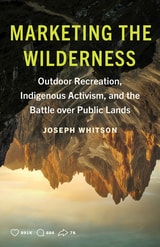
Marketing the Wilderness
Outdoor Recreation, Indigenous Activism, and the Battle over Public LandsJoseph Whitson
University of Minnesota Press, 2025
How outdoor industry marketing promotes an image of “the wilderness” as an unpeopled haven
Marketing the Wilderness analyzes the relationship between the outdoor recreation industry, public lands in the United States, and Indigenous sovereignty and representation in recreational spaces. Combining social media analysis, digital ethnography, and historical research, Joseph Whitson offers nuanced insights into more than a century of the outdoor recreation industry’s marketing strategies, unraveling its complicity in settler colonialism.
Complicating the narrative of outdoor recreation as a universal good, Whitson introduces the concept of “wildernessing” to describe the physical, legal, and rhetorical production of pristine, empty lands that undergirds the outdoor recreation industry, a process that further disenfranchises Indigenous people from whom these lands were stolen. He demonstrates how companies such as Patagonia and REI align with the mining and drilling industries in their need to remove Indigenous peoples and histories from valuable lands. And he describes the ways Indigenous and decolonial activists are subverting and resisting corporate marketing strategies to introduce new narratives of place.
Through the lens of environmental justice activism, Marketing the Wilderness reconsiders the ethics of recreational land use, advocating for engagement with issues of cultural representation and appropriation informed by Indigenous perspectives. As he discusses contemporary public land advocacy around places such as Bears Ears National Monument, Whitson focuses on the deeply fraught relationship between the outdoor recreation industry and Indigenous communities. Emphasizing the power of the corporate system and its treatment of land as a commodity under capitalism, he shows how these tensions shape the American idea of “wilderness” and what it means to fight for its preservation.
Retail e-book files for this title are screen-reader friendly with images accompanied by short alt text and/or extended descriptions.
Nudging towards Health
A Tool to Influence Human Behavior in Health PolicyRadek Kovács and František Ochrana
Karolinum Press, 2023
Behavioral economics sees “nudges” as ways to encourage people to re-evaluate their priorities in such a way that they voluntarily change their behavior, leading to personal and social benefits. This book examines nudging as a tool for influencing human behavior in health policy. The authors investigate the contemporary scientific discourse on nudging and enrich it with an ontological, epistemological, and praxeological analysis of human behavior. Based on analyses of the literature and a systemic review, the book defines nudging tools within the paradigm of prospect theory. In addition to the theoretical contribution, Nudging also examines and offers suggestions on the practice of health policy regarding obesity, malnutrition, and especially type 2 diabetes mellitus.
RSF
The Russell Sage Foundation Journal of the Social Sciences: The Socioeconomic Impacts of the COVID-19 PandemicSchneider, Daniel
Russell Sage Foundation, 2023
The 11 articles in this issue examine the impacts of the COVID-19 pandemic and federal and local responses to the crisis on social safety net usage, unemployment insurance (UI) recipiency, parenting and gender disparities, housing, and experiences with the criminal justice system. Marianne P. Bitler and colleagues find that during the pandemic, participation in the Supplemental Nutrition Assistance Program (SNAP) increased more in counties that experienced larger employment shocks, however, the SNAP pandemic benefit increases were less generous to Black and Hispanic SNAP participants as compared to White participants. Alex Bell and colleagues show while the UI recipiency rate increased substantially across the U.S. during the pandemic, wealthier states had higher recipiency rates and states with higher shares of Black residents had lower recipiency rates. Liana Christin Landivar and colleagues reveal that remote schooling was associated with reduced employment among mothers compared to fathers and women without children, with Black mothers experiencing the largest reduction in employment. Vincent J. Reina and Yeonhwa Lee find that low-income renters who received emergency rental assistance during the pandemic had lower arrears, a lower likelihood of having rent-related debt, and a lower likelihood of experiencing debilitating anxiety. Samantha Plummer and colleagues show that individuals leaving jail or who had criminal cases during the early phase of the pandemic suffered high levels of housing and food insecurity as well as joblessness, but those with co-occurring mental illness and substance abuse problems experienced the highest levels of material hardship.
This issue of RSF sheds light on how the pandemic and the corresponding government response have both reinforced and reshaped socioeconomic inequality in the United States.
RSF
The Russell Sage Foundation Journal of the Social Sciences: Three Decades Since 'Making Ends Meet': What We Know about How Single Mothers Survive TodayElizabeth O. Ananat
Russell Sage Foundation, 2026
In their seminal 1995 book Making Ends Meet: How Low-Income Single Mothers Survive Welfare and Low-Wage Employment, Kathryn Edin and Laura Lein laid bare the strategies and challenges of low-income single mothers who were struggling to provide for their families. Even in an era when cash welfare was a federal entitlement, these women struggled to get by. In the thirty years since the book’s publication, many single parents wrestle with volatility and precarious resources from work, informal and formal supports. In this double issue of RSF, economist Elizabeth O. Ananat, political scientist and public policy scholar Carolyn Y. Barnes, sociologists Sandra K. Danziger and Kathryn Edin, and an interdisciplinary group of contributors examine how the policy landscape has changed since welfare reform and how it impacts low-income single mothers’ ability to make ends meet today.
Issue 1 has 8 articles that examine how the traditional safety net has evolved and new supports that have been developed since Making Ends Meet. For example, Sarah K. Bruch and colleagues assess changes to the social safety net since welfare reform in the 1990s and find that benefits have become more exclusive, have more constraints, and are less generous. Kelley Fong and Nora McCarthy reveal that, in an attempt to decrease child maltreatment, the child welfare system increasingly provides material resources to system-involved parents, including in-kind donations and assistance accessing childcare. However, parents often avoid obtaining resources through the system because it opens them up to increased state surveillance. Heather D. Hill and colleagues show that access to paid family and medical leave (PFML) varies greatly for single mothers, with two-thirds of single mothers living in states without PMFL. For those who live in states with PFML, the accessibility and generosity of benefits vary greatly.
Issue 2 has 5 articles that look at lessons that can be learned from COVID Era policies, how single mothers currently try to make ends meet, and men’s contributions to families. For example, Natasha V. Pilkauskas and Kevin Bruey find that low-income single mothers, with and without employment, utilize a variety of public and private resources to make ends meet. Despite this, both groups face high levels of material hardship, including food and housing insecurity. Hope Harvey examines how members of doubled up households understand their economic and social relationships and reveals that there are often disagreements about shared resources, such as money and food. However, it is not just the precise contributions that cause conflict, but how the exchanges are interpreted within the context of household members’ relationships. Allison Dwyer Emory and colleagues show that nonresident fathers often have trouble making ends meet themselves and are unable to make up for the loss of cash support post-welfare reform.
This double issue of RSF showcases the persistence of precarity that low-income families face since Making Ends Meet.
Note: This copy refers to both issues of the journal double issue.
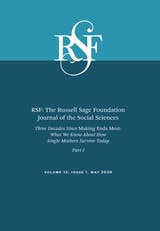
RSF
The Russell Sage Foundation Journal of the Social Sciences: Three Decades Since 'Making Ends Meet': What We Know about How Single Mothers Survive TodayElizabeth O. Ananat
Russell Sage Foundation, 2026
In their seminal 1995 book Making Ends Meet: How Low-Income Single Mothers Survive Welfare and Low-Wage Employment, Kathryn Edin and Laura Lein laid bare the strategies and challenges of low-income single mothers who were struggling to provide for their families. Even in an era when cash welfare was a federal entitlement, these women struggled to get by. In the thirty years since the book’s publication, many single parents wrestle with volatility and precarious resources from work, informal and formal supports. In this double issue of RSF, economist Elizabeth O. Ananat, political scientist and public policy scholar Carolyn Y. Barnes, sociologists Sandra K. Danziger and Kathryn Edin, and an interdisciplinary group of contributors examine how the policy landscape has changed since welfare reform and how it impacts low-income single mothers’ ability to make ends meet today.
Issue 1 has 8 articles that examine how the traditional safety net has evolved and new supports that have been developed since Making Ends Meet. For example, Sarah K. Bruch and colleagues assess changes to the social safety net since welfare reform in the 1990s and find that benefits have become more exclusive, have more constraints, and are less generous. Kelley Fong and Nora McCarthy reveal that, in an attempt to decrease child maltreatment, the child welfare system increasingly provides material resources to system-involved parents, including in-kind donations and assistance accessing childcare. However, parents often avoid obtaining resources through the system because it opens them up to increased state surveillance. Heather D. Hill and colleagues show that access to paid family and medical leave (PFML) varies greatly for single mothers, with two-thirds of single mothers living in states without PMFL. For those who live in states with PFML, the accessibility and generosity of benefits vary greatly.
Issue 2 has 5 articles that look at lessons that can be learned from COVID Era policies, how single mothers currently try to make ends meet, and men’s contributions to families. For example, Natasha V. Pilkauskas and Kevin Bruey find that low-income single mothers, with and without employment, utilize a variety of public and private resources to make ends meet. Despite this, both groups face high levels of material hardship, including food and housing insecurity. Hope Harvey examines how members of doubled up households understand their economic and social relationships and reveals that there are often disagreements about shared resources, such as money and food. However, it is not just the precise contributions that cause conflict, but how the exchanges are interpreted within the context of household members’ relationships. Allison Dwyer Emory and colleagues show that nonresident fathers often have trouble making ends meet themselves and are unable to make up for the loss of cash support post-welfare reform.
This double issue of RSF showcases the persistence of precarity that low-income families face since Making Ends Meet.
Note: This copy refers to both issues of the journal double issue.
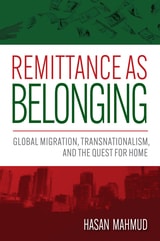
Remittance as Belonging
Global Migration, Transnationalism, and the Quest for HomeHasan Mahmud
Rutgers University Press, 2025
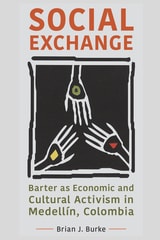
Social Exchange
Barter as Economic and Cultural Activism in Medellín, ColombiaBrian J. Burke
Rutgers University Press, 2022
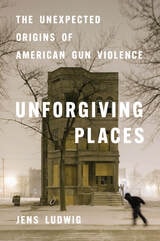
Unforgiving Places
The Unexpected Origins of American Gun ViolenceJens Ludwig
University of Chicago Press, 2025
In 2007, economist Jens Ludwig moved to the South Side of Chicago to research two big questions: Why does gun violence happen, and is there anything we can do about it? Almost two decades later, the answers aren’t what he expected. Unforgiving Places is Ludwig’s revelatory portrait of gun violence in America’s most famously maligned city.
Disproving the popular narrative that shootings are the calculated acts of malicious or desperate people, Ludwig shows how most shootings actually grow out of a more fleeting source: interpersonal conflict, especially arguments. By examining why some arguments turn tragic while others don't, Ludwig shows gun violence to be more circumstantial—and more solvable—than our traditional approaches lead us to believe.
Drawing on decades of research and Ludwig’s immersive fieldwork in Chicago, including “countless hours spent in schools, parks, playgrounds, housing developments, courtrooms, jails, police stations, police cars, and lots and lots of McDonald'ses,” Unforgiving Places is a breakthrough work at the cutting edge of behavioral economics. As Ludwig shows, progress on gun violence doesn’t require America to solve every other social problem first; it only requires that we find ways to intervene in the places and the ten-minute windows where human behaviors predictably go haywire.