Results by title
29 books match the query 'Social Evolution'
After Collapse
The Regeneration of Complex SocietiesEdited by Glenn M. Schwartz and John J. Nichols
University of Arizona Press, 2006
Ranging widely across the Near East, the Aegean, East Asia, Mesoamerica, and the Andes, these cross-cultural studies expand our understanding of social evolution by examining how societies were transformed during the period of radical change now termed “collapse.” They seek to discover how societal complexity reemerged, how second-generation states formed, and how these re-emergent states resembled or differed from the complex societies that preceded them.
The contributors draw on material culture as well as textual and ethnohistoric data to consider such factors as preexistent institutions, structures, and ideologies that are influential in regeneration; economic and political resilience; the role of social mobility, marginal groups, and peripheries; and ethnic change. In addition to presenting a number of theoretical viewpoints, the contributors also propose reasons why regeneration sometimes does not occur after collapse. A concluding contribution by Norman Yoffee provides a critical exegesis of “collapse” and highlights important patterns found in the case histories related to peripheral regions and secondary elites, and to the ideology of statecraft.
After Collapse blazes new research trails in both archaeology and the study of social change, demonstrating that the archaeological record often offers more clues to the “dark ages” that precede regeneration than do text-based studies. It opens up a new window on the past by shifting the focus away from the rise and fall of ancient civilizations to their often more telling fall and rise.
CONTRIBUTORS
Bennet Bronson
Arlen F. Chase
Diane Z. Chase
Christina A. Conlee
Lisa Cooper
Timothy S. Hare
Alan L. Kolata
Marilyn A. Masson
Gordon F. McEwan
Ellen Morris
Ian Morris
Carlos Peraza Lope
Kenny Sims
Miriam T. Stark
Jill A. Weber
Norman Yoffee
Ancient Society
Lewis Henry Morgan; Foreword by Elisabeth Tooker
University of Arizona Press, 1985
Beyond Collapse
Archaeological Perspectives on Resilience, Revitalization, and Transformation in Complex SocietiesEdited by Ronald K. Faulseit
Southern Illinois University Press, 2015
Essays in the book are arranged into five sections. The first section addresses previous research on the subject of collapse and reorganization as well as recent and historic theoretical trends. In the second section, contributors look at collapse and resilience through the concepts of collective action, eventful archaeology, and resilience theory. The third section introduces critical analyses of the effectiveness of resilience theory as a heuristic tool for modeling the phenomena of collapse and resilience. In the fourth section, contributors examine long-term adaptive strategies employed by prehistoric societies to cope with stresses. Essays in the fifth section make connections to contemporary research on post-decline societies in a variety of time periods and geographic locations.
Contributors consider collapse and reorganization not as unrelated phenomena but as integral components in the evolution of complex societies. Using archaeological data to interpret how ancient civilizations responded to various stresses—including environmental change, warfare, and the fragmentation of political institutions—contributors discuss not only what leads societies to collapse but also why some societies are resilient and others are not, as well as how societies reorganize after collapse. The implications of the fate of these societies for modern nations cannot be underestimated. Putting in context issues we face today, such as climate change, lack of social diversity, and the failure of modern states, Beyond Collapse is an essential volume for readers interested in human-environment interaction and in the collapse—and subsequent reorganization—of human societies.
Beyond the Meme
Development and Structure in Cultural EvolutionAlan C. Love
University of Minnesota Press, 2019
Interdisciplinary perspectives on cultural evolution that reject meme theory in favor of a complex understanding of dynamic change over time
How do cultures change? In recent decades, the concept of the meme, posited as a basic unit of culture analogous to the gene, has been central to debates about cultural transformation. Despite the appeal of meme theory, its simplification of complex interactions and other inadequacies as an explanatory framework raise more questions about cultural evolution than it answers.
In Beyond the Meme, William C. Wimsatt and Alan C. Love assemble interdisciplinary perspectives on cultural evolution, providing a nuanced understanding of it as a process in which dynamic structures interact on different scales of size and time. By focusing on the full range of evolutionary processes across distinct contexts, from rice farming to scientific reasoning, this volume demonstrates how a thick understanding of change in culture emerges from multiple disciplinary vantage points, each of which is required to understand cultural evolution in all its complexity. The editors provide an extensive introductory essay to contextualize the volume, and Wimsatt contributes a separate chapter that systematically organizes the conceptual geography of cultural processes and phenomena.
Any adequate account of the transmission, elaboration, and evolution of culture must, this volume argues, recognize the central roles that cognitive and social development play in cultural change and the complex interplay of technological, organizational, and institutional structures needed to enable and coordinate these processes.
Contributors: Marshall Abrams, U of Alabama at Birmingham; Claes Andersson, Chalmers U of Technology; Mark A. Bedau, Reed College; James A. Evans, U of Chicago; Jacob G. Foster, U of California, Los Angeles; Michel Janssen, U of Minnesota; Sabina Leonelli, U of Exeter; Massimo Maiocchi, U of Chicago; Joseph D. Martin, U of Cambridge; Salikoko S. Mufwene, U of Chicago; Nancy J. Nersessian, Georgia Institute of Technology and Harvard U; Paul E. Smaldino, U of California, Merced; Anton Törnberg, U of Gothenburg; Petter Törnberg, U of Amsterdam; Gilbert B. Tostevin, U of Minnesota.
Brutalism
Achille Mbembe
Duke University Press, 2024
Crow-Omaha
New Light on a Classic Problem of Kinship AnalysisEdited by Thomas R. Trautmann and Peter M. Whiteley
University of Arizona Press, 2012
This volume examines the Crow-Omaha problem from a variety of perspectives—historical, linguistic, formalist, structuralist, culturalist, evolutionary, and phylogenetic. It focuses on the regions where Crow-Omaha systems occur: Native North America, Amazonia, West Africa, Northeast and East Africa, aboriginal Australia, northeast India, and the Tibeto-Burman area. The international roster of authors includes leading experts in their fields.
The book offers a state-of-the-art assessment of Crow-Omaha kinship and carries forward the work of the landmark volume Transformations of Kinship, published in 1998. Intended for students and scholars alike, it is composed of brief, accessible chapters that respect the complexity of the ideas while presenting them clearly. The work serves as both a new benchmark in the explanation of kinship systems and an introduction to kinship studies for a new generation of students.
Series Note: Formerly titled Amerind Studies in Archaeology, this series has recently been expanded and retitled Amerind Studies in Anthropology to incorporate a high quality and number of anthropology titles coming in to the series in addition to those in archaeology.
Cultural Evolution
How Darwinian Theory Can Explain Human Culture and Synthesize the Social SciencesAlex Mesoudi
University of Chicago Press, 2011
Cultural Materialism
On Raymond WilliamsChristopher Prendergast
University of Minnesota Press, 1995
"Raymond Williams was the last of the great European male revolutionary socialist intellectuals born before the end of the age of Europe (1492-1945)."-Cornel West
The work of Raymond Williams is of seminal importance in rethinking the idea of culture. He is widely regarded as one of the founding figures of international cultural studies. In tribute to his legacy, this edited volume is devoted to his theories of cultural materialism and is the most substantial and wide-ranging collection of essays on his work to be offered since his death in 1988. For all readers grappling with Williams's complex legacy, this volume is not to be missed.Contributors include Stanley Aronowitz, Graduate School, CUNY; John Brenkman, Baruch College, CUNY; Peter de Bolla, Cambridge University; Catherine Gallagher, University of California, Berkeley; Stephen Heath, University of California, Santa Cruz; John Higgins, University of Cape Town; Peter Hitchcock, Baruch College, CUNY; Cora Kaplan, Rutgers University; David Lloyd, University of California, Berkeley; Robert Miklitsch, Ohio University; Michael Moriarty, Cambridge University; Morag Shiach, Queen Mary and Westfield College, University of London; David Simpson, University of Colorado, Boulder; Gillian Skirrow; Kenneth Surin, Duke University; Paul Thomas, University of California, Berkeley; Gauri Viswanathan, Columbia University; and Cornel West, Harvard University.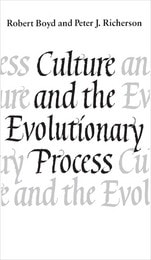
Culture and the Evolutionary Process
Robert Boyd and Peter J. Richerson
University of Chicago Press, 1985
Darwin's Conjecture
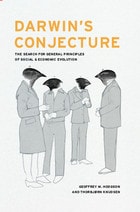
The Search for General Principles of Social and Economic EvolutionGeoffrey M. Hodgson and Thorbjørn Knudsen
University of Chicago Press, 2010
Of paramount importance to the natural sciences, the principles of Darwinism, which involve variation, inheritance, and selection, are increasingly of interest to social scientists as well. But no one has provided a truly rigorous account of how the principles apply to the evolution of human society—until now.
In Darwin’s Conjecture, Geoffrey Hodgson and Thorbjørn Knudsen reveal how the British naturalist’s core concepts apply to a wide range of phenomena, including business practices, legal systems, technology, and even science itself. They also critique some prominent objections to applying Darwin to social science, arguing that ultimately Darwinism functions as a general theoretical framework for stimulating further inquiry. Social scientists who adopt a Darwinian approach, they contend, can then use it to frame and help develop new explanatory theories and predictive models.
This truly pathbreaking workat long last makes the powerful conceptual tools of Darwin available to the social sciences and will be welcomed by scholars and students from a range of disciplines.
Evolutionary Systems and Society
A General TheoryVilmos Csányi
Duke University Press, 1988
Grandmotherhood
The Evolutionary Significance of the Second Half of Female LifeVoland, Eckart
Rutgers University Press, 2014
By the year 2030, the average life expectancy of women in industrialized countries could reach ninety—exceeding that of men by about ten years. At the present time, postmenopausal women represent more than fifteen percent of the world’s population and this figure is likely to grow.
From an evolutionary perspective, these demographic numbers pose some intriguing questions. Darwinian theory holds that a successful life is measured in terms of reproduction. How is it, then, that a woman’s lifespan can greatly exceed her childbearing and childrearing years? Is this phenomenon simply a byproduct of improved standards of living, or do older women—grandmothers in particular—play a measurable role in increasing their family members’ biological success?
Until now, these questions have not been examined in a thorough and comprehensive manner. Bringing togethertheoretical and empirical work byinternationally recognized scholars in anthropology, psychology, ethnography, and the social sciences, Grandmotherhood explores the evolutionary purpose and possibilities of female post-generative life. Students and scholars of human evolution, anthropology, and even gerontology will look to this volume as a major contribution to the current literature in evolutionary studies.
Holistic Darwinism
Synergy, Cybernetics, and the Bioeconomics of EvolutionPeter Corning
University of Chicago Press, 2005
How We Became Human
Mimetic Theory and the Science of Evolutionary OriginsPierpaolo Antonello
Michigan State University Press, 2015
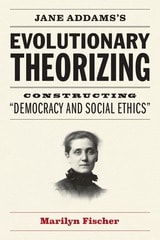
Jane Addams's Evolutionary Theorizing
Constructing “Democracy and Social Ethics”Marilyn Fischer
University of Chicago Press, 2019
Examining essays Addams wrote in the 1890s and showing how they were revised for Democracy and Social Ethics, Fischer draws from philosophy, history, literature, rhetoric, and more to uncover the array of social evolutionary thought Addams engaged with in her texts—from British socialist writings on the evolution of democracy to British and German anthropological accounts of the evolution of morality. By excavating Addams’s evolutionary reasoning and rhetorical strategies, Fischer reveals the depth, subtlety, and richness of Addams’s thought.
Mathematical Models of Social Evolution
A Guide for the PerplexedRichard McElreath and Robert Boyd
University of Chicago Press, 2007
Over the last several decades, mathematical models have become central to the study of social evolution, both in biology and the social sciences. But students in these disciplines often seriously lack the tools to understand them. A primer on behavioral modeling that includes both mathematics and evolutionary theory, Mathematical Models of Social Evolution aims to make the student and professional researcher in biology and the social sciences fully conversant in the language of the field.
Teaching biological concepts from which models can be developed, Richard McElreath and Robert Boyd introduce readers to many of the typical mathematical tools that are used to analyze evolutionary models and end each chapter with a set of problems that draw upon these techniques. Mathematical Models of Social Evolution equips behaviorists and evolutionary biologists with the mathematical knowledge to truly understand the models on which their research depends. Ultimately, McElreath and Boyd’s goal is to impart the fundamental concepts that underlie modern biological understandings of the evolution of behavior so that readers will be able to more fully appreciate journal articles and scientific literature, and start building models of their own.
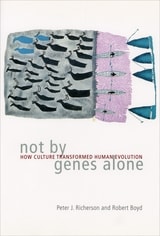
Not By Genes Alone
How Culture Transformed Human EvolutionPeter J. Richerson and Robert Boyd
University of Chicago Press, 2004
Not by Genes Alone offers a radical interpretation of human evolution, arguing that our ecological dominance and our singular social systems stem from a psychology uniquely adapted to create complex culture. Richerson and Boyd illustrate here that culture is neither superorganic nor the handmaiden of the genes. Rather, it is essential to human adaptation, as much a part of human biology as bipedal locomotion. Drawing on work in the fields of anthropology, political science, sociology, and economics—and building their case with such fascinating examples as kayaks, corporations, clever knots, and yams that require twelve men to carry them—Richerson and Boyd convincingly demonstrate that culture and biology are inextricably linked, and they show us how to think about their interaction in a way that yields a richer understanding of human nature.
In abandoning the nature-versus-nurture debate as fundamentally misconceived, Not by Genes Alone is a truly original and groundbreaking theory of the role of culture in evolution and a book to be reckoned with for generations to come.
“I continue to be surprised by the number of educated people (many of them biologists) who think that offering explanations for human behavior in terms of culture somehow disproves the suggestion that human behavior can be explained in Darwinian evolutionary terms. Fortunately, we now have a book to which they may be directed for enlightenment . . . . It is a book full of good sense and the kinds of intellectual rigor and clarity of writing that we have come to expect from the Boyd/Richerson stable.”—Robin Dunbar, Nature
“Not by Genes Alone is a valuable and very readable synthesis of a still embryonic but very important subject straddling the sciences and humanities.”—E. O. Wilson, Harvard University
Out of Time
History and Evolution in Anthropological DiscourseNicholas Thomas
University of Michigan Press, 1996
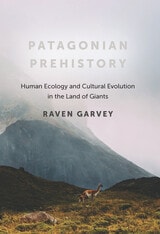
Patagonian Prehistory
Human Ecology and Cultural Evolution in the Land of GiantsRaven Garvey
University of Utah Press, 2021
Garvey’s novel hypotheses question common assumptions regarding Patagonia’s suitability for prehistoric hunter-gatherers. She makes four primary arguments: (1) the surprising lack of clothing in parts of prehistoric Patagonia supports a relatively slow initial colonization of the Americas; (2) the sparse record of human habitation during the middle Holocene may be due to prehistoric behavioral changes and archaeological sampling methods rather than population decline; (3) farming never took root in Patagonia because risks associated with farming likely outweighed potential benefits; and, finally, (4) the broad trajectory of cultural change in Patagonia owes as much to feedback between population size and technology as to conditions in the rugged Patagonian outback itself.

Political Descent
Malthus, Mutualism, and the Politics of Evolution in Victorian EnglandPiers J. Hale
University of Chicago Press, 2014
These two traditions, Hale shows, developed in a context of mutual hostility, debate, and refutation. Participants disagreed not only about evolutionary processes but also on broader questions regarding the kind of creature our evolution had made us and in what kind of society we ought therefore to live. Significantly, and in spite of Darwin’s acknowledgement that natural selection was “the doctrine of Malthus, applied to the whole animal and vegetable kingdoms,” both sides of the debate claimed to be the more correctly “Darwinian.” By exploring the full spectrum of scientific and political issues at stake, Political Descent offers a novel approach to the relationship between evolution and political thought in the Victorian and Edwardian eras.
Profiles in Cultural Evolution
Papers from a Conference in Honor of Elman R. ServiceEdited by A. Terry Rambo and Kathleen Gillogly
University of Michigan Press, 1991
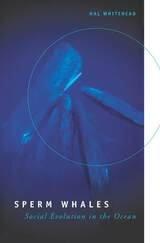
Sperm Whales
Social Evolution in the OceanHal Whitehead
University of Chicago Press, 2003
With this book, Hal Whitehead gives us a clearer picture of the ecology and social life of sperm whales than we have ever had before. Based on almost two decades of field research, Whitehead describes their biology, behavior, and habitat; how they organize their societies; and how their complex lifestyles may have evolved in this unique environment. Among the many fascinating topics he explores is the crucial role that culture plays in the life of the sperm whale, and he traces the consequences of this argument for both evolution and conservation. Finally, drawing on these findings, Whitehead builds a general model of how the ocean environment influences social behavior and cultural evolution among mammals as well as other animals.
The definitive portrait of a provocative creature, Sperm Whales will interest animal behaviorists, conservationists, ecologists, and evolutionary biologists as well as marine mammalogists.
Style, Function, Transmission
Evolutionary Archaeological PerspectivesMichael J O'Brien
University of Utah Press, 2003
Darwin's theory of evolutionary descent with modification rests in part on the notion that there is heritable continuity affected by transmission between ancestor and descendant. It is precisely this continuity that allows one to trace hylogenetic histories between fossil taxa of various ages and recent taxa. Darwin was clear that were an analyst to attempt such tracings, then the anatomical characters of choice are those least influenced by natural selection, or what are today referred to as adaptively neutral traits. The transmission of these traits is influenced solely by such mechanisms as drift and not by natural selection.
The application of Darwin's theory to archaeological phenomena requires that the theory be retooled to accommodate artifacts. One aspect that has undergone this retooling concerns cultural transmission, the mechanism that affects heritable continuity between cultural phenomena. Archaeologists have long traced what is readily interpreted as heritable continuity between artifacts, but the theory underpinning their tracings is seldom explicit. Thus what have been referred to as artifacts styles underpin such tracings because styles are adaptively neutral. Other traits are referred to as functional.
In their introduction to Style, Function, Transmission, Michael O’Brien and R. Lee Lyman outline in detail the interrelations of a theory of cultural descent with modification and the concepts of drift, style, and function. The chapters in the volume specifically address the issues of selection and drift and their relation to style and function. In non-polemic presentations, contributors specify empirical implications of aspects of cultural transmission for evolutionary lineages of artifacts and then present archaeological data for those implications.
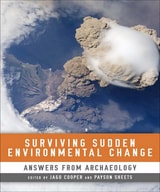
Surviving Sudden Environmental Change
Answers From ArchaeologyJago Cooper
University Press of Colorado, 2012
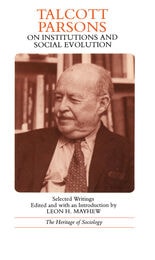
Talcott Parsons on Institutions and Social Evolution
Selected WritingsTalcott Parsons
University of Chicago Press, 1983
In his extensive introduction to this volume, Leon H. Mayhew brings a new focus and clarity to Talcott Parsons's work. Explicating Parsons on his own terms, Mayhew discusses the basic tools of Parsonian analysis and interprets the larger themes of his work. He provides a chronological account of the development of Parsons's thought, his presuppositions, and his position on the ideological spectrum of social thought.
Mayhew then presents twenty of Parsons's essays, touching on each of the major aspects of his work, including "action" theory and the celebrated four-function scheme. Other topics covered include the role of theory in social research, evolutionary universals in society, influence, control, and the mass media.
"Talcott Parsons on Institutions and Social Evolution will become a standard reference for those studying that development of his sociological ideas."—Martin Bulmer, The Times Higher Education Supplement

The Arc of War
Origins, Escalation, and TransformationJack S. Levy and William R. Thompson
University of Chicago Press, 2011

The Eighth Day
Social Evolution as the Self-Organization of EnergyBy Richard Newbold Adams
University of Texas Press, 1988
Can human social evolution be described in terms common to other sciences, most specifically, as an energy process? The Eighth Day reflects a conviction that the human trajectory, for all its uniqueness and indeterminism, will never be satisfactorily understood until it is framed in dynamics that are common to all of nature. The problem in doing this, however, lies in ourselves. The major social theories have failed to treat human social evolution as a component of broader natural processes.
The Eighth Day argues that the energy process provides a basis for explaining, comparing, and measuring complex social evolution. Using traditional ecological energy flow studies as background, society is conceived as a self-organization of energy. This perspective enables Adams to analyze society in term of the natural selection of self-organizing energy forms and the trigger processes basic to it. Domestication, civilization, socioeconomic development, and the regulation of contemporary industrial nation-states serve to illustrate the approach. A principal aim is to explore the limitation that energy process imposes on human social evolution as well as to clarify the alternatives that it allows.
Richly informed by contemporary anthropological historicism, sociobiology, and Marxism, The Eighth Day avoids simple reductionism and denies facile ideological categorization. Adams builds on work in nonequilibrium thermodynamics and theoretical biology and brings three decades of his own work to an analysis of human society that demands an extreme materialism in which human thought and action find a central place.
The Promise of Progress
The Life and Work of Lewis Henry MorganDaniel Noah Moses
University of Missouri Press, 2009
Work, Sex, and Power
The Forces that Shaped Our HistoryWillie Thompson
Pluto Press, 2015
It expertly explores the foundations of our developing society by showing how these grand themes have recurred throughout the various phases of global history. From communities of Palaeolithic hunter-gatherers, through feudalism and onto the capitalistic machine-civilisation of recent centuries, Willie Thompson takes us on a journey that is fundamentally opposed to mainstream histories which concentrate on monarchs, politicians and military commanders.
At the centre of this book lies the interaction between humans and their environment. By exploring history in this way, it reveals a simple yet powerful materialist understanding of how we got to where we are today, and opens a door to a different reading of our world.