Results by title
42 books match the query 'Social action'

"The Wrong Side of Privilege"
Advocacy, Community, and Politics: The Collected Essays of Stephen J. Parks, 2000–2020Stephen J. Parks
University Press of Colorado, 2025
A Unified Theory of Collective Action and Social Change
Luis Fernando Medina
University of Michigan Press, 2007
The notion that groups form and act in ways that respond to objective, external costs and benefits has long been the key to accounting for social change processes driven by collective action. Yet this same notion seems to fall apart when we try to explain how collectivities emerge out of the choices of individuals. This book overcomes that dilemma by offering an analysis of collective action that, while rooted in individual decision making, also brings out the way in which objective costs and benefits can impede or foster social coordination. The resulting approach enables us to address the causes and consequences of collective action with the help of the tools of modern economic theory. To illustrate this, the book applies the tools it develops to the study of specific collective action problems such as clientelism, focusing on its connections with economic development and political redistribution; and wage bargaining, showing its economic determinants and its relevance for the political economy of the welfare state.
"Medina's study is a great step forward in the analytics of collective action. He shows the inadequacies of currently standard models and shows that straightforward revisions reconcile rational-choice and structural viewpoints. It will influence all future work."
—Kenneth Arrow, Stanford University
"Olson, Schelling, and now Medina. A Unified Theory deepens our understanding of collective action and contributes to the foundations of our field. A major work."
—Robert H. Bates, Harvard University
"Medina thinks that the main problem of social action is not whether or not to cooperate but how to do it. To this end he has produced an imaginative approach to analyzing strategic coordination problems that produces plausible predictions in a range of circumstances."
—John Ferejohn, Stanford University
Luis Fernando Medina is Associate Professor in the Department of Politics at the University of Virginia.
After Parsons
A Theory of Social Action for the Twenty-First CenturyRenee C. Fox
Russell Sage Foundation, 2005

Averting the Apocalypse
Social Movements in India TodayArthur Bonner
Duke University Press, 1990
Bonner finds that India’s inability or refusal to address its debilitating social structure may be the precursor to an apocalyptic social upheaval unless heed is paid to the social movements that his first-hand investigation reveals.
Banded Together
Economic Democratization in the Brass ValleyJeremy Brecher
University of Illinois Press, 2011
Building Resilience
Social Capital in Post-Disaster RecoveryDaniel P. Aldrich
University of Chicago Press, 2012
Can Literature Promote Justice?
Trauma Narrative and Social Action in Latin American TestimonioKimberly A. Nance
Vanderbilt University Press, 2006
The advent of the testimonio--loosely, a political autobiography of a Latin American activist who hopes, through the telling of her life story, to bring about change--was met with a great deal of excitement by scholars who posited it as a radical new form of literature. Those accolades were almost immediately followed by a series of critical problems. In what sense were testimonios "true"? What right did privileged scholars in the U.S. have to engage accounts of suffering with traditional modes of criticism? Were questions of veracity or aesthetics more important? Were these texts autobiography or political screeds? It seemed critics didn't know quite what to make of the testimonio and so, after a brief bout of engagement, disregarded it.
Nance, however, argues that any form as prolific as the testimonio is well worth examining and that these questions, rather than being insurmountable, are exactly the questions with which scholars ought to be wrestling. If, as critics claim, that the testimonio is one of the most pervasive contemporary Latin American cultural genres, then it is high time for a comprehensive study of the genre such as Nance's.
Coethnicity
Diversity and the Dilemmas of Collective ActionJames Habyarimana
Russell Sage Foundation, 2009
Collaborative Imagination
Earning Activism through Literacy EducationPaul Feigenbaum
Southern Illinois University Press, 2015
Processes of fighting unequal citizenship have historically prioritized literacy education, through which people envision universal first-class citizenship and devise practical methods for enacting this vision. In this important volume, literacy scholar Paul Feigenbaum explores how literacy education can facilitate activism in contemporary contexts in which underserved populations often remain consigned to second-class status despite official guarantees of equal citizenship. By conceiving of education as, in part, a process of understanding and grappling with adaptive and activist rhetorics, Feigenbaum explains, educators can direct people’s imaginations toward activism without running up against the conceptual problems so many scholars associate with critical pedagogy. Over time, this model of education expands people’s imaginations about what it means to be a good citizen, facilitates increased civic participation, and encourages collective destabilization of, rather than adaptation to, the structural inequalities of mainstream civic institutions. Feigenbaum offers detailed analyses of various locations and time periods inside, outside, and across the walls of formal education, including the Citizenship Schools and Freedom Schools rooted in the Civil Rights Movement of the 1950s and 1960s; the Algebra Project, a current practical-literacy network; and the Imagination Federation, a South Florida–based Earth-Literacy network. Considering both the history and the future of community literacy, Collaborative Imagination offers educators a powerful mechanism for promoting activism through their teaching and scholarship, while providing practical ideas for greater civic engagement among students.
Conceptual Activism
Radical Sense-Making and the Struggle for GenderDavina Cooper
Duke University Press, 2026

Crossing Parish Boundaries
Race, Sports, and Catholic Youth in Chicago, 1914-1954Timothy B. Neary
University of Chicago Press, 2016
In this book, Timothy B. Neary reveals the history of Bishop Bernard Sheil’s Catholic Youth Organization (CYO), which brought together thousands of young people of all races and religions from Chicago’s racially segregated neighborhoods to take part in sports and educational programming. Tens of thousands of boys and girls participated in basketball, track and field, and the most popular sport of all, boxing, which regularly filled Chicago Stadium with roaring crowds. The history of Bishop Sheil and the CYO shows a cosmopolitan version of American Catholicism, one that is usually overshadowed by accounts of white ethnic Catholics aggressively resisting the racial integration of their working-class neighborhoods. By telling the story of Catholic-sponsored interracial cooperation within Chicago, Crossing Parish Boundaries complicates our understanding of northern urban race relations in the mid-twentieth century.
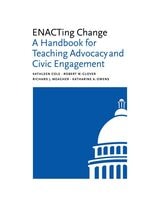
ENACTing Change
A Handbook for Teaching Advocacy and Civic EngagementKathleen Cole, Robert W. Glover, Richard J. Meagher, and Katharine A. Owens
Brandeis University Press, 2025
ENACT: The Educational Network for Active Civic Transformation aims to teach college students about democracy through engagement with the state legislative process. Built on the values of knowledge, cooperation, justice, and integrity, ENACT is a national, intercollegiate nonpartisan network. The program empowers students to be active participants in democratic processes by connecting with policymakers and community organizations, conducting research and analysis, and informing public policy with evidence and expertise.
ENACTing Change introduces teachers to the philosophy and practice of the ENACT model—which includes workshops, courses, an online network, as well as pilot projects and other initiatives—while providing detailed guidance on how to incorporate the model into their courses, regardless of discipline or educational settings. The book offers instructors recommendations for developing and teaching courses that engage in state-level policy advocacy with a focus on learning outcomes. ENACTing Change takes instructors through each step of the course design process, from how to build the relationships needed to teach the class to the next steps for students to work in the community after ENACT.
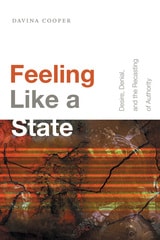
Feeling Like a State
Desire, Denial, and the Recasting of AuthorityDavina Cooper
Duke University Press, 2019
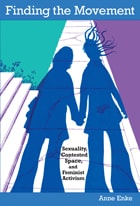
Finding the Movement
Sexuality, Contested Space, and Feminist ActivismFinn Enke
Duke University Press, 2007
By considering the development of feminism through an analysis of public space, Enke expands and revises the historiography of second-wave feminism. She suggests that the movement was so widespread because it was built by people who did not identify themselves as feminists as well as by those who did. Her focus on claims to public space helps to explain why sexuality, lesbianism, and gender expression were so central to feminist activism. Her spatial analysis also sheds light on hierarchies within the movement. As women turned commercial, civic, and institutional spaces into sites of activism, they produced, as well as resisted, exclusionary dynamics.

Fire and Ink
An Anthology of Social Action WritingEdited by Frances Payne Adler, Debra Busman, and Diana García
University of Arizona Press, 2009
Fire and Ink brings together, for the first time in one volume, politically engaged writing by poets, fiction writers, and essayists. Including many of our finest writers—Martín Espada, Adrienne Rich, June Jordan, Patricia Smith, Gloria Anzaldúa, Sharon Olds, Arundhati Roy, Sonia Sanchez, Carolyn Forche, Chitra Banerjee Divakaruni, Alice Walker, Linda Hogan, Gary Soto, Kim Blaeser, Minnie Bruce Pratt, Li-Young Lee, and Jimmy Santiago Baca, among others—this is an indispensable collection.
This groundbreaking anthology marks the emergence of social action writing as a distinct field within creative writing and literature. Featuring never-before-published pieces, as well as reprinted material, Fire and Ink is divided into ten sections focused on significant social issues, including identity, sexuality and gender, the environment, social justice, work, war, and peace. The pieces can often be gripping, such as “Frame,” in which Adrienne Rich confronts government and police brutality, or Chris Abani’s “Ode to Joy,” which documents great courage in the face of mortal danger.
Fire and Ink serves as a wonderful reader for a wide range of courses, from composition and rhetoric classes to courses in ethnic studies, gender studies, American studies, and even political science, by facing a past that was often accompanied by injustice and suffering. But beyond that, this collection teaches us that we all have the power to create a more equitable and just future.
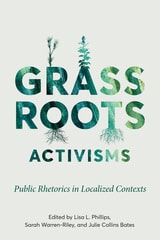
Grassroots Activisms
Public Rhetorics in Localized ContextsEdited by Lisa L. Phillips, Sarah Warren-Riley, and Julie Collins Bates
The Ohio State University Press, 2024
What is the nature of grassroots activism? How and why do individuals get involved or attempt to make change for themselves, others, or their own communities? What motivates activists to maintain momentum when their efforts to redress injustices or paths toward change seem difficult or personally risky to navigate? These questions and more are addressed in Grassroots Activisms: Public Rhetorics in Localized Contexts. Featuring a diverse array of both local activist profiles and original scholarly essays, the collection amplifies and analyzes the tactics of grassroots activists working locally to intervene in a variety of social injustices—from copwatching and policy reform to Indigenous resistance against land colonization to #RageAgainstRape.
Attuned to the demanding—and often underappreciated—work of grassroots activism, this book interrogates how such efforts unfold within and against existing historical, cultural, social, and political realities of local communities; are informed by the potentials and constraints of coalition-building; and ultimately shape different facets of society at the local level. This collection acknowledges and celebrates the complexity of grassroots activist work, showing how these less-recognized efforts often effect change where institutions have failed.
How Humans Cooperate
Confronting the Challenges of Collective ActionRichard E. Blanton
University Press of Colorado, 2016
In How Humans Cooperate, Richard E. Blanton and Lane F. Fargher take a new approach to investigating human cooperation, developed from the vantage point of an "anthropological imagination." Drawing on the discipline’s broad and holistic understanding of humans in biological, social, and cultural dimensions and across a wide range of temporal and cultural variation, the authors unite psychological and institutional approaches by demonstrating the interplay of institution building and cognitive abilities of the human brain.
Blanton and Fargher develop an approach that is strongly empirical, historically deep, and more synthetic than other research designs, using findings from fields as diverse as neurobiology, primatology, ethnography, history, art history, and archaeology. While much current research on collective action pertains to local-scale cooperation, How Humans Cooperate puts existing theories to the test at larger scales in markets, states, and cities throughout the Old and New Worlds.
This innovative book extends collective action theory beyond Western history and into a broadly cross-cultural dimension, places cooperation in the context of large and complex human societies, and demonstrates the interplay of collective action and aspects of human cognitive ability. By extending the scope and content of collective action theory, the authors find a fruitful new path to understanding human cooperation.
Inspiring Teens, Tweens, and Families to Make a Difference in the World
Programming to Advance the Sustainable Development GoalsAmanda Moss Struckmeyer
American Library Association, 2025
- programs and activities related to such topics as good health and well-being, ending poverty, peace and justice, responsible consumption and production, decent work, and clean water and sanitation;
- ideas perfect for multi-age audiences (families), tweens, and teens that can be tailored for different group sizes, programming spaces, budgets, and time frames;
- a plethora of flexible, cost-effective passive programs that patrons can engage in at any time;
- guidance on outreach opportunities for fostering partnerships with local experts and guest speakers; and
- pointers on additional and supporting resources including books, videos, and websites.

Inventing the Ties That Bind
Imagined Relationships in Moral and Political LifeFrancesca Polletta
University of Chicago Press, 2020
Lobbying the Autocrat
The Dynamics of Policy Advocacy in NondemocraciesMax Grömping and Jessica C. Teets, Editors
University of Michigan Press, 2023
Although authoritarian countries often repress independent citizen activity, lobbying by civil society organizations is actually a widespread phenomenon. Using case studies such as China, Russia, Belarus, Cambodia, Malaysia, Montenegro, Turkey, and Zimbabwe, Lobbying the Autocrat shows that citizen advocacy organizations carve out niches in the authoritarian policy process, even influencing policy outcomes. The cases cover a range of autocratic regime types (one-party, multi-party, personalist) on different continents, and encompass different systems of government to explore citizen advocacy ranging from issues such as social welfare, women’s rights, election reform, environmental protection, and land rights. They show how civil society has developed adaptive capacities to the changing levels of political repression and built resilience through ‘tactful contention’ strategies. Thus, within the bounds set by the authoritarian regimes, adaptive lobbying may still bring about localized responsiveness and representation.
However, the challenging conditions of authoritarian advocacy systems identified throughout this volume present challenges for both advocates and autocrats alike. The former are pushed by an environment of constant threat and uncertainty into a precarious dance with the dictator: just the right amount of acquiescence and assertiveness, private persuasion and public pressure, and the flexibility to change quickly to suit different situations. An adaptive lobbyist survives and may even thrive in such conditions, while others often face dire consequences. For the autocrat on the other hand, the more they stifle the associational sphere in an effort to prevent mass mobilization, the less they will reap the informational benefits associated with it. This volume synthesizes the findings of the comparative cases to build a framework for understanding how civil society effectively lobbies inside authoritarian countries.
Lost in the USA
American Identity from the Promise Keepers to the Million Mom MarchDeborah Gray White
University of Illinois Press, 2017
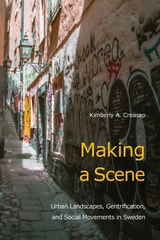
Making a Scene
Urban Landscapes, Gentrification, and Social Movements in SwedenKimberly A. Creasap
Temple University Press, 2022
In the three largest cities in Sweden, social movement “scenes”—networks of social movement actors and the places they inhabit—challenge threats such as gentrification. The geography of the built environment influences their ability to lay claim to urban space and to local political processes. In Making a Scene, Kimberly Creasap emphasizes that it is the centrality, concentration, and visibility of these scenes that make them most effective. Whereas some scenes become embedded as part of everyday life—as in Malmö—in contrast, scenes in Göteborg and Stockholm often fail to become part of the fabric of urban neighborhoods.
Creasap investigates key spaces for scenes, from abandoned industrial areas and punk clubs to street festivals, bookstores, and social centers, to show how activists create sites and develop structures of resistance that are anti-capitalist, anti-fascist, anti-gentrification, queer, and feminist. She also charts the relationship between scenes and city spaces to show these autonomous social movements create their own cultural landscapes. Making a Scene encourages critical thinking about spatiality and place in the sociology of social movements and the role of social movements as important actors in urban development.
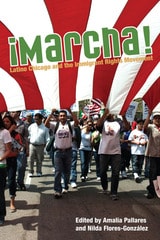
Marcha
Latino Chicago and the Immigrant Rights MovementEdited by Amalia Pallares and Nilda Flores-Gonzalez
University of Illinois Press, 2010
Marcha is a multidisciplinary survey of the individuals, organizations, and institutions that have given shape and power to the contemporary immigrant rights movement in Chicago. A city with longstanding historic ties to immigrant activism, Chicago has been the scene of a precedent-setting immigrant rights mobilization in 2006 and subsequent mobilizations in 2007 and 2008.
Positing Chicago as a microcosm of the immigrant rights movement on national level, these essays plumb an extraordinarily rich set of data regarding recent immigrant rights activities, defining the cause as not just a local quest for citizenship rights, but a panethnic, transnational movement. The result is a timely volume likely to provoke debate and advance the national conversation about immigration in innovative ways.

Muslim Women Activists in North America
Speaking for OurselvesEdited by Katherine Bullock
University of Texas Press, 2005
In the eyes of many Westerners, Muslim women are hidden behind a veil of negative stereotypes that portray them as either oppressed, subservient wives and daughters or, more recently, as potential terrorists. Yet many Muslim women defy these stereotypes by taking active roles in their families and communities and working to create a more just society. This book introduces eighteen Muslim women activists from the United States and Canada who have worked in fields from social services, to marital counseling, to political advocacy in order to further social justice within the Muslim community and in the greater North American society.
Each of the activists has written an autobiographical narrative in which she discusses such issues as her personal motivation for doing activism work, her views on the relationship between Islam and women's activism, and the challenges she has faced and overcome, such as patriarchal cultural barriers within the Muslim community or racism and discrimination within the larger society. The women activists are a heterogeneous group, including North American converts to Islam, Muslim immigrants to the United States and Canada, and the daughters of immigrants. Young women at the beginning of their activist lives as well as older women who have achieved regional or national prominence are included. Katherine Bullock's introduction highlights the contributions to society that Muslim women have made since the time of the Prophet Muhammad and sounds a call for contemporary Muslim women to become equal partners in creating and maintaining a just society within and beyond the Muslim community.

Naked Agency
Genital Cursing and Biopolitics in AfricaNaminata Diabate
Duke University Press, 2020

New York Undercover
Private Surveillance in the Progressive EraJennifer Fronc
University of Chicago Press, 2009
To combat behavior they viewed as sexually promiscuous, politically undesirable, or downright criminal, social activists in Progressive-era New York employed private investigators to uncover the roots of society’s problems. New York Undercover follows these investigators—often journalists or social workers with no training in surveillance—on their information-gathering visits to gambling parlors, brothels, and meetings of criminal gangs and radical political organizations.
Drawing on the hundreds of detailed reports that resulted from these missions, Jennifer Fronc reconstructs the process by which organizations like the National Civic Federation and the Committee of Fourteen generated the knowledge they needed to change urban conditions. This information, Fronc demonstrates, eventually empowered government regulators in the Progressive era and beyond, strengthening a federal state that grew increasingly repressive in the interest of pursuing a national security agenda. Revealing the central role of undercover investigation in both social change and the constitution of political authority, New York Undercover narrates previously untold chapters in the history of vice and the emergence of the modern surveillance state.

Political Action
Key To Understanding PoliticsDick Simpson
Ohio University Press, 1984
Politics and the study of politics are at a watershed. They are deficient because they fail to respond to fundamental crises in our society, fail to incorporate new knowledge from other fields of study, and fail to allow citizens to function as mature human beings shaping their own destiny. Political Action demonstrates the need for a new political science which, in turn, may lead to a new politics more adequate to the problems of this era.
Modern political science, as currently studied and practiced, is irrelevant for both public officials and citizens because it fails to focus on political action. Simpson and Beam provide a methodology for the study of political action and demonstrate how the study of political action using these methods provides a better understanding of politics and how these methods aid in identifying effective strategies for building a better America.
Without a new focus on political action, political science will remain sterile and without a more humane politics, citizens will remain misinformed, apathetic, and helpless. Political Action is controversial because it challenges the profession of political science. It provides a “paradigm shift” in the field which is important for allied social science disciplines as well. For political strategists, it provides the methodological tool of political action propositions which allow a careful calculation of the effects of alternative strategies.
Rhyming Hope and History
Activists, Academics, and Social Movement ScholarshipDavid Croteau
University of Minnesota Press, 2005
Contributors: Kevin M. Carragee, Suffolk U; Catherine Corrigall-Brown, U of California, Irvine; Myra Marx Ferree, U of Wisconsin, Madison; Richard Flacks, U of California, Santa Barbara; Adria D. Goodson; Richard Healy and Sandra Hinson, Grassroots Policy Project; David Meyer, U of California, Irvine; Cynthia Peters, Worker Education Program of the Service Employees International Union, Local 2020; Barbara Risman, North Carolina State U; Robert J. S. Ross, Clark U; Leila J. Rupp, U of California, Santa Barbara; Cassie Schwerner, Schott Foundation; Valerie Sperling, Clark U; David A. Snow, U of California, Irvine; Verta Taylor, U of California, Santa Barbara.
David Croteau is formerly associate professor of sociology and anthropology at Virginia Commonwealth University. William Hoynes is professor of sociology and director of media studies at Vassar College. Charlotte Ryan is codirector of the Media Research and Action Project at Boston College. William A. Gamson is professor of sociology at Boston College.

Society in Action
The Theory of Social BecomingPiotr Sztompka
University of Chicago Press, 1991
Sztompka connects the interpretations of such collective activity to a wider grasp of the nature of social action. The result is a comprehensive and original theory of social change which focuses on the self-transforming influence on society of its members' striving for freedom, autonomy, and self-fulfillment. He develops his theory by means of a general concept of "social becoming," the roots of which he traces to the early romantic and humanist work of Karl Marx and his followers and to two influential sociological schools of today, the theory of agency and historical sociology.
Sztompka situates his theory midway between the rigid determinism of social totalities and the unbridled voluntarism of free individuals. Social change, he demonstrates, can be understood neither as the outcome of individual actions taken alone nor as structurally determined actions. Instead, he confers upon social organizations and movements a "self-transcending" quality: they express human agency yet, by virtue of their active character, are quite often able to achieve unpredictable outcomes.
Throughout his analysis of social movements and revolutions in history, Sztompka emphasizes the dynamics of spontaneous social change generated from below—a theoretical testimony to the rapid and fundamental social change in Eastern Europe in recent history. Against the fashions of postmodernist malaise, boredom, and disenchantment, his theory of social becoming expresses the possibility of emancipation, of change leading to positive gains. His work registers a belief in progress, not inevitably gained, but its attainment fully dependent upon the creativity and optimism of an active citizenry.
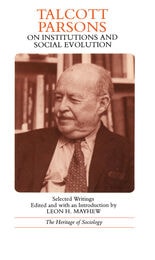
Talcott Parsons on Institutions and Social Evolution
Selected WritingsTalcott Parsons
University of Chicago Press, 1983
In his extensive introduction to this volume, Leon H. Mayhew brings a new focus and clarity to Talcott Parsons's work. Explicating Parsons on his own terms, Mayhew discusses the basic tools of Parsonian analysis and interprets the larger themes of his work. He provides a chronological account of the development of Parsons's thought, his presuppositions, and his position on the ideological spectrum of social thought.
Mayhew then presents twenty of Parsons's essays, touching on each of the major aspects of his work, including "action" theory and the celebrated four-function scheme. Other topics covered include the role of theory in social research, evolutionary universals in society, influence, control, and the mass media.
"Talcott Parsons on Institutions and Social Evolution will become a standard reference for those studying that development of his sociological ideas."—Martin Bulmer, The Times Higher Education Supplement

The Early Essays
Talcott Parsons
University of Chicago Press, 1991
In his superb introductory essay, Camic situates Parsons's early writings in their sociointellectual and biographical context. Drawing upon extensive historical research, he identifies three overlapping but relatively distinct thematic phases in the early development of Paron's ideas: that on capitalist society and its origins, that one the historical development of the theory of action, and that on the foundations of analytical sociology. Camic correlates the emergence of these phases to Parsons's experiences at Amherst College in the early 1920s, in London and Heidelberg during the mid-1920s, and at Harvard University in the important period from the late 1920s to the mid-1930s. Reproducing in full each of twenty-one selections, this volume charts the changes and continues in the early development of some of Parsons's most fundamental ideas.
The Making of Pro-life Activists
How Social Movement Mobilization WorksZiad W. Munson
University of Chicago Press, 2008
Through extensive interviews and detailed studies of pro-life organizations across the nation, Munson makes the startling discovery that many activists join up before they develop strong beliefs about abortion—in fact, some are even pro-choice prior to their mobilization. Therefore, Munson concludes, commitment to an issue is often a consequence rather than a cause of activism.
The Making of Pro-life Activists provides a compelling new model of how people become activists while also offering a penetrating analysis of the complex relationship between religion, politics, and the pro-life movement. Policy makers, activists on both sides of the issue, and anyone seeking to understand how social movements take shape will find this book essential.
The Newark Frontier
Community Action in the Great SocietyMark Krasovic
University of Chicago Press, 2016
The Newark Frontier shows how, during the Great Society, urban liberalism adapted and grew, defining itself less by centralized programs and ideals than by administrative innovation and the small-scale, personal interactions generated by community action programs, investigative commissions, and police-community relations projects. Paying particular attention to the fine-grained experiences of Newark residents, Krasovic reveals that this liberalism was rooted in an ethic of experimentation and local knowledge. He illustrates this with stories of innovation within government offices, the dynamic encounters between local activists and state agencies, and the unlikely alliances among nominal enemies. Krasovic makes clear that postwar liberalism’s eventual fate had as much to do with the experiments waged in Newark as it did with the violence that rocked the city in the summer of 1967.
The Rebel's Dilemma
Mark Irving Lichbach
University of Michigan Press, 1998
". . . a significant contribution to the understanding of collective behavior, protest, and rebellion." --Choice
"The book is interesting and thought-provoking, and its insights extend beyond the narrow subject of rebellion to help illuminate many issues related to organizing groups to undertake collective action." --Public Choice
"[Lichbach's] book is monumental and pivotal. . . . [It] consolidates over three decades of research on collective action problems and sets the agenda for future studies of collective dissent and rebellion. . . . [This] book is a major step forward. It will have an enormous impact in the field of conflict studies and belongs on the shelf of anyone even casually interested in dissent, rebellion, and revolution. . . . [This] book is a major step forward. It will have an enormous impact in the field of conflict studies and belongs on the shelf of anyone even casually interested in dissent, rebellion, and revolution." --American Political Science Review
"For scholars interested in game-theoretic analyses of politics . . . essential reading." --Manus I. Midlarsky, Journal of Politics
"Lichbach has to be praised for providing valuable insight on the logic of collective dissent. . . ." --Political Studies
Mark Irving Lichbach is Professor of Political Science, University of Colorado.
The Spectacular City
Violence and Performance in Urban BoliviaDaniel M. Goldstein
Duke University Press, 2004
During the period of Goldstein’s fieldwork in Villa Pagador in the mid-1990s, residents attempted to lynch several thieves and attacked the police who tried to intervene. Since that time, there have been hundreds of lynchings in the poor barrios surrounding Cochabamba. Goldstein presents the lynchings of thieves as a form of horrific performance, with elements of critique and political action that echo those of local festivals. He explores the consequences and implications of extralegal violence for human rights and the rule of law in the contemporary Andes. In rich detail, he provides an in-depth look at the development of Villa Pagador and of the larger metropolitan area of Cochabamba, illuminating a contemporary Andean city from both microethnographic and macrohistorical perspectives. Focusing on indigenous peoples’ experiences of urban life and their attempts to manage their sociopolitical status within the broader context of neoliberal capitalism and political decentralization, The Spectacular City highlights the deep connections between performance, law, violence, and the state.
The Unheard Voices
Community Organizations and Service LearningRandy Stoecker
Temple University Press, 2009
Service learning has become an institutionalized practice in higher education. Students are sent out to disadvantaged communities to paint, tutor, feed, and help organize communities. But while the students gain from their experiences, the contributors to The Unheard Voices ask, "Does the community?"
This volume explores the impact of service learning on a community, and considers the unequal relationship between the community and the academy. Using eye-opening interviews with community-organization staff members, The Unheard Voices challenges assumptions about the effectiveness of service learning. Chapters offer strong critiques of service learning practices from the lack of adequate training and supervision, to problems of communication and issues of diversity. The book's conclusion offers ways to improve service learning so that future endeavors can be better at meeting the needs of the communities and the students who work in them.
To Live Here, You Have to Fight
How Women Led Appalachian Movements for Social JusticeJessica Wilkerson
University of Illinois Press, 2019
Jessica Wilkerson tells their stories within the larger drama of efforts to enact change in the 1960s and 1970s. She shows white Appalachian women acting as leaders and soldiers in a grassroots war on poverty--shaping and sustaining programs, engaging in ideological debates, offering fresh visions of democratic participation, and facing personal political struggles. Their insistence that caregiving was valuable labor clashed with entrenched attitudes and rising criticisms of welfare. Their persistence, meanwhile, brought them into unlikely coalitions with black women, disabled miners, and others to fight for causes that ranged from poor people's rights to community health to unionization.
Inspiring yet sobering, To Live Here, You Have to Fight reveals Appalachian women as the indomitable caregivers of a region--and overlooked actors in the movements that defined their time.
Transforming Places
Lessons from AppalachiaEdited by Stephen L. Fisher and Barbara Ellen Smith
University of Illinois Press, 2012
Vision, Rhetoric, and Social Action in the Composition Classroom
Kristie S. Fleckenstein
Southern Illinois University Press, 2009
In this innovative volume, Kristie S. Fleckenstein explores how the intersection of vision, rhetoric, and writing pedagogy in the classroom can help students become compassionate citizens who participate in the world as they become more critically aware of the world. Fleckenstein argues that all social action—behavior designed to increase human dignity, value, and quality of life—depends on a person’s repertoire of visual and rhetorical habits. To develop this repertoire in students, the author advocates the incorporation of visual habits—or ways of seeing—into a language-based pedagogical approach in the writing classroom. According to Fleckenstein, interweaving the visual and rhetorical in composition pedagogy enables students to more readily perceive the need for change, while arming them with the abilities and desire to enact it.
The author addresses social action from the perspective of three visual habits: spectacle, which fosters disengagement; animation, or fusing body with meaning; and antinomy, which invites the invention of new realities. Fleckenstein then examines the ways in which particular visual habits interact with rhetorical habits and with classroom methods, resulting in the emergence of various forms of social action. To enhance the understanding of the concepts she discusses, the author represents the intertwining relationships of vision, rhetoric, and writing pedagogy graphically as what she calls symbiotic knots. In tracing the modes of social action privileged by a visual habit and a teacher’s pedagogical choices, Fleckenstein attends particularly to the experiences of students who have been traditionally barred from participation in the public sphere because of gender, race, or class. The book culminates in a call for visually and rhetorically robust writing pedagogies.
In Vision, Rhetoric, and Social Action in the Composition Classroom, Fleckenstein combines classic methods of rhetorical teaching with fresh perspectives to provide a unique guide for initiating important improvements in teaching social action. The result is a remarkable volume that empowers teachers to best inspire students to take part in their world at that most crucial moment when they are discovering it.
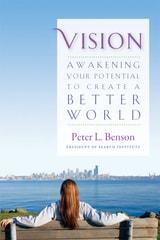
Vision
Awakening Your Potential to Create a Better WorldPeter Benson
Templeton Press, 2009
According to Peter L. Benson, the capacity to generate vision is among life's most beautiful and unheralded gifts. To him, a vision is more than just a goal, more than just a dream of what could be—it is a summons, a pull towards the future, an inspired call to make real that which should be. In Vision: Awakening Your Potential to Create a Better World, Benson takes readers on an uplifting exploration of this powerful concept.
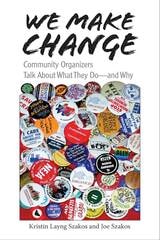
We Make Change
Community Organizers Talk About What They Do--and WhyKristin Layng Szakos
Vanderbilt University Press, 2007
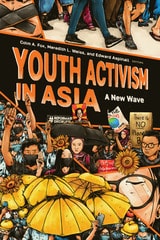
Youth Activism in Asia
A New WaveEdited by Colm A. Fox, Meredith L. Weiss, Edward Aspinall
University of Michigan Press, 2026
Over the last decade, a youth revolt has swept through Asia. Massive, regime-rocking protests have grabbed global attention as students and other young people have confronted security forces on the streets, taking great risks to condemn authoritarian rule, promote democracy, and to push forward new agendas of personal freedom and gender equality. Behind the scenes, young people have experimented with novel and diverse modes of political and social activism, often using new tools of online communication and cultural expression, forging new kinds of coalitions, and exploring nonconfrontational and subterranean networking.
Youth Activism in Asia focuses equally on the episodes of spectacular protest and on varieties of less visible engagement, examining the diversity, origins, and impact of contemporary youth activism in Asia. With fifteen case studies, the volume highlights shared patterns among demands, tactical repertoires, and activist networks, and examines what differentiates protest movements across countries and over time. Drawing on original fieldwork and, in many cases, their own experience, the authors address Brunei, China, Hong Kong, Indonesia, Malaysia, Myanmar, the Philippines, Singapore, Taiwan, Thailand, Timor-Leste, and transnational activism. Conceiving of “activism” broadly as any action intended to bring about social and political change, the volume makes theoretical contributions to our understanding of the relationship between protest and democratic backsliding, engagement with new communication technologies, and this generation’s distinctive intersectional politics. Youth Activism in Asia showcases the creativity, energy, boldness, and diversity of a new generation of Asian political activists.