Results by title
139 books match the query 'Social archaeology' and 22 start with a
A Gendered Past
A Critical Bibliography of Gender in ArchaeologyForeword by Alison Wylie. Edited by Elisabeth A. Bacus, Alex W. Barker, Jeffrey D. Bonevich, Sandra L. Dunavan, J. Benjamin Fitzhugh, Debra L. Gold, Nurit S. Goldman-Finn, William Griffin, and Karen M. Mudar
University of Michigan Press, 1993
A Prehistory of Ordinary People
Monica L. Smith
University of Arizona Press, 2010
Even after the advent of “civilization” about 6,000 years ago, human culture has for the most part been created and maintained not by the actions of elites—as is commonly proclaimed by many archaeological theorists—but by the many thousands of daily actions carried out by average citizens.
With this book, Monica L. Smith examines how the archaeological record of ordinary objects—used by ordinary people—constitutes a manifestation of humankind’s cognitive and social development. A Prehistory of Ordinary People offers an impressive synthesis and accessible style that will appeal to archaeologists, cultural anthropologists, and others interested in the long history of human decision-making.
Preface
Prologue: A Chance Encounter
1 The Origins of Multitasking
2 Individuals and Food
3 Individuals and Goods
4 Individuals and Work
5 Multitasking and Social Complexity
References
Figure Credits
Index
Abundance
The Archaeology of PlenitudeMonica L. Smith
University Press of Colorado, 2020
Using case studies from around the globe—including Mesoamerica, North and South America, Africa, China, and the Greco-Roman world—and across multiple time periods, the authors in this volume make the case that abundance provides an essential explanatory perspective on ancient peoples’ choices and activities. Economists frequently focus on scarcity as a driving principle in the development of social and economic hierarchies, yet focusing on plenitude enables the understanding of a range of cohesive behaviors that were equally important for the development of social complexity.
Our earliest human ancestors were highly mobile hunter-gatherers who sought out places that provided ample food, water, and raw materials. Over time, humans accumulated and displayed an increasing quantity and variety of goods. In households, shrines, tombs, caches, and dumps, archaeologists have discovered large masses of materials that were deliberately gathered, curated, distributed, and discarded by ancient peoples. The volume’s authors draw upon new economic theories to consider the social, ideological, and political implications of human engagement with abundant quantities of resources and physical objects and consider how individual and household engagements with material culture were conditioned by the quest for abundance.
Abundance shows that the human propensity for mass consumption is not just the result of modern production capacities but fulfills a longstanding focus on plenitude as both the assurance of well-being and a buffer against uncertainty. This book will be of great interest to scholars and students in economics, anthropology, and cultural studies.
Contributors: Traci Ardren, Amy Bogaard, Elizabeth Klarich, Abigail Levine, Christopher R. Moore, Tito E. Naranjo, Stacey Pierson, James M. Potter, François G. Richard, Christopher W. Schmidt, Carol Schultze, Payson Sheets, Monica L. Smith, Katheryn C. Twiss, Mark D. Varien, Justin St. P. Walsh, María Nieves Zedeño
Across a Great Divide
Continuity and Change in Native North American Societies, 1400–1900Edited by Laura L. Scheiber and Mark D. Mitchell
University of Arizona Press, 2010
The contributors address a series of interlocking themes. Several consider the role of indigenous agency in the processes of colonial interaction, paying particular attention to gender and status. Others examine the ways long-standing native political economies affected, and were in turn affected by, colonial interaction. A third group explores colonial-period ethnogenesis, emphasizing the emergence of new native social identities and relations after 1500. The book also highlights tensions between the detailed study of local cases and the search for global processes, a recurrent theme in postcolonial research.
If archaeologists are to bridge the artificial divide separating history from prehistory, they must overturn a whole range of colonial ideas about American Indians and their history. This book shows that empirical archaeological research can help replace long-standing models of indigenous culture change rooted in colonialist narratives with more nuanced, multilinear models of change—and play a major role in decolonizing knowledge about native peoples.
After Collapse
The Regeneration of Complex SocietiesEdited by Glenn M. Schwartz and John J. Nichols
University of Arizona Press, 2006
Ranging widely across the Near East, the Aegean, East Asia, Mesoamerica, and the Andes, these cross-cultural studies expand our understanding of social evolution by examining how societies were transformed during the period of radical change now termed “collapse.” They seek to discover how societal complexity reemerged, how second-generation states formed, and how these re-emergent states resembled or differed from the complex societies that preceded them.
The contributors draw on material culture as well as textual and ethnohistoric data to consider such factors as preexistent institutions, structures, and ideologies that are influential in regeneration; economic and political resilience; the role of social mobility, marginal groups, and peripheries; and ethnic change. In addition to presenting a number of theoretical viewpoints, the contributors also propose reasons why regeneration sometimes does not occur after collapse. A concluding contribution by Norman Yoffee provides a critical exegesis of “collapse” and highlights important patterns found in the case histories related to peripheral regions and secondary elites, and to the ideology of statecraft.
After Collapse blazes new research trails in both archaeology and the study of social change, demonstrating that the archaeological record often offers more clues to the “dark ages” that precede regeneration than do text-based studies. It opens up a new window on the past by shifting the focus away from the rise and fall of ancient civilizations to their often more telling fall and rise.
CONTRIBUTORS
Bennet Bronson
Arlen F. Chase
Diane Z. Chase
Christina A. Conlee
Lisa Cooper
Timothy S. Hare
Alan L. Kolata
Marilyn A. Masson
Gordon F. McEwan
Ellen Morris
Ian Morris
Carlos Peraza Lope
Kenny Sims
Miriam T. Stark
Jill A. Weber
Norman Yoffee
Agency in Ancient Writing
Joshua Englehardt
University Press of Colorado, 2012
Individual agents are frequently evident in early writing and notational systems, yet these systems have rarely been subjected to the concept of agency as it is traceable in archeology. Agency in Ancient Writing addresses this oversight, allowing archeologists to identify and discuss real, observable actors and actions in the archaeological record.
Embracing myriad ways in which agency can be interpreted, ancient writing systems from Mesoamerica, Mesopotamia, Egypt, Crete, China, and Greece are examined from a textual perspective as both archaeological objects and nascent historical documents. This allows for distinction among intentions, consequences, meanings, and motivations, increasing understanding and aiding interpretation of the subjectivity of social actors. Chapters focusing on acts of writing and public recitation overlap with those addressing the materiality of texts, interweaving archaeology, epigraphy, and the study of visual symbol systems.
Agency in Ancient Writing leads to a more thorough and meaningful discussion of agency as an archaeological concept and will be of interest to anyone interested in ancient texts, including archaeologists, historians, linguists, epigraphers, and art historians, as well as scholars studying agency and structuration theory.
Alternative Pathways to Complexity
A Collection of Essays on Architecture, Economics, Power, and Cross-Cultural AnalysisLane F. Fargher
University Press of Colorado, 2016
A group of highly distinguished scholars takes up important issues, theories, and methods stemming from the nascent body of research on comparative archaeology to showcase and apply important theories of households, power, and how the development of complex societies can be extended and refined. Drawing on the archaeological, ethnohistorical, and ethnographic records, the chapters in this volume contain critical investigations on the role of collective action, economics, and corporate cognitive codes in structuring complex societies.
Alternative Pathways to Complexity is an important addition to theoretical development and empirical research on Mesoamerica, the Old World, and cross-cultural studies. The theoretical implications addressed in the chapters will have broad appeal for scholars grappling with alternative pathways to complexity in other regions as well as those addressing diverse cross-cultural research.
Contributors: Sarah B. Barber, Cynthia L. Bedell, Christopher S. Beekman, Frances F. Berdan, Tim Earle, Carol R. Ember, Gary M. Feinman, Arthur A. Joyce, Stephen A. Kowalewski, Lisa J. LeCount, Linda M. Nicholas, Peter N. Peregrine, Peter Robertshaw, Barbara L. Stark, T. L. Thurston, Deborah Winslow, Rita Wright
Ancestral Landscapes of the Pueblo World
James E. Snead
University of Arizona Press, 2008
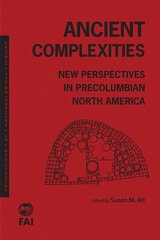
Ancient Complexities
New Perspectives in Pre-Columbian North AmericaSusan Alt
University of Utah Press, 2010
Edited by Susan M. Alt
Foundations of Archaeological Inquiry
Jim Skibo, Series Editor
Anthropology and Archaeology
Many archaeologists have long been frustrated with the traditional, reductionist representation of complexity. Yet, even after years of debate, there seem to be never ending disagreements over the complexity of places like Chaco Canyon, Cahokia, and Poverty Point. This matters, because there are political and scholarly implications to calling any place or people more or less complex. In North America especially, given historical biases and the mound-builder myth, archaeologists need to rethink complexity as they seek to explain the past.
Based on a Society of American Archaeology symposium, Ancient Complexities offers a current overview of what is meant by cultural complexity and how archaeologists study the development of complex societies in North America. Taking a critical look at how accepted definitions of complexity have bounded our thinking about ancient societies, this volume presents new theoretical perspectives and states a case for the need for different definitions in order to move this discussion ahead.
This collection by scholars of North American archaeology is a must read for anyone wishing to be abreast of the most current dialogue on complexity taking place in modern archaeology.
Ancient Households of the Americas
Conceptualizing What Households DoJohn G. Douglass
University Press of Colorado, 2012
Several different cultures-Iroquois, Coosa, Anasazi, Hohokam, San Agustín, Wankarani, Formative Gulf Coast Mexico, and Formative, Classic, Colonial, and contemporary Maya-are analyzed through the lens of household archaeology in concrete, data-driven case studies. The text is divided into three sections: Section I examines the spatial and social organization and context of household production; Section II looks at the role and results of households as primary producers; and Section III investigates the role of, and interplay among, households in their greater political and socioeconomic communities.
In the past few decades, household archaeology has made substantial contributions to our understanding and explanation of the past through the documentation of the household as a social unit-whether small or large, rural or urban, commoner or elite. These case studies from a broad swath of the Americas make Ancient Households of the Americas extremely valuable for continuing the comparative interdisciplinary study of households.
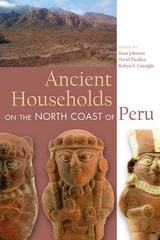
Ancient Households on the North Coast of Peru
Ilana Johnson
University Press of Colorado, 2020
Many volumes on this region are limited to one time period or civilization, often the Moche. While Ancient Households on the North Coast of Peru does examine the Moche, it offers a wider thematic approach to a broader swath of prehistory. Chapters on various time periods use a comparable scale of analysis to examine long-term continuity and change and draw on a large corpus of prior research on states, rulership, and cosmology to offer new insight into the intersection of household, community, and state. Contributors address social reproduction, construction and reinforcement of gender identities and social hierarchy, household permanence and resilience, and expression of identity through cuisine.
This volume challenges common concepts of the “household” in archaeology by demonstrating the complexity and heterogeneity of household-level dynamics as they intersect with institutions at broader social scales and takes a comparative perspective on daily life within one region of the Andes. It will be of interest to both students and scholars of South American archaeology and household archaeology.
Contributors: Brian R. Billman, David Chicoine, Guy S. Duke, Hugo Ikehara, Giles Spence-Morrow, Jessica Ortiz, Edward Swenson, Kari A. Zobler
Ancient Plants and People
Contemporary Trends in ArchaeobotanyEdited by Marco Madella, Carla Lancelotti, and Manon Savard
University of Arizona Press, 2014
Food has both a public and a private role, and it permeates the life of all people in a society. Food choice, production, and distribution probably represent the most complex indicators of social life, and thus a study of foods consumed by ancient peoples reveals many clues about their lifestyles. But in addition to yielding information about food production, distribution, preparation, and consumption, plant remains recovered from archaeological sites offer precious insights on past landscapes, human adaptation to climate change, and the relationship between human groups and their environment. Revealing important aspects of past human societies, these plant-driven insights widen the spectrum of information available to archaeologists as we seek to understand our history as a biological and cultural species.
Often answers raise more questions. As a result, archaeobotanists are constantly pushed to reflect on the methodological and theoretical aspects of their discipline. The contributors discuss timely methodological issues and engage in debates on a wide range of topics from plant utilization by hunter-gatherers and agriculturalists, to uses of ancient DNA. Ancient Plants and People provides a global perspective on archaeobotanical research, particularly on the sophisticated interplay between the use of plants and their social or environmental context.
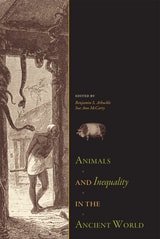
Animals and Inequality in the Ancient World
Benjamin S. Arbuckle
University Press of Colorado, 2014
The authors provide a global range of case studies from both New and Old World archaeology—a royal Aztec dog burial, the monumental horse tombs of Central Asia, and the ceremonial macaw cages of ancient Mexico among them. They explore the complex relationships between people and animals in social, economic, political, and ritual contexts, incorporating animal remains from archaeological sites with artifacts, texts, and iconography to develop their interpretations.
Animals and Inequality in the Ancient World presents new data and interpretations that reveal the role of animals, their products, and their symbolism in structuring social inequalities in the ancient world. The volume will be of interest to archaeologists, especially zooarchaeologists, and classical scholars of pre-modern civilizations and societies.
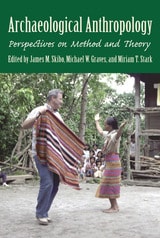
Archaeological Anthropology
Perspectives on Method and TheoryEdited by James M. Skibo, Michael W. Graves, and Miriam T. Stark
University of Arizona Press, 2014
In this collection of twelve new chapters, four generations of Longacre protégés show how they are building upon and developing but also modifying the theoretical paradigm that remains at the core of Americanist archaeology. The contributions focus on six themes prominent in Longacre’s career: the intellectual history of the field in the late twentieth century, archaeological methodology, analogical inference, ethnoarchaeology, cultural evolution, and reconstructing ancient society.
More than a comprehensive overview of the ideas developed by one of the most influential scholars in the field, however, Archaeological Anthropology makes stimulating contributions to contemporary research. The contributors do not unequivocally endorse Longacre’s ideas; they challenge them and expand beyond them, making this volume a fitting tribute to a man whose robust research and teaching career continues to resonate.
Archaeological Approaches to Market Exchange in Ancient Societies
Christopher P. Garraty
University Press of Colorado, 2010
Drawing from historical documents and archaeological records from Mesoamerica, the U.S. Southwest, East Africa, and the Andes, this volume reveals the complexity of ancient marketplace development and economic behavior both in hierarchical and non-hierarchical societies. Highlighting four principal themes-the defining characteristics of market exchange; the recognition of market exchange archaeologically; the relationship among market, political, and other social institutions; and the conditions in which market systems develop and change-the book contains a strong methodological and theoretical focus on market exchange.
Diverse contributions from noted scholars show the history of market exchange and other activities to be more dynamic than scholars previously appreciated. Archaeological Approaches to Market Exchange in Ancient Societies will be of interest to archaeologists, anthropologists, material-culture theorists, economists, and historians.
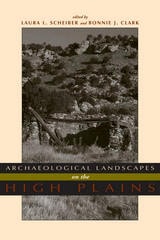
Archaeological Landscapes on the High Plains
Laura L. Scheiber
University Press of Colorado, 2008
Focusing on long-term change, this book considers ethnographic literature, archaeological evidence, and environmental data spanning thousands of years of human presence to understand human perception and construction of landscape. The contributors offer cohesive and synthetic studies emphasizing hunter-gatherers and subsistence farmers.
Using landscape as both reality and metaphor, Archaeological Landscapes on the High Plains explores the different and changing ways that people interacted with place in this transitional zone between the Rocky Mountains and the eastern prairies.
The contemporary archaeologists working in this small area have chosen diverse approaches to understand the past and its relationship to the present. Through these ten case studies, this variety is highlighted but leads to a common theme - that the High Plains contains important locales to which people, over generations or millennia, return. Providing both data and theory on a region that has not previously received much attention from archaeologists, especially compared with other regions in North America, this volume is a welcome addition to the literature. Contributors:
o Paul Burnett
o Oskar Burger
o Minette C. Church
o Philip Duke
o Kevin Gilmore
o Eileen Johnson
o Mark D. Mitchell
o Michael R. Peterson
o Lawrence Todd
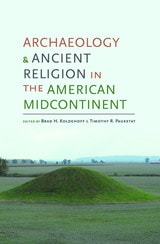
Archaeology and Ancient Religion in the American Midcontinent
Edited by Brad H. Koldehoff and Timothy R. Pauketat
University of Alabama Press, 2019
Across North America, huge data accumulations derived from decades of cultural resource management studies, combined with old museum collections, provide archaeologists with unparalleled opportunities to explore new questions about the lives of ancient native peoples. For many years the topics of technology, economy, and political organization have received the most research attention, while ritual, religion, and symbolic expression have largely been ignored. This was often the case because researchers considered such topics beyond reach of their methods and data.
In Archaeology and Ancient Religion in the American Midcontinent, editors Brad H. Koldehoff and Timothy R. Pauketat and their contributors demonstrate that this notion is outdated through their analyses of a series of large datasets from the midcontinent, ranging from tiny charred seeds to the cosmic alignments of mounds, they consider new questions about the religious practices and lives of native peoples. At the core of this volume are case studies that explore religious practices from the Cahokia area and surrounding Illinois uplands. Additional chapters explore these topics using data collected from sites and landscapes scattered along the Mississippi and Ohio River valleys.
This innovative work facilitates a greater appreciation for, and understanding of, ancient native religious practices, especially their seamless connections to everyday life and livelihood. The contributors do not advocate for a reduced emphasis on technology, economy, and political organization; rather, they recommend expanding the scope of such studies to include considerations of how religious practices shaped the locations of sites, the character of artifacts, and the content and arrangement of sites and features. They also highlight analytical approaches that are applicable to archaeological datasets from across the Americas and beyond.
Archaeology and Apprenticeship
Body Knowledge, Identity, and Communities of PracticeEdited by Willeke Wendrich
University of Arizona Press, 2012
Apprenticeship is broadly defined as the transmission of culture through a formal or informal teacher–pupil relationship. This collection invites a wide discussion, citing case studies from all over the world and yet focuses the scholarship into a concise set of contributions. The chapters in this volume demonstrate how archaeology can benefit greatly from the understanding of the social dimensions of knowledge transfer. This book also examines apprenticeship in archaeology against a backdrop of sociological and cognitive psychology literature, to enrich the understanding of the relationship between material remains and enculturation.
Each of the authors in this collection looks specifically at how material remains can reveal several specific aspects of ancient cultures: What is the human potential for learning? How do people learn? Who is teaching? Why are they learning? What are the results of such learning? How do we recognize knowledge transfer in the archaeological record? These fundamental questions are featured in various forms in all chapters of the book. With case studies from the American Southwest, Alaska, Egypt, Ancient Greece, and Mesopotamia, this book will have broad appeal for scholars—particularly those concerned with cultural transmission and traditions of learning and education—all over the world.
Archaeology at El Perú-Waka'
Ancient Maya Performances of Ritual, Memory, and PowerEdited by Olivia C. Navarro-Farr and Michelle Rich
University of Arizona Press, 2014
El Perú-Waka’ is an ancient Maya city located in present-day northwestern Petén, Guatemala. Rediscovered by petroleum exploration workers in the mid-1960s, it is the largest known archaeological site in the Laguna del Tigre National Park in Guatemala’s Maya Biosphere Reserve. The El Perú-Waka’ Regional Archaeological Project initiated scientific investigations in 2003, and through excavation and survey, researchers established that Waka’ was a key political and economic center well integrated into Classic-period lowland Maya civilization, and reconstructed many aspects of Maya life and ritual activity in this ancient community. The research detailed in this volume provides a wealth of new, substantive, and scientifically excavated data, which contributors approach with fresh theoretical insights. In the process, they lay out sound strategies for understanding the ritual manipulation of monuments, landscapes, buildings, objects, and memories, as well as related topics encompassing the performance and negotiation of power throughout the city’s extensive sociopolitical history.
Archaeology of the Moundville Chiefdom
Edited by Vernon James Knight Jr. and Vincas P. Steponaitis, with a foreword by Chistopher S. Peebles
University of Alabama Press, 2007
Built on a flat terrace overlooking the Black Warrior River in Alabama, the Moundville ceremonial center was at its height a densely occupied town of approximately 1,000 residents, with at least 29 earthen mounds surrounding a central plaza. Today Moundville is not only one of the largest and best-preserved Mississippian sites in the United States but also one of the most intensively studied. This volume brings together nine Moundville specialists who trace the site’s evolution and eventual decline.
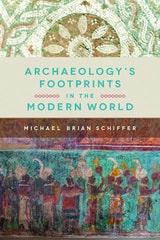
Archaeology's Footprints in the Modern World
Michael Brian Schiffer
University of Utah Press, 2017
What is the social value of archaeological research to present-day society? Michael Schiffer answers this question with forty-two case studies from a global perspective to demonstrate archaeology’s diverse scientific and humanistic contributions. Drawing on nearly five decades of research, he delivers fascinating yet nontechnical discussions that provide a deeper understanding of what archaeologists do and why they do it.
From reconstructing human evolution and behavior in prehistoric times to providing evidence that complements recorded history or debunks common legends, archaeologists help us understand our human past. They have also played crucial roles in developing techniques essential for the investigation of climate change along with tools for environmental reconstruction. Working for cities, tribes, and federal agencies, archaeologists manage cultural resources and testify in court. In forensic contexts, archaeological expertise enables the gathering of critical evidence. With engaging and lively prose, Archaeology’s Footprints brings to life a full panorama of contributions that have had an impact on modern society.
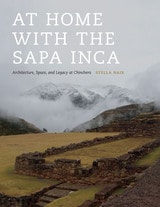
At Home with the Sapa Inca
Architecture, Space, and Legacy at ChincheroBy Stella Nair
University of Texas Press, 2015
By examining the stunning stone buildings and dynamic spaces of the royal estate of Chinchero, Nair brings to light the rich complexity of Inca architecture. This investigation ranges from the paradigms of Inca scholarship and a summary of Inca cultural practices to the key events of Topa Inca’s reign and the many individual elements of Chinchero’s extraordinary built environment.
What emerges are the subtle, often sophisticated ways in which the Inca manipulated space and architecture in order to impose their authority, identity, and agenda. The remains of grand buildings, as well as a series of deft architectural gestures in the landscape, reveal the unique places that were created within the royal estate and how one space deeply informed the other. These dynamic settings created private places for an aging ruler to spend time with a preferred wife and son, while also providing impressive spaces for imperial theatrics that reiterated the power of Topa Inca, the choice of his preferred heir, and the ruler’s close relationship with sacred forces.
This careful study of architectural details also exposes several false paradigms that have profoundly misguided how we understand Inca architecture, including the belief that it ended with the arrival of Spaniards in the Andes. Instead, Nair reveals how, amidst the entanglement and violence of the European encounter, an indigenous town emerged that was rooted in Inca ways of understanding space, place, and architecture and that paid homage to a landscape that defined home for Topa Inca.