Results by title

12 books match the query 'Social perception'
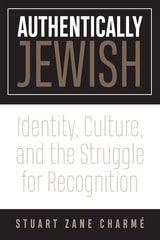
cover of Authentically Jewish: Identity, Culture, and the Struggle for Recognition

Authentically Jewish

Identity, Culture, and the Struggle for Recognition

Stuart Z. Charmé

Rutgers University Press, 2022

This book analyzes the different conceptions of authenticity that are behind conflicts over who and what should be recognized as authentically Jewish.  Although the concept of authenticity has been around for several centuries, it became a central focus for Jews since existentialist Jean-Paul Sartre raised the question in the 1940s. Building on the work of Sartre, later Jewish thinkers, philosophers, anthropologists, and cultural theorists, the book offers a model of Jewish authenticity that seeks to balance history and tradition, creative freedom and innovation, and the importance of recognition among different groups within an increasingly multicultural Jewish community.
 
Author Stuart Z. Charmé explores how debates over authenticity and struggles for recognition are a key to understanding a wide range of controversies between Orthodox and liberal Jews, Zionist and diaspora Jews, white Jews and Jews of color, as well as the status of intermarried and messianic Jews, and the impact of Jewish genetics.  In addition, it discusses how and when various cultural practices and traditions such as klezmer music, Israeli folk dance, Jewish yoga and meditation, and others are recognized as authentically Jewish, or not.
 
[more]
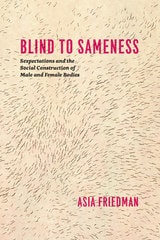
cover of Blind to Sameness: Sexpectations and the Social Construction of Male and Female Bodies

Blind to Sameness

Sexpectations and the Social Construction of Male and Female Bodies

Asia Friedman

University of Chicago Press, 2013

What is the role of the senses in how we understand the world? Cognitive sociology has long addressed the way we perceive or imagine boundaries in our ordinary lives, but Asia Friedman pushes this question further still. How, she asks, did we come to blind ourselves to sex sameness?

Drawing on more than sixty interviews with two decidedly different populations—the blind and the transgendered—Blind to Sameness answers provocative questions about the relationships between sex differences, biology, and visual perception. Both groups speak from unique perspectives that magnify the social construction of dominant visual conceptions of sex, allowing Friedman to examine the visual construction of the sexed body and highlighting the processes of social perception underlying our everyday experience of male and female bodies. The result is a notable contribution to the sociologies of gender, culture, and cognition that will revolutionize the way we think about sex.
[more]
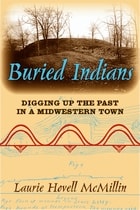
cover of Buried Indians: Digging Up the Past in a Midwestern Town

Buried Indians

Digging Up the Past in a Midwestern Town

Laurie Hovell McMillin

University of Wisconsin Press, 2006

In Buried Indians, Laurie Hovell McMillin presents the struggle of her hometown, Trempealeau, Wisconsin, to determine whether platform mounds atop Trempealeau Mountain constitute authentic Indian mounds. This dispute, as McMillin subtly demonstrates, reveals much about the attitude and interaction-past and present-between the white and Indian inhabitants of this Midwestern town.

McMillin's account, rich in detail and sensitive to current political issues of American Indian interactions with the dominant European American culture, locates two opposing views: one that denies a Native American presence outright and one that asserts its long history and ruthless destruction. The highly reflective oral histories McMillin includes turn Buried Indians into an accessible, readable portrait of a uniquely American culture clash and a dramatic narrative grounded in people's genuine perceptions of what the platform mounds mean.

[more]
cover of Dialogical Imaginations: Aisthesis as Social Perception and New Ideas of Humanism

Dialogical Imaginations

Aisthesis as Social Perception and New Ideas of Humanism

Edited by Michael F. Zimmermann with Gernot Müller, Christian Sauer, Kerstin Schmidt, Robert Schmidt, and Fosca Mariani Zini

Diaphanes, 0

Whereas language is situated in the communicative zones between subjects, the imagination, according to a widespread prejudice concerning its freedom, is often treated as obscurely originating from the inner self. Instead of focusing on individual or “private” imaginations by means of introspection, the contributors to the volume inquire into the dialogical formations the imagination shares with language, and into social ways of world making.

“Aisthesis” means perception, but, in this volume, as the cover illustration the artist Giulio Paolini made for us demonstrates, it is treated as inscribed into dialogue. Furthermore, the range of its meaning is extended to include societies’ capacities to perceive their own conditions and dispositions—those concerning their inner structures and their external, cultural, and natural contexts. The essays present a wide variety of cultural manifestations of social perception—from the documentary to the fictional. Philosophers and sociologists, literary and art historians, media and film analysts deal with figurations, topoi, and stereotypes as created in various communal spheres and as resulting from media and epistemological practices.

Many of the debates turn around dialogical humanism, but this is certainly not aimed at returning to normative models more regulating than describing the human. Our period has been marked by debates around the post-human, biopolitics, and an increasing awareness of crisis and of global interdependence. Previously, the concept of humanism had been criticized, for good reasons, by Foucault and by philosophers such as Judith Butler. If the editors propose to discuss humanism again, a reevaluation of the dialogical character of humanism—and a reconstruction of its history as marked by dialogical strategies—is the starting point. In dialogical humanism, man, instead of being defined by a system of norms, is and remains an argument—even if, in the final instance, inscrutable, inexhaustible.

[more]
cover of Inside the Antisemitic Mind: The Language of Jew-Hatred in Contemporary Germany

Inside the Antisemitic Mind

The Language of Jew-Hatred in Contemporary Germany

Monika Schwarz-Friesel and Jehuda Reinharz

Brandeis University Press, 2017
Antisemitism never disappeared in Europe. In fact, there is substantial evidence that it is again on the rise, manifest in violent acts against Jews in some quarters, but more commonly noticeable in everyday discourse in mainstream European society. This innovative empirical study examines written examples of antisemitism in contemporary Germany. It demonstrates that hostility against Jews is not just a right-wing phenomenon or a phenomenon among the uneducated, but is manifest among all social classes, including intellectuals. Drawing on 14,000 letters and e-mails sent between 2002 and 2012 to the Central Council of Jews in Germany and to the Israeli embassy in Berlin, as well as communications sent between 2010 and 2011 to Israeli embassies in Austria, Switzerland, Belgium, England, Ireland, the Netherlands, Sweden, and Spain, this volume shows how language plays a crucial role in activating and re-activating antisemitism. In addition, the authors investigate the role of emotions in antisemitic argumentation patterns and analyze “anti-Israelism” as the dominant form of contemporary hatred of Jews.
[more]
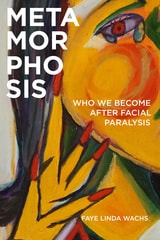
cover of Metamorphosis: Who We Become after Facial Paralysis

Metamorphosis

Who We Become after Facial Paralysis

Faye Linda Wachs

Rutgers University Press, 2023
Losing her smile to synkinesis after unresolved Bell’s palsy changed how Faye Linda Wachs was seen by others and her internal experience of self. In Metamorphosis, interviewing over one hundred people with acquired facial difference challenged her presumptions about identity, disability, and lived experience. Participants described microaggressions, internalizations, and minimalizations and their impact on identity. Heartbreakingly, synkinesis disrupts the ability to have shared moments.  When one experiences spontaneous emotion, wrong nerves trigger misfeel and misperception by others. One is misread by others and receives confusing internal information. Communication of and to the self is irrevocably damaged. Wachs describes the experience as a social disability. People found a host of creative ways to reinvigorate their sense of self and self-expression. Like so many she interviewed, Wachs experiences a process of change and growth as she is challenged to think more deeply about ableism, identity, and who she wants to be.
[more]
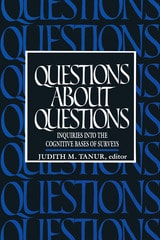
cover of Questions About Questions: Inquiries into the Cognitive Bases of Surveys

Questions About Questions

Inquiries into the Cognitive Bases of Surveys

Judith M. Tanur

Russell Sage Foundation, 1992
The social survey has become an essential tool in modern society, providing crucial measurements of social change, describing social life, and guiding government policy. But the validity of surveys is fragile and depends ultimately upon the accuracy of answers to survey questions. As our dependence on surveys grows, so too have questions about the accuracy of survey responses. Authored by a group of experts in cognitive psychology, linguistics, and survey research, Questions About Questions provides a broad review of the survey response problem. Examining the cognitive and social processes that influence the answers to questions, the book first takes up the problem of meaning and demonstrates that a respondent must share the survey researcher's intended meaning of a question if the response is to be revealing and informative. The book then turns to an examination of memory. It provides a framework for understanding the processes that can introduce errors into retrospective reports, useful guidance on when those reports are more or less trustworthy, and investigates techniques for the improvement of such reports. Questions about the rigid standardization imposed on the survey interview receive a thorough airing as the authors show how traditional survey formats violate the usual norms of conversational behavior and potentially endanger the validity of the data collected. Synthesizing the work of the Social Science Research Council's Committee on Cognition and Survey Research, Questions About Questions emphasizes the reciprocal gains to be achieved when insights and techniques from the cognitive sciences and survey research are exchanged. "these chapters provide a good sense of the range of survey problems investigated by the cognitive movement, the methods and ideas it draws upon, and the results it has yielded." —American Journal of Sociology
[more]
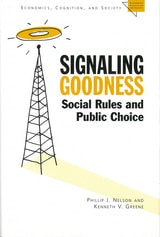
cover of Signaling Goodness: Social Rules and Public Choice

Signaling Goodness

Social Rules and Public Choice

Phillip J. Nelson and Kenneth V. Greene

University of Michigan Press, 2003

Political, intellectual, and academic discourse in the United States has been awash in political correctness, which has itself been berated and defended -- yet little understood. As a corrective, Nelson and Greene look at a more general process: adopting political positions to enhance one's reputation for trustworthiness both to others and to oneself.
Phillip Nelson and Kenneth Greene are Professors of Economics in the Department of Economics at the State University of New York, Binghamton.
[more]
cover of The Fine Line

The Fine Line

Eviatar Zerubavel

University of Chicago Press, 1993
Eviatar Zerubavel argues that most of the distinctions we make in our daily lives and in our culture are social constructs. He questions the notion that a clear line can be drawn to separate one time or object or concept from another, and presents witty and provocative counterexamples in defense of ambiguity and anomaly.
[more]
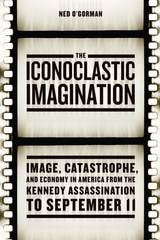
cover of The Iconoclastic Imagination: Image, Catastrophe, and Economy in America from the Kennedy Assassination to September 11

The Iconoclastic Imagination

Image, Catastrophe, and Economy in America from the Kennedy Assassination to September 11

Ned O'Gorman

University of Chicago Press, 2015

Bloody, fiery spectacles—the Challenger disaster, 9/11, JFK’s assassination—have given us moments of catastrophe that make it easy to answer the “where were you when” question and shape our ways of seeing what came before and after. Why are these spectacles so packed with meaning?

In The Iconoclastic Imagination, Ned O’Gorman approaches each of these moments as an image of icon-destruction that give us distinct ways to imagine social existence in American life. He argues that the Cold War gave rise to crises in political, aesthetic, and political-aesthetic representations. Locating all of these crises within a “neoliberal imaginary,” O’Gorman explains that since the Kennedy assassination, the most powerful way to see “America” has been in the destruction of representative American symbols or icons. This, in turn, has profound implications for a neoliberal economy, social philosophy, and public policy. Richly interwoven with philosophical, theological, and rhetorical traditions, the book offers a new foundation for a complex and innovative approach to studying Cold War America, political theory, and visual culture.
[more]
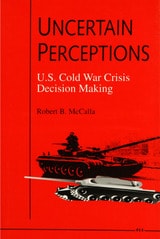
cover of Uncertain Perceptions: U.S. Cold War Crisis Decision Making

Uncertain Perceptions

U.S. Cold War Crisis Decision Making

Robert B. McCalla

University of Michigan Press, 1992
In Uncertain Perceptions, Robert McCalla examines the role of misperceptions in decision making by U.S. officials during five major Cold War crises.To suggest that misperceptions have played an important role in U.S.-Soviet relations will surprise no one. Most people, including scholars and decision makers, will agree that the potential for misperception and miscommunication is high, and the dangers of the nuclear age simply compound the risk. What has been missing is a consideration of the role of different types of misperception in crisis decision making and the impacts of those different types of misperceptions on the dynamics of crises. Different types of misperceptions can occur during a crisis; and the type will influence the nature and duration of the crisis.McCalla shows that the crisis dynamic is sensitive to the sources of misperception and that the most important influence on misperceptions is the flexibility of a decision maker’s worldview. In contrast with previous studies, McCalla’s work provides evidence that decision makers are not necessarily firmly wedded to their views. He refines the concept of misperception by identifying two types: “situational misperception,” which stems from the ambiguities and uncertainties that can surround another state’s actions, and “dispositional misconception," which has to do with the attitudes and images that a particular decision maker holds. Crises rooted in situational misperceptions will tend toward resolution when more information is provided to the decision maker, while crises that originate from dispositional misperceptions will be less affected by additional information. With the end of the Cold War, historians and political scientists are reexamining the history of U.S.-Soviet relations away from the glare of Cold War politics and rhetoric, and in doing so advancing new ways of understanding past conflicts.Uncertain Perceptions offers students of American policy, both generalists and specialists, a new lens for understanding American decision making during U.S.-Soviet crises and the role that perceptions and misperceptions played in those decisions.
[more]
cover of Witnessing: Beyond Recognition

Witnessing

Beyond Recognition

Kelly Oliver

University of Minnesota Press, 2001

A new, ethically based theory of identity by a major scholar.

Challenging the fundamental tenet of the multicultural movement-that social struggles turning upon race, gender, and sexuality are struggles for recognition-this work offers a powerful critique of current conceptions of identity and subjectivity based on Hegelian notions of recognition. The author’s critical engagement with major texts of contemporary philosophy prepares the way for a highly original conception of ethics based on witnessing.

Central to this project is Oliver’s contention that the demand for recognition is a symptom of the pathology of oppression that perpetuates subject-object and same-different hierarchies. While theorists across the disciplines of the humanities and social sciences focus their research on multiculturalism around the struggle for recognition, Oliver argues that the actual texts and survivors’ accounts from the aftermath of the Holocaust and slavery are testimonials to a pathos that is “beyond recognition.” Oliver traces many of the problems with the recognition model of subjective identity to a particular notion of vision presupposed in theories of recognition and misrecognition. Contesting the idea of an objectifying gaze, she reformulates vision as a loving look that facilitates connection rather than necessitates alienation. As an alternative, Oliver develops a theory of witnessing subjectivity. She suggests that the notion of witnessing, with its double meaning as either eyewitness or bearing witness to the unseen, is more promising than recognition for describing the onset and sustenance of subjectivity. Subjectivity is born out of and sustained by the process of witnessing-the possibility of address and response-which puts ethical obligations at its heart.
[more]