Results by title
52 books match the query 'Social problems' and 9 start with a
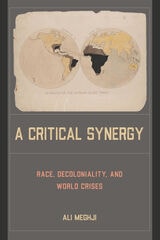
A Critical Synergy
Race, Decoloniality, and World CrisesMeghji, Ali
Temple University Press, 2023
The differences between decolonial thought and CRT, Meghji insists, does not necessarily imply one approach is stronger. Rather, he asserts, they often provide alternative but not incompatible viewpoints of the same social problem. Meghji presents case studies of capitalism, the COVID-19 pandemic, climate crisis, and twenty-first-century far-right populism to show that with both theories, we can understand more, as insights may be lost by using only one.
Meghji is not calling for a universal theoretical synthesis in A Critical Synergy, but rather a practice that can help open sociology and social science to the tradition of pluriversality much more broadly.

A Lydia Maria Child Reader
Carolyn L. Karcher, ed.
Duke University Press, 1997
This rich collection is the first to represent the full range of Child’s contributions as a literary innovator, social reformer, and progressive thinker over a career spanning six decades. It features stories, editorials, articles, and letters to politicians culled from rare newspapers and periodicals and never before published in book form; extracts from her trailblazing childrearing manual, history of women, and primer for the emancipated slaves; and a generous sampling of her best-known writings on slavery, the Indian question, poverty, and women’s rights. Witty, incisive, and often daringly unconventional, Child’s writings open a panoramic window on nineteenth-century American culture while addressing issues still relevant to our own time. In this anthology, the editor of Harriet Jacobs’s Incidents in the Life of a Slave Girl reemerges in her own right as one of the nation’s greatest prophets.

A Social Laboratory for Modern France
The Musée Social and the Rise of the Welfare StateJanet R. Horne
Duke University Press, 2001
Horne explains how Musée founders believed—and convinced others to believe—that the Third Republic would carry out the social mission of the French Revolution and create a new social contract for modern France, one based on the rights of citizenship and that assumed collective responsibility for the victims of social change. Challenging the persistent notion of the Third Republic as the stagnant backwater of European social reform, Horne instead depicts the intellectually sophisticated and progressive political culture of a generation that laid the groundwork for the rise of a hybrid welfare system, characterized by a partnership between private agencies and government. With a focus on the cultural origins of turn-of-the-century thought—including religion, republicanism, liberalism, solidarism, and early sociology—A Social Laboratory for Modern France demonstrates how French reformers grappled with social problems that are still of the utmost relevance today and how they initiated a process that gave the welfare state the task of achieving social cohesion within an industrializing republic.
A War for the Soul of America, Second Edition
A History of the Culture WarsAndrew Hartman
University of Chicago Press, 2019
“As a guide to the late twentieth-century culture wars, Hartman is unrivalled. . . . Incisive portraits of individual players in the culture wars dramas. . . . Reading Hartman sometimes feels like debriefing with friends after a raucous night out, an experience punctuated by laughter, head-scratching, and moments of regret for the excesses involved.”—New Republic
A War for the Soul of America
A History of the Culture WarsAndrew Hartman
University of Chicago Press, 2015
Buchanan’s fiery speech marked a high point in the culture wars, but as Andrew Hartman shows in this richly analytical history, their roots lay farther back, in the tumult of the 1960s—and their significance is much greater than generally assumed. Far more than a mere sideshow or shouting match, the culture wars, Hartman argues, were the very public face of America’s struggle over the unprecedented social changes of the period, as the cluster of social norms that had long governed American life began to give way to a new openness to different ideas, identities, and articulations of what it meant to be an American. The hot-button issues like abortion, affirmative action, art, censorship, feminism, and homosexuality that dominated politics in the period were symptoms of the larger struggle, as conservative Americans slowly began to acknowledge—if initially through rejection—many fundamental transformations of American life.
As an ever-more partisan but also an ever-more diverse and accepting America continues to find its way in a changing world, A War for the Soul of America reminds us of how we got here, and what all the shouting has really been about.
Abolition Revolution
Aviah Day
Pluto Press, 2022
George Floyd's murder in Minneapolis triggered abolitionist shockwaves. Calls to defund the police found receptive ears around the world. Shortly after, Sarah Everard's murder by a serving police officer sparked a national abolitionist movement in Britain. But to abolish the police, prisons and borders, we must confront the legacy of Empire.
Abolition Revolution is a guide to abolitionist politics in Britain, drawing out rich histories of resistance from rebellion in the colonies to grassroots responses to carceral systems today. The authors argue that abolition is key to reconceptualising revolution for our times - linking it with materialist feminisms, anti-capitalist class struggle, internationalist solidarity and anti-colonialism.
Perfect for reading groups and activist meetings, this is an invaluable book for those new to abolitionist politics - whilst simultaneously telling a passionate and authoritative story about the need for abolition and revolution in Britain and globally.

All-American Massacre
The Tragic Role of American Culture and Society in Mass ShootingsEdited by Eric Madfis and Adam Lankford
Temple University Press, 2023
With a specific focus on exploring how American culture, institutions, and social structures influence the circumstances, frequency, and severity of mass shootings in the United States, All-American Massacre advances emerging theoretical perspectives and forges fresh approaches, new research questions, and innovative data and conclusions.
Bringing together pioneering scholars, this groundbreaking compilation of research and analysis identifies the social roots of this insidious threat and prompts new reflections on how we can stop the seemingly endless cycle of horror and death.All-American Massacre helps clarify the unique nature and salience of mass shootings in American life.
Contributors: Melanie Brazzell, Tristan Bridges, Ryan Broll, F. Chris Curran, Sarah E. Daly, Salvatore D’Angelo, James Densley, Tom Diaz, Scott Duxbury, Benjamin W. Fisher, Betsy Friauf, Emma E. Fridel, Celene Fuller, Daniel Gascón, Patrick J. Gauding, Brooke Miller Gialopsos, Simon Gottschalk, Donald P. Haider-Markel, Stephanie Howells, Cheryl Lero Jonson, Mark R. Joslyn, Jessie Klein, Aaron Kupchik, Alison J. Marganski, Melissa M. Moon, Kristen J. Neville, Jaimee Nix, Daniel Okamura, Patrick F. Parnaby, Jillian Peterson, Michael Phillips, Paul Reeping, Jason R. Silva, William A. Stadler, Lindsay Steenberg, Tara Leigh Tober, Jillian J. Turanovic, Abigail Vegter, Stanislav Vysotsky, Lacey N. Wallace and the editors
An Intellectual in Public
Alan Wolfe
University of Michigan Press, 2004
". . . proof that the spirit of the free-ranging public intellectual is still very much alive."
-Newsday
"Alan Wolfe is one of liberalism's last and most loyal sons. His mind is naturally decent and diversified; large enough and fair enough to contain both conviction and doubt. His profound respect for real people does not interfere with his profound respect for real thought. The criticism that he practices is, I fear, a dying art, but it is also one of the glories of American democracy."
-Leon Wieseltier, New Republic
"Alan Wolfe is one of America's indispensable essayists. On a broad range of topics-race, religion, politics, the marketplace, the university, and more-he combines a scholar's erudition with a historian's feel for the past and a journalist's keen attunement to the shifting patterns of the current scene. Above all he is a true writer, graceful but fearless, who ponders the deep questions so often ignored in the clamor of our ongoing civic conversation. Anyone who wonders what the term 'public intellectual' really means will find the answer-in fact many answers-in this scintillating collection."
-Sam Tanenhaus, Vanity Fair
Averting the Apocalypse
Social Movements in India TodayArthur Bonner
Duke University Press, 1990
Bonner finds that India’s inability or refusal to address its debilitating social structure may be the precursor to an apocalyptic social upheaval unless heed is paid to the social movements that his first-hand investigation reveals.