Results by title
30 books match the query 'Social service'
Caring on the Clock
The Complexities and Contradictions of Paid Care WorkDuffy, Mignon
Rutgers University Press, 2015
Catching a Case
Inequality and Fear in New York City's Child Welfare SystemLee, Tina
Rutgers University Press, 2016
Civic Gifts
Voluntarism and the Making of the American Nation-StateElisabeth S. Clemens
University of Chicago Press, 2020
Civil Society, Philanthropy, and the Fate of the Commons
Bruce R. Sievers
University Press of New England, 2010

Development in Multiple Dimensions
Social Power and Regional Policy in IndiaAlexander Lee
University of Michigan Press, 2019

Fighting for Reliable Evidence
Judith M. Gueron
Russell Sage Foundation, 2013

For Love or Money
Care Provision in the United StatesNancy Folbre
Russell Sage Foundation, 2013
From Charity to Enterprise
The Development of American Social Work in a Market EconomyStanley Wenocur and Michael Reisch
University of Illinois Press, 1989
Now in paperback for the first time, From Charity to Enterprise sets the professionalization of social work into a dynamic social context. The explicit political and economic framework of Wenocur and Reisch's model enables the authors to examine how various subgroups within social work lost or gained control of the professional enterprise at various points.
God's Economy
Faith-Based Initiatives and the Caring StateLew Daly
University of Chicago Press, 2009
President Obama has signaled a sharp break from many Bush Administration policies, but he remains committed to federal support for religious social service providers. Like George W. Bush’s faith-based initiative, though, Obama’s version of the policy has generated loud criticism—from both sides of the aisle—even as the communities that stand to benefit suffer through an ailing economy. God’s Economy reveals that virtually all of the critics, as well as many supporters, have long misunderstood both the true implications of faith-based partnerships and their unique potential for advancing social justice.
Unearthing the intellectual history of the faith-based initiative, Lew Daly locates its roots in the pluralist tradition of Europe’s Christian democracies, in which the state shares sovereignty with social institutions. He argues that Catholic and Dutch Calvinist ideas played a crucial role in the evolution of this tradition, as churches across nineteenth-century Europe developed philosophical and legal defenses to protect their education and social programs against ascendant governments. Tracing the influence of this heritageon the past three decades of American social policy and church-state law, Daly finally untangles the radical beginnings of the faith-based initiative. In the process, he frees it from the narrow culture-war framework that has limited debate on the subject since Bush opened the White House Office for Faith-Based and Community Initiatives in 2001.
A major contribution from an important new voice at the intersection of religion and politics, God’s Economy points the way toward policymaking that combines strong social support with a new moral focus on the protection of families and communities.
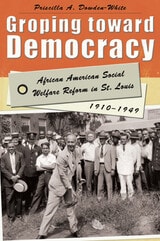
Groping toward Democracy
African American Social Welfare Reform in St. Louis, 1910-1949Priscilla A. Dowden-White
University of Missouri Press, 2011
In Groping toward Democracy: African American Social Welfare Reform in St. Louis, 1910–1949, historian Priscilla A. Dowden-White presents an on-the-ground view of local institution building and community organizing campaigns initiated by African American social welfare reformers. Through extensive research, the author places African American social welfare reform efforts within the vanguard of interwar community and neighborhood organization, reaching beyond the “racial uplift” and “behavior” models of the studies preceding hers. She explores one of the era’s chief organizing principles, the “community as a whole” idea, and deliberates on its relationship to segregation and the St. Louis black community’s methods of reform. Groping toward Democracy depicts the dilemmas organizers faced in this segregated time, explaining how they pursued the goal of full, uncontested black citizenship while still seeking to maximize the benefits available to African Americans in segregated institutions. The book’s nuanced mapping of the terrain of social welfare offers an unparalleled view of the progress brought forth by the early-twentieth-century crusade for democracy and equality.
By delving into interrelated developments in health care, education, labor, and city planning, Dowden-White deftly examines St. Louis’s African American interwar history. Her in-depth archival research fills a void in the scholarship of St. Louis’s social development, and her compelling arguments will be of great interest to scholars and teachers of American urban studies and social welfare history.
Homeless Mothers
Face to Face with Women and PovertyDeborah R. Connolly
University of Minnesota Press, 2001

Jane Addams
The Most Dangerous Woman in AmericaMarlene Targ Brill
Ohio University Press, 2024

Looking Back to See Ahead
Helen Harris Perlman
University of Chicago Press, 1989
Looking Back to See Ahead offers pieces chosen for their centrality to Perlman's thinking on some of the major problems of social work practice and education. To each essay she has added her current, informal comments. Refreshingly original is the section "After Hours," in which she captures, in sketches and verse, the humor and heartache that are inevitable in any profession that deals with hurt and troubled people.
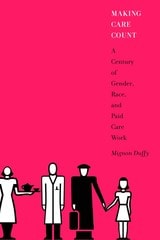
Making Care Count
A Century of Gender, Race, and Paid Care WorkMignon Duffy
Rutgers University Press, 2011
There are fundamental tasks common to every society: children have to be raised, homes need to be cleaned, meals need to be prepared, and people who are elderly, ill, or disabled need care. Day in, day out, these responsibilities can involve both monotonous drudgery and untold rewards for those performing them, whether they are family members, friends, or paid workers. These are jobs that cannot be outsourced, because they involve the most intimate spaces of our everyday lives--our homes, our bodies, and our families.
Mignon Duffy uses a historical and comparative approach to examine and critique the entire twentieth-century history of paid care work--including health care, education and child care, and social services--drawing on an in-depth analysis of U.S. Census data as well as a range of occupational histories. Making Care Count focuses on change and continuity in the social organization along with cultural construction of the labor of care and its relationship to gender, racial-ethnic, and class inequalities. Debunking popular understandings of how we came to be in a "care crisis," this book stands apart as an historical quantitative study in a literature crowded with contemporary, qualitative studies, proposing well-developed policy approaches that grow out of the theoretical and empirical arguments.

Navigating Difficult Situations in Public Libraries
The PLA Guide to Trauma-Informed De-EscalationMargaret Ann Paauw
American Library Association, 2025
- a succinct overview of how to define and understand trauma, including its definition, causes, effects, and manifestations;
- evidence-informed approaches drawn from the fields of social work, psychology, and counseling;
- dozens of activities, handouts, and worksheets designed to spur reflection and help readers build upon the practices introduced in the book;
- guidance on debriefing, evaluation, facing compassion fatigue, and other aftercare topics; and
- appendices that provide information on mental health resources, crisis intervention hotlines, and further reading on trauma and burnout.
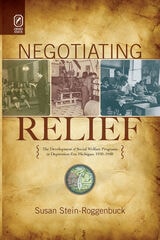
Negotiating Relief
The Development of Social Welfare Programs in Depression-Era Michigan, 1930–1940Susan Stein-Roggenbuck
The Ohio State University Press, 2008
Guided by fiscal localism and a firm belief in home rule, local officials fought to retain control of relief. Stein-Roggenbuck argues that while significant changes occurred in welfare policy as a result of the New Deal, many continuities remained. Among those was the responsibility of families to provide financial support. Often forgotten were those on general relief—individuals who did not fit the federal programs such as Aid to Dependent Children (ADC) and Old Age Assistance (OAA). General relief became a third track of welfare.
Drawing on newspaper records, county and city board minutes, social welfare agency records, federal records, and case file records, Negotiating Relief gives voice to the numerous groups involved in welfare debates, particularly the recipients of relief. This book adds to our understanding of the local implementation of welfare policy in both rural and urban areas.
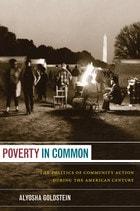
Poverty in Common
The Politics of Community Action during the American CenturyAlyosha Goldstein
Duke University Press, 2012

Recharging Judaism
How Civic Engagement Is Good for Synagogues, Jews, and AmericaRabbi Judith Schindler and Judy Seldin-Cohen
Central Conference of American Rabbis, 2018
Recharging Judaism is the essential and timely guide for every synagogue and community seeking to strengthen the bonds of Jewish communal life through advocating for social justice. This volume delves into the enriching civic engagement and acts of righteousness already undertaken by Jews and Jewish communities across the country, and further explores the positive differences we can all affect upon the future of America. There are a myriad of ways in which advocating for social justice and participating in civic engagement can create lasting change. Those inspired to affect such change will find new meaning in the texts and history of our tradition. Using real examples from both small and large congregations across the country, Recharging Judaism offers a framework to guide us through our journey of civic responsibility and social duty and into a brighter future for our country.
Reinventing Citizenship
Black Los Angeles, Korean Kawasaki, and Community ParticipationKazuyo Tsuchiya
University of Minnesota Press, 2014
In the 1960s and 1970s, the United States and Japan went through massive welfare expansions that sparked debates about citizenship. At the heart of these disputes stood African Americans and Koreans. Reinventing Citizenship offers a comparative study of African American welfare activism in Los Angeles and Koreans’ campaigns for welfare rights in Kawasaki. In working-class and poor neighborhoods in both locations, African Americans and Koreans sought not only to be recognized as citizens but also to become legitimate constituting members of communities.
Local activists in Los Angeles and Kawasaki ardently challenged the welfare institutions. By creating opposition movements and voicing alternative visions of citizenship, African American leaders, Tsuchiya argues, turned Lyndon B. Johnson’s War on Poverty into a battle for equality. Koreans countered the city’s and the nation’s exclusionary policies and asserted their welfare rights. Tsuchiya’s work exemplifies transnational antiracist networking, showing how black religious leaders traveled to Japan to meet Christian Korean activists and to provide counsel for their own struggles.
Reinventing Citizenship reveals how race and citizenship transform as they cross countries and continents. By documenting the interconnected histories of African Americans and Koreans in Japan, Tsuchiya enables us to rethink present ideas of community and belonging.
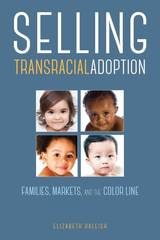
Selling Transracial Adoption
Families, Markets, and the Color LineElizabeth Raleigh
Temple University Press, 2017
While focused on serving children and families, the adoption industry must also generate sufficient revenue to cover an agency’s operating costs. With its fee-for-service model, Elizabeth Raleigh asks, How does private adoption operate as a marketplace? Her eye-opening book, Selling Transracial Adoption, provides a fine-grained analysis of the business decisions in the adoption industry and what it teaches us about notions of kinship and race.
Adoption providers, Raleigh declares, are often tasked with pitching the idea of transracial adoption to their mostly white clientele. But not all children are equally “desirable,” and transracial adoption—a market calculation—is hardly colorblind. Selling Transracial Adoption explicitly focuses on adoption providers andemploys candid interviews with adoption workers, social workers, attorneys, and counselors, as well as observations from adoption conferences and information sessions, toillustrate how agencies institute a racial hierarchy—especially when the supply of young and healthy infants is on the decline. Ultimately, Raleigh discovers that the racialized practices in private adoption serve as a powerful reflection of race in America.

Social Work Research
Methods for the Helping ProfessionsEdited by Norman A. Polansky
University of Chicago Press, 1975
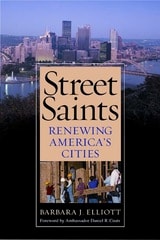
Street Saints
Renewing American CitiesBarbara J. Elliott
Templeton Press, 2006
Based on eight years of hands-on experience and more than 300 interviews, Street Saints is both a book of motivational stories about unsung heroes and a sociological study of the "faith factor," documenting faith-based programs that are treating social maladies in America. This book takes readers on a tour of communities and institutions in America where faith-based initiatives are making a difference. It offers inspiration, role models, and guidelines for people who would like to give back to their own communities.

Tales of Wayward Girls and Immoral Women
Case Records and the Professionalization of Social WorkKaren W. Tice
University of Illinois Press, 1998
"An original and important study, this is the first major work I know of to carry out a contextual analysis of case records and to discuss the role case records have played in the development of social work." -- Leslie Leighninger, author of Social Work, Social Welfare, and American Society

The Color Bind
Talking (and Not Talking) About Race at WorkErica Gabrielle Foldy
Russell Sage Foundation, 2014
The Moral Neoliberal
Welfare and Citizenship in ItalyAndrea Muehlebach
University of Chicago Press, 2012

The Private Abuse of the Public Interest
Market Myths and Policy MuddlesLawrence D. Brown and Lawrence R. Jacobs
University of Chicago Press, 2008
The authors support their pragmatic approach with evidence drawn from in-depth analyses of education, transportation, and health care policies. In each policy area, initiatives such as school choice, deregulation of airlines and other carriers, and the promotion of managed care have introduced or enlarged the role of market forces with the aim of eliminating bureaucratic inefficiency. But in each case, the authors show, reality proved to be much more complex than market models predicted. This complexity has resulted in a political cycle—strikingly consistent across policy spheres—that culminates in public interventions to sustain markets while protecting citizens from their undesirable effects. Situating these case studies in the context of more than two hundred years of debate about the role of markets in society, Brown and Jacobs call for a renewed focus on public-private partnerships that recognize and respect each sector’s vital—and fundamentally complementary—role.
The Voluntary City
Choice, Community, and Civil SocietyDavid T. Beito, Peter Gordon, and Alexander Tabarrok, Editors
University of Michigan Press, 2002

Twenty Years at Hull-House
Jane Addams, with Autobiographical Notes. Introduction and Notes by James Hurt.
University of Illinois Press, 1990
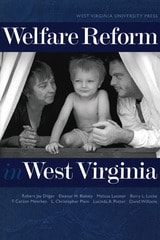
WELFARE REFORM IN WEST VIRGINIA
ROBERT J. DILGER
West Virginia University Press, 2004
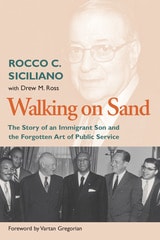
Walking On Sand
The Story of an Immigrant Son and the Forgotten Art of Public ServiceRocco C Siciliano
University of Utah Press, 2004
Rocco C. Siciliano broke new ground as the first Italian-American to serve in the White House as an assistant to the president, Dwight D. Eisenhower. At 31, "Ike’s Youngest" attained a prominence not suggested in his humble beginnings in Salt Lake City, Utah. But his upbringing in the Mormon-dominated community, where he balanced the heritage of his striving immigrant parents with his own aspirations for success, prepared him for a wide variety of service. This service includes leading a special weapons platoon in the 10th Mountain Division in World War II, bringing Martin Luther King Jr. to meet with President Eisenhower, and becoming a recognized business leader in California.
Siciliano used his expertise in labor, personnel management, and business to contribute substantively to the J. Paul Getty Center, the Los Angeles Philharmonic Association, the Committee for Economic Development, and the "Volcker" Commission on Public Service, among others.
The variety of Siciliano’s experiences reinvigorates our understanding of the forgotten art of public service. Walking on Sand emphasizes the role that public service can play for corporations, communities, states, and the nation. This story is a gift from the Greatest Generation to the many people who serve America today and will serve her tomorrow.