Results by title
17 books match the query 'Sociologists'
Almost Home
A Brazilian American's Reflections on Faith, Culture, and ImmigrationH. B. Cavalcanti
University of Wisconsin Press, 2012
Due to both his family background and the prevalence of U.S. media in Latin America, Cavalcanti already felt immersed in U.S. culture before arriving in Kentucky in 1981 to complete graduate studies. At that time, opportunities for advancement in the United States exceeded those in Brazil, and in an era of military dictatorships throughout much of Latin America, Cavalcanti sought in the United States a nation of laws. In this memoir, he reflects on the dynamics of acculturation, immigrant parenting, interactions with native-born U.S. citizens, and the costs involved in rejecting his country of birth for an adopted nation. He also touches on many of the factors that contribute to migration in both the “sending” and “receiving” countries and explores the contemporary phenomenon of accelerated immigration.
With its blend of personal anecdotes and scholarly information, Almost Home addresses both individual and policy-related issues to provide a moving portrait of the impact of migration on those who, like Cavalcanti, confront both the wonder and the disorientation inherent in the immigrant experience.

Are You Two Sisters?
The Journey of a Lesbian CoupleSusan Krieger
Temple University Press, 2022
Authored by one of the most respected figures in the field of personal ethnographic narrative, this book serves as both a memoir and a sociological study, telling the story of one lesbian couple’s lifelong journey together.
Are You Two Sisters? is Susan Krieger’s candid, revealing, and engrossing memoir about the intimacies of a lesbian couple. Krieger explores how she and her partner confront both the inner challenges of their relationship and the invisibility of lesbian identity in the larger world.
Using a lively novelistic and autoethnographic approach that toggles back and forth in time, Krieger reflects on the evolution of her forty-year relationship. She describes building a life together, from sharing pets and travels to getting married. Are You Two Sisters? addresses not only questions of gender and sexuality, but also of disability, as Krieger explores how the couple adapts to her increasing blindness.
Krieger’s title comes from a question asked by a stranger outside a remote desert bar as she and her partner traveled in the Southwest. Her apprehension about answering that question suggests how, even after the legalization of gay marriage, lesbianism often remains hidden—an observation that makes Krieger’s poignant narrative all the more moving.
Bourdieu
Critical PerspectivesEdited by Craig Calhoun, Edward LiPuma, and Moishe Postone
University of Chicago Press, 1993
American reception of his works, however, has lacked a full understanding of their place within the broad context of French human science. His individual works separated by distinct boundaries between social science fields in American academia, Bourdieu's cohesive thought has come to this country in fragments.
Bourdieu: Critical Perspectives provides a unified and balanced appraisal of Bourdieu's varied works by both proponents and skeptics. The essays are written from the varied viewpoints of cultural anthropology, ethnomethodology and other varieties of sociology, existential and Wittgensteinian philosophies, linguistics, media studies, and feminism. They work around three main themes: Bourdieu's effort to transcend gaps between practical knowledge and universal structures, his central concept of "reflexivity," and the relations between social structure, systems of classification, and language.
Ultimately, the contributors raise a variety of crucial theoretical questions and address problems that are important not only to understanding Bourdieu but to advancing empirical work of the kind he has pioneered. In an essay written especially for this volume, Bourdieu describes his own "mode of intellectual production" and the reasons he sees for its common misunderstanding.
The contributors are Hubert Dreyfus, Paul Rabinow, Charles Taylor, Aaron Cicourel, James Collins, William Hanks, Beate Krais, Nicholas Garnham, Scott Lash, Roger Brubaker, and Loic Wacquant, and the editors.

Conversations with Claude Levi-Strauss
Claude Lévi-Strauss and Didier Eribon
University of Chicago Press, 1991
Now available in English, the conversations are rich in Lévi-Strauss's candid appraisals of some of the best-known figures of the Parisian intelligentsia: surrealists André Breton and Max Ernst, with whom Lévi-Strauss shared a bohemian life in 1940s Manhattan; de Beauvoir, Sartre, and Camus, the stars of existentialism; Leiris, Foucault, Dumézil, Jacob, Lacan, and others. His long friendships with Jakobson and Merleau-Ponty are recalled, as well as his encounters with prominent figures in American anthropology: Lowie, Boas (who suddenly died in his chair beside Lévi-Strauss at a banquet at Columbia University), Benedict, Linton, Mead, and Kroeber.
Lévi-Strauss speaks frankly about how circumstances and his own inclinations, after his early fieldwork in Brazil, led him to embrace theoretical work. His straightforward answers to Eribon's penetrating questions—What is a myth? What is structuralism? Are you a philosopher?—clarify his intellectual motives and the development of his research; his influential role as an administrator, including the founding of the Laboratory of Social Anthropology and of the journal L'Homme; the course of his writings, from Elementary Structures of Kinship to The Jealous Potter; and his thoughts on the conduct of anthropology today.
Never before has Lévi-Strauss spoken so freely on so many aspects of his life: his initial failure to be elected to the Collège de France; his reaction to the events of May 1968; his regrets at not being a great investigative reporter or playwright; his deep identification with Wagner, Proust, and Rousseau. This is a rare opportunity to become acquainted with a great thinker in all his dimensions.

E. Franklin Frazier Reconsidered
Platt, Anthony M
Rutgers University Press, 1991

Familiar Stranger
A Life Between Two IslandsStuart Hall
Duke University Press, 2017
Growing up in a middle-class family in 1930s Kingston, Jamaica, still then a British colony, the young Stuart Hall found himself uncomfortable in his own home. He lived among Kingston's stiflingly respectable brown middle class, who, in their habits and ambitions, measured themselves against the white elite. As colonial rule was challenged, things began to change in Kingston and across the world. In 1951 a Rhodes scholarship took Hall across the Atlantic to Oxford University, where he met young Jamaicans from all walks of life, as well as writers and thinkers from across the Caribbean, including V. S. Naipaul and George Lamming. While at Oxford he met Raymond Williams, Charles Taylor, and other leading intellectuals, with whom he helped found the intellectual and political movement known as the New Left. With the emotional aftershock of colonialism still pulsing through him, Hall faced a new struggle: that of building a home, a life, and an identity in a postwar England so rife with racism that it could barely recognize his humanity.
With great insight, compassion, and wit, Hall tells the story of his early life, taking readers on a journey through the sights, smells, and streets of 1930s Kingston while reflecting on the thorny politics of 1950s and 1960s Britain. Full of passion and wisdom, Familiar Stranger is the intellectual memoir of one of our greatest minds.
George Herbert Mead
THE MAKING OF A SOCIAL PRAGMATISTGary A. Cook
University of Illinois Press, 1993

Hayek
A Life, 1899–1950Bruce Caldwell and Hansjoerg Klausinger
University of Chicago Press, 2022
The definitive account of the distinguished economist’s formative years.
Few twentieth-century figures have been lionized and vilified in such equal measure as Friedrich Hayek—economist, social theorist, leader of the Austrian school of economics, and champion of classical liberalism. Hayek’s erudite arguments in support of individualism and the market economy have attracted a devout following, including many at the levers of power in business and government. Critics, meanwhile, cast Hayek as the intellectual forefather of “neoliberalism” and of all the evils they associate with that pernicious doctrine.
In Hayek: A Life, historians of economics Bruce Caldwell and Hansjörg Klausinger draw on never-before-seen archival and family material to produce an authoritative account of the influential economist’s first five decades. This includes portrayals of his early career in Vienna; his relationships in London and Cambridge; his family disputes; and definitive accounts of the creation of The Road to Serfdom and of the founding meeting of the Mont Pèlerin Society.
A landmark work of history and biography, Hayek: A Life is a major contribution both to our cultural accounting of a towering figure and to intellectual history itself.
Journeys in Sociology
From First Encounters to Fulfilling RetirementsRosalyn Benjamin Darling and Peter J. Stein
Temple University Press, 2017
For most sociologists, their life’s work does not end with retirement. Many professors and practitioners continue to teach, publish, or explore related activities after leaving academia. They also connect with others in the field to lessen the isolation they sometimes feel outside the ivory tower or an applied work setting.
The editors and twenty contributors to the essential anthology Journeys in Sociology use a life-course perspective to address the role of sociology in their lives. The power of their personal experiences—during the Great Depression, World War II, or the student protests and social movements in the 1960s and ‘70s—magnify how and why social change prompted these men and women to study sociology. Moreover, all of the contributors include a discussion of their activities in retirement.
From Bob Perrucci, Tuck Green, and Wendell Bell, who write about issues of class, to Debra Kaufman and Elinore Lurie, who explain how gender played a role in their careers, the diverse entries in Journeys in Sociology provide a fascinating look at both the influence of their lives on the discipline and the discipline on these sociologists’ lives.
Contributors include: David J. Armor, Wendell Bell, Glen H. Elder, Jr., Henry W. Fischer, Janet Zollinger Giele, Charles S. (Tuck) Green, Peter Mandel Hall, Elizabeth Higginbotham, Debra Renee Kaufman, Corinne Kirchner, Elinore E. Lurie, Gary T. Marx, Robert Perrucci, Fred Pincus, Thomas Scheff, Arthur Shostak, David Simon, Natalie J. Sokoloff, Edward Tiryakian, Joyce E. Williams, and the editors.
Published in collaboration with the American Sociological Association Opportunities in Retirement Network.

Laud Humphreys
Prophet of Homosexuality and SociologyJohn F. Galliher, Wayne Brekhus, and David P. Keys
University of Wisconsin Press, 2004
Radical Sociologists
Martin Oppenheimer
Temple University Press, 1991
Sociologists, Economists, and Democracy
Brian Barry
University of Chicago Press, 1988
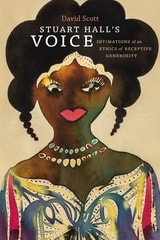
Stuart Hall's Voice
Intimations of an Ethics of Receptive GenerosityDavid Scott
Duke University Press, 2017
Taking the Naturalistic Turn, Or How Real Philosophy of Science Is Done
Edited Organized and Moderated by Werner Callebaut
University of Chicago Press, 1993
This innovative book presents candid, informal debates among scholars who examine the benefits and problems of studying science in the same way that scientists study the natural world. Callebaut achieves the effect of face-to-face engagement through separate interviews with participants.
Contributors include William Bechtel, Robert Brandon, Richard M. Burian, Donald T. Campbell, Patricia Churchland, Jon Elster, Ronald N. Giere, David L. Hull, Philip Kitcher, Karin Knorr Cetina, Bruno Latour, Richard Levins, Richard C. Lewontin, Elisabeth Lloyd, Helen Longino, Thomas Nickles, Henry C. Plotkin, Robert J. Richards, Alexander Rosenberg, Michael Ruse, Dudley Shapere, Elliott Sober, Ryan Tweney, and William Wimsatt.
"Why can't we have both theoretical ecology and natural histories, lovingly done?"—Philip Kitcher
"Don't underestimate the arrogance of philosophers!"—Elisabeth Lloyd

The Americanization of Social Science
Intellectuals and Public Responsibility in the Postwar United StatesDavid Paul Haney
Temple University Press, 2008
A highly readable introduction to and overview of the postwar social sciences in the United States, The Americanization of Social Science explores a critical period in the evolution of American sociology’s professional identity from the late 1940s through the early 1960s. David Paul Haney contends that during this time leading sociologists encouraged a professional secession from public engagement in the name of establishing the discipline’s scientific integrity.
According to Haney, influential practitioners encouraged a willful withdrawal from public sociology by separating their professional work from public life. He argues that this separation diminished sociologists’ capacity for conveying their findings to wider publics, especially given their ambivalence towards the mass media, as witnessed by the professional estrangement that scholars like David Riesman and C. Wright Mills experienced as their writing found receptive lay audiences. He argues further that this sense of professional insularity has inhibited sociology’s participation in the national discussion about social issues to the present day.
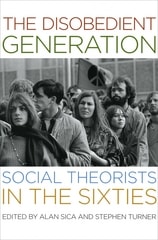
The Disobedient Generation
Social Theorists in the SixtiesEdited by Alan Sica and Stephen Turner
University of Chicago Press, 2005
The Disobedient Generation collects newly written autobiographies by an international cross-section of well-known sociologists, all of them "children of the '60s." It illuminates the human experience of living through that decade as apprentice scholars and activists, encountering the issues of class, race, the Establishment, the decline of traditional religion, feminism, war, and the sexual revolution. In each case the interlinked crises of young adulthood, rapid change, and nascent professional careers shaped this generation's private and public selves. This is an intensely personal collective portrait of a generation in a time of struggle.
Varieties of Social Imagination
Barbara Celarent
University of Chicago Press, 2017
Sociologist and AJS editor Andrew Abbott edited the Celarent essays, and in Varieties of Social Imagination, he brings the work together for the first time. Previously available only in the journal, the thirty-six meditations found here allow readers not only to engage more deeply with a diversity of thinkers from the past, but to imagine more fully a sociology—and a broader social science—for the future.