Results by title
5 books match the query 'Soldiers' writings, American'
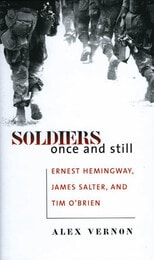
Soldiers Once and Still
Ernest Hemingway, James Salter, and Tim O'BrienAlex Vernon
University of Iowa Press, 2007
Hemingway, Salter, and O’Brien form the core of Soldiers Once and Still because each represents a different warring generation of twentieth-century America: World War I with Hemingway, World War II and Korea with Salter, and Vietnam with O’Brien. Each author also represents a different literary voice of the twentieth century, from modern to mid-century to postmodern, and each presents a different battlefield experience: Hemingway as noncombatant, Salter as air force fighter pilot, and O’Brien as army grunt.
War’s pervasive influence on the individual means that, for veterans-turned-writers like Hemingway, Salter, and O’Brien, the war experience infiltrates their entire body of writing—their works can be seen not only as war literature but also as veterans’ literature. As such, their entire postwar oeuvre, regardless of whether an individual work explicitly addresses the war or the military, is open to Vernon’s exploration of war, society, gender, and literary history.
Vernon’s own experiences as a soldier, a veteran, a writer, and a critic inform this enlightening critique of American literature, offering students and scholars of American literature and war studies an invaluable tool for understanding war’s effects on the veteran writer and his society.
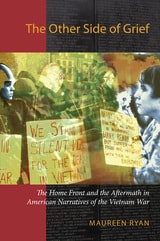
The Other Side of Grief
The Home Front and the Aftermath in American Narratives of the Vietnam WarMaureen Ryan
University of Massachusetts Press, 2008
The lingering aftereffects of the Vietnam War resonate to this day throughout American society: in foreign policy, in attitudes about the military and war generally, and in the contemporary lives of members of the so-called baby boom generation who came of age during the 1960s and early 1970s. While the best-known personal accounts of the war tend to center on the experience of combat, Maureen Ryan's The Other Side of Grief examines the often overlooked narratives—novels, short stories, memoirs, and films—that document the war's impact on the home front.
In analyzing the accounts of Vietnam veterans, women as well as men, Ryan focuses on the process of readjustment, on how the war continued to insinuate itself into their lives, their families, and their communities long after they returned home. She looks at the writings of women whose husbands, lovers, brothers, and sons served in Vietnam and whose own lives were transformed as a result. She also appraises the experiences of the POWs who came to be embraced as the war's only heroes; the ordeal of Vietnamese refugees who fled their “American War” to new lives in the United States; and the influential movement created by those who committed themselves to protesting the war.
The end result of Ryan's investigations is a cogent synthesis of the vast narrative literature generated by the Vietnam War and its aftermath. Together those stories powerfully demonstrate how deeply the legacies of the war penetrated American culture and continue to reverberate still.
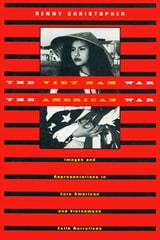
The Viet Nam War/The American War
Images and Representations in Euro-American and Vietnamese Exile NarrativesRenny Christopher
University of Massachusetts Press, 1995
This book seeks to reformulate the canon of writings on what is called “the Viet Nam War” in America and “the American War” in Viet Nam. Until recently, the accepted canon has consisted almost exclusively of American white male combat narratives, which often reflect and perpetuate Asian stereotypes. Renny Christopher introduces material that displays a bicultural perspective, including works by Vietnamese exile writers and by lesser-known Euro-Americans who attempt to bridge the cultural gap.
Christopher traces the history of American stereotyping of Asians and shows how Euro-American ethnocentricity has limited most American authors' ability to represent fairly the Vietnamese in their stories. By giving us access to Vietnamese representations of the war, she creates a context for understanding the way the war was experienced from the “other” side, and she offers perceptive, well-documented analyses of how and why Americans have so emphatically excised the Vietnamese from narratives about a war fought in their own country.
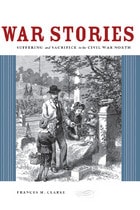
War Stories
Suffering and Sacrifice in the Civil War NorthFrances M. Clarke
University of Chicago Press, 2011
The American Civil War is often seen as the first modern war, not least because of its immense suffering. Yet unlike later conflicts, it did not produce an outpouring of disillusionment or cynicism, as most people continued to portray the war in highly sentimental and patriotic terms. While scholars typically dismiss this everyday writing as simplistic or naïve, Frances M. Clarke argues that we need to reconsider the letters, diaries, songs, and journalism penned by Union soldiers and their caregivers to fully understand the war’s impact and meaning.
In War Stories, Clarke revisits the most common stories that average Northerners told in hopes of redeeming their suffering and loss—stories that enabled people to make sense of their hardship, and to express their beliefs about religion, community, and personal character. From tales of Union soldiers who died heroically to stories of tireless volunteers who exemplified the Republic’s virtues, War Stories sheds new light on this transitional moment in the history of war, emotional culture, and American civic life.
When War Becomes Personal
Soldiers' Accounts from the Civil War to IraqDonald Anderson
University of Iowa Press, 2008
The thirteen essays in When War Becomes Personal tell the enduring truths of battle, stripping away much of the romance, myth, and fantasy.
Soldiers more than anyone know what they are capable of destroying; when they write about war, they are trying to preserve the world.