Results by title

9 books match the query 'South India'

cover of Connective Tissue: Factory Accidents and Reconstructive Plastic Surgery in South India

Connective Tissue

Factory Accidents and Reconstructive Plastic Surgery in South India

Lily N. Shapiro

Rutgers University Press, 2025

An ethnography of factory accidents and their attendant reconstructive plastic surgeries in Coimbatore, Tamil Nadu, Connective Tissue explores notions of risk, work and labor practices, and the way meaning is made from experiences of trauma, care, and recovery. The book charts a rough chronology of the accident—from the workspace that preceded it, the transformation of the workspace by the accident, through journeys to and treatment in the hospital, and then the various and complex ways in which the accident reverberates into the future during recovery.
 
Connective Tissue revisits scholarship on factory labor by analyzing the accident as constitutive of the experience of work itself, and it refines existing conversations about the body, trauma, and care by introducing an analysis informed by theories of labor and production. Author Lily N. Shapiro argues that care does not happen in spite of or on the margins of capitalism, but rather that capitalism happens in and through care and caring relations. These experiences are intersected by identities of caste, class, and gender, and entangled in state discourse about labor rights, welfare, and industrial law.
 
[more]
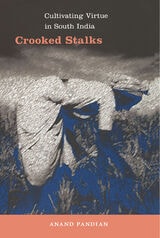
cover of Crooked Stalks: Cultivating Virtue in South India

Crooked Stalks

Cultivating Virtue in South India

Anand Pandian

Duke University Press, 2009

How do people come to live as they ought to live? Crooked Stalks seeks an answer to this enduring question in diverse practices of cultivation: in the moral horizons of development intervention, in the forms of virtue through which people may work upon their own desires, deeds, and habits, and in the material labors that turn inhabited worlds into environments for both moral and natural growth. Focusing on the colonial subjection and contemporary condition of the Piramalai Kallar caste—classified, condemned, and policed for decades as a “criminal tribe”—Anand Pandian argues that the work of cultivation in all of these senses has been essential to the pursuit of modernity in south India. Colonial engagements with the Kallars in the early twentieth century relied heavily upon agrarian strategies of moral reform, an approach that echoed longstanding imaginations of the rural cultivator as a morally cultivated being in Tamil literary, moral, and religious tradition. These intertwined histories profoundly shape how people of the community struggle with themselves as ethical subjects today.

In vivid, inventive, and engaging prose, Pandian weaves together ethnographic encounters, archival investigations, and elements drawn from Tamil poetry, prose, and popular cinema. Tacking deftly between ploughed soils and plundered orchards, schoolroom lessons and stationhouse registers, household hearths and riverine dams, he reveals moral life in the postcolonial present as a palimpsest of traces inherited from multiple pasts. Pursuing these legacies through the fragmentary play of desire, dream, slander, and counsel, Pandian calls attention not only to the moral potential of ordinary existence, but also to the inescapable force of accident, chance, and failure in the making of ethical lives. Rarely are the moral coordinates of modern power sketched with such intimacy and delicacy.
[more]
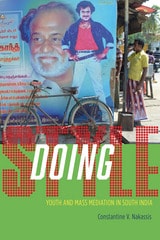
cover of Doing Style: Youth and Mass Mediation in South India

Doing Style

Youth and Mass Mediation in South India

Constantine V. Nakassis

University of Chicago Press, 2016

In Doing Style, Constantine V. Nakassis explores the world of youth and mass media in South India, where what Tamil youth call “style” anchors their day-to-day lives and media worlds. Through intimate ethnographic descriptions of college life in Tamil Nadu, Nakassis explores the complex ways that acts and objects of style such as brand fashion, English slang, and film representations express the multiple desires and anxieties of this generation, who live in the shadow of the promise of global modernity.
           
As Nakassis shows, while signs of the global, modern world are everywhere in post-liberalization India, for most of these young people this world is still very distant—a paradox that results in youth’s profound sense of being in between. This in-betweenness manifests itself in the ambivalent quality of style, the ways in which stylish objects are necessarily marked as counterfeit, mixed, or ironical. In order to show how this in-betweenness materializes in particular media, Nakassis explores the entanglements between youth peer groups and the sites where such stylish media objects are produced, arguing that these entanglements deeply condition the production and circulation of the media objects themselves. The result is an important and timely look at the tremendous forces of youth culture, globalization, and mass media as they interact in the vibrancy of a rapidly changing India. 

[more]
cover of Singing the Classical, Voicing the Modern: The Postcolonial Politics of Music in South India

Singing the Classical, Voicing the Modern

The Postcolonial Politics of Music in South India

Amanda J. Weidman

Duke University Press, 2006

While Karnatic music, a form of Indian music based on the melodic principle of raga and time cycles called tala, is known today as South India’s classical music, its status as “classical” is an early-twentieth-century construct, one that emerged in the crucible of colonial modernity, nationalist ideology, and South Indian regional politics. As Amanda J. Weidman demonstrates, in order for Karnatic music to be considered classical music, it needed to be modeled on Western classical music, with its system of notation, composers, compositions, conservatories, and concerts. At the same time, it needed to remain distinctively Indian. Weidman argues that these contradictory imperatives led to the emergence of a particular “politics of voice,” in which the voice came to stand for authenticity and Indianness.

Combining ethnographic observation derived from her experience as a student and performer of South Indian music with close readings of archival materials, Weidman traces the emergence of this politics of voice through compelling analyses of the relationship between vocal sound and instrumental imitation, conventions of performance and staging, the status of women as performers, debates about language and music, and the relationship between oral tradition and technologies of printing and sound reproduction. Through her sustained exploration of the way “voice” is elaborated as a trope of modern subjectivity, national identity, and cultural authenticity, Weidman provides a model for thinking about the voice in anthropological and historical terms. In so doing, she shows that modernity is characterized as much by particular ideas about orality, aurality, and the voice as it is by regimes of visuality.
[more]
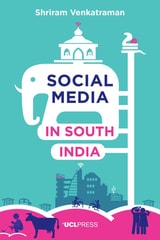
cover of Social Media in South India

Social Media in South India

Shriram Venkatraman

University College London, 2017
This book is one of the first ethnographic studies to explore the use of social media in the everyday lives of people in Tamil Nadu, a region of South India experiencing rapid change. In the past decade, there has been an influx of IT companies into a space once dominated by agriculture, resulting in a complex juxtaposition between an evolving knowledge economy and the traditions of rural life. This study suggests there is a blurring of boundaries and asserts that the use of various social media platforms in the region, while seeming to induce societal change, also remain bound by local practices influenced by class, age, gender, and caste.
[more]
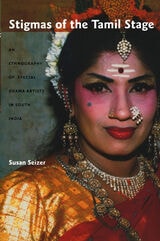
cover of Stigmas of the Tamil Stage: An Ethnography of Special Drama Artists in South India

Stigmas of the Tamil Stage

An Ethnography of Special Drama Artists in South India

Susan Seizer

Duke University Press, 2005

A study of the lives of popular theater artists, Stigmas of the Tamil Stage is the first in-depth analysis of Special Drama, a genre of performance unique to the southernmost Indian state of Tamilnadu. Held in towns and villages throughout the region, Special Drama performances last from 10 p.m. until dawn. There are no theatrical troupes in Special Drama; individual artists are contracted “specially” for each event. The first two hours of each performance are filled with the kind of bawdy, improvisational comedy that is the primary focus of this study; the remaining hours present more markedly staid dramatic treatments of myth and history. Special Drama artists themselves are of all ages, castes, and ethnic and religious affiliations; the one common denominator in their lives is their lower-class status. Artists regularly speak of how poverty compelled their entrance into the field.

Special Drama is looked down upon by the middle- and upper-classes as too popular, too vulgar, and too “mixed.” The artists are stigmatized: people insult them in public and landlords refuse to rent to them. Stigma falls most heavily, however, on actresses, who are marked as “public women” by their participation in Special Drama. As Susan Seizer’s sensitive study shows, one of the primary ways the performers deal with such stigma is through humor and linguistic play. Their comedic performances in particular directly address questions of class, culture, and gender deviations—the very issues that so stigmatize them. Seizer draws on extensive interviews with performers, sponsors, audience members, and drama agents as well as on careful readings of live Special Drama performances in considering the complexities of performers’ lives both on stage and off.
[more]
cover of Unfinished Gestures: Devadasis, Memory, and Modernity in South India

Unfinished Gestures

Devadasis, Memory, and Modernity in South India

Davesh Soneji

University of Chicago Press, 2011
 
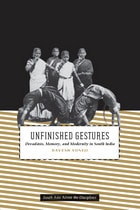
Unfinished Gestures presents the social and cultural history of courtesans in South India who are generally called devadasis, focusing on their encounters with colonial modernity in the nineteenth and early twentieth centuries. Following a hundred years of vociferous social reform, including a 1947 law that criminalized their lifestyles, the women in devadasis communities contend with severe social stigma and economic and cultural disenfranchisement. Adroitly combining ethnographic fieldwork with historical research, Davesh Soneji provides a comprehensive portrait of these marginalized women and unsettles received ideas about relations among them, the aesthetic roots of their performances, and the political efficacy of social reform in their communities.
 
Poignantly narrating the history of these women, Soneji argues for the recognition of aesthetics and performance as a key form of subaltern self-presentation and self-consciousness. Ranging over courtly and private salon performances of music and dance by devadasis in the nineteenth century, the political mobilization of devadasis identity in the twentieth century, and the post-reform lives of women in these communities today, Unfinished Gestures charts the historical fissures that lie beneath cultural modernity in South India.
[more]
cover of Violence of Democracy: Interparty Conflict in South India

Violence of Democracy

Interparty Conflict in South India

Ruchi Chaturvedi

Duke University Press, 2023
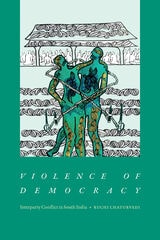
In Violence of Democracy Ruchi Chaturvedi tracks the rise of India’s divisive politics through close examination of decades-long confrontations in Kerala between members of the Communist Party of India (Marxist) and supporters of the Hindu nationalist Rashtriya Swayam Sevak Sangh and the Bharatiya Janata Party. Drawing on ethnographic fieldwork and extensive archival research, Chaturvedi investigates the unique character of the conflict between the party left and the Hindu right. This conflict, she shows, defies explanations centering religious, caste, or ideological differences. It offers instead new ways of understanding how quotidian political competition can produce antagonistic majoritarian communities. Rival political parties mobilize practices of disbursing care and aggressive masculinity in their struggle for electoral and popular power, a process intensified by a criminal justice system that reproduces rather than mitigating violence. Chaturvedi traces these dynamics from the late colonial period to the early 2000s, illuminating the broader relationships between democratic life, divisiveness, and majoritarianism.
[more]
cover of With Respect to Sex: Negotiating Hijra Identity in South India

With Respect to Sex

Negotiating Hijra Identity in South India

Gayatri Reddy

University of Chicago Press, 2005

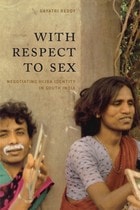
With Respect to Sex is an intimate ethnography that offers a provocative account of sexual and social difference in India. The subjects of this study are hijras or the "third sex" of India—individuals who occupy a unique, liminal space between male and female, sacred and profane.

Hijras are men who sacrifice their genitalia to a goddess in return for the power to confer fertility on newlyweds and newborn children, a ritual role they are respected for, at the same time as they are stigmatized for their ambiguous sexuality. By focusing on the hijra community, Gayatri Reddy sheds new light on Indian society and the intricate negotiations of identity across various domains of everyday life. Further, by reframing hijra identity through the local economy of respect, this ethnography highlights the complex relationships among local and global, sexual and moral, economies.

This book will be regarded as the definitive work on hijras, one that will be of enormous interest to anthropologists, students of South Asian culture, and specialists in the study of gender and sexuality.
[more]