Results by title
121 books match the query 'Space' and 8 start with a
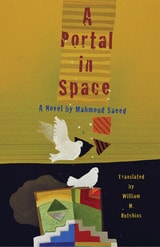
A Portal in Space
By Mahmoud Saeed, Translated by William M. Hutchins
University of Texas Press, 2015
A Portal in Space, set in Basra, Iraq, during the Iran-Iraq War (1980–1988), follows the lives of Anwar, a newly minted architect, and the other members of his affluent family as they attempt to maintain a sense of normality during the frequent bombing attacks from Iran. When Anwar joins the Iraqi army and then goes missing in action, his family struggles to cope with uncertainty over his fate. His mother falls into depression and secludes herself in the family home, while his father shifts his attention from his duties as a judge to the weekly pilgrimage to Baghdad seeking information on his son—and to Zahra, the young widow he meets there.
Emotionally engaging, A Portal in Space is a wry, wise tale of human beings striving to retain their humanity during a war that is anything but humane. Mahmoud Saeed succeeds brilliantly in bringing the sights and sounds of Iraq to life on the page—whether in a bunker on the front lines of the Iran-Iraq War or in the parlor of a fortune-teller in Baghdad. As Zahra says of the novel she is writing: “It is a normal novel that contains love, war, life, deceit, and death.”
A Sense of Space
A Local’s Guide to a Flat Earth, the Edge of the Cosmos, and Other Curious PlacesJohn Edward Huth
University of Chicago Press, 2025
When you give directions, do you tell someone to go straight ahead and turn left? Or do you suggest that they head north before moving west? Your answer reveals more than you might think.
In A Sense of Space, writer and physicist John Edward Huth uses these two kinds of navigation—either centered on or independent of people—to help readers chart a path through evolving spatial models. In doing so, he offers an astonishing exploration of how changing scientific models of space alter our social perceptions, and vice versa. New visions of space can emanate from human considerations, he argues, and those new visions can in turn spawn new cultural phenomena. With accessible introductions to topics including mental maps, astrology, astronomy, particle physics, and Einstein’s relativity, Huth makes clear that, although our minds have evolved to comprehend space in terrestrial distances, we routinely extend this understanding to realms far removed from our everyday experiences, from cosmological to subatomic scales.
Taking us across the eons from the myth of a flat earth to the mysteries of the multiverse, A Sense of Space is an energetic, thoughtful guide to how we orient ourselves in our world—and beyond.
Affective Intellectuals and the Space of Catastrophe in the Americas
Judith Sierra-Rivera
The Ohio State University Press, 2018
Pursuing this argument, Sierra-Rivera examines print, radio, and web materials by authors whose emotional discourses have also had a measurable impact on the formation of communities that demand their full political inclusion in society. This book therefore fills a significant gap in the study of the relationship between materiality (space and bodies), emotions, and the political imagination. Affective Intellectuals demonstrates that writers and intellectuals themselves are vital in reshaping their communities and fighting for social justice in the Hemispheric Americas.
Africa's World Cup
Critical Reflections on Play, Patriotism, Spectatorship, and SpaceEdited by Peter Alegi and Chris Bolsmann
University of Michigan Press, 2013
Africa’s World Cup: Critical Reflections on Play, Patriotism, Spectatorship, and Spacefocuses on a remarkable month in the modern history of Africa and in the global history of football. Peter Alegi and Chris Bolsmann are well-known experts on South African football, and they have assembled an impressive team of local and international journalists, academics, and football experts to reflect on the 2010 World Cup and its broader significance, its meanings, complexities, and contradictions.
The World Cup’s sounds, sights, and aesthetics are explored, along with questions of patriotism, nationalism, and spectatorship in Africa and around the world. Experts on urban design and communities write on how the presence of the World Cup worked to refashion urban spaces and negotiate the local struggles in the hosting cities. The volume is richly illustrated by authors’ photographs, and the essays in this volume feature chronicles of match day experiences; travelogues; ethnographies of fan cultures; analyses of print, broadcast, and electronic media coverage of the tournament; reflections on the World Cup’s private and public spaces; football exhibits in South African museums; and critiques of the World Cup’s processes of inclusion and exclusion, as well as its political and economic legacies.
The volume concludes with a forum on the World Cup, including Thabo Dladla, Director of Soccer at the University of KwaZulu-Natal, Mohlomi Kekeletso Maubane, a well-known Soweto-based writer and a soccer researcher, and Rodney Reiners, former professional footballer and current chief soccer writer for the Cape Argus newspaper in Cape Town. This collection will appeal to students, scholars, journalists, and fans.
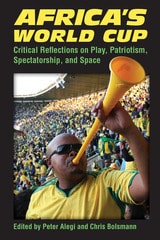
Cover illustration: South African fan blowing his vuvuzela at South Africa vs. France, Free State Stadium, Bloemfontein, June 22, 2010. Photo by Chris Bolsmann.
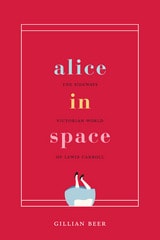
Alice in Space
The Sideways Victorian World of Lewis CarrollGillian Beer
University of Chicago Press, 2016
Gillian Beer explores Carroll’s work through the speculative gaze of Alice, for whom no authority is unquestioned and everything can speak. Parody and Punch, evolutionary debates, philosophical dialogues, educational works for children, math and logic, manners and rituals, dream theory and childhood studies—all fueled the fireworks. While much has been written about Carroll’s biography and his influence on children’s literature, Beer convincingly shows him at play in the spaces of Victorian cultural and intellectual life, drawing on then-current controversies, reading prodigiously across many fields, and writing on multiple levels to please both children and adults in different ways.
With a welcome combination of learning and lightness, Beer reminds us that Carroll’s books are essentially about curiosity, its risks and pleasures. Along the way, Alice in Space shares Alice’s exceptional ability to spark curiosity in us, too.
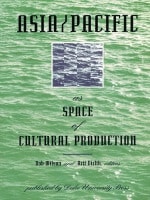
Asia/Pacific as Space of Cultural Production
Rob Wilson and Arif Dirlik, eds.
Duke University Press, 1995
From New Zealand to Japan, Taiwan to Hawaii, this innovative volume presents essays, poems, and memoirs by prominent Asia/Pacific writers that resist appropriation by transnational capitalism through the articulation of autonomous local identities and counter-histories of place and community. In addition, cultural critics spanning several locations and disciplines deconstruct representations—particularly those on film and in novels—that perpetuate Asia/Pacific as a realm of EuroAmerican fantasy.
This collection, a much expanded edition of boundary 2, offers a new perception of the Asia/Pacific region by presenting the Pacific not as a paradise or vast emptiness, but as a place where living, struggling peoples have constructed contemporary identities out of a long history of hegemony and resistance. Asia/Pacific as Space of Cultural Production will prove stimulating to readers with an interest in the Asia/Pacific region, and to scholars in the fields of Asian, American, Pacific, postcolonial, and cultural studies.
Contributors. Joseph P. Balaz, Chris Bongie, William A. Callahan, Thomas Carmichael, Leo Ching, Chiu Yen Liang (Fred), Chungmoo Choi, Christopher L. Connery, Arif Dirlik, John Fielder, Miriam Fuchs, Epeli Hau`ofa, Lawson Fusao Inada, M. Consuelo León W., Katharyne Mitchell, Masao Miyoshi, Steve Olive, Theophil Saret Reuney, Peter Schwenger, Subramani, Terese Svoboda, Jeffrey Tobin, Haunani-Kay Trask, John Whittier Treat, Tsushima Yuko, Albert Wendt, Rob Wilson
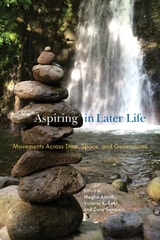
Aspiring in Later Life
Movements across Time, Space, and GenerationsMegha Amrith
Rutgers University Press, 2023
This book is also freely available online as an open-access digital edition.
Download the open access book here.
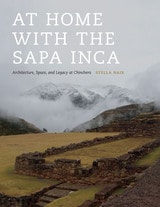
At Home with the Sapa Inca
Architecture, Space, and Legacy at ChincheroBy Stella Nair
University of Texas Press, 2015
By examining the stunning stone buildings and dynamic spaces of the royal estate of Chinchero, Nair brings to light the rich complexity of Inca architecture. This investigation ranges from the paradigms of Inca scholarship and a summary of Inca cultural practices to the key events of Topa Inca’s reign and the many individual elements of Chinchero’s extraordinary built environment.
What emerges are the subtle, often sophisticated ways in which the Inca manipulated space and architecture in order to impose their authority, identity, and agenda. The remains of grand buildings, as well as a series of deft architectural gestures in the landscape, reveal the unique places that were created within the royal estate and how one space deeply informed the other. These dynamic settings created private places for an aging ruler to spend time with a preferred wife and son, while also providing impressive spaces for imperial theatrics that reiterated the power of Topa Inca, the choice of his preferred heir, and the ruler’s close relationship with sacred forces.
This careful study of architectural details also exposes several false paradigms that have profoundly misguided how we understand Inca architecture, including the belief that it ended with the arrival of Spaniards in the Andes. Instead, Nair reveals how, amidst the entanglement and violence of the European encounter, an indigenous town emerged that was rooted in Inca ways of understanding space, place, and architecture and that paid homage to a landscape that defined home for Topa Inca.