Results by title

2 books match the query 'Stephenson, Steven L.'
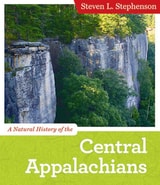
cover of A Natural History of the Central Appalachians

A Natural History of the Central Appalachians

Steven L. Stephenson

West Virginia University Press, 2013
Central Appalachia is the system of linear ridges, intervening valleys, and deeply dissected plateaus that make up the rugged terrain found in western and southwestern Virginia, eastern and central West Virginia, western Maryland, and a portion of south central and southwestern Pennsylvania. Through its concise and accessible approach, A Natural History of the Central Appalachians thoroughly examines the biology and ecology of the plants, animals, and other organisms of this region of eastern North America.
With over 120 images, this text provides an overview of the landscape of this region, including the major changes that have taken place over the past 300 million years; describes the different types of forests and other plant communities currently present in Central Appalachia; and examines living systems ranging from microorganisms and fungi to birds and mammals. Through a consideration of the history of humans in the region, beginning with the arrival of the first Native Americans, A Natural History of the Central Appalachians also discusses the past, present, and future influences of human activity upon this geographic area.
[more]
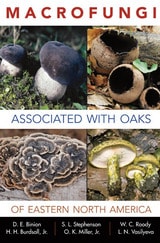
cover of Macrofungi Associated with Oaks of Eastern North America

Macrofungi Associated with Oaks of Eastern North America

DENISE E. BINION

West Virginia University Press, 2008

Macrofungi Associated with Oaks of Eastern North America, which was written as a companion to Field Guide to Oak Species of Eastern North America, represents the first major publication devoted exclusively to the macrofungi that occur in association with oak trees in the forests of eastern North America. The macrofungi covered in this volume include many of the more common examples of the three groups—mycorrhizal fungi, decomposers, and pathogens—that are ecologically important to the forest ecosystems in which oaks occur. More than 200 species of macrofungi are described and illustrated via vibrantly colored photographs. Information is given on edibility, medicinal properties, and other novel uses as well. This publication reflects the combined expertise of six mycologists on the macrofungi anyone would be likely to encounter in an oak forest.

[more]