Results by title
15 books match the query 'Stranger'
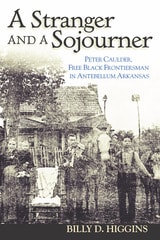
A Stranger and a Sojourner
Peter Caulder, Free Black Frontiersman in Antebellum ArkansasBilly D. Higgins
University of Arkansas Press, 2004

A Stranger in My Own Land
Sofia Casanova, a Spanish Writer in the European Fin de SiecleKirsty Hooper
Vanderbilt University Press, 2008
This study addresses the scandalous disappearance of Casanova and her female contemporaries from accounts of the emergence of the modern Spanish nation. Arguing that women's perceived silence during this critical period in the formation of modern Iberian identities has significant repercussions even today, it takes her works as a case study for modeling a radical rethinking of the way we teach and research the crucial years around the turn of the twentieth century. The first study of Casanova's radical and compelling, but now forgotten, early narrative, it explores the Galician, Polish and Spanish context of her work, arguing that her transnational career demonstrates the inadequacies of existing models of national literary history. At the same time, recognizing Casanova's innovative and strategic use of literary genres and techniques traditionally denominated as "feminine" (and therefore excluded from discussions of "serious" national literature), it provides a model for re-evaluating the vast cultural store of popular and sentimental literature as a key part of the debates about the transition to modernity, in Spain and beyond.

A Stranger in the Hague
The Letters of Queen Sophie of the Netherlands to Lady Malet, 1842–1877S. W. Jackman and Hella Haasse, eds.
Duke University Press, 1989
Sophie met her friend and confidant Marina Dora Spading, Lady Malt, when the latter was at the Hague with her diplomat husband in 1842. A lifelong friendship ensued, although they saw each other only infrequently thereafter. Sophie’s letters to Lady Malt are an extraordinary combination of comments on her personal situation and shrewd analyses of the European political arena. This selection of her surviving correspondence is opinionated, frank, and perceptive, and her letters are a unique commentary on the affairs of the Europe of the mid-nineteenth century.
Adopting the Stranger as Kindred in Deuteronomy
Mark R. Glanville
SBL Press, 2018
Investigate how Deuteronomy incorporates vulnerable, displaced people
Deuteronomy addresses social contexts of widespread displacement, an issue affecting 65 million people today. In this book Mark R. Glanville investigates how Deuteronomy fosters the integration of the stranger as kindred into the community of Yahweh. According to Deuteronomy, displaced people are to be enfolded within the household, within the clan, and within the nation. Glanville argues that Deuteronomy demonstrates the immense creativity that communities may invest in enfolding displaced and vulnerable people. Inclusivism is nourished through social law, the law of judicial procedure, communal feasting, and covenant renewal. Deuteronomy’s call to include the stranger as kindred presents contemporary nation-states with an opportunity and a responsibility to reimagine themselves and their disposition toward displaced strangers today.
Features:
- Exploration of the relationship of ancient Israel’s social history to biblical texts
- An integrative methodology that brings together literary-historical, legal, sociological, comparative, literary, and theological approaches
- A thorough study of Israelite identity and ethnicity

Foreign Exchange
(Or the Stories You Wouldn't Tell a Stranger)Edited by Clémentine Deliss, Yvette Mutumba, and the Weltkulturen Museum
Diaphanes, 2014
Developed through artistic research in the Weltkulturen Museum’s Weltkulturen Labor research lab, Foreign Exchange raises questions about the relationship between the museum’s educational and scientific aims and global trade. Together, essays by anthropologists, art historians, artists, and curators form an extended conversation around the historical accumulation and commodification of artifacts and, in particular, the representation of the human body in ethnographic photographs. Rounding out the volume are many previously unpublished photographs of works discussed. Contributing authors and artist include Peggy Buth, Minerva Cuevas, Gabriel Gbadamosi, David Lau, Tom McCarthy, David Weber-Krebs, and Luke Willis-Thompson.
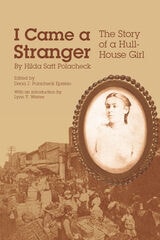
I Came a Stranger
The Story of a Hull-House GirlHilda Satt Polacheck
University of Illinois Press, 1989
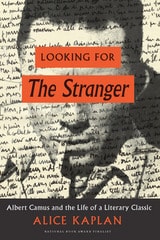
Looking for The Stranger
Albert Camus and the Life of a Literary ClassicAlice Kaplan
University of Chicago Press, 2016
How did a young man in his twenties who had never written a novel turn out a masterpiece that still grips readers more than seventy years later? With Looking for “The Stranger”, Alice Kaplan tells that story. In the process, she reveals Camus’s achievement to have been even more impressive—and more unlikely—than even his most devoted readers knew.
Born in poverty in colonial Algeria, Camus started out as a journalist covering the criminal courts. The murder trials he attended, Kaplan shows, would be a major influence on the development and themes of The Stranger. She follows Camus to France, and, making deft use of his diaries and letters, re-creates his lonely struggle with the novel in Montmartre, where he finally hit upon the unforgettable first-person voice that enabled him to break through and complete The Stranger.
Even then, the book’s publication was far from certain. France was straining under German occupation, Camus’s closest mentor was unsure of the book’s merit, and Camus himself was suffering from near-fatal tuberculosis. Yet the book did appear, thanks in part to a resourceful publisher, Gaston Gallimard, who was undeterred by paper shortages and Nazi censorship.
The initial critical reception of The Stranger was mixed, and it wasn’t until after liberation that The Stranger began its meteoric rise. As France and the rest of the world began to move out of the shadow of war, Kaplan shows, Camus’s book— with the help of an aggressive marketing campaign by Knopf for their 1946 publication of the first English translation—became a critical and commercial success, and Camus found himself one of the most famous writers in the world. Suddenly, his seemingly modest tale of alienation was being seen for what it really was: a powerful parable of the absurd, an existentialist masterpiece.
Few books inspire devotion and excitement the way The Stranger does. And it couldn’t have a better biographer than Alice Kaplan, whose books about twentieth-century French culture and history have won her legions of fans. No reader of Camus will want to miss this brilliant exploration.
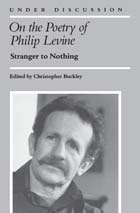
On the Poetry of Philip Levine
Stranger to NothingChristopher Buckley, Editor
University of Michigan Press, 1990
Readers and critics alike have applauded Philip Levine's poems for their eloquent and elegiac narrative and their vivas for the dignity of the human spirit. In 1987 Levine received the esteemed Ruth Lilly Prize, given by the Modern Poetry Association and the American Council for the Arts in recognition of outstanding poetic achievement. On the Poetry of Philip Levine, the first critical collection to focus on this original and highly acclaimed poet, selects essays and reviews that span three decades. Included are pieces by Richard Howard, Stephen Yenser, Ralph J. Mills, Jr., and Dave Smith.
UNDER DISCUSSION Donald Hall, General Editor

Romanticism and the Question of the Stranger
David Simpson
University of Chicago Press, 2012

Ruth Benedict
Stranger in This LandBy Margaret M. Caffrey
University of Texas Press, 1989
Poet, anthropologist, feminist—Ruth Fulton Benedict was all of these and much more. Born into the last years of the Victorian era, she came of age during the Progressive years and participated in inaugurating the modern era of American life. Ruth Benedict: Stranger in This Land provides an intellectual and cultural history of the first half of the twentieth century through the life of an important and remarkable woman.
As a Lyricist poet, Ruth Benedict helped define Modernism. As an anthropologist, she wrote the classic Patterns of Culture and at one point was considered the foremost anthropologist in the United States—the first woman ever to attain such status. She was an intellectual and an artist living in a time when women were not encouraged to be either. In this fascinating study, Margaret Caffrey attempts to place Benedict in the cultural matrix of her time and successfully shows the way in which Benedict was a product of and reacted to the era in which she lived.
Caffrey goes far beyond providing simple biographical material in this well-written interdisciplinary study. Based on exhaustive research, including access for the first time to the papers of Margaret Mead, Benedict's student and friend, Caffrey is able to put Benedict's life clearly in perspective. By identifying the family and educational influences that so sharply influenced Benedict's psychological makeup, the author also closely analyzes the currents of thought that were strong when Victorianism paralleled the Modernism that figured in Benedict's life work. The result is a richly detailed study of a gifted woman.
This important work will be of interest to students of Modernism, poetry, and women's studies, as well as to anthropologists.
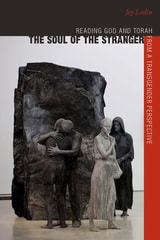
The Soul of the Stranger
Reading God and Torah from a Transgender PerspectiveJoy Ladin
Brandeis University Press, 2018

The Stranger from Omaha
Travel Narratives in the Cinema of Alexander PayneJason Sperb
University of Texas Press, 2025
The first in-depth analysis of the films of Alexander Payne through the lenses of authorship, tourism, and leisure.
With the films Election, About Schmidt, Sideways, Nebraska, and The Holdovers, Alexander Payne has carved out an unusual role in American cinema as a bankable auteur. There is something about Payne’s neurotics and searchers, his working stiffs and disillusioned idealists—something funny, moving, and filled with insight.
Jason Sperb dissects Payne’s oeuvre, focusing on the director’s penchant for travel narratives. Payne’s films usually center on male protagonists discontent with the emotional and material realities of the day-to-day and seeking satisfaction in some literal or metaphorical elsewhere. But their attempts to escape wind up perpetuating, rather than alleviating, the imbalance between labor and leisure that structures modern life. In this sense, Sperb argues, Payne’s characters are akin to tourists, searching for fleeting glimpses of the fulfillment they dream about. Examining themes of masculinity, nostalgia, whiteness, and class, The Stranger from Omaha is the first auteur study devoted to Payne’s delicately balanced cinematic world. An outsider even in his own heartland, Payne proves to be an artist working at a clarifying remove—a witness to the American condition, observing from just enough distance.
The Stranger in Medieval Society
Frank. R. P. Akehurst and Stephanie Cain Van D’Elden, Editors
University of Minnesota Press, 1998
The Stranger in Medieval Society was first published in 1998. Minnesota Archive Editions uses digital technology to make long-unavailable books once again accessible, and are published unaltered from the original University of Minnesota Press editions.
The Stranger in Medieval Society examines the presence of outsiders in medieval Europe. Whether welcome or unwelcome, voluntary or involuntary, strangers appear in every society; they leave their own communities, venture into new environments, confront differences, and often spark changes. The first collection in medieval studies to concentrate on the notion of the stranger, these essays show how outsiders influenced the culture of Europe in the Middle Ages.
Among the topics explored are Edward III and Sir Gawain and the Green Knight as historical and literary instances of chivalric skill and courage; political conflict in the late French epic Renaut de Montauban; and a group of people who were doubly strangers-some thirty thousand Jews, who after being expelled from France in 1306 returned under an experimental agreement a few years later.
Contributors: William Calin, U of Florida; Susan Crane, Rutgers; Maria Dobozy, U of Utah; Edward R. Haymes, Cleveland State U; William Chester Jordan, Princeton U; Derek Pearsall, Harvard U; William D. Phillips Jr., U of Minnesota; Kathryn L. Reyerson, U of Minnesota; and Janet L. Solberg, Kalamazoo College.
F. R. P. Akehurst is professor of French in the Department of French and Italian at the University of Minnesota. Stephanie Cain Van D'Elden is director of graduate studies for the program in Germanic philology at the University of Minnesota.
This is volume 12 in the Medieval Cultures Series
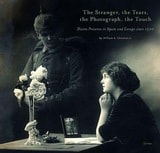
The Stranger, the Tears, the Photograph, the Touch
Divine Presence in Spain and Europe since 1500William A. Christian Jr.
Central European University Press, 2017

You May See a Stranger
StoriesPaula Whyman
Northwestern University Press, 2016
Miranda Weber is a hot mess. In Paula Whyman’s debut collection of stories, we find her hoarding duct tape to ward off terrorists, stumbling into a drug run with a crackhead, and—frequently—enduring the bad behavior of men. A drivers’ education class pulsing with racial tension is the unexpected context of her sexual awakening. As she comes of age, and in the three decades that follow, the potential for violence always hovers nearby. She’s haunted by the fate of her disabled sister and—thanks to the crack cocaine epidemic of the ’80s, the wars in the Middle East, and sniper attacks—the threat of crime and terror in her hometown of Washington, D.C. Miranda can be lascivious, sardonic, and maddeningly self-destructive, but, no matter what befalls her, she never loses her sharp wit or powers of observation, which illuminate both her own life and her strange, unsettling times.