Results by title
25 books match the query 'Street'
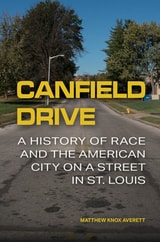
Canfield Drive
A History of Race and the American City on a Street in St. LouisMatthew Knox Averett
University of Missouri Press, 2027
Winner of the 2026 Missouri Conference on History Book Award; the 2026 Missouri History Book Award; and shortlisted for the 2026 ASU Humanities Book Award
On August 9, 2014, Michael Brown and a friend were walking down Canfield Drive, a residential street in the St. Louis suburb of Ferguson. There, they encountered Ferguson Police Officer Darren Wilson. Moments later, Brown was dead on the street—shot by Wilson at least six times. That evening, a memorial appeared on the pavement where he had fallen. In the days that followed, vigils turned into protests, and protests into an Uprising, as police in riot gear faced off with a grieving, outraged community. For nearly two weeks, Ferguson commanded the nation’s attention. The killing of Michael Brown was an outrage and it should not have happened. But Canfield Drive was primed for tragedy long before that fatal encounter because the street was already a place of racial conflict. This was no accident.
Canfield Drive: A History of Race and the American City on a Street in St. Louis uncovers the deeper history behind the street where Brown died, tracing how race and the built environment have long intersected in St. Louis—from the city’s founding to the Ferguson Uprising. The book follows the story of Black space across two centuries: from early Black communities, to the birth of the St. Louis Blues, to the Halcyon days of The Ville, to the destruction of Mill Creek Valley, to the tragedy of Pruitt-Igoe, and to the construction of Canfield Drive. Though Canfield Drive is the first comprehensive history of St. Louis’s Black urban landscape, it is more than just St. Louis's story. Canfield Drive details the racial engineering of the American city. Here is the machinery of American segregation laid bare: occupancy covenants, court decisions, racial steering, white flight, public housing, voucher systems, and predatory policing that combine to transform neighborhoods into traps. Here too are the people who fought back, building community against staggering odds and securing civil rights reforms that transformed America's understanding of government's obligations to its citizens.
Canfield Drive provides a powerful lens on the national story of race and the American city and reveals how Michael Brown's death was not just one officer's deadly decision, but the inevitable outcome of America's built environment—a tragedy centuries in the making, on a street designed for violence. This is how a place becomes a powder keg. This is how history erupts into headlines. This is the story behind the story that America couldn't look away from. This is the story of how a street came to matter, and how it came to stand for something far greater than itself.

Crossing the Street in Hanoi
Teaching and Learning About VietnamCarol Wilder
Intellect Books, 2013
Dark End Of The Street
Margins in American Vanguard PoetryMaria Damon
University of Minnesota Press, 1993
Damon foregrounds a number of modern American poets work and lives in order to argue that the American avant-garde is located in the experimental literary works of social "outsiders." Discussed is the work of Black/Jewish surrealist street poet Bob Kaufman, Boston-Brahmin Robert Lowell and three teenaged women writing from a South Boston housing project, pre-Stonewall gay poets Jack Spicer and Robert Duncan, and Jewish lesbian-in-exile Gertrude Stein.
"An engaging and important book. Damon's sophisticated, theoretical approaches to American verse, coupled with her fresh, writerly style in The Dark End of The Street, put her on the forefront of American poetry's next generation of literary criticism." -American Literature"A work of art as well as a work of criticism. Addresses important questions about art and social life, about the margins and the center, and about oppression and suppression." -George Lipsitz
Dual Justice
America's Divergent Approaches to Street and Corporate CrimeAnthony Grasso
University of Chicago Press, 2024
This is an auto-narrated audiobook version of this book.
A far-reaching examination of how America came to treat street and corporate crime so differently.
While America incarcerates its most marginalized citizens at an unparalleled rate, the nation has never developed the capacity to consistently prosecute corporate wrongdoing. Dual Justice unearths the intertwined histories of these two phenomena and reveals that they constitute more than just modern hypocrisy.
By examining the carceral and regulatory states’ evolutions from 1870 through today, Anthony Grasso shows that America’s divergent approaches to street and corporate crime share common, self-reinforcing origins. During the Progressive Era, scholars and lawmakers championed naturalized theories of human difference to justify instituting punitive measures for poor offenders and regulatory controls for corporate lawbreakers. These ideas laid the foundation for dual justice systems: criminal justice institutions harshly governing street crime and regulatory institutions governing corporate misconduct.
Since then, criminal justice and regulatory institutions have developed in tandem to reinforce politically constructed understandings about who counts as a criminal. Grasso analyzes the intellectual history, policy debates, and state and federal institutional reforms that consolidated these ideas, along with their racial and class biases, into America’s legal system.
Dual Justice
America’s Divergent Approaches to Street and Corporate CrimeAnthony Grasso
University of Chicago Press, 2024
A far-reaching examination of how America came to treat street and corporate crime so differently.
While America incarcerates its most marginalized citizens at an unparalleled rate, the nation has never developed the capacity to consistently prosecute corporate wrongdoing. Dual Justice unearths the intertwined histories of these two phenomena and reveals that they constitute more than just modern hypocrisy.
By examining the carceral and regulatory states’ evolutions from 1870 through today, Anthony Grasso shows that America’s divergent approaches to street and corporate crime share common, self-reinforcing origins. During the Progressive Era, scholars and lawmakers championed naturalized theories of human difference to justify instituting punitive measures for poor offenders and regulatory controls for corporate lawbreakers. These ideas laid the foundation for dual justice systems: criminal justice institutions harshly governing street crime and regulatory institutions governing corporate misconduct.
Since then, criminal justice and regulatory institutions have developed in tandem to reinforce politically constructed understandings about who counts as a criminal. Grasso analyzes the intellectual history, policy debates, and state and federal institutional reforms that consolidated these ideas, along with their racial and class biases, into America’s legal system.
Everyday Law on the Street
City Governance in an Age of DiversityMariana Valverde
University of Chicago Press, 2012

God In The Street
New York Writing from The Penny Press to MelvilleHans Bergmann
Temple University Press, 1995
In the fast changing culture of antebellum New York, writers of every stripe celebrated "the City" as a stage for the daily urban encounter between the familiar and the inexplicable. Probing into these richly varied texts, Hans Bergmann uncovers the innovations in writing that accompanied the new market society— the penny newspapers' grandiose boastings, the poetic catalogues of Walt Whitman, the sentimental realism of charity workers, the sensationalism of slum visitors, and the complex urban encounters of Herman Melville's fiction.
The period in which New York, the city itself, became firmly established as a subject invented a literary form that attempts to capture the variety of the teeming city and the flaneur, the walking observer. But Bergmann does not simply lead a parade of images and themes; he explores the ways in which these observers understood what was happening around them and to them, always attentive to class struggle and race and gender issues.
God in the Street shows how the penny press and Whitman's New York poetry create a new mass culture hero who interprets and dignifies the city's confusions. New York writers, both serious and sensationalist, meditate upon street encounters with tricksters and confidence-men and explore the meanings of encounters. Melville's "Bartleby, the Scrinever" underlines the unrelenting isolation and inability to control the interpreter. Bergmann reinterprets Melville's The Confidence Man as an example of how a complex literary form arises directly from its own historical materials and is itself socially symbolic. Bergmann sees Melville as special because he recognizes his inability to make sense of the surface of chaotic images and encounters. In mid-century New York City, Melville believes God is in the street, unavailable and unrecognizable, rather than omnipresent and guiding.
Homeless in Las Vegas
Stories from the StreetKurt Borchard
University of Nevada Press, 2011
House and Street
The Domestic World of Servants and Masters in Nineteenth-Century Rio de JaneiroBy Sandra Lauderdale Graham
University of Texas Press, 1992
During the later half of the nineteenth century, a majority of Brazilian women worked, most as domestic servants, either slave or free. House and Street re-creates the working and personal lives of these women, drawing on a wealth of documentation from archival, court, and church records.
Lauderdale Graham traces the intricate and ambivalent relations that existed between masters and servants. She shows how for servants the house could be a place of protection—as well as oppression—while the street could be dangerous—but also more autonomous. She integrates her discoveries with larger events taking place in Rio de Janeiro during the period, including the epidemics of the 1850s, the abolition of slavery, the demolition of slums, and major improvements in sanitation during the first decade of the 1900s.
Hunting for Frogs on Elston, and Other Tales from Field & Street
Jerry Sullivan
University of Chicago Press, 2004
Published in association with the Chicago Wilderness coalition, Hunting for Frogs on Elston comprehensively chronicles Chicagoland's unique urban ecology, from its indigenous prairie and oft-delayed seasons to its urban coyotes and passenger pigeons. In witty, informed prose, Sullivan evokes his adventures netting dog-faced butterflies, hunting rattlesnakes, and watching fireflies mate. Inspired by regional flora and fauna, Sullivan ventures throughout the metropolis and its environs in search of sludge worms, gyrfalcons, and wild onions. In reporting his findings to otherwise oblivious urbanites, Sullivan endeavors to make "alienated, atomized, postmodern people feel at home, connected to something beyond ourselves."
In the sprawling Chicagoland region, where an urban ecosystem teeming with remarkable life evolves between skyscrapers and train tracks, no writer chronicled the delicate balance of nature and industry more vividly than Jerry Sullivan. An homage to the urban ecology Sullivan loved so dearly, Hunting for Frogs on Elston is his fitting legacy as well as a lasting gift to the urban naturalist in us all.

In the Street
Chalk Drawings and Messages, New York City, 1938-1948Helen Levitt
Duke University Press, 1987
So wrote James Agee in 1939. He shared this fascination with children’s street drawings and messages with his friend Helen Levitt. Here now are over one hundred of her photographs, made in the years between 1938 and 1948. Most of these pictures have never before been published. They have been selected and arranged by the photographer and carefully reproduced.
Robert Coles has written especially for this book an essay on the imaginative live of children and of a time when “. . . children still had some visual independence, some keen-eyed interest in laying pictorial claim to the world around them. . . . I have not seen scenes such as Helen Levitt offers in my wanderings through America’s city streets twenty and thirty and forty years after these were taken. They offer, then, a look backward—though they are also timeless in certain aspects. For children will never really stop being tempted by their imaginative faculties to show and tell—to let others see what they find themselves conceiving in thought and fantasy and dream.”
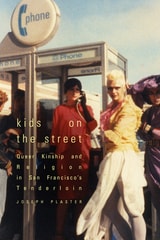
Kids on the Street
Queer Kinship and Religion in San Francisco's TenderloinJoseph Plaster
Duke University Press, 2023
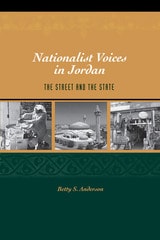
Nationalist Voices in Jordan
The Street and the StateBy Betty S. Anderson
University of Texas Press, 2005
According to conventional wisdom, the national identity of the Jordanian state was defined by the ruling Hashemite family, which has governed the country since the 1920s. But this view overlooks the significant role that the "Arab street"—in this case, ordinary Jordanians and Palestinians—played and continues to play in defining national identity in Jordan and the Fertile Crescent as a whole. Indeed, as this pathfinding study makes clear, "the street" no less than the state has been a major actor in the process of nation building in the Middle East during and after the colonial era.
In this book, Betty Anderson examines the activities of the Jordanian National Movement (JNM), a collection of leftist political parties that worked to promote pan-Arab unity and oppose the continuation of a separate Jordanian state from the 1920s through the 1950s. Using primary sources including memoirs, interviews, poetry, textbooks, and newspapers, as well as archival records, she shows how the expansion of education, new jobs in the public and private sectors, changes in economic relationships, the establishment of national militaries, and the explosion of media outlets all converged to offer ordinary Jordanians and Palestinians (who were under the Jordanian government at the time) an alternative sense of national identity. Anderson convincingly demonstrates that key elements of the JNM's pan-Arab vision and goals influenced and were ultimately adopted by the Hashemite elite, even though the movement itself was politically defeated in 1957.

Nomads of a Desert City
Personal Stories from Citizens of the StreetBarbara Seyda
University of Arizona Press, 2001
You see them as faceless shapes on the median or in city parks. You recognize them by their cardboard signs, their bags of aluminum cans, or their weathered skin. But you do not know them.
In Nomads of a Desert City Barbara Seyda meets the gazes of our homeless neighbors and, with an open heart and the eye of an accomplished photographer, uncovers their compelling stories of life on the edge.
Byrdy is a teenager from Alaska who left a violent husband and misses the young daughter her mother now cares for. Her eyes show a wisdom that belies her youth. Samuel is 95 and collects cans for cash. His face shows a lifetime of living outside while his eyes hint at the countless stories he could tell. Lamanda worked as an accountant before an act of desperation landed her in prison. Now she struggles to raise the seven children of a woman she met there. Dorothy—whose earliest memories are of physical and sexual abuse—lives in a shelter, paycheck to paycheck, reciting affirmations so she may continue “to grace the world with my presence.”
They live on the streets or in shelters. They are women and men, young and old, Native or Anglo or Black or Hispanic. Their faces reflect the forces that have shaped their lives: alcoholism, poverty, racism, mental illness, and abuse. But like desert survivors, they draw strength from some hidden reservoir.
Few recent studies on homelessness offer such a revealing collection of oral history narratives and compelling portraits. Thirteen homeless women and men open a rare window to enrich our understanding of the complex personal struggles and triumphs of their lives. Nomads of a Desert City sheds a glaring light on the shadow side of the American Dream—and takes us to the crossroads of despair and hope where the human spirit survives.
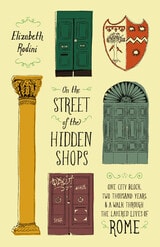
On the Street of the Hidden Shops
One City Block, Two Thousand Years, and a Walk Through the Layered Lives of RomeElizabeth Rodini
University of Chicago Press, 2026
Delve into Rome’s lost history through the stories of a single city block.
Cutting through the heart of Rome is Via delle Botteghe Oscure, a time-worn street named for the mysterious “shops” said to run beneath it. History lies thick here, a museum atop a convent atop ancient ruins; layered in are traces of artisans and poets, pilgrims and saints, a Fascist deportation, a communist coffee bar, a political assassination, and shopkeepers, too. These stories all rest upon a single city block, the same place where, in 13 BCE, the triumphal Roman general Lucius Cornelius Balbus built a monumental theater complex in his own honor.
Elizabeth Rodini’s On the Street of the Hidden Shops digs deep into this corner of the city, uncovering a set of surprising, often poignant narratives that range across two thousand years. For as the walls of Balbus’s compound decayed and the neighborhood was rebuilt, this block would come to shelter Romans from all walks of life: the daughters of local prostitutes, an earnest young man in search of a bride, an entrepreneur determined to preserve the city’s colorful dialect, a Jewish family recently liberated from the nearby Ghetto, and a band of idealistic archaeologists unearthing a long-forgotten past, as well as a gifted baker, a medieval donkey, and a Renaissance ghost. Their stories survive in archives and artifacts but also in the enduring power of rumor and legend.
On the Street of the Hidden Shops invites us on a captivating journey to one place across many centuries. Its tight urban focus reveals a Rome most visitors miss, while uncovering some of the many Romes that have been largely lost to history.
On the Street of the Hidden Shops
One City Block, Two Thousand Years, and a Walk Through the Layered Lives of RomeElizabeth Rodini
University of Chicago Press, 2026
Delve into Rome’s lost history through the stories of a single city block.
Cutting through the heart of Rome is Via delle Botteghe Oscure, a time-worn street named for the mysterious “shops” said to run beneath it. History lies thick here, a museum atop a convent atop ancient ruins; layered in are traces of artisans and poets, pilgrims and saints, a Fascist deportation, a communist coffee bar, a political assassination, and shopkeepers, too. These stories all rest upon a single city block, the same place where, in 13 BCE, the triumphal Roman general Lucius Cornelius Balbus built a monumental theater complex in his own honor.
Elizabeth Rodini’s On the Street of the Hidden Shops digs deep into this corner of the city, uncovering a set of surprising, often poignant narratives that range across two thousand years. For as the walls of Balbus’s compound decayed and the neighborhood was rebuilt, this block would come to shelter Romans from all walks of life: the daughters of local prostitutes, an earnest young man in search of a bride, an entrepreneur determined to preserve the city’s colorful dialect, a Jewish family recently liberated from the nearby Ghetto, and a band of idealistic archaeologists unearthing a long-forgotten past, as well as a gifted baker, a medieval donkey, and a Renaissance ghost. Their stories survive in archives and artifacts but also in the enduring power of rumor and legend.
On the Street of the Hidden Shops invites us on a captivating journey to one place across many centuries. Its tight urban focus reveals a Rome most visitors miss, while uncovering some of the many Romes that have been largely lost to history.
Street of Dreams
The Nature and Legacy of the 1960sDouglas M. Knight
Duke University Press, 1989
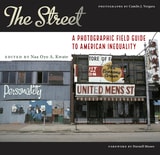
The Street
A Photographic Field Guide to American InequalityNaa Oyo A. Kwate
Rutgers University Press, 2021
Using MacArthur fellow Camilo José Vergara’s intimate street photographs of Camden, New Jersey as reference points, the essays in this collection analyze these images within the context of troubled histories and misguided policies that have exacerbated racial and economic inequalities. Rather than blaming Camden’s residents for the blighted urban landscape, the multidisciplinary array of scholars contributing to this guide reveal the oppressive structures and institutional failures that have led the city to this condition. Tackling topics such as race and law enforcement, gentrification, food deserts, urban aesthetics, credit markets, health care, childcare, and schooling, the contributors challenge conventional thinking about what we should observe when looking at neighborhoods.
The Subtlety of the Street
The Discourse of ResponsibilityM Peregrine Balmat
University of Michigan Press, 2026
The Subtlety of the Street examines the effects of small, seemingly mundane words that occur in conversations between street-level workers and those they serve. Combining discourse analysis, public policy studies, and higher education and social work research, M Peregrine Balmat examines data from two distinct ethnographies that comprise over 1100 pages of transcribed social interaction and 24 months of participant observation fieldwork. Balmat uses Interactional Linguistics to examine how responsibility is constructed over time in social work (homeless shelter) and higher education (community college) contexts, bringing to light systemic issues that face street-level disciplines. Analyzing constellations of words—personal pronouns, terms referring to performance benchmarks and assessments, and cultural mythologies—the author shows that clusters of seemingly generic phrases street-level workers use to communicate responsibility can function, in concert, as racialized microaggressions —termed the Gestalt of Responsibility.
These problematic linguistic choices can accumulate over a student’s time in the classroom or over a person’s time in shelter. They shift in response to performance assessments and measurements, increasing in unfriendly, morally-loaded constructions of responsibility as testing days and shelter restrictions approach. While street-level research suggests that strategies like these are utilized because workers believe those discourse practices work, the phrases reflect historical English Poor Laws and racialized ideologies leveled against enslaved Black people as well as more modern neoliberal welfare state and education politics where such ideologies persist. The Subtlety of the Street offers recommendations for street-level workers’ collaborative professional development and implications for street-level approaches to pedagogy and practice.
The Theater Is in the Street
Politics and Public Performance in 1960s AmericaBradford D. Martin
University of Massachusetts Press, 2004
During the 1960s, the SNCC Freedom Singers, The Living Theatre, the Diggers, the Art Workers Coalition, and the Guerrilla Art Action Group fused art and politics by staging unexpected and uninvited performances in public spaces. Through their activism and the response it provoked, art, theater, and politics began to converge and assume a new visibility in everyday life. While their specific political visions varied, these groups shared the impulse to stage performances and actions publicly—"in the streets"—eschewing museums, theaters, and other conventional halls of culture. Bradford D. Martin offers detailed portraits of each of these groups and examines why they embraced public performance as a vehicle to express and advance their politics.
At a time when the New Left and the counterculture were on the rise, these artists reflected the decade's political and cultural radicalism and helped to define a new aesthetic. Civil rights activists mobilized singing in the struggle for desegregation, introducing a vibrant musical form into the public space. The Living Theatre culminated an arduous quest to mesh artistic and political goals, leading audiences from theaters into the streets to begin the “beautiful nonviolent anarchist revolution.” The Diggers playfully engaged San Francisco's counterculture in politics with their carnivalesque public actions. The Art Workers Coalition and the Guerrilla Action Art Group sought to disrupt the conventional art world, mounting protests in and around New York City museums.
By questioning the values and assumptions that separated art from politics, these groups not only established public performance as a legitimate aesthetic but also provided a new creative vocabulary for future generations of artists. Their continued involvement with the women's liberation movement, rural communes, and political street theater into the 1970s and beyond challenges the popular myth that activists disengaged from politics after the 1960s.
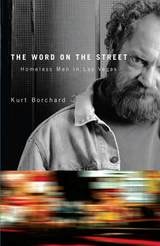
The Word On The Street
Homeless Men In Las VegasKurt Borchard
University of Nevada Press, 2007
Borchard’s account offers a graphic, disturbing, and profoundly moving picture of life on Las Vegas’s streets, depicting the strategies that homeless men employ in order to survive, from the search for a safe place to sleep at night to the challenges of finding food, maintaining personal hygiene, and finding an acceptable place to rest during a long day on the street.
That such misery and desperation exist in the midst of Las Vegas’s hedonistic tourist economy and booming urban development is a cruel irony, according to the author, and it threatens the city’s future as a prime tourist destination. The book will be of interest to social workers, sociologists, anthropologists, politicians, and all those concerned about changing the misery on the street.
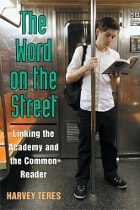
The Word on the Street
Linking the Academy and the Common ReaderHarvey Michael Teres
University of Michigan Press, 2010
"The Word On the Street invites humanities scholars to move beyond the classroom and the monograph to share the pleasures of art in ways that engage the intelligence of the common reader, cultivating the critical imagination so vital to American cultural democracy. Lively and thought-provoking, Teres lays out contemporary debates and wades into them with gusto."
---Nancy Cantor, Syracuse University
"At a moment when questions about the literary, 'bookishness,' and the future of print are being urgently raised, with incessant national attention to the perceived crises of literacy and reading, Teres' thoughtful, broadly democratic, but also tough-minded examination of both 'common readers' and academic readers makes a real contribution to the debate."
---Julie Ellison, University of Michigan
Despite significant changes since the mid-twentieth century in American critical culture---the culture emanating from the serious review of books, ideas, and the arts---it attracts only a small and declining minority of Americans. However productive this culture has been, American society has not approached the realization of Emerson's or Dewey's vision of a highly participatory American cultural democracy. Such a culture requires critics who are read by the average citizen, but the migration of critics and intellectuals from the public to the academy has resulted in fewer efforts to engage with ordinary citizens. The Word on the Street investigates this disjunction between the study of literature in the academy and the interests of the common reader and society at large, arguing the vital importance of publicly engaged scholarship in the humanities. Teres chronicles how the once central function of the humanities professorate---to teach students to appreciate and be inspired by literature---has increasingly been lost to literary and cultural studies in the last thirty years.
The Word on the Street argues for a return to an earlier model of the public intellectual and a literary and cultural criticism that is accessible to ordinary citizens. Along the way, Teres offers an illuminating account of the current problem and potential solutions, with the goal of prompting a future vision of publicly engaged scholarship that resonates with the common reader and promotes an informed citizenry.
Harvey Teres is Associate Professor of English at Syracuse University.
Cover image: Ruth Fremson/The New York Times/Redux
The New Public Scholarship

Word on the Street
Edited by Elisha Foust and Sophie Fuggle
University of London Press, 2011
Working the Street
Police Discretion and the Dilemmas of ReformMichael K. Brown
Russell Sage Foundation, 1981
Writing for the Street, Writing in the Garret
Melville, Dickinson, and Private PublicationMichael Kearns
The Ohio State University Press, 2010
Although Herman Melville and Emily Dickinson differed dramatically in terms of their lives and writing careers, they shared not only a distaste for writing “for the street” (mass readership) but a preference for the intimate writer–reader relationship created by private publication, especially in the form of manuscripts. In Writing for the Street, Writing in the Garret: Melville, Dickinson, and Private Publication, Michael Kearns shows that this distaste and preference were influenced by American copyright law, by a growing tendency in America to treat not only publications but their authors as commodities, and by the romantic stereotype of the artist (usually suffering in a garret) living only for her or his own work.