Results by title
12 books match the query 'Structural anthropology'

Attraction of Opposites
Thought and Society in the Dualistic ModeDavid Maybury-Lewis and Uri Almagor, Editors
University of Michigan Press, 1989
Claude Levi-Strauss
Edmund Leach
University of Chicago Press, 1989
Conversations with Claude Levi-Strauss
Claude Lévi-Strauss and Didier Eribon
University of Chicago Press, 1991
Now available in English, the conversations are rich in Lévi-Strauss's candid appraisals of some of the best-known figures of the Parisian intelligentsia: surrealists André Breton and Max Ernst, with whom Lévi-Strauss shared a bohemian life in 1940s Manhattan; de Beauvoir, Sartre, and Camus, the stars of existentialism; Leiris, Foucault, Dumézil, Jacob, Lacan, and others. His long friendships with Jakobson and Merleau-Ponty are recalled, as well as his encounters with prominent figures in American anthropology: Lowie, Boas (who suddenly died in his chair beside Lévi-Strauss at a banquet at Columbia University), Benedict, Linton, Mead, and Kroeber.
Lévi-Strauss speaks frankly about how circumstances and his own inclinations, after his early fieldwork in Brazil, led him to embrace theoretical work. His straightforward answers to Eribon's penetrating questions—What is a myth? What is structuralism? Are you a philosopher?—clarify his intellectual motives and the development of his research; his influential role as an administrator, including the founding of the Laboratory of Social Anthropology and of the journal L'Homme; the course of his writings, from Elementary Structures of Kinship to The Jealous Potter; and his thoughts on the conduct of anthropology today.
Never before has Lévi-Strauss spoken so freely on so many aspects of his life: his initial failure to be elected to the Collège de France; his reaction to the events of May 1968; his regrets at not being a great investigative reporter or playwright; his deep identification with Wagner, Proust, and Rousseau. This is a rare opportunity to become acquainted with a great thinker in all his dimensions.
Culture and Enchantment
Mark A. Schneider
University of Chicago Press, 1993
For interpretive disciplines, Schneider suggests, meaning often behaves behaves as mysteriously as the apparitions pursued by centuries ago by natural philosophers. He demonstrates this using two case studies from anthropology: Clifford Geertz's description of Balinese cockfights and Yoruba statuary, and Claude Levi-Strauss's analyses of myths. These provide a basis for actively engaging disputes over the meaning and interpretation of culture.
Culture and Enchantment will appeal to an interdisciplinary audience in anthropology, sociology, history, history and sociology of science, culture studies, and literary theory. Schneider's provocative arguments will make this book a fulcrum in the continuing debate over the nature and prospects of cultural inquiry.
Culture and Practical Reason
Marshall Sahlins
University of Chicago Press, 1978

Ethnological Imagination
A Cross-Cultural Critique Of ModernityFuyuki Kurasawa
University of Minnesota Press, 2004
A significant intervention in contemporary debates about cross-cultural understanding
Fuyuki Kurasawa unearths what he terms “the ethnological imagination,” a substantial countercurrent of thought that interprets and contests Western modernity’s existing social order through comparison and contrast to a non-Western other. Accordingly, Kurasawa traces and critiques, through this prism of cultural alterity, the writings of some of the key architects of this way of thinking: Jean-Jacques Rousseau, Karl Marx, Max Weber, Émile Durkheim, Claude Lévi-Strauss, and Michel Foucault.
In the work of these thinkers, Kurasawa finds little justification for two of the most prevalent claims about social theory: the wholesale “postmodern” dismissal of the social-theoretical enterprise because of its supposedly intractable ethnocentrism and imperialism, or, on the other hand, the traditionalist and historicist revival of a canon stripped of its intercultural foundations. Rather, Kurasawa’s book defends a cultural perspective that eschews both the false universalism of “end of history” scenarios and the radical particularism embodied in the vision of “the clash of civilizations.” It contends that the ethnological imagination can invigorate critical social theory by informing its response to an increasingly multicultural world—a response that calls for a reconsideration of the identity and boundaries of the West as well of modernity itself.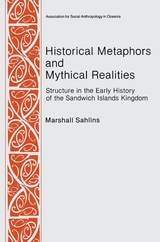
Historical Metaphors and Mythical Realities
Structure in the Early History of the Sandwich Islands KingdomMarshall D. Sahlins
University of Michigan Press, 1981
Hawaiian culture as it met foreign traders and settlers is the context for Sahlins's structuralist methodology of historical interpretation
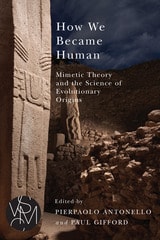
How We Became Human
Mimetic Theory and the Science of Evolutionary OriginsPierpaolo Antonello
Michigan State University Press, 2015
Structural Anthropology, Volume 2
Claude Lévi-Strauss
University of Chicago Press, 1983
"Structural Anthropology, Volume II is a diverse collection. [It is] a useful 'sampler' that gives a reader the full range of Lévi-Strauss's interests."—Daniel Bell, New York Times Book Review
The Raw and the Cooked
Mythologiques, Volume 1Claude Lévi-Strauss
University of Chicago Press, 1983
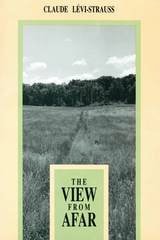
The View from Afar
Claude Lévi-Strauss
University of Chicago Press, 1992
"Hardly a field remains untouched—sociobiology, linguistics, botany, genetics, psychiatry, esthetics, ecology, politics, neuroscience, education, morality, psychology. . . . It's all breathtaking and alarming, some of it wonderful, some of it ridiculous. . . . At times the experience is exhilarating."—Richard A. Shweder, New York Times Book Review
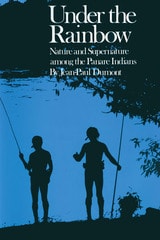
Under the Rainbow
Nature and Supernature among the Panare IndiansBy Jean-Paul Dumont
University of Texas Press, 1976
This ethnographic study of the Panare Indians of Venezuela is the first extensive look at a tribe of this region of the Amazonia. It is an important book not only because it delves into the myth-filled Panare culture, but also because the author has used a modified version of the structural analysis of Claude Lévi-Strauss in examining the Panare.
Lévi-Strauss applied his method of structural analysis to the mythology of many societies in Amazonia, but never to any single society. Jean-Paul Dumont has filled that gap and has shown how the approach works in practice when applied to the intensive study of a single, small-scale culture. His book significantly expands the discussion of the strengths and weaknesses of the method.
The work deals specifically with the implicit mythology of the Panare and is concerned with the symbolic activities manifested in the daily behavior of this group. The analysis of the symbolism, explains Dumont, allows for the discovery of the conceptual system through which the Panare conceive of themselves.
The study is organized into two parts: a presentation of the data and an analysis. The presentation includes a geographical and historical account of the Panare and a general ethnological profile. The analysis is organized into the conceptual categories of inhabited space, time, astrosexuality, hearing, and taste. A concluding chapter summarizes the analysis.
Under the Rainbow will be of interest and of value not only to anthropologists but also to linguists, philosophers, psychologists, and others interested in the general intellectual movement represented by French structuralism. The fieldwork for Under the Rainbow was conducted in Venezuelan Guiana from September 1967 to July 1969.