Results by title
9 books match the query 'Study and teaching (Middle school)'

Coteaching Reading Comprehension Strategies in Secondary School Libraries
Maximizing Your ImpactJudi Moreillon
American Library Association, 2012
Empowering Science and Mathematics Education in Urban Schools
Edna Tan and Angela Calabrese Barton with Erin Turner and Maura Varley Gutiérrez
University of Chicago Press, 2012
Me llamo Marcela
My Story as a Heritage SpeakerWritten by Marcela T. Garcés and illustrated by Andrés E. Garcés
The Ohio State University Press, 2024
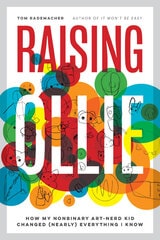
Raising Ollie
How My Nonbinary Art-Nerd Kid Changed (Nearly) Everything I KnowTom Rademacher
University of Minnesota Press, 2021
The account of one radically new school year for a Teacher of the Year and for his nonbinary, art-obsessed, brilliant child
Seven-year-old Ollie was researching local advanced school programs—because every second grader does that, right? Ollie, who used to hate weekends because they meant no school, was crying on the way to school almost every day. Sure, there were the slings and arrows of bullies and bad teachers, but, maybe worse, Ollie, a funny, anxious, smart kid with a thing for choir and an eye for graphic art, was gravely underchallenged and also struggling with identity and how to live totally as themselves. Ollie begged to switch to a new school with “kids like me,” where they wouldn’t feel so alone, or so bored, and so they made the change.
Raising Ollie is dad Tom Rademacher’s story (really, many stories) of that eventful and sometimes painful school year, parenting Ollie and relearning every day what it means to be a father and teacher. As Ollie—who is nonbinary and uses they/them pronouns, and prefers art to athletics, vegetables to cake, and animals to most humans—flourishes in their new school, Rademacher is making an eye-opening adjustment to a new school of his own, one that’s whiter and more suburban than anywhere he has previously taught, with a history of racial tension that he tries to address and navigate.
While Ollie is learning to code, 3D model, animate, speak Japanese, and finally feel comfortable at school, Rademacher increasingly sees how his own educational struggles, anxieties, and childhood upbringing are reflected in his teaching, writing, and parenting, as well as in Ollie’s experience. And with this story of one anything-but-academic year of inquiry and wonder, doubt and revelation, he shows us how raising a kid changes everything—and how much raising a kid like Ollie can teach us about who we are and what we’re doing in the world.
Teaching Banned Books
12 Guides for Young ReadersPat R. Scales
American Library Association, 2001
Teaching Banned Books
32 Guides For Children And TeensPat R. Scales
American Library Association, 2019
As standard-bearers for intellectual freedom, school and children’s librarians are in ideal positions to collaborate with educators to not only protect the freedom to read but also ensure that valued books which touch upon important topics are not quarantined from the readers for whom they were written. In this best-selling classroom- and library-ready book of discussion guides, thoroughly updated and expanded to include genres such as graphic novels and nonfiction, award-winning champion of children's literature Scales shows that there is a way to teach these books while respecting all views. Also freshened to include only books that are in print, this resource
- reprints Judy Blume's stirring introduction from the first edition;
- aids educators and librarians in stimulating the critical thinking skills of young readers aged 9-18 while also encouraging freedom of thought and expression, in either classroom or book club settings;
- spotlights titles dealing with sensitive but vital issues such as bullying, racism, bigotry, making tough choices, other cultures, and our uncertain future;
- offers tips for introducing each book and its associated topics;
- provides open-ended questions for discussion which explore the book as a whole rather than simply its "controversial" aspects, along with research and writing activities; and
- includes short summaries of each book, plus a read-alikes section to keep the conversation going.
Wisconsin
Our State SAG 1E eng: Student Activity GuideBobbie Malone
Wisconsin Historical Society Press, 2008

Wisconsin
Our State TE 1EBobbie Malone
Wisconsin Historical Society Press, 2008
The Teacher's Edition provides educators with the background, literacy, and other skill-building strategies to teach "Wisconsin: Our State, Our Story" in both social studies and literacy classes.
"Wisconsin: Our State, Our Story" textbook promotes content-focused reading to address both social studies and language arts standards for the state of Wisconsin.
The Teacher's Edition draws on the research-based pedagogy in both literacy developmnent and in historical inquiry to help reach the many different levels of learners in today's classrooms.
Wisconsin
Our State TE 2EBobbie Malone
Wisconsin Historical Society Press, 2016
The Teacher's Edition provides educators with the background, literacy, and other skill-building strategies to teach "Wisconsin: Our State, Our Story" in both social studies and literacy classes.
"Wisconsin: Our State, Our Story" textbook promotes content-focused reading to address both social studies and language arts standards for the state of Wisconsin.
The Teacher's Edition draws on the research-based pedagogy in both literacy development and in historical inquiry to help reach the many different levels of learners in today's classrooms.
- Differentiated Learning Approaches The Teacher's Edition draws together and charts a compendium of literacy strategies, historical thinking skills, and differentiated learning approaches in the introductory section.
- Supports Both Literacy and History Learning Each of the early chapters focuses on a different literacy skill. Students have the opportunity to practice and master each skill as they progress through the textbook. Though each chapter differs in length, they all have the same components, so that students can learn to make connections. Major, overarching questions drive the content of each chapter.
- An Inquiry-Based History Approach Each topic is inquiry-based. Students quickly learn that the historian plays the role of detective: asking questions and amassing enough clues to put together a "picture" of some historical event or personality and to weave these into a sufficiently broad understanding.