Results by title
3 books match the query 'Suffering in art'
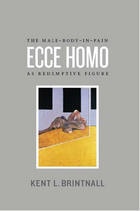
Ecce Homo
The Male-Body-in-Pain as Redemptive FigureKent L. Brintnall
University of Chicago Press, 2011
Acknowledging that representations of men confronting violence and pain can reinforce ideas of manly tenacity, Kent L. Brintnall also argues that they reveal the vulnerability of men’s bodies and open them up to eroticization. Locating the roots of our cultural fascination with male pain in the crucifixion, he analyzes the way narratives of Christ’s death and resurrection both support and subvert cultural fantasies of masculine power and privilege. Through stimulating readings of works by Georges Bataille, Kaja Silverman, and more, Brintnall delineates the redemptive power of representations of male suffering and violence.
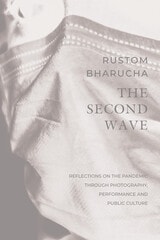
The Second Wave
Reflections on the Pandemic through Photography, Performance and Public CultureRustom Bharucha
Seagull Books, 2022
Focusing on the second wave of the Covid-19 pandemic in India between April and December 2021, Rustom Bharucha’s timely essay reflects on four interconnected realities that haunted this ongoing crisis—death, grief, mourning, and extinction. How do we cope with multiple deaths and the dislocation of rituals when the act of mourning is either postponed or denied? What roles do political surveillance, censorship, the regulation of lockdowns, and the sheer indifference to the lives of people play in the containment of civil liberties? Through vivid examples of photography, theater, dance, visual arts, and the cultures of everyday life, this meditative essay illuminates both the horror of the pandemic as well as its unexpected intimacies and revelations of shared suffering. Against the destruction of nature and the disrespect for the nonhuman, The Second Wave offers lessons in resilience through its reflections on the ethos of waiting and the need to re-envision breath as a vital resource of self-renewal and resistance.

Tough Enough
Arbus, Arendt, Didion, McCarthy, Sontag, WeilDeborah Nelson
University of Chicago Press, 2017
Tough Enough traces the careers of these women and their challenges to the pre-eminence of empathy as the ethical posture from which to examine pain. Their writing and art reveal an adamant belief that the hurts of the world must be treated concretely, directly, and realistically, without recourse to either melodrama or callousness. As Deborah Nelson shows, this stance offers an important counter-tradition to the familiar postwar poles of emotional expressivity on the one hand and cool irony on the other. Ultimately, in its insistence on facing reality without consolation or compensation, this austere “school of the unsentimental” offers new ways to approach suffering in both its spectacular forms and all of its ordinariness.