Results by title
12 books match the query 'Sufism'
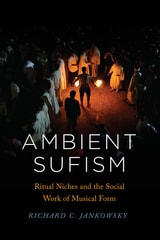
Ambient Sufism
Ritual Niches and the Social Work of Musical FormRichard C. Jankowsky
University of Chicago Press, 2021

Arguing Sainthood
Modernity, Psychoanalysis, and IslamKatherine Pratt Ewing
Duke University Press, 1997
Ewing critiques Eurocentric cultural theorists and Orientalist discourse while also taking issue with expatriate postcolonial thinkers Homi Bhabha and Gayatri Spivak. She challenges the notion of a monolithic Islamic modernity in order to explore the lived realities of individuals, particularly those of Pakistani saints and their followers. By examining the continuities between current Sufi practices and earlier popular practices in the Muslim world, Ewing identifies in the Sufi tradition a reflexive, critical consciousness that has usually been associated with the modern subject. Drawing on her training in clinical and theoretical psychoanalysis as well as her anthropological fieldwork in Lahore, Pakistan, Ewing argues for the value of Lacan in anthropology as she provides the basis for retheorizing postcolonial studies.
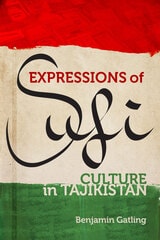
Expressions of Sufi Culture in Tajikistan
Benjamin Gatling
University of Wisconsin Press, 2018
Gatling demonstrates how Sufis transcend the oppressive religious politics of contemporary Tajikistan by using these forms to inhabit multiple times: the paradoxical present, the Persian sacred past, and the Soviet era. In a world consumed with the supposed political dangers of Islam, Gatling shows the intricate, ground-level ways that Muslim expressive culture intersects with authoritarian politics, not as artful forms of resistance but rather as a means to shape Sufi experiences of the present.
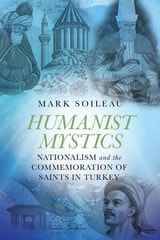
Humanist Mystics
Nationalism and the Commemoration of Saints in TurkeyMark Soileau
University of Utah Press, 2018
Humanist Mystics is the first book to examine Islam and secularism within Turkish nationalist ideology through the lens of commemorated saints. Soileau surveys Anatolian and Turkish religious and political history as the context for his closer attention to the lives and influence of these three Sufi saints. By comparing premodern hagiographic and scholarly representations with twentieth-century monographs, literary works, artistic media, and commemorative ceremonies, he shows how the saints have been transformed into humanist mystics and how this change has led to debates about their character and relevance.
Logos and Revelation
Ibn 'Arabi, Meister Eckhart, and Mystical HermeneuticsRobert J. Dobie
Catholic University of America Press, 2010

Medicine and the Saints
Science, Islam, and the Colonial Encounter in Morocco, 1877-1956By Ellen J. Amster
University of Texas Press, 2013
The colonial encounter between France and Morocco took place not only in the political realm but also in the realm of medicine. Because the body politic and the physical body are intimately linked, French efforts to colonize Morocco took place in and through the body. Starting from this original premise, Medicine and the Saints traces a history of colonial embodiment in Morocco through a series of medical encounters between the Islamic sultanate of Morocco and the Republic of France from 1877 to 1956.
Drawing on a wealth of primary sources in both French and Arabic, Ellen Amster investigates the positivist ambitions of French colonial doctors, sociologists, philologists, and historians; the social history of the encounters and transformations occasioned by French medical interventions; and the ways in which Moroccan nationalists ultimately appropriated a French model of modernity to invent the independent nation-state. Each chapter of the book addresses a different problem in the history of medicine: international espionage and a doctor’s murder; disease and revolt in Moroccan cities; a battle for authority between doctors and Muslim midwives; and the search for national identity in the welfare state. This research reveals how Moroccans ingested and digested French science and used it to create a nationalist movement and Islamist politics, and to understand disease and health. In the colonial encounter, the Muslim body became a seat of subjectivity, the place from which individuals contested and redefined the political.
Modern Muslims
A Sudan MemoirSteve Howard
Ohio University Press, 2016
Queer Companions
Religion, Public Intimacy, and Saintly Affects in PakistanOmar Kasmani
Duke University Press, 2022
Realm of the Saint
Power and Authority in Moroccan SufismBy Vincent J. Cornell
University of Texas Press, 1998
In premodern Moroccan Sufism, sainthood involved not only a closeness to the Divine presence (walaya) but also the exercise of worldly authority (wilaya). The Moroccan Jazuliyya Sufi order used the doctrine that the saint was a "substitute of the prophets" and personification of a universal "Muhammadan Reality" to justify nearly one hundred years of Sufi involvement in Moroccan political life, which led to the creation of the sharifian state.
This book presents a systematic history of Moroccan Sufism through the fifteenth and sixteenth centuries C.E. and a comprehensive study of Moroccan Sufi doctrine, focusing on the concept of sainthood. Vincent J. Cornell engages in a sociohistorical analysis of Sufi institutions, a critical examination of hagiography as a source for history, a study of the Sufi model of sainthood in relation to social and political life, and a sociological analysis of more than three hundred biographies of saints. He concludes by identifying eight indigenous ideal types of saint that are linked to specific forms of authority. Taken together, they define sainthood as a socioreligious institution in Morocco.
The Female Voice in Sufi Ritual
Devotional Practices of Pakistan and IndiaBy Shemeem Burney Abbas
University of Texas Press, 2002
The female voice plays a more central role in Sufi ritual, especially in the singing of devotional poetry, than in almost any other area of Muslim culture. Female singers perform sufiana-kalam, or mystical poetry, at Sufi shrines and in concerts, folk festivals, and domestic life, while male singers assume the female voice when singing the myths of heroines in qawwali and sufiana-kalam. Yet, despite the centrality of the female voice in Sufi practice throughout South Asia and the Middle East, it has received little scholarly attention and is largely unknown in the West.
This book presents the first in-depth study of the female voice in Sufi practice in the subcontinent of Pakistan and India. Shemeem Burney Abbas investigates the rituals at the Sufi shrines and looks at women's participation in them, as well as male performers' use of the female voice. The strengths of the book are her use of interviews with both prominent and grassroots female and male musicians and her transliteration of audio- and videotaped performances. Through them, she draws vital connections between oral culture and the written Sufi poetry that the musicians sing for their audiences. This research clarifies why the female voice is so important in Sufi practice and underscores the many contributions of women to Sufism and its rituals.
The Languages of Political Islam
India 1200-1800Muzaffar Alam
University of Chicago Press, 2004
Muzaffar Alam shows that the adoption of Arabo-Persian Islam in India changed the manner in which Islamic rule and governance were conducted. Islamic regulation and statecraft in a predominately Hindu country required strategic shifts from the original Islamic injunctions. Islamic principles could not regulate beliefs in a vast country without accepting cultural limitations and limits on the exercise of power. As a result of cultural adaptation, Islam was in the end forced to reinvent its principles for religious rule. Acculturation also forced key Islamic terms to change so fundamentally that Indian Islam could be said to have acquired a character substantially different from the Islam practiced outside of India.
Unknowing and the Everyday
Sufism and Knowledge in IranSeema Golestaneh
Duke University Press, 2023